
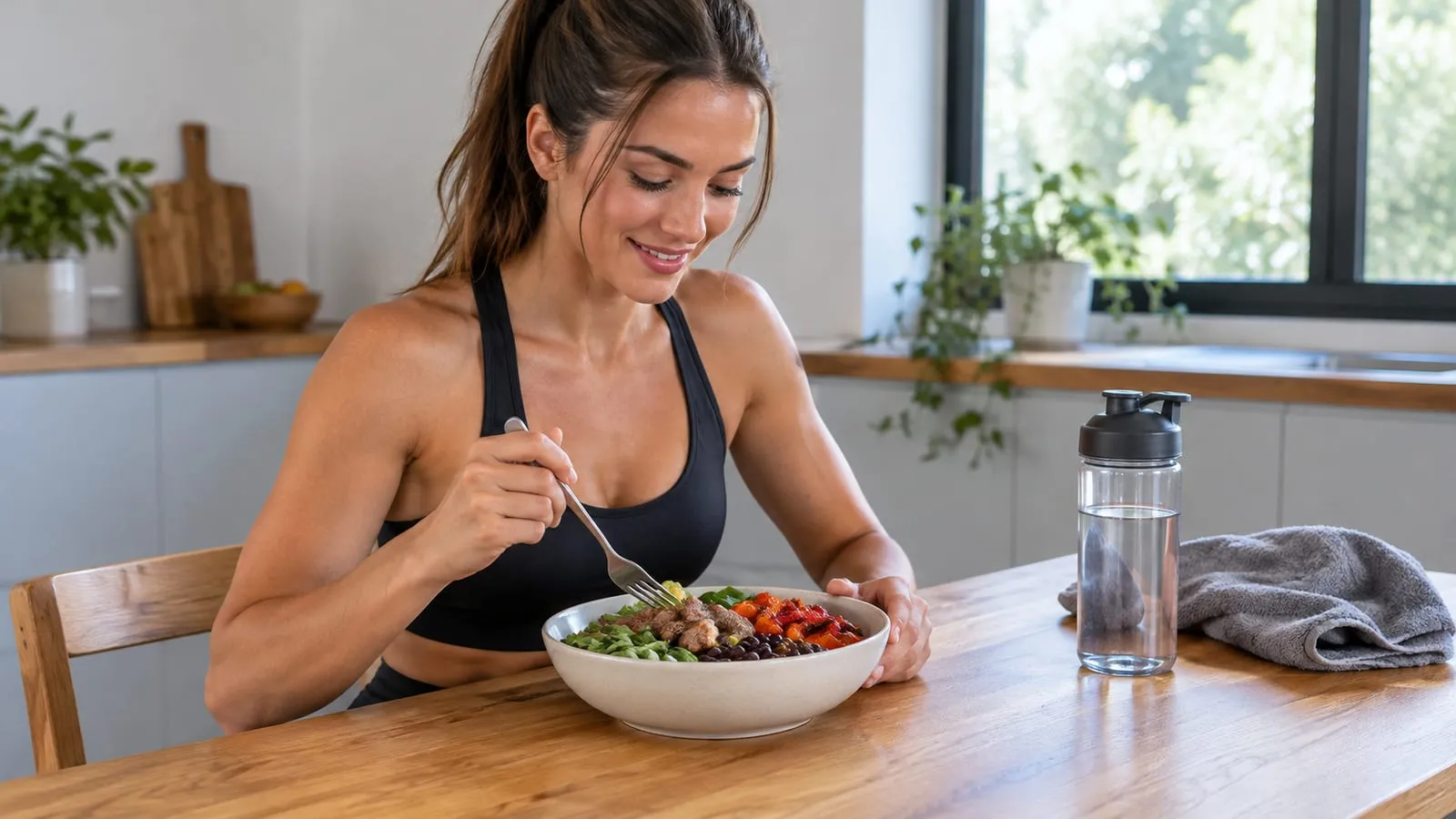
Most runners who feel flat reach for an iron pill first, and that's usually the wrong first move. Here's how to get enough iron as a runner: build one iron-rich meal into most days, pair it with a vitamin C food, and keep coffee, tea, and calcium away from that meal. If fatigue or slipping pace hangs around, get a blood test before you buy a supplement. Food is the default. Supplements belong to confirmed deficiency and a clinician's plan.
How do you get enough iron as a runner?
Start with your plate, then check your blood if your training says something is off. These five steps cover most runners:
- Know your target. Your needs depend on sex, age, periods, pregnancy, diet, and training load.
- Anchor one meal a day on iron. Lean beef, chicken thighs, tuna, lentils, tofu, or fortified cereal all count.
- Add vitamin C to that meal. Peppers, tomatoes, oranges, strawberries, or kiwi help your body absorb plant iron.
- Move the blockers. Drink coffee and tea between meals, and take calcium supplements at a different time.
- Test before you supplement. Ask for a ferritin test and a full iron workup if fatigue, breathlessness, or declining pace persist.
That's the whole system. The rest of this page shows you how to fit each step into a real training week.
Why iron shows up in your pace
Iron builds hemoglobin, the protein in red blood cells that carries oxygen from your lungs to your legs. It also sits in myoglobin, which holds oxygen inside muscle, and in the enzymes that turn food into training energy. When your stores drop, easy pace starts to feel like work. Hills feel steeper, and recovery between sessions stretches out.
Runners also lose more iron than most people. Some leaves in sweat. Some is lost when red blood cells break down from thousands of foot strikes, and small amounts can leak from the gut during long, hard efforts.
Hard training also raises hepcidin, a hormone that slows iron absorption for a while afterward. As a result, the casual approach that worked when you ran twice a week may stop working once you add a long run, a workout, and more mileage. For the deeper science on oxygen and endurance, read iron's role in athletic performance. This page stays practical: what to eat, when to eat it, and when to test.
How much iron do runners need?
Start with the Recommended Dietary Allowance (RDA), the daily intake that covers the needs of most healthy people. For men aged 19 to 50, the RDA for iron is 8 mg per day. For women of childbearing age it's 18 mg per day. During pregnancy, the RDA rises to 27 mg per day.
Treat those numbers as a floor for an active body. Several situations push your needs higher:
- Menstruation, especially heavy periods.
- Adolescence, when growth and rising training volume arrive at the same time.
- Pregnancy, which belongs under a clinician's care for both iron and training.
- Vegetarian or vegan eating, because plant iron absorbs less well.
- Heavy endurance training, from sweat losses, foot-strike losses, and frequent hard sessions.
- Low energy availability, which means eating too little for the training you do. Less food means less iron too.
You don't need to count milligrams every day. Instead, aim for one iron-rich meal on most days and a second iron source somewhere else. If several of the risks above apply to you, that pattern matters more, and so does testing.
Iron foods that fit a runner's schedule
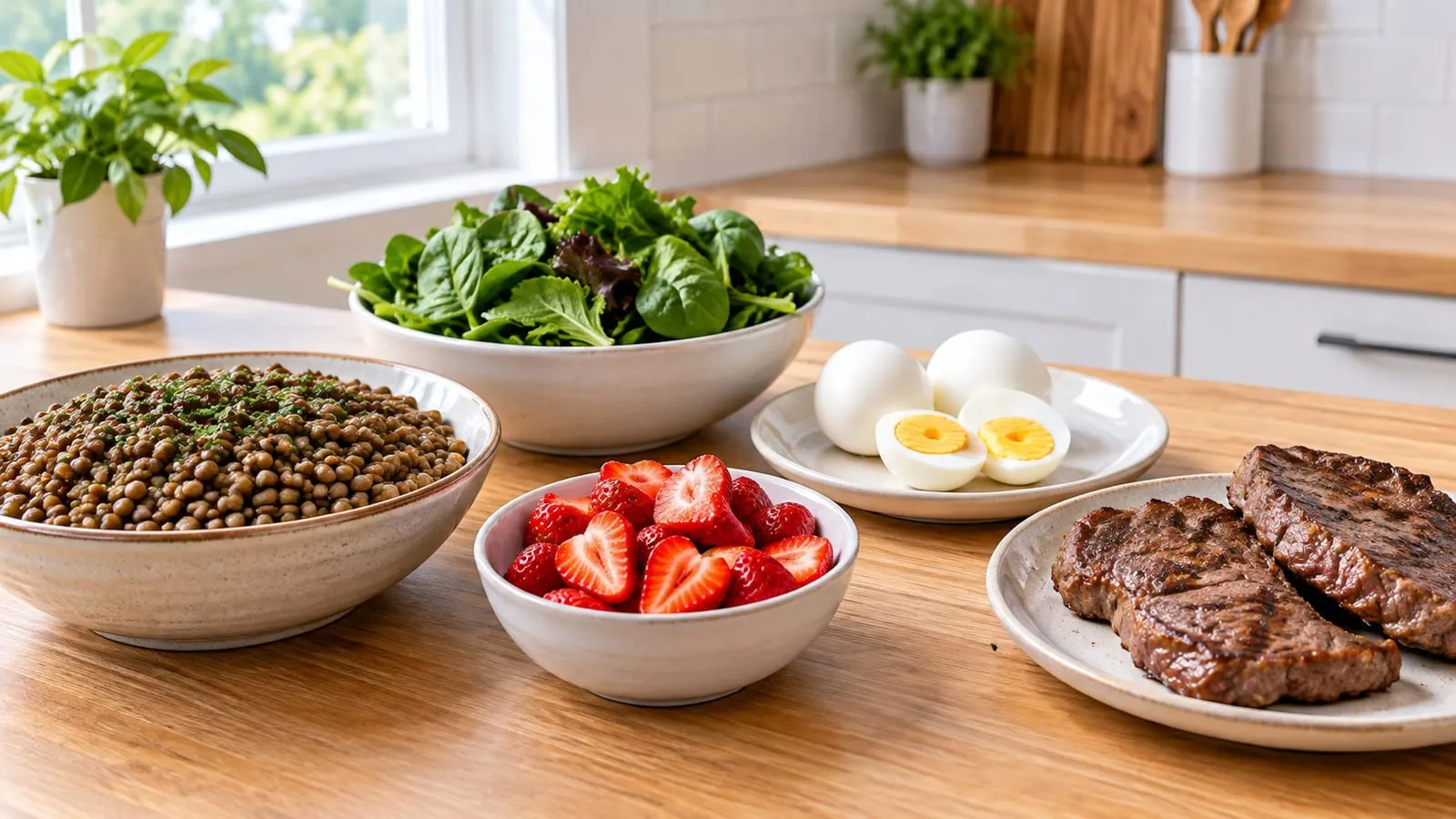
The best iron foods are the ones you'll buy, cook, and eat after a long day. Here's a practical list, grouped by how they fit a busy schedule:
- Quick animal sources: canned tuna or sardines, deli turkey, rotisserie chicken (the dark meat has more iron), eggs.
- Cook-once staples: lean ground beef, beef stew meat, chicken thighs, pork loin.
- Plant proteins: canned lentils, chickpeas, black beans, kidney beans, tofu, tempeh, edamame.
- Fortified grains: iron-fortified breakfast cereal, instant oatmeal, enriched bread and pasta.
- Greens and seeds: spinach, kale, pumpkin seeds, tahini, hemp seeds.
- Portable snacks: dried apricots, trail mix with pumpkin seeds, roasted chickpeas, beef jerky.
Fortified cereal earns a spot in most runners' cupboards. Some brands supply a large share of your daily iron in one bowl, so check the label. It's cheap, it digests easily around a run, and picky eaters and teens will usually eat it.
Spinach has a bigger reputation than it deserves. It does contain iron, but compounds called oxalates hold much of it back from absorption. Eat it because it's good food, just don't count on it as your main source. Plant-based runners can find more staples in this grocery list for plant-based athletes.
Heme iron does more of the heavy lifting
Food iron comes as either heme or nonheme iron. Heme iron comes from meat, poultry, and fish, and your body absorbs it well. Nonheme iron comes from plants, eggs, and fortified grains, and it absorbs less reliably.
That's why a small serving of beef or sardines covers a lot of ground. Meat and fish also help the plant iron eaten alongside them. So a chili with beef and beans gets more out of the beans than a pot of beans alone.
Plant-based runners can still meet their needs. They just need more deliberate meals. Lean on legumes, tofu, fortified grains, and seeds at most meals, and pair them with vitamin C every time. Regular blood checks matter most for this group, because a slow decline is easy to miss.
Use vitamin C to make plant iron count
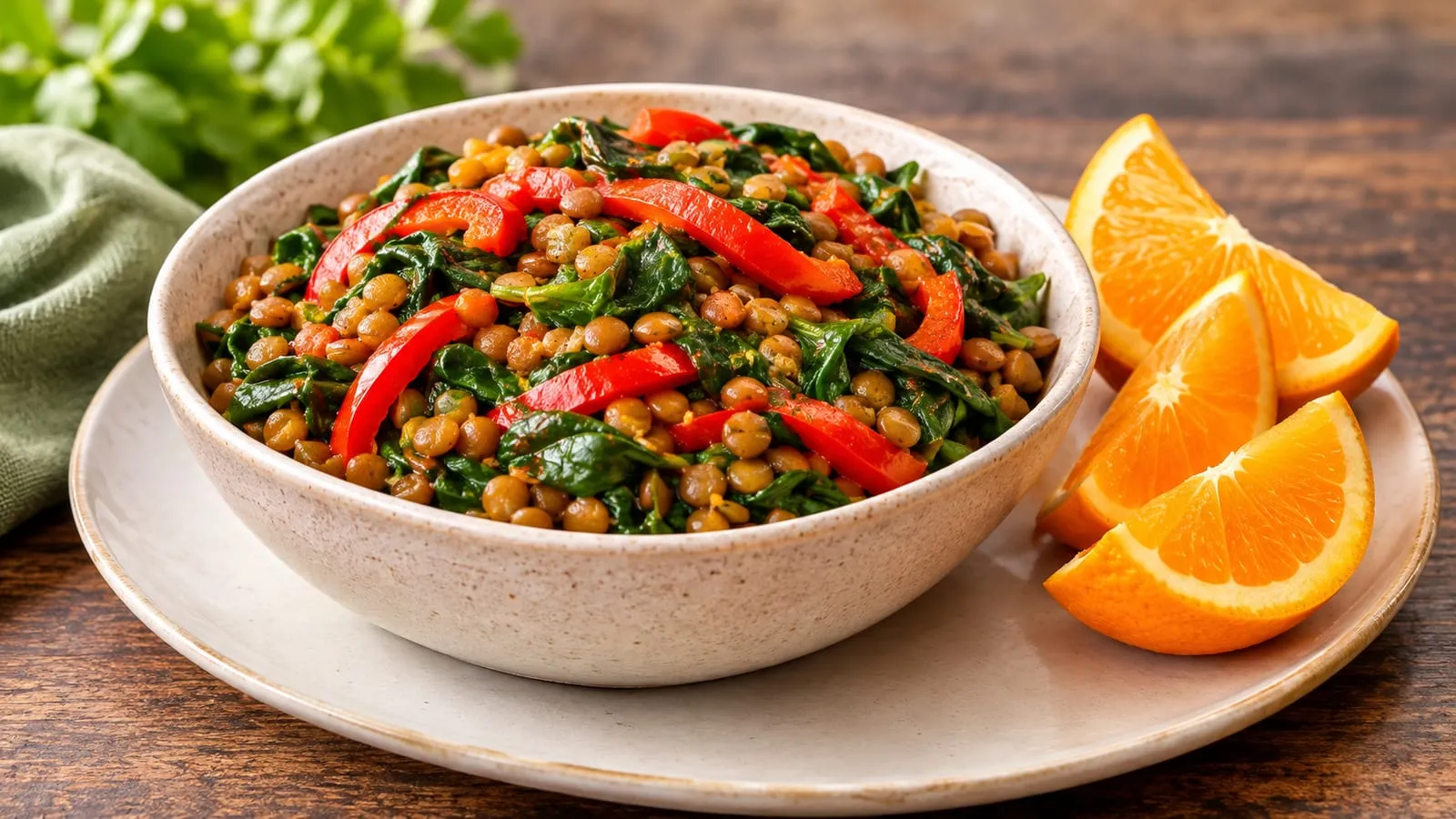
Vitamin C converts nonheme iron into a form your gut absorbs more easily. You don't need a supplement or a rule book. Put a vitamin C food on the same plate as your plant iron, and you've done the job.
Simple pairings that work:
- Black beans with salsa and sautéed peppers in a burrito bowl.
- Fortified oatmeal with strawberries or a glass of orange juice.
- Tofu stir-fry with broccoli, a squeeze of lime, and orange slices on the side.
- Lentil soup with tomatoes, plus a kiwi afterward.
- Hummus and pita with cherry tomatoes and bell pepper strips.
Raw or lightly cooked produce keeps more vitamin C, since heat breaks it down. Still, cooked tomatoes and peppers help, so don't stress about the method. The daily habit matters more than the exact amount.
Keep the biggest blockers away from your iron meal
A few common habits cut how much iron you absorb from a meal:
- Tea and coffee. Their polyphenols bind iron in the gut.
- Calcium supplements. Calcium reduces absorption of both heme and nonheme iron.
- Large calcium-rich servings, such as a big glass of milk or a large bowl of yogurt with your iron meal.
- Phytates in whole grains, beans, and nuts. Soaking, sprouting, and fermenting (as in sourdough or tempeh) lower them.
None of these foods are a problem on their own. Milk and yogurt are excellent recovery foods, and coffee before an early run is fine. The fix is timing. Have coffee or tea between meals, take any calcium supplement at a different meal or at bedtime, and save the big yogurt for a snack that isn't carrying your iron load.
Don't let timing rules get in the way of training. If coffee is what gets you out the door at 6 a.m., keep it. Make lunch or dinner your iron meal instead.
Build the routine around training
A good iron plan fits your appetite, stomach, and calendar. Here's a flexible daily framework:
- Breakfast: fortified cereal or oatmeal with berries or orange juice. It's easy to digest before a morning run and easy to eat after one.
- Lunch: beans, lentils, tuna, or leftover beef in a wrap or bowl with tomatoes, peppers, or salsa.
- Post-run: refuel with carbohydrates and protein first. Chocolate milk or yogurt fits here, because this snack isn't your iron anchor.
- Dinner: your main iron meal on most days. Try beef chili, chicken-thigh stir-fry, salmon with potatoes and broccoli, or tofu curry with tomatoes.
Some research suggests iron absorbs best in the morning and shortly after a run, before hepcidin climbs. So if your stomach handles food then, a fortified breakfast after a morning run is a smart place for iron. If it doesn't, dinner still works.
Adjust for digestion, too. Before a hard workout, skip big servings of beans, high-fiber cereal, and heavy red meat, since they can cause gut trouble mid-run. Save those for after training or for rest days. On a tight budget, canned beans, lentils, eggs, fortified cereal, and frozen spinach cover a lot of iron for little money.
Female runners need a proactive plan
Female runners lose iron every month through menstruation. Add higher daily needs, frequent hard training, and sometimes a small appetite, and stores can fall quietly over months. Heavy periods raise the risk further. Signs include soaking through protection quickly, passing large clots, or bleeding longer than usual.
If that sounds like you, talk to a clinician. Heavy bleeding is treatable, and treating it protects your iron along with everything else.
Under-fueling makes all of this worse. Relative energy deficiency in sport (RED-S) happens when you eat too little to cover training and normal body functions. It can disrupt periods, weaken bones, and cut iron intake at the same time. Missing periods are a warning sign that deserves medical attention.
Too many female runners treat constant fatigue as part of the sport. It isn't. If you're tired all the time, your times are stuck despite steady training, or you feel dizzy standing up, get checked. Teen girls need extra care, because growth, rising mileage, and new periods all land at once, so parents should push for testing before buying anything off a pharmacy shelf.
Is low iron holding back your running?
Low iron rarely announces itself clearly. Watch for patterns like these:
- Unusual fatigue that sleep and rest days don't fix.
- Slower pace at a familiar effort, or a heart rate that runs higher than normal.
- Breathlessness on runs that used to feel easy.
- Heavy legs and poor recovery for days after workouts.
- Dizziness or lightheadedness, especially when you stand up.
- Pale skin, inner eyelids, or nail beds.
- Frequent colds or minor illnesses.
- Restless legs at night, or cravings for ice.
These symptoms overlap with under-eating, poor sleep, overtraining, illness, and thyroid problems. A symptom list can raise the question, but only a blood test can answer it. If general tiredness is your main complaint, review what actually restores energy alongside your iron check.
Test before you take an iron supplement
If symptoms persist or several risk factors apply to you, ask your doctor for a ferritin blood test along with a full iron workup. Ferritin reflects your stored iron. Hemoglobin and other markers show whether low iron has started to affect your red blood cells.
A clinician should read these results together. Inflammation and recent hard training can push ferritin up and hide a low reading. So avoid testing right after a race or a brutal session, and tell your clinician about your training load. Many clinicians aim for different targets in endurance athletes, so ask what range they're using for you.
Self-prescribing iron causes real problems. Supplements often bring constipation, nausea, stomach pain, and dark stools, which are hard to manage on a run. Taking iron you don't need can also lead to overload. Some people carry hemochromatosis, a genetic condition that makes the body store too much iron.
A supplement can also cover up the real cause of your fatigue, such as under-fueling or heavy bleeding. Keep any iron supplements locked away from young children, because accidental overdose is dangerous for them. With a confirmed deficiency, follow your clinician's dose and schedule, retest when they suggest, and keep eating your iron meals for long-term maintenance.
A simple week of iron-first runner meals
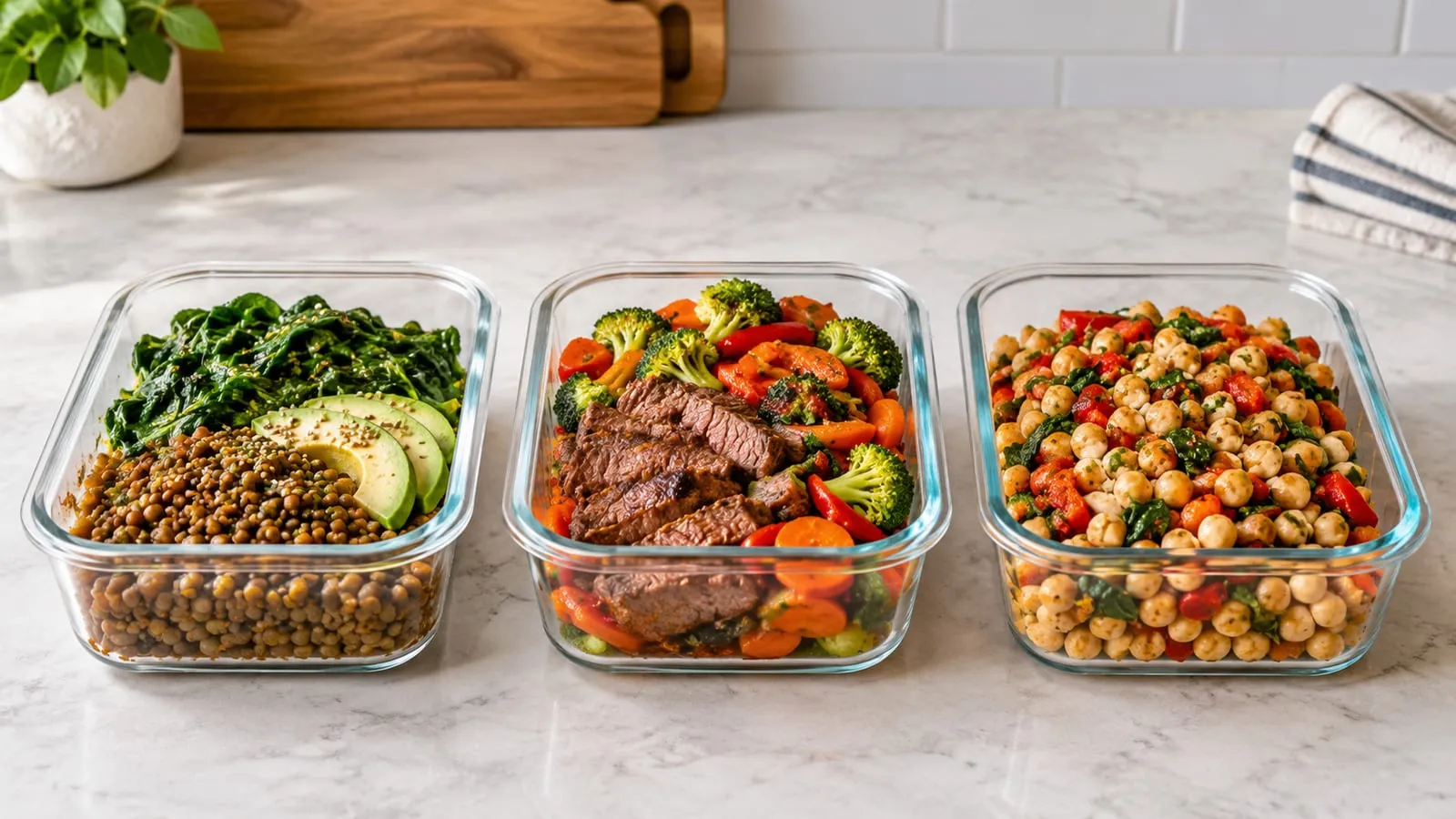
This is what a normal week of iron-first eating looks like. Each meal pairs an iron anchor with a vitamin C partner. Pick the column that matches how you eat and what you can spend.
| Day | Omnivore | Vegetarian | Budget |
|---|---|---|---|
| Monday | Beef and bean chili with tomatoes | Lentil chili with tomatoes and peppers | Canned bean chili with canned tomatoes |
| Tuesday | Fortified cereal with strawberries | Fortified cereal with strawberries | Fortified cereal with orange slices |
| Wednesday | Chicken-thigh stir-fry with broccoli and peppers | Tofu stir-fry with broccoli and peppers | Egg fried rice with frozen peas and peppers |
| Thursday | Tuna wrap with cherry tomatoes | Chickpea and hummus wrap with peppers | Tuna on toast with an orange |
| Friday | Salmon, potatoes, and spinach with lemon | Tempeh, rice, and spinach with lemon | Sardines on toast with sliced tomato |
| Saturday (long run) | Fortified oatmeal and berries after the run, steak tacos with salsa for dinner | Fortified oatmeal and berries, black bean tacos with salsa | Instant oatmeal with orange juice, bean and rice burritos with salsa |
| Sunday | Turkey meatballs and pasta with tomato sauce | Lentil bolognese with enriched pasta | Lentil pasta sauce with enriched pasta |
Repeat the meals you like and drop the ones you don't. Cook a big pot of chili or lentil sauce on Sunday, and you've covered two or three dinners. On hard training days, add extra carbohydrates such as rice, bread, or potatoes, so iron isn't competing with an empty tank.
FAQ
Does cooking in a cast iron pan add iron?
Yes, a little. Acidic foods like tomato sauce pick up some iron from the pan, especially with long simmering. It's a nice bonus, but the amount varies too much to replace iron-rich foods or treatment.
How long does it take to raise low iron?
Usually months, not days. Hemoglobin can improve before stored iron does, so you may feel better before your ferritin fully recovers. Your clinician will set the retest timing, and keeping training steady while you rebuild helps.
Do male runners need to worry about iron?
Less often, but high mileage, plant-based eating, under-fueling, and gut bleeding can still drain men's stores. Men should be especially careful about guessing with supplements, because hemochromatosis tends to cause trouble earlier in men.
Will extra iron make me faster if my levels are already normal?
There's no good evidence for it. Iron helps performance when it corrects a shortfall. Beyond that, extra pills mostly add side effects and overload risk, so spend that effort on eating enough total food instead.