
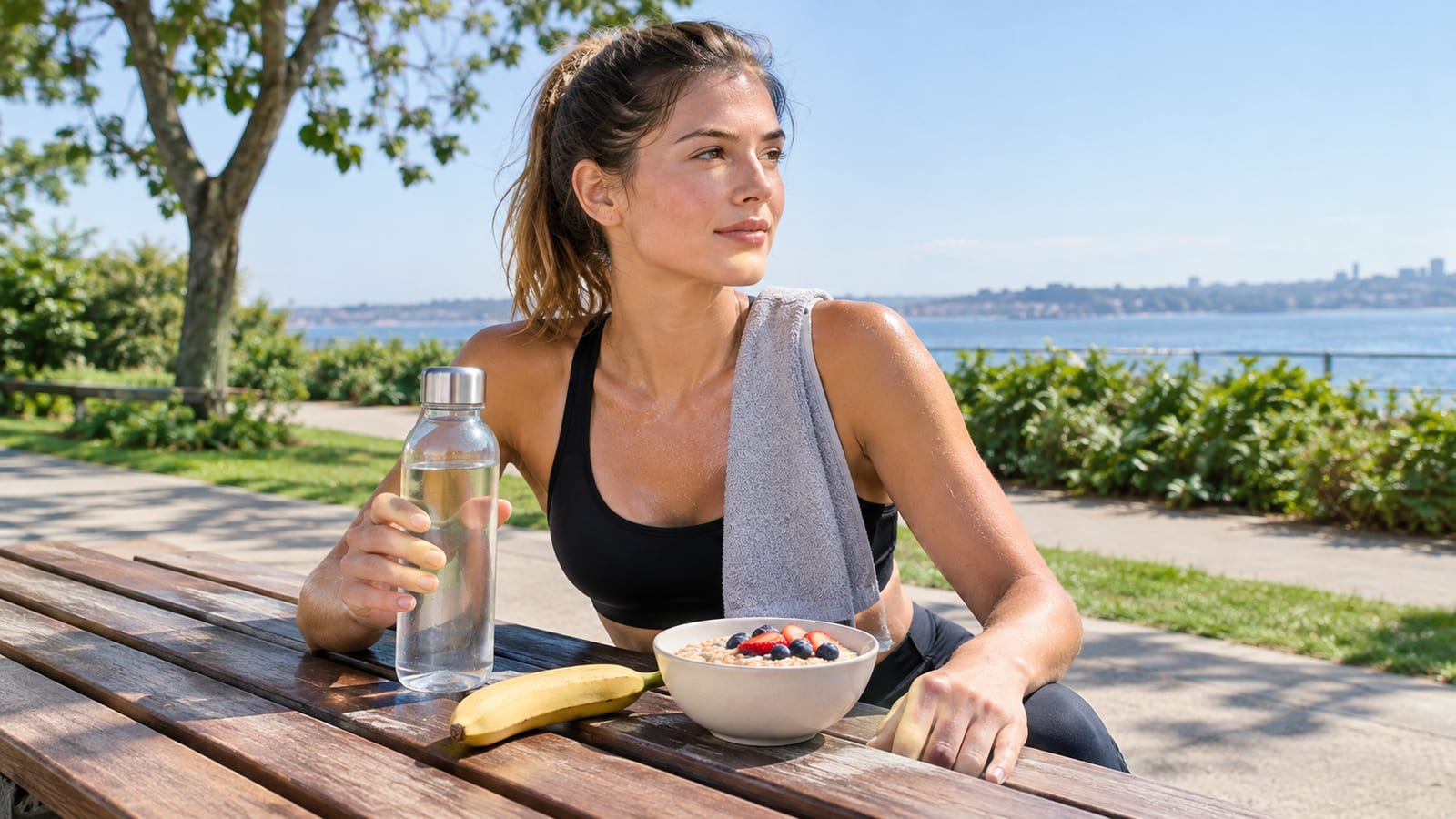
Heat raises the price of every session, and you pay it in fluid, salt, and carbohydrate. When you're training in hot weather, eat familiar, carb-forward meals that digest easily, add protein after the session, and replace the fluid and sodium you sweat out on purpose. Don't force down a heavy meal before you head out just because it sounds healthy. A big salad or a rich grain bowl an hour before a hot run is a fast route to cramps and a slow walk home.
What Should You Eat When Training in Hot Weather?
Eat mostly what you already eat, with more attention to carbohydrates, fluids, and salt. You don't need a special diet or an exotic product. Ordinary food, timed well, covers it.
Heat changes three things at once. First, your body sends more blood to your skin to shed heat, which leaves less for working muscles and your gut. Second, you sweat more, and sweat carries sodium out along with water. Third, the same pace feels harder, and you tend to burn through stored carbohydrate faster.
So the priorities are simple:
- Carbohydrates: rice, bread, potatoes, pasta, fruit, and cereal. They're your main training energy, and heat uses them up faster.
- Fluids: start the session topped up, drink during longer work, and replace what you lost afterward.
- Sodium: salty snacks, salted meals, and sports drinks. Sweat takes sodium out, and plain water doesn't put it back.
- Protein: mostly after training, for repair. Before a session, keep the portion moderate.
Appetite is the quiet casualty. Many athletes feel less hungry in the heat and under-eat for days without noticing. That shows up as flat legs and slow recovery well before it shows up on a scale.
Plan Meals Around When You Train
Your session time decides how big and how plain your meals should be. The hotter the day and the closer the meal is to training, the less fat and fiber it should carry. Both slow digestion, and a slow stomach in the heat is an unhappy one.
| Session time | Before | After |
|---|---|---|
| Early morning | Small carb snack: banana and toast, or a drinkable yogurt | Full breakfast: eggs, toast, and fruit, or oats with yogurt and milk |
| Midday | Solid breakfast, then a light snack an hour or two out: bagel, pretzels, or fruit | Cold lunch: rice bowl, deli sandwich with fruit, or pasta salad with chicken |
| Late afternoon or evening | Lunch with plenty of carbs, then a mid-afternoon snack: yogurt with cereal or a turkey wrap | Prepped dinner: rice, pasta, or potatoes with chicken, tofu, eggs, or fish |
If you have a choice, train early. Morning is usually the coolest part of the day, and you only need a small snack before you start. Midday is the hardest slot to fuel, because breakfast is far behind you and lunch sits too close.
Evening sessions in summer can still be hot, since heat builds through the afternoon. For that reason, your afternoon snack does more work than a rushed meal right before practice.
Before a Hot Session: Fuel Without the Heavy Stomach
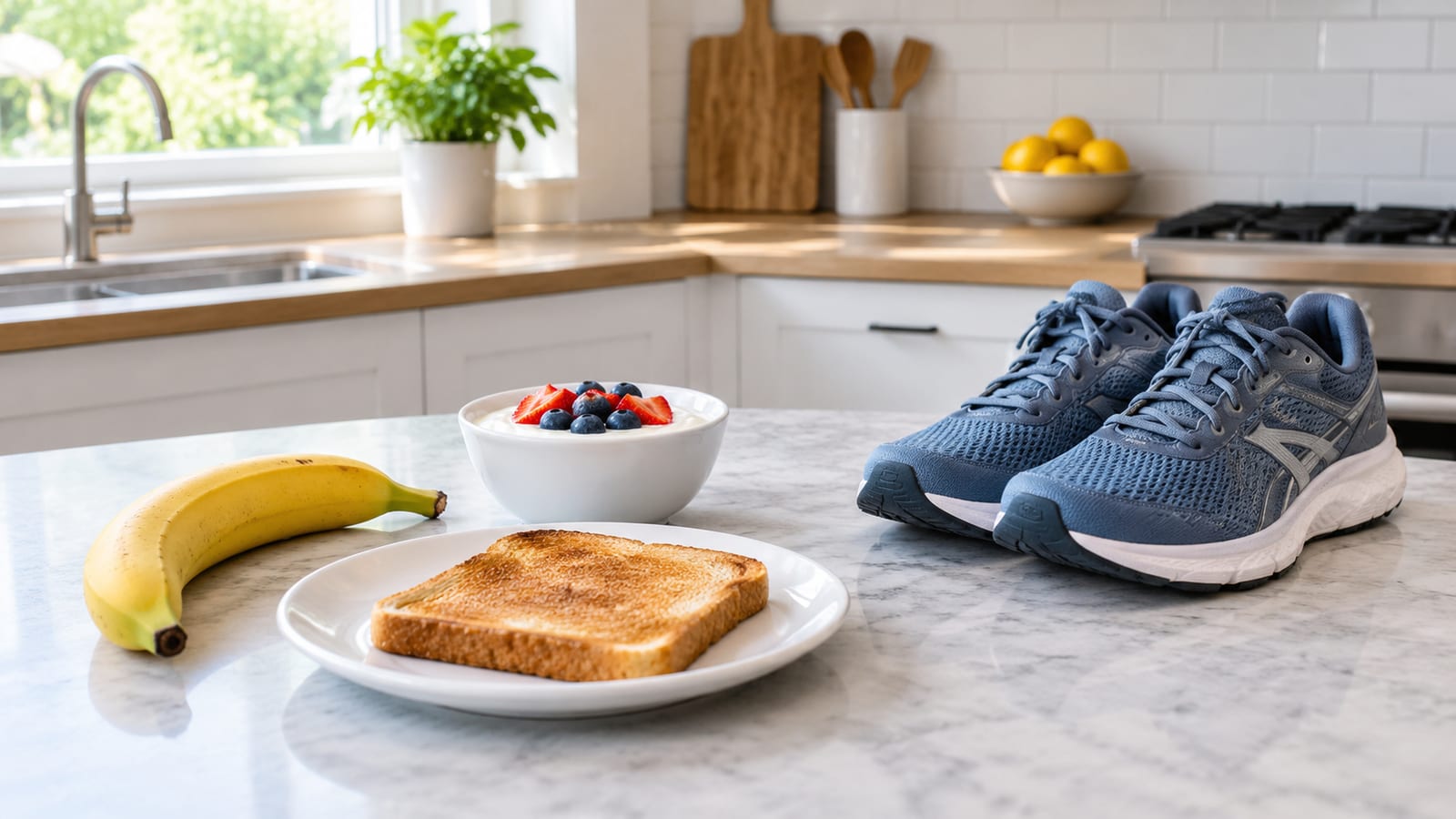
A few hours before training, eat a normal meal built on carbohydrates, with a moderate serving of protein and not much fat. Good options include chicken and rice, a turkey sandwich with fruit, pasta with tomato sauce, or oatmeal with milk and a banana. Salt it a little more than usual on a hot day, or add a handful of pretzels or crackers.
If you're closer to the session, shrink the meal and simplify it. A banana, applesauce, toast with honey, plain cereal, or a few pretzels will give you usable fuel without much for your stomach to process.
Fluid matters as much as food here. A common guideline for athletes is to drink about 5 to 10 ml per kilogram of body weight in the last 2 to 4 hours before exercise. For a 70 kg (about 154 lb) athlete, that works out to roughly 12 to 24 fl oz spread across that window. Sipping it over a few hours gives your body time to absorb it, and gives you time for a bathroom stop before you start.
For longer runs and rides, our guide to pre-workout meals for endurance training has more meal ideas sized for bigger sessions.
During Long or Hard Sessions, Add Carbs and Salt
For a session under an hour at easy or moderate effort, water is usually enough. Past that point, or in hard heat with heavy sweating, water alone leaves two gaps. You run short on carbohydrate for fuel and on sodium to replace sweat losses.
The American College of Sports Medicine position stand on exercise and fluid replacement recommends 0.5 to 0.7 grams of sodium per liter of fluid during exercise lasting longer than an hour. Plain water adds next to none. That's the main reason a sports drink earns its place on a long, hot day: it delivers fluid, carbohydrate, and sodium in one bottle you can sip on the move.
What that looks like by sport:
- Long runs, rides, and hikes: a sports drink, plus bananas, fig bars, chews, or a jam sandwich cut into small pieces.
- Team sports: sports drink at every break, with orange slices, a banana, or pretzels at halftime.
- Hard intervals or circuits lasting over an hour: small sips of sports drink between sets, since chewing mid-effort rarely goes well.
Test your during-session fuel on ordinary training days first. A gel you've never tried is a gamble in the heat. If you want help choosing a bottle, see our roundup of sports drinks for hot, hard, and long workouts.
After Training: Refuel, Rehydrate, and Put Salt Back
After a hot session, fluid comes first, then a real meal with carbohydrates and protein. Chocolate milk with a bagel, rice with eggs and soy sauce, a chicken burrito, pasta with meat sauce, tofu stir-fry over rice, or a baked potato with cottage cheese all do the job.
Salty food helps more than most people expect. Soup, a deli-meat sandwich, pickles, or a salted rice dish put sodium back alongside the fluid. As a result, your body holds on to more of the water you drink instead of sending it straight to the bathroom.
Timing depends on what comes next. If you train again later that day or early tomorrow, eat within the next hour or two. However, if your next hard session is two days away, your normal next meal is fine.
Heat often kills hunger after training. If solid food sounds awful, start with something you can drink, like chocolate milk, a smoothie, or yogurt with fruit. Our guide on what to eat when appetite is low after training has more ways to get food in when your stomach says no.
Cheap, Portable Foods That Handle the Heat
The best foods for hot-weather training are cheap, familiar, and easy to digest. Most of them are already in an ordinary supermarket.
Carbohydrates
- Bananas, oranges, grapes, watermelon
- Low-fiber cereal
- Bagels, bread, tortillas
- Pretzels and crackers
- Rice and potatoes
- Applesauce pouches and fig bars
Protein
- Greek yogurt, milk, chocolate milk
- Eggs
- Tuna or chicken packets, deli turkey
- Tofu, soy milk, soy yogurt
- Peanut butter, in small amounts before training
Fluids and sodium
- Water and a sports drink
- Broth or soup
- Salted crackers and pickles
Heat spoils food too. Milk, yogurt, eggs, and deli meat should ride in an insulated bag with an ice pack, and they shouldn't sit in a hot car through practice. When you can't keep things cold, lean on shelf-stable choices such as pretzels, fig bars, peanut butter, and tuna packets.
How Much Should You Drink and How Much Sodium Do You Need?
Drink enough to keep your losses modest, then use your body's signals and a bathroom scale to check your work. No single number fits everyone, because sweat rate changes with body size, fitness, clothing, heat, and humidity.
Four tools tell you most of what you need:
- Thirst. A reasonable guide for shorter sessions. Don't ignore it.
- Urine trend. Pale yellow across the day is the target. Dark urine first thing in the morning means you're starting short.
- Body weight. Weigh yourself before and after a session, in dry clothes or none.
- Salty sweat clues. White streaks on your hat or shirt, sweat that stings your eyes, or gritty skin all suggest you lose more sodium than most. Heavy salty sweaters should lean harder on salted food and sports drinks.
For recovery, ACSM guidance suggests drinking about 23 fl oz of fluid for every pound of weight lost during exercise. Spread that over the next few hours with food instead of chugging it all at once.
Watch the other direction, too. Gaining weight during a session means you drank more than you sweated. That's a warning sign, not a win. Drinking large amounts of plain water for hours can dilute your blood sodium, a dangerous condition called hyponatremia.
This page focuses on food. For a deeper look at fluid strategy, see our hydration tips for training in hot climates.
Match Your Food to the Session
A 30-minute easy jog in the heat needs far less planning than a three-hour ride. Scale the effort to the work.
| Session type | Before | During | After |
|---|---|---|---|
| Short and easy, under an hour | Normal meals; small snack if hungry | Water | Next normal meal plus extra fluid |
| Hard intervals or heavy lifting | Carb snack an hour or two before | Water; sports drink if long or very sweaty | Carbs and protein soon after |
| Long run, ride, or hike over an hour | Carb-forward meal a few hours out | Sports drink plus portable carbs | Full meal, salty food, fluid replaced by weight |
| Two-a-days or tournaments | Carb-heavy meal and a packed cooler | Sports drink and simple carbs between sessions | Refuel right after each session |
Young athletes need extra protection in the heat. They do best with regular meals, a water bottle they actually refill, and scheduled shade breaks. A sports drink can help during a long tournament day, but for a normal practice, water and a snack usually cover it. Skip supplements and pre-workout products for kids entirely.
Foods Most Likely to Ruin a Hot Session
Most hot-weather stomach trouble comes down to what you ate, how much, and how close to training. These are the usual suspects:
- Fried or high-fat meals in the few hours before: burgers, fries, pizza, creamy pasta.
- Big fiber loads: large salads, beans, bran cereal, piles of raw vegetables.
- Spicy or brand-new dishes on a hard training day or game day.
- Unfamiliar gels, drinks, or bars. "Low-sugar" bars sweetened with sugar alcohols are a common cause of gas and diarrhea.
- Drinks more concentrated than a sports drink, like soda or juice gulped in large amounts. Very sugary fluid leaves the stomach more slowly.
- Alcohol the night before. It increases urine output and disrupts sleep, so you start the next day behind on fluid and rest.
These foods aren't off-limits. They just belong on rest days and after training, away from hot, hard sessions.
When Heat Wrecks Your Stomach
Don't answer nausea by eating nothing. Under-fueling in the heat makes the next session worse, and the one after that. Instead, work down this ladder until something sits well:
- Shrink the portion. Half a sandwich instead of a whole one.
- Simplify it. Drop fat and fiber, then switch to white bread, rice, crackers, or a banana.
- Go liquid. Sports drink, chocolate milk, a smoothie, or drinkable yogurt.
- Sip small and often. Big gulps slosh and come back up.
- Move the timing. Eat earlier to give your stomach more time, or save more food for afterward.
- Ease the pace on the hottest days. Harder efforts pull even more blood away from your gut.
Keep a short log of what you ate, when, the temperature, the effort, and how you felt. Change one thing at a time, so you can tell what helped. If vomiting, severe cramping, or bloody stool keeps happening, see a qualified clinician instead of running more food experiments.
A Simple Day of Eating for a Hot Afternoon Practice
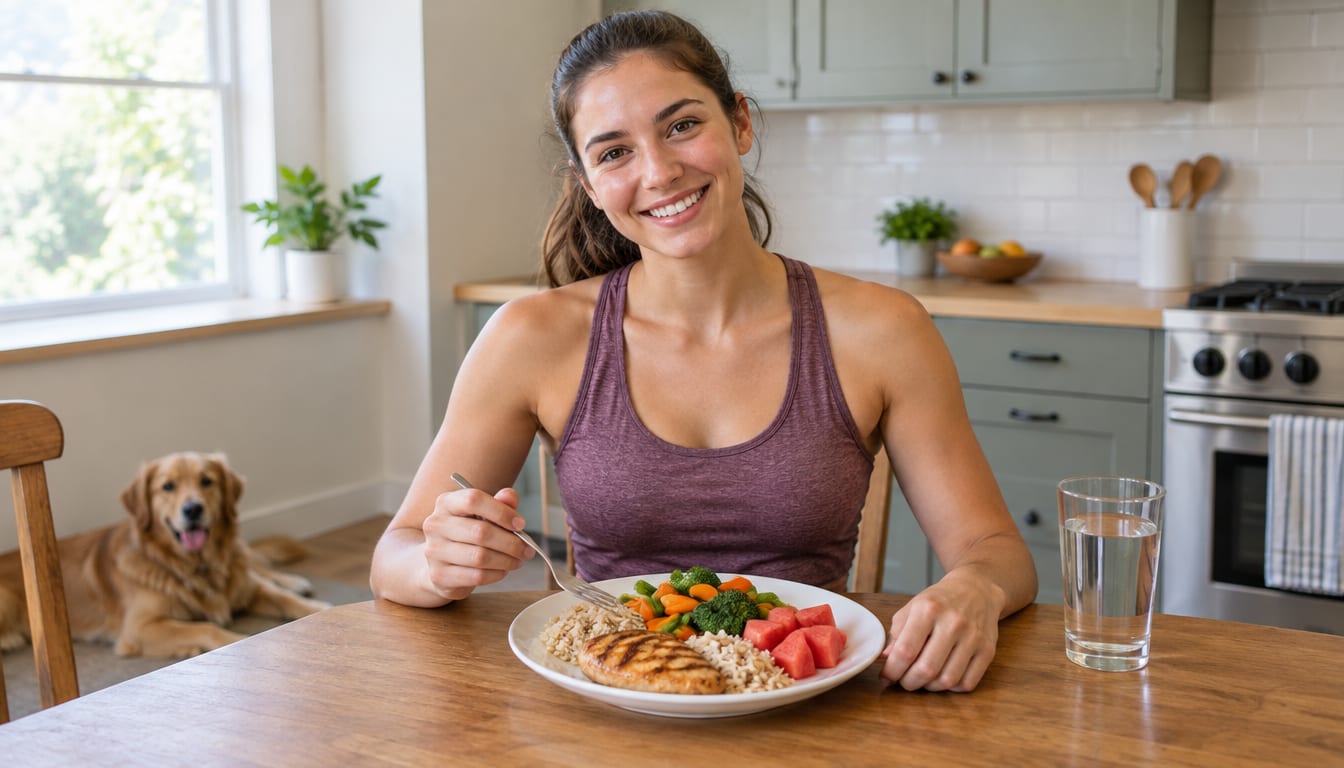
Here's one way to eat when you train in hot weather, built around a practice from 4 to 5:30 p.m. Shift the times to fit your own schedule.
- 7 a.m. breakfast: oatmeal made with milk, a banana, and a spoon of peanut butter. Water.
- 10 a.m. snack: yogurt with cereal and berries.
- 12:30 p.m. lunch: turkey sandwich, pretzels, an orange, and water. Salt it as you like.
- 2 to 3:30 p.m.: sip fluids steadily, plus a small snack such as applesauce and crackers or a banana.
- During practice: water, with a sports drink if it runs long or you sweat heavily.
- Right after: chocolate milk, a quick weigh-in, and more fluid.
- 7 p.m. dinner: rice bowl with chicken or tofu, vegetables, and soy sauce. Water.
- Before bed, if hungry: cereal and milk.
For a plant-based version, swap in soy milk, soy yogurt, tofu, and a sunflower or peanut spread. On a tight budget, bananas, rice, eggs, oats, bread, and store-brand cereal carry most of this day. Meanwhile, meal prep on Sunday, like a big pot of rice and a tray of baked chicken or tofu, makes the post-practice dinner nearly automatic.
When Should You Stop Instead of Eating Through It?
Food and fluid lower your risk in the heat, but they can't make every session safe. Some symptoms mean the workout is over:
- Dizziness or fainting
- Headache, nausea, or vomiting
- Muscle cramps that won't ease
- Unusual weakness or exhaustion
- Chills or goosebumps despite the heat
- Confusion, slurred speech, clumsiness, or collapse
Mild signs mean stop, get into the shade, cool down, and sip fluids. However, confusion, collapse, or odd behavior can point to heat stroke, which is a medical emergency. Call emergency services and start cooling right away, ideally with cold-water immersion. Someone who is still sweating can still have heat stroke.
Your body also needs time to adapt. In the first hot weeks of summer, build volume and intensity gradually and move hard sessions to cooler hours. Coaches of young athletes should plan for this, because no snack makes up for a hard practice in peak heat on day one.
FAQ
Do salt tablets help in hot weather?
They can help a small group of heavy, salty sweaters during very long events. Most athletes get enough sodium from salted meals, salty snacks, and a sports drink. Tablets also make overshooting easier, and a concentrated dose can upset your stomach. Try food first, then ask a sports dietitian if you still cramp or finish sessions caked in salt.
Is coconut water a good replacement for a sports drink?
It works fine as a pleasant everyday drink. However, it's naturally high in potassium and fairly low in sodium, which is the mineral you lose most in sweat. For a long, sweaty session, a sports drink or coconut water plus a salty snack is a better match.
Can I have coffee before training in the heat?
Usually, yes, if you already drink it. A regular cup doesn't drain your fluid levels the way old advice claimed. The bigger risk is your gut, since coffee speeds things along for many people. Test it before an easy hot session before you rely on it before competition.
Do you need more protein in hot weather?
Not in any meaningful way. Your daily protein target stays about the same, so keep spreading it across meals and getting some after training. What heat does change is your need for carbohydrate, fluid, and sodium, so put your planning energy there.