

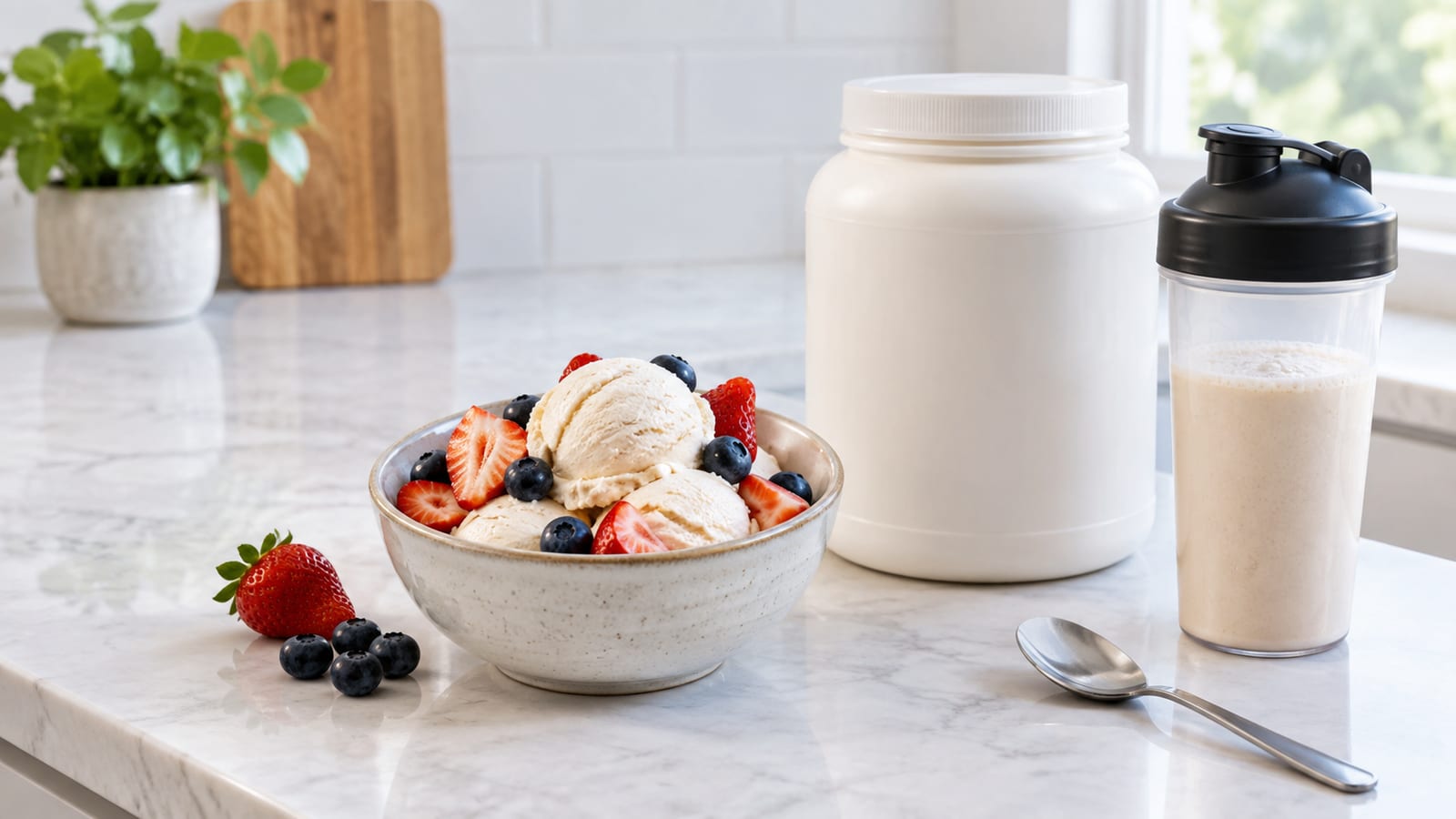
Protein ice cream is worth making when it helps you hit your daily protein with almost no effort. It stops being worth it when it quietly replaces a real meal. The simplest version is one scoop of protein powder, milk, and Greek yogurt, frozen and spun or blended smooth. Size the bowl to the day's training load, and don't count a low-calorie pint as your post-workout refuel. It's a good high-protein dessert, and that's the job to give it.
Is Protein Ice Cream a Recovery Food?
Only partly. Recovery nutrition has to replace training energy, repair muscle, and rehydrate you for the next session. That takes carbohydrates, protein, fluids, and enough total food. Most macro-friendly pints cover the protein and skip the rest on purpose.
Store-bought pints show the trade-off clearly. Protein Pints chocolate high protein dessert ice cream carries 10 grams of protein and 125 calories per ⅔-cup (88-gram) serving. That's a reasonable snack. Still, it's a light one, and a serving is only part of the container.
So where does it fit? It works best at night, when you want something sweet anyway. Swapping your usual bowl of ice cream for a protein version adds protein without extra cooking. It also helps athletes who have trouble eating enough protein at dinner.
It falls short right after a long or intense session. After a long ride or back-to-back practices, a light, low-carb dessert leaves your muscles short on fuel for tomorrow. Eat the meal first. Have the ice cream after, if you still want it.
The Simplest Base That Works
Start with three ingredients from any supermarket. You don't need gums, pudding mix, or a special powder for a good first batch.
- Protein powder: one scoop of a flavor you already like drinking.
- Milk or a milk alternative: dairy milk freezes creamiest. Soy milk is the closest plant swap for protein.
- Greek yogurt or cottage cheese: one single-serve cup adds protein, body, and a little tang.
Mix it well before freezing. Shake it in a jar or blend it, then let the foam settle for a few minutes. Powder clumps that don't dissolve now turn into chalky spots later.
Your budget and texture preferences decide the swaps. Store-brand Greek yogurt works as well as name brands here. Cottage cheese is often cheaper for the protein you get. It also blends completely smooth, so nobody notices the curds. For a richer pint, use whole or reduced-fat milk. Skim makes a leaner pint, but it tends to freeze icier.
If you want more no-fuss options built on the same short ingredient lists, these 5-ingredient high protein recipes follow the same idea.
Build the Macros Around the Day's Training
Decide first whether this is a snack or part of a meal. That one choice sets everything else.
On heavy training days, add carbohydrates. A frozen banana, a drizzle of honey or maple syrup, or a handful of cereal turns the dessert into useful recovery fuel. Whole milk adds fat and calories that a high-volume athlete can use. This is the version for swimmers in a heavy block, two-a-day athletes, or anyone who struggles to eat enough.
On rest days or during a fat-loss phase, keep it lean. Use skim or unsweetened plant milk and plain Greek yogurt, and skip the syrup. You'll get a big, filling bowl that's mostly protein.
Appetite matters too. Some athletes lose their hunger after hard evening sessions. A cold, sweet bowl often goes down when a plate of chicken won't. If that's you, build the richer version and count it as part of dinner. Add toast or fruit to round out the carbohydrates.
Which Protein Powder Freezes Best?
Casein and whey-casein blends give the thickest, most ice-cream-like texture. Whey works fine, but it runs icier and foamier. Plant proteins work with a few tweaks. Your stomach gets a vote too, so start with a powder you already digest well.
| Powder | Frozen texture | Flavor and sweetness | Cost | Digestion notes |
|---|---|---|---|---|
| Whey (milk-based, fast-digesting) | Lighter, icier, can foam | Mixes clean, often very sweet | Often the cheapest | Concentrate has some lactose; isolate has less |
| Casein (milk-based, slow-digesting) | Thick and creamy | Can taste chalky if overused | Usually pricier | Dairy; feels heavy for some people |
| Whey-casein blend | Creamy middle ground | Balanced | Mid-range | Dairy |
| Pea, soy, or plant blends | Thick, sometimes gritty | Earthy; needs flavor help | Varies | Lactose-free; added fibers can cause gas |
If dairy powders leave you bloated, lactose may be the cause. The NIH explains the signs of lactose intolerance in plain terms. Whey isolate carries less lactose than concentrate, and plant powders carry none.
Check the sweetener too. Many powders use sugar alcohols such as erythritol or sorbitol. A full pint can deliver enough to cause gas or a rushed bathroom trip. For a deeper look at choosing a powder for training goals, see how protein powder supports muscle gain. Plant-based athletes can borrow flavor ideas from this guide to building a high-protein vegan smoothie.
Ninja Creami: Freeze and Spin It Properly
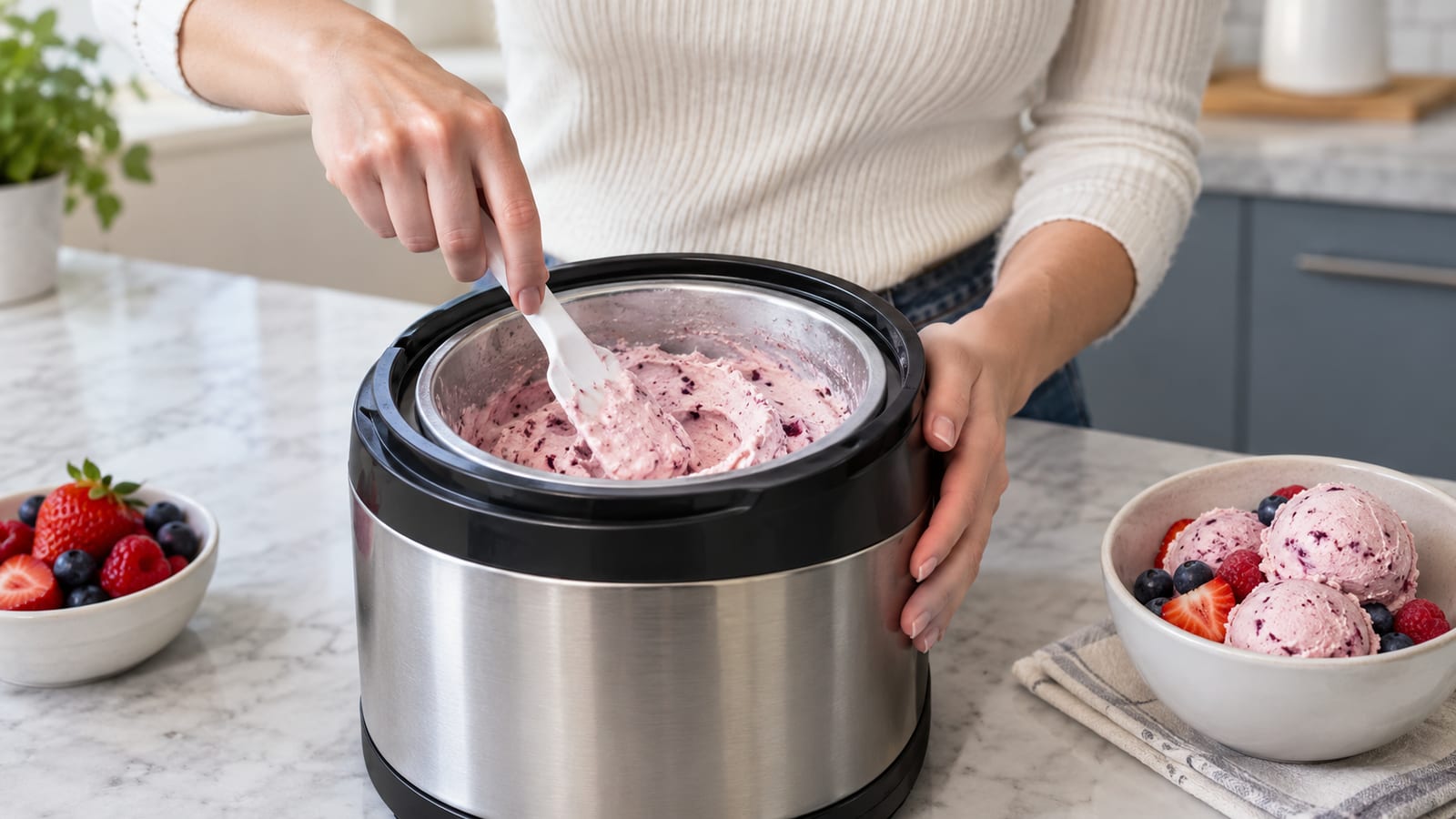
The Ninja CREAMi is the machine behind most of the protein pints you see online. It shaves a frozen block into something smooth, but only if the block is frozen properly. Most wasted batches come from rushing the freeze or overfilling the pint.
- Mix and fill. Blend the base until smooth, then pour it into the pint up to the max fill line, never above it.
- Freeze flat and long. Put the lid on and set the pint on a level shelf. Ninja Kitchen's official recommendation is 24 hours. Some people spin sooner, but a soft center spins into soup.
- Spin on Lite Ice Cream. That program is designed for lower-sugar, lower-fat bases like this one.
- Re-spin if it's crumbly. Add a splash of milk and press Re-spin. Do it once more if it's still powdery.
- Add mix-ins last. Dig a hole down the center, drop them in, and run the Mix-In program.
A crumbly first spin is normal for protein bases. They're low in sugar and fat, so they freeze hard. Don't throw the pint out; the splash of milk and a second spin fix it almost every time.
Watch for a hump in the middle of the frozen pint. It usually means the pint froze tilted or was overfilled. Freeze on a flat surface, and scrape the top level before spinning if needed.
No Ice Cream Maker? Use a Blender
Frozen fruit does the work here. Frozen banana chunks are the best base because they blend into a creamy soft serve without much liquid.
- Add frozen banana or mango chunks to a strong blender or food processor.
- Add one scoop of protein powder and a spoonful of Greek yogurt.
- Pour in a small splash of milk, just enough to get it moving.
- Blend, stop, scrape down the sides, and repeat until smooth.
Expect soft serve. It won't be a scoopable pint, and refreezing leftovers makes them rock-hard. Eat it right away, or freeze it briefly if you want it a little firmer.
Skip ice-based versions when you can. Ice waters down the flavor and leaves sharp crystals. A food processor often handles thick mixtures better than a weak blender, because it doesn't need extra liquid to keep spinning.
A Spoon-Only Shortcut for Busy Days
Online, this one gets sold as instant protein ice cream. The name oversells the ice cream part, but the speed is real, and you don't need a blender.
Stir one scoop of protein powder into a single-serve cup of Greek yogurt until it's thick and smooth. Fold in a big handful of frozen berries. The berries chill the yogurt and form icy pockets around themselves. Each bite tastes like frozen yogurt with fruit, and a few minutes in the freezer makes it colder.
This is the version for late nights after practice, hotel rooms with a mini fridge, or college dorms. It costs little, digests easily for most people, and leaves one spoon to wash.
Flavor Variations on the Same Base
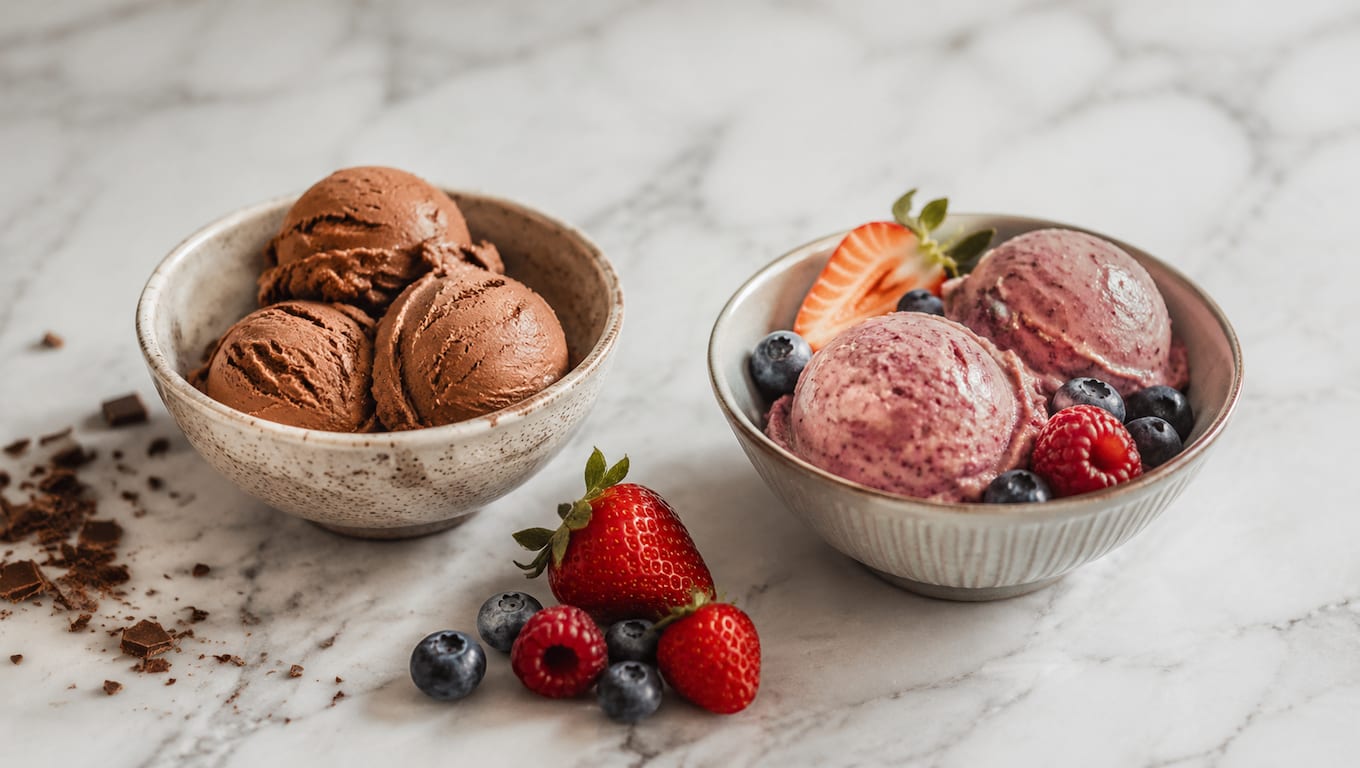
Keep two powders in the cupboard, chocolate and vanilla. With those plus a few pantry staples, you can make most flavors people actually repeat.
- Chocolate: chocolate powder, a spoonful of cocoa powder, and a pinch of salt. The cocoa deepens the flavor without adding much sugar.
- Vanilla berry: vanilla powder in the base, with frozen berries blended in or swirled through after the spin.
- Peanut butter: powdered peanut butter keeps the pint lighter, while regular peanut butter makes it richer. Use a chocolate base for chocolate peanut butter.
- Coffee: swap part of the milk for cooled coffee or dissolved instant espresso. Remember it carries caffeine.
- Fruit-forward: blend mango, banana, or cherries into a vanilla base for a sorbet-style pint.
Salt does more than people expect. A small pinch cuts the flat, artificial edge some powders have. It costs nothing, so try it before buying a new flavor.
Mix-Ins, Toppings, and What They Add
Mix-ins make the bowl satisfying, but they can add a lot of energy fast. Granola, nut butter, chocolate chips, and cereal are all calorie-dense. Portions also creep when you pour straight from the bag.
| Mix-in | What it adds | Best for |
|---|---|---|
| Fresh or frozen fruit | Volume, fiber, some carbs | Lean days, budget |
| Cereal or crushed graham crackers | Crunch and quick carbohydrates | Hard training days |
| Granola | Crunch, carbs, and fat | Muscle gain, high-volume training |
| Nut butter | Rich flavor and fat | Muscle gain; small amounts on lean days |
| Chocolate chips | Flavor in small amounts | A spoonful for satisfaction |
On a big training day, these extras help. They're carbohydrates and energy you need anyway. During a fat-loss phase, measure them with a spoon before they go in, and lean on fruit for volume.
Fix Icy, Chalky, Gummy, or Too-Sweet Pints
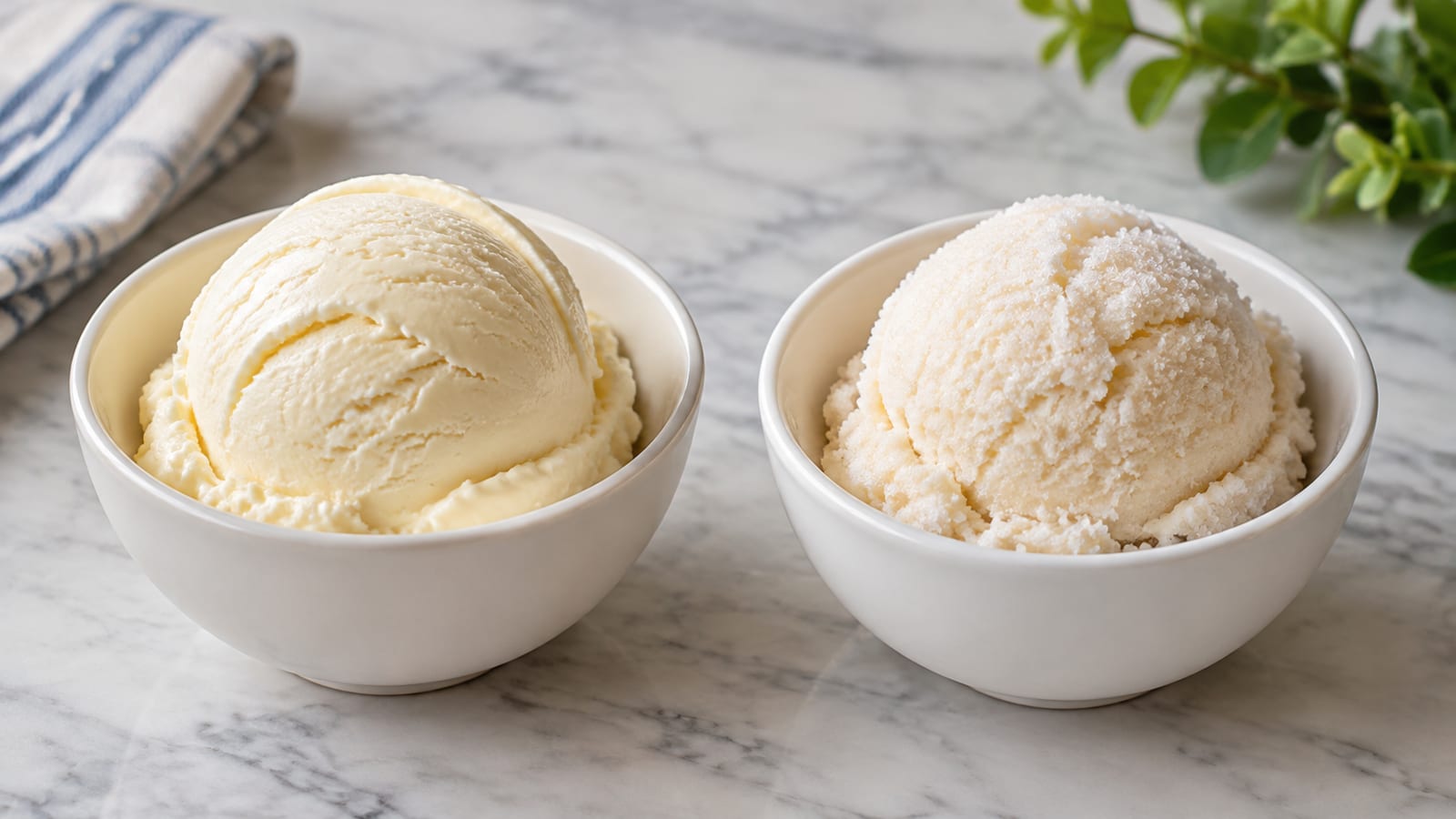
Most texture problems trace back to the base. Fix it with what's already in your fridge before buying more powders or gums.
- Icy: the base needs more fat or a little sugar. Use whole milk or extra yogurt, add a spoonful of honey or maple syrup, or re-spin with a splash of milk. Sugar lowers the freezing point, so even a small amount softens the pint.
- Chalky: too much powder or undissolved clumps. Blend the base longer, use a bit less powder, and replace some of it with yogurt or cottage cheese.
- Gummy or stretchy: too much casein, gum, or pudding mix. Many casein powders already contain gums, so adding more stacks them up.
- Too sweet: sweetened powder, sweetened milk, and syrup add up quickly. Switch to unsweetened milk and plain yogurt, then add cocoa, coffee, or salt.
Change one thing per batch. If you change three ingredients at once, you won't know which one fixed it.
Portion It for Your Goal
The right serving depends on what the rest of your day looks like. These starting points cover most athletes:
- Fat loss: one bowl from a lean base, eaten slowly, with fruit for volume. Don't finish the whole pint just because the label looks light, especially if the powder uses sugar alcohols.
- Muscle gain: the full pint with a richer base, plus granola or a banana. It's an easy way to add food without feeling stuffed.
- High-volume training: treat it as part of a meal and pair it with carbohydrates such as toast, fruit, or cereal.
Mind the clock, too. A coffee-flavored pint late at night can cost you sleep. A large cold bowl right before bed also brings on reflux or bloating for some people.
Homemade usually costs less than store pints if you already own protein powder. For young athletes, this is an occasional treat at most. Teens get the protein they need from regular meals, milk, and snacks. They shouldn't rely on supplement powders to cover it.
When to Skip It and Eat Something Else
Protein ice cream is the wrong call when your training needs speed, carbohydrates, or fluids more than a sweet treat.
- Right after a hard session with another one soon: chocolate milk and a bagel, or a rice bowl with eggs, refuels faster.
- Between tournament games: heavy, cold dairy can sit badly. Bananas, pretzels, or applesauce pouches digest more easily.
- On busy nights when it replaces dinner: a regular meal with a starch, protein, and vegetables does more for tomorrow's training.
- If sugar alcohols or lactose upset your stomach: a plain yogurt bowl with fruit and honey gives the protein without the risk.
- When you need fluids too: a smoothie covers protein, carbohydrates, and hydration in one glass.
- On the road with no freezer: pack a portable option such as a sandwich, jerky, or a protein bar.
None of these are worse choices. They simply match the work better.
FAQ
Does freezing or blending damage the protein?
No. Freezing and blending change how the protein feels in your mouth, but your body still breaks it down into the same amino acids. You get the same protein from a frozen pint as from a shake made with the same scoop.
Can I use collagen powder instead?
It's a poor fit. Collagen dissolves thin, so the pint freezes icy and loose. On its own, it's also an incomplete protein, because it lacks enough of certain essential amino acids, most notably tryptophan. As a result, it does less for muscle repair than whey, casein, or soy.
How long does a homemade pint keep in the freezer?
Plan to eat it within several days for the best texture. Ice crystals build up the longer it sits, even with the lid on. A stored pint may need a splash of milk and a fresh spin to bring it back.
Is it okay to eat protein ice cream every day?
Yes, if it fits your energy needs and your stomach handles it. Rotate flavors and bases so you don't get bored. Also keep an eye on whether it's pushing fruit, grains, or full meals off your plate.