

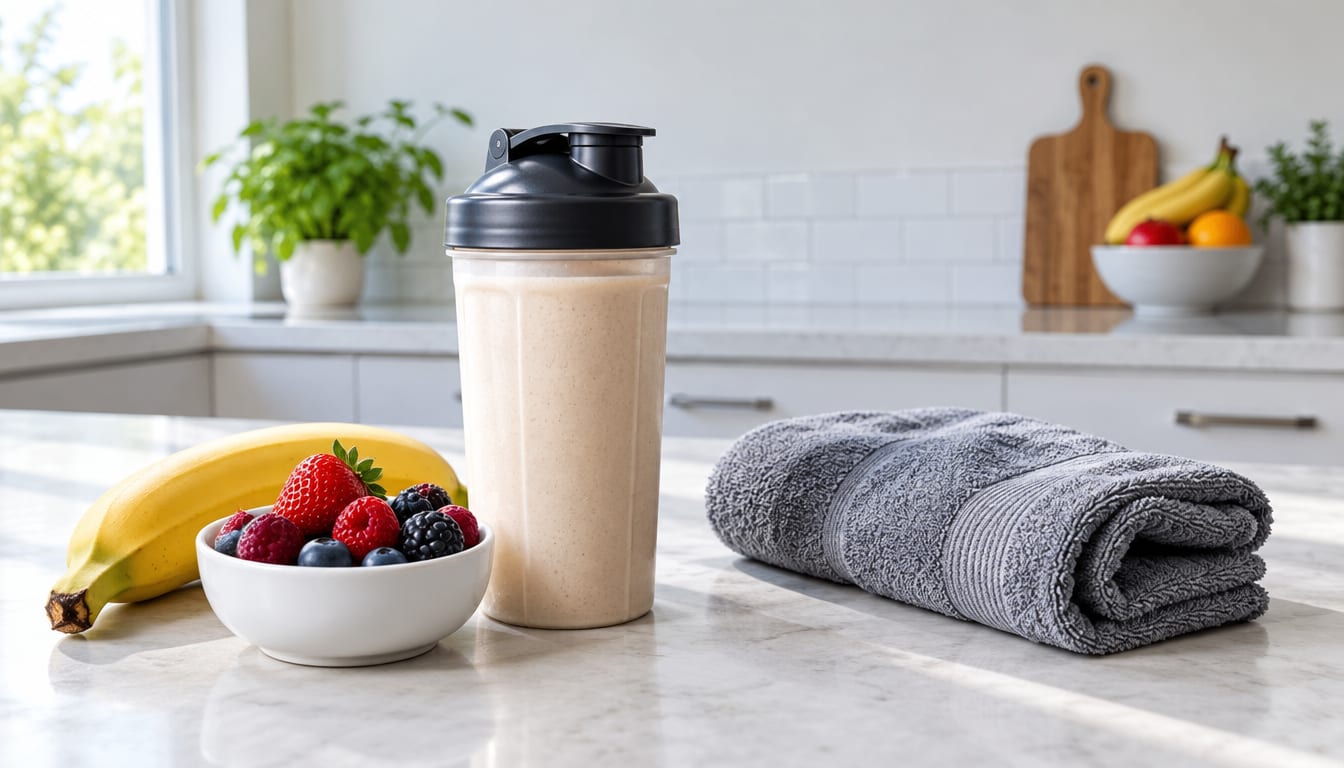
Choose a plant-based lactose-free protein shake when milk-based drinks leave you bloated, cramped, or hunting for a bathroom. Koia Elite is a ready-to-drink, plant-based, dairy-free shake made with pea protein. Aloha protein drinks are made without dairy and powered by plants. Homemade shakes with pea, rice, soy, or tofu also work. Pick the option you can digest, afford, and pack for training.
What counts as lactose-free?
Lactose-free protein shakes provide concentrated protein without dairy-derived lactose, the sugar naturally found in milk. They can help you refuel after training or cover a protein gap during a busy school or workday.
Use a shake when access is the problem. Keep one in your gym bag for the drive home, then add fruit, cereal, toast, or a sandwich. Protein supports muscle repair, while carbohydrates replace the training energy you used.
However, lactose-free does not always mean dairy-free. Some products remove or break down lactose while keeping milk proteins. If you have a milk allergy, read the allergen statement before you drink anything.
Plant-based shakes usually use pea, brown rice, soy, hemp, or a blend. The label still matters. A bottle with little protein and a long wellness pitch is an expensive drink, not useful recovery food.
For athletes, give the shake a clear job:
- After training, pair it with fruit, cereal, toast, or a sandwich.
- Before practice, keep it simple and use only a formula you already tolerate.
- Between meals, add carbohydrates when your training load is high.
- On rest days, use it when your normal meals leave a real protein gap.
If you need meal ideas beyond a bottle, see these dairy-free protein meals for athletes.
Who benefits from these shakes?
Lactose-free options suit athletes who get gas, cramping, bloating, or loose stool after milk-based protein drinks. They also help people who avoid dairy for personal, ethical, or dietary reasons.
Lactose intolerance affects how you digest lactose. A milk allergy involves an immune response to milk proteins. A dairy-free plant shake may suit both needs, although shared equipment and other allergens still require a label check.
Young athletes need extra care. A portable shake can cover the trip from school to practice, but it cannot repair a day of missed meals. Growing athletes still need enough total food, carbohydrates, fluids, and protein.
Lactose intolerance and digestion
Lactose intolerance changes how you handle lactose. It does not rule out every protein source. Powders and bottled shakes may use milk proteins, plant proteins, or a blend.
Some people tolerate a small amount of dairy but react to a large shake. Others struggle with whey concentrate, milk powder, or added ingredients. Serving size, meal timing, and the rest of the formula can decide whether a drink settles well or ruins practice.
The National Institute of Diabetes and Digestive and Kidney Diseases explains lactose intolerance and its digestive symptoms. Keep these label terms straight:
- Lactose-free: Little or no lactose, although dairy proteins may remain.
- Dairy-free: No dairy ingredients listed, but cross-contact may still occur.
- Vegan: No animal ingredients in the product’s stated formulation.
- Milk allergy safe: Trust this only when the label and manufacturer support the claim.
A plant-based shake removes lactose, but soy, nuts, coconut, and other ingredients can still cause trouble. Added fibers, sugar alcohols, large servings, and fast drinking are also common culprits. Blaming lactose for every stomach complaint can send you toward the wrong fix.
Plant proteins that work

Choose a plant protein that gives you useful protein and sits comfortably before or after training. Pea and brown rice blends are common because their amino acid profiles complement each other. Soy is another complete plant protein, although it will not suit someone with a soy allergy.
Useful choices include:
- Pea protein shakes
- Pea and brown rice blends
- Soy protein drinks
- Hemp protein blends
- Homemade smoothies with plant protein powder
- Silken tofu blended with fruit and a milk-free liquid
Texture can make or break regular use. Pea protein often feels thick, while hemp can taste earthy. Some powders also contain gums or concentrated fibers that turn a simple recovery drink into digestive work.
For a homemade shake, blend plant protein powder, banana, oats, and soy or oat milk. Add water if it feels too heavy after training. You can find more combinations in this guide to building a high-protein vegan smoothie.
Do not spend your energy chasing an impressive amino acid panel while skipping lunch. A basic shake with carbohydrates and enough food across the day will support training better than an expensive powder beside an empty plate.
Koia Elite for portable recovery
Choose Koia Elite when you need a ready-to-drink, plant-based, dairy-free shake made with pea protein. It suits lactose-intolerant athletes who need something portable after practice and cannot get to a kitchen.
The protein can support recovery, but the bottle still needs help after hard training. Pair it with a banana, pretzels, cereal, or a sandwich. Otherwise, you may get protein while staying short on the carbohydrates needed to restore training energy.
Koia Elite also works for a packed school or workday. Keep it cold if possible, and test it after a normal practice before putting it in your competition bag. Game day is a poor time to discover that a thick shake and repeated sprints do not get along.
Check the package for the calorie count, flavor ingredients, and allergen statement. Formulas can change, and flavors may use different ingredients. Koia Elite is a sensible pick when pea protein agrees with your digestion.
You can also compare shake choices with these protein shakes for football players, especially if you need portable recovery food around long practices.
Aloha for dairy-free convenience
Choose Aloha if you want a dairy-free, plant-based drink and already tolerate its ingredients. Aloha protein drinks are made without dairy and powered by plants, which makes them useful for athletes avoiding lactose.
Ingredient tolerance is the real test. Specific plant ingredients, flavor systems, and added fibers can affect people differently. If you have a soy, coconut, or other food allergy, read the full label before packing the drink for practice.
Aloha lists its vanilla protein drinks in a 12-count pack at $42.99. That cost adds up with regular use. If you cannot keep it stocked, use it for rushed days and rely on lower-cost food at home.
Check each product label for:
- Protein per serving
- Calories per serving
- Plant protein sources
- Added fibers or sweeteners
- Soy, coconut, nut, and other allergen statements
- Storage needs and serving size
Aloha is a reasonable choice if you enjoy the taste and digest the ingredients well. Buy according to the exact drink in front of you. The plant-based label alone cannot tell you how it will feel during training.
Comparing your options
Match the shake to your training load, schedule, budget, and stomach. Then check the package for the exact product you plan to drink.
| Option | Protein | Main protein source | Lactose suitability | Main concern |
|---|---|---|---|---|
| Koia Elite | Plant protein | Pea | Dairy-free | Check flavor-specific allergens and texture |
| Aloha protein drinks | Varies by drink | Plant-based sources | Made without dairy | Check ingredients, calories, allergens, and added fibers |
| Homemade plant shake | Depends on recipe | Pea, rice, soy, hemp, or tofu | Can be fully dairy-free | Requires planning and portion control |
For a short, easy session, regular food may cover the job. A sandwich, soy yogurt, tofu bowl, or beans with rice provides protein and more complete fuel with less packaging.
A bottled shake earns its space when your schedule is tight, your appetite is low, or you cannot carry a full meal. Drinking one beside a complete meal can add cost without solving a training problem.
If budget matters, compare each serving with ordinary foods. Tofu, beans, lentils, eggs if you eat them, and canned fish can provide useful protein for less money. Save the bottle for the days when portability keeps you from missing food altogether.
Preventing bloating and stomach trouble
Start with a smaller serving during an easy training week. This gives your stomach room to show whether the problem comes from the protein, sweetener, added fiber, or amount.
Use these practical steps:
- Test the shake away from competition.
- Drink it slowly instead of finishing it in one gulp.
- Start with water or a simple milk alternative.
- Avoid pairing it with a large meal during the first test.
- Record the flavor, serving size, timing, heat, and symptoms.
- Change one ingredient or habit at a time.
Large amounts of added fiber can cause gas. Sugar alcohols also upset some stomachs. If a formula repeatedly causes problems, switch products rather than forcing down a drink because its label looks athletic.
Timing matters too. After training, a shake with a banana may digest more easily than a thick blend of oats, nut butter, and several high-fiber add-ins. Before practice, keep the drink smaller and simpler until you trust it.
Persistent pain, vomiting, bloody stool, weight loss, or symptoms that limit training deserve medical advice. Another tub of powder will not tell you what is wrong.
FAQ
Can whey protein be lactose-free?
Some highly filtered whey products contain little lactose, although the amount varies. Whey still comes from milk, so it may be unsafe for someone with a milk allergy. Check the lactose claim and the milk allergen statement.
Are lactose-free shakes good after workouts?
Yes, if they provide useful protein and agree with your stomach. Add fruit, toast, cereal, or another carbohydrate source after a demanding session. The shake repairs only part of the recovery job.
Can lactose-free protein shakes cause gas?
Yes. Added fibers, sugar alcohols, large servings, and fast drinking can cause bloating even when lactose is absent. Test the drink after an ordinary practice and change one factor at a time.
Are plant-based protein shakes complete proteins?
Soy provides all essential amino acids. Blends such as pea and brown rice can also offer a useful amino acid mix. However, your full day of food matters more than making one shake pass an amino acid exam.
Should children use lactose-free protein shakes?
Children should get most of their protein from regular meals and snacks. A clinician or sports dietitian can help when allergies, poor appetite, restricted diets, or heavy training make that difficult. A shake may fill a practical gap, but parents still need to address missed meals.