

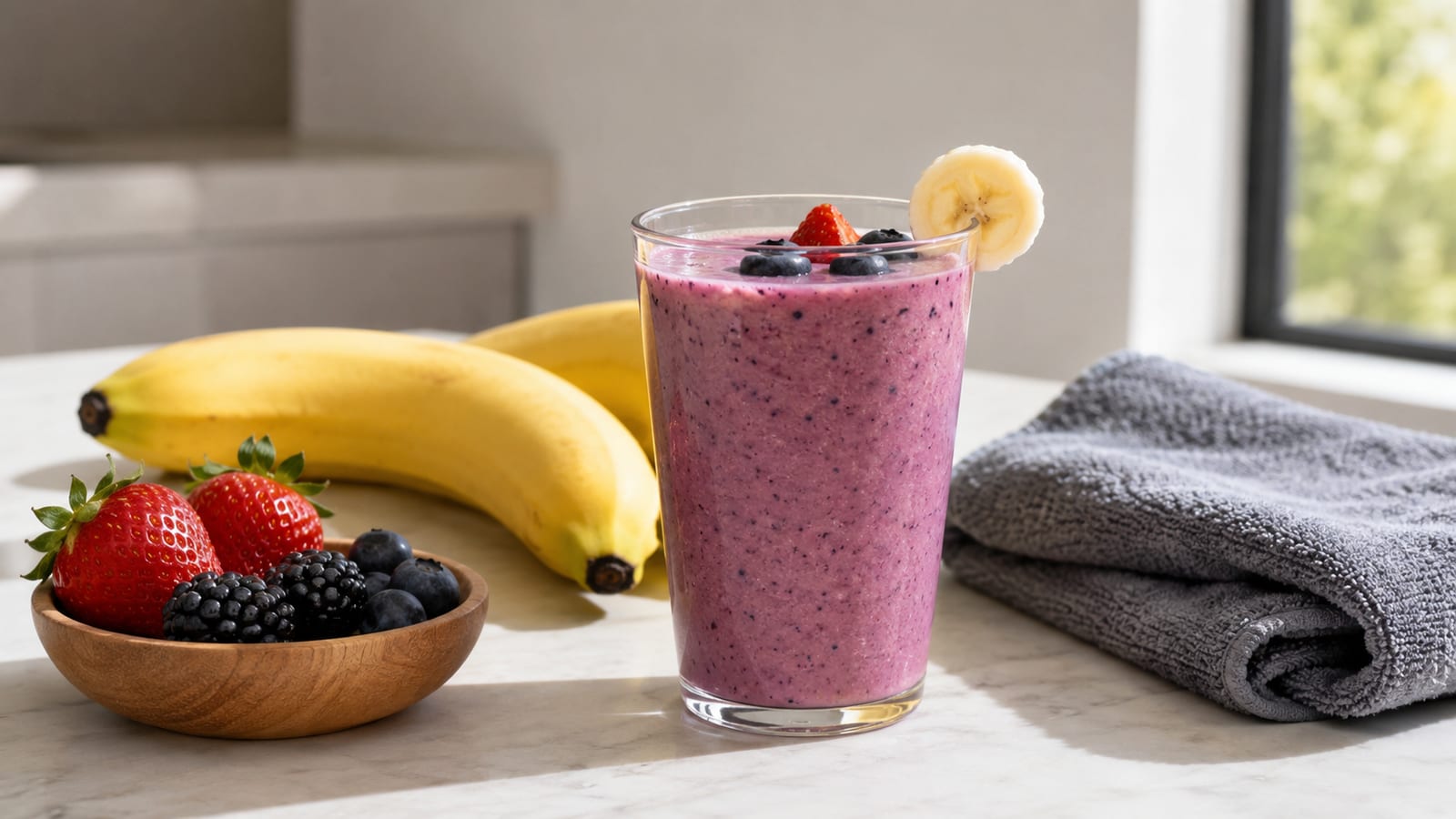
The best smoothies for post-workout recovery are simple blends with Greek yogurt, berries, banana, and milk. They provide protein for muscle repair, carbohydrates for training energy, potassium, fluids, and useful plant compounds without turning recovery into an expensive supplement routine. Choose soy milk and tofu if you avoid dairy. Add electrolytes only after a long, hot, or unusually sweaty workout.
Last updated: 2026-08-25
What makes a smoothie effective after a workout?
A recovery smoothie needs four things:
- Protein to repair and maintain muscle
- Carbohydrates to replace the energy you used
- Fluids to support rehydration
- Ingredients you can digest comfortably
The smoothie does not need a special label or a long ingredient list. A dairy yogurt, fruit, and milk blend can cover the main needs after a routine workout.
Your training load changes the recipe. A short strength session may need a smaller smoothie. A long practice, hard endurance workout, or second session later that day calls for more carbohydrates, more total food, and closer attention to fluids.
Protein helps, but it cannot replace carbohydrates after demanding training. A protein-only shake may support muscle repair while leaving you under-fueled for the rest of the day.
For more on the food side of recovery, see our guide to foods for muscle recovery and repair.
The overall pick: berry-banana Greek yogurt
Blend plain Greek yogurt with berries, a banana, and milk. This is the best default for most post-workout sessions because it balances protein, carbohydrates, potassium, fluids, and flavor in one familiar drink.
The yogurt supplies substantial protein. The banana and berries bring carbohydrates for refueling, while the banana also adds potassium. Milk contributes fluid and more protein, so you do not need to build the drink around a costly powder.
This option provides protein, along with recovery carbohydrates, potassium, fluids, and antioxidant-rich berries. It is affordable and easy to adjust for appetite.
Use plain yogurt if you want control over sweetness. Frozen berries make the smoothie cold and thick without requiring extra ice. Greek Gods Yogurt Plain Traditional-32 oz is sold in a 32 oz container, with a listed price of $8.99, but any plain Greek yogurt with a taste and texture you tolerate can do the job.
Verdict: Keep this as your regular recovery smoothie. It covers the basics without asking your blender to become a supplement cabinet.
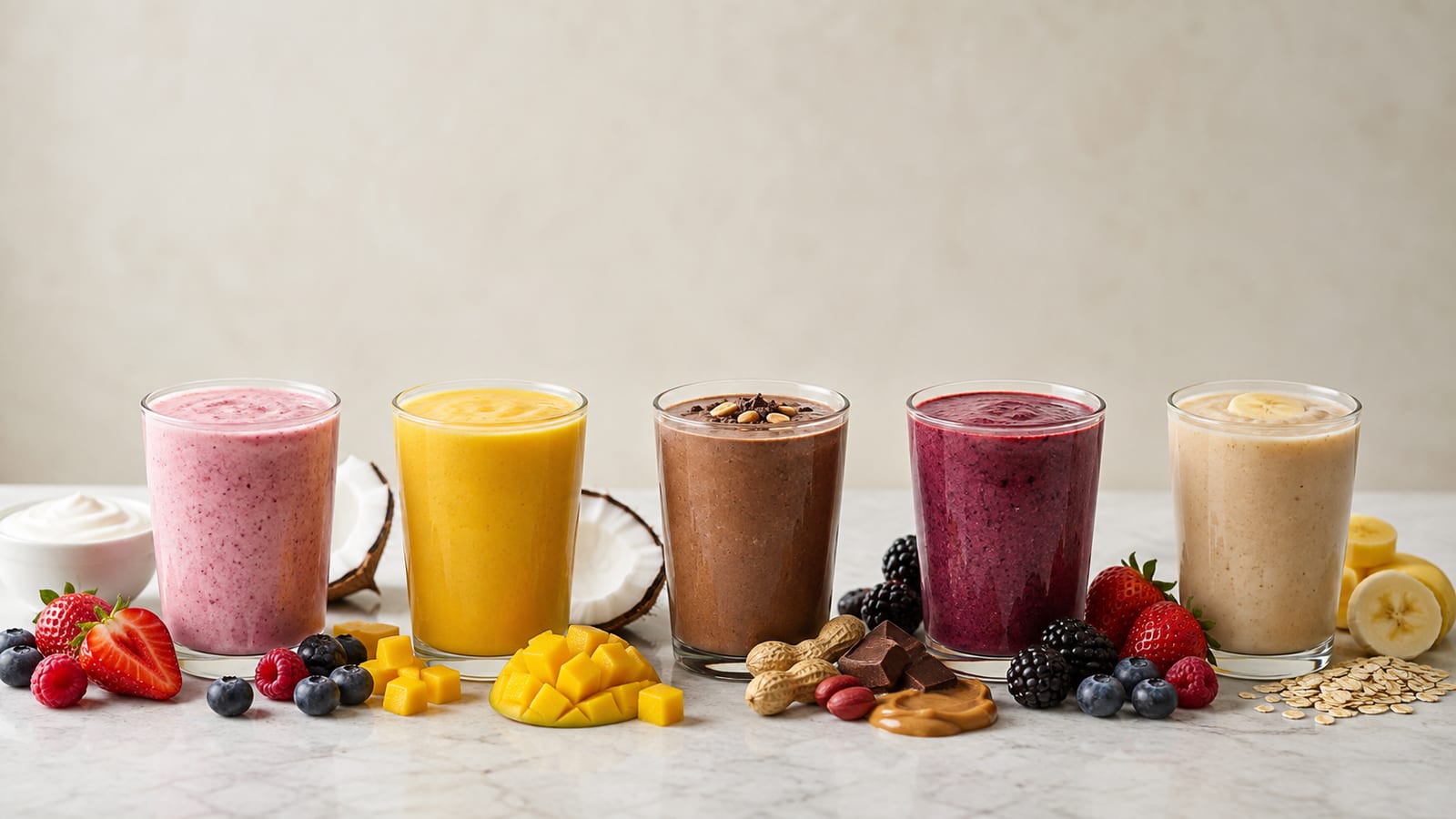
Five practical options compared
| Smoothie | Best fit | What it provides | Where it falls short | Verdict |
|---|---|---|---|---|
| Berry-banana Greek yogurt | Most routine workouts | Protein, carbohydrates, potassium, fluids, berries | Dairy may bother some athletes | Best overall |
| Soy-tofu berry | Vegan recovery | Complete plant protein, carbohydrates, fluids | Tofu texture takes some testing | Best vegan option |
| Chocolate peanut butter | Hard training and high calorie needs | More protein, carbohydrates, and energy | Heavy for sensitive stomachs | Best for big training days |
| Coconut water mango protein | Hot, sweaty sessions | Fluids, carbohydrates, potassium, some electrolytes | May not provide enough sodium | Useful, with a salt plan |
| Three-ingredient protein | Busy schedules | Fast protein and carbohydrate intake | Less fiber, flavor variety, and food value | Best for rushed mornings |
No option wins every workout. The right choice depends on what you trained, how soon you eat again, and how your stomach handles liquid food.
How much protein and carbohydrate should your smoothie provide?
For a routine workout, include a moderate amount of protein in the smoothie. That range works well for many athletes, especially when the drink follows a normal training session and a full meal is coming later.
Longer or harder sessions require more carbohydrate. Add extra fruit, oats, or another carbohydrate-rich food when you have trained for a long time, worked at high intensity, or need to perform again soon.
A practical recovery blend usually includes:
- Routine workout: Moderate protein and a serving of fruit
- Long practice or endurance session: More fruit, oats, or another carbohydrate source
- Twice-daily training: A full smoothie with protein and a larger carbohydrate base
- Low appetite after exercise: A smaller drink now, followed by a meal when your stomach settles
You do not need to force the same portion after every workout. A small smoothie after an easy session may be enough. A larger blend makes more sense after a long practice, especially if your next meal is several hours away.
If you want a deeper look at the balance, read our guide to the carbohydrate-protein ratio after training.
Fluid and electrolytes depend on sweat loss
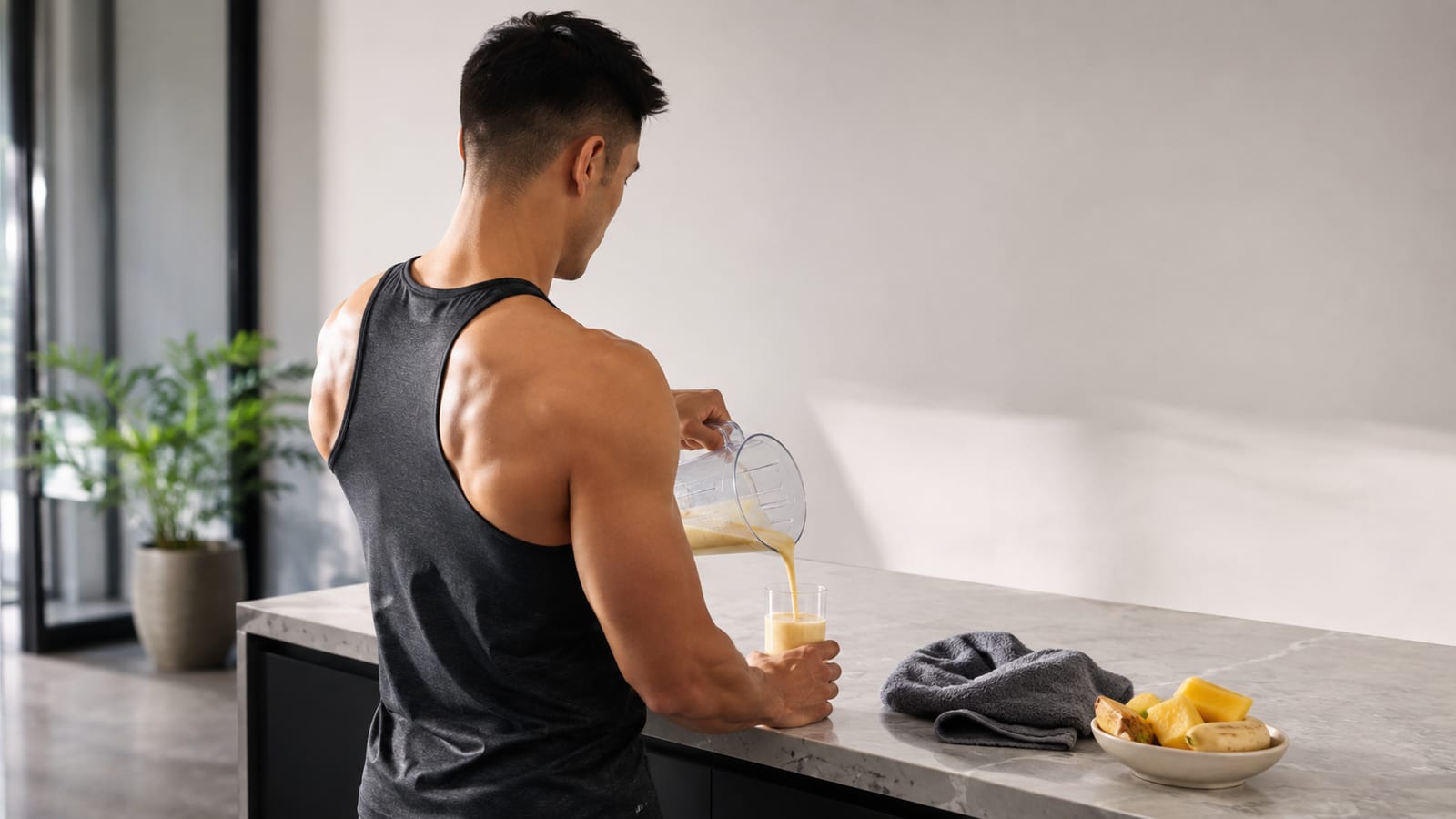
Milk works well in a recovery smoothie because it adds fluid, protein, and carbohydrates. Soy milk offers a similar role for athletes who avoid dairy, provided you choose a fortified version that you tolerate.
Coconut water supplies fluid, carbohydrates, potassium, and some electrolytes. It can fit after a hot session, but it has a clear limit. Sweat contains sodium, and coconut water may not replace enough sodium after prolonged training in heat.
For a long tournament, extended run, or heavy-sweat practice, pair the smoothie with a salty food or a drink that provides sodium. Pretzels, salted crackers, soup, or a planned electrolyte drink may cover what the smoothie misses.
Do not add electrolytes to every smoothie by habit. Water and a normal meal are usually enough after ordinary training. The Dietary Guidelines for Americans also support getting most nutrients from regular foods and drinks rather than treating every workout as an excuse for a specialized product.
The best ingredients for energy and potassium
Bananas are useful because they add carbohydrates, potassium, sweetness, and a smooth texture. They also make a plain yogurt smoothie easier to drink when you are tired after training.
Mango works well when you need more carbohydrate and want a sweeter tropical flavor. Frozen fruit is practical because it lasts, chills the drink, and needs no chopping. Frozen berries are sold in packages with 16 ounces or 48 ounces of net weight, so you can choose the size that fits how often you make smoothies.
Oats add carbohydrates and make a smoothie more filling. Use them after a demanding workout or when your next meal is delayed. They may feel too heavy right after hard intervals, so reduce them or leave them out if your stomach is unsettled.
Dairy milk and fortified soy milk add more than liquid. They can contribute protein and carbohydrates, while soy milk also gives you a plant-based base with useful protein. Almond milk is lighter, but many versions provide little protein, so check the label before treating it as the main recovery ingredient.
Potassium supports normal muscle and nerve function. It does not replace sodium lost through heavy sweating. A banana can help, but it is not an electrolyte plan by itself.
Are berries worth adding?
Yes, berries are worth adding for most athletes. They provide flavor, carbohydrates, color, and antioxidant compounds without making the smoothie overly sweet.
Their fiber can help the drink keep you satisfied. However, that same fiber may bother you immediately after intense exercise, especially if nausea or stomach cramping already follows your workouts.
Choose a smaller serving of berries if your stomach feels fragile. You can also use banana and milk first, then eat berries later with a meal. Recovery food has to digest well enough to help you.
Berries also make plain ingredients easier to repeat. That matters more than chasing a new powder every week.
The best vegan smoothie for muscle recovery
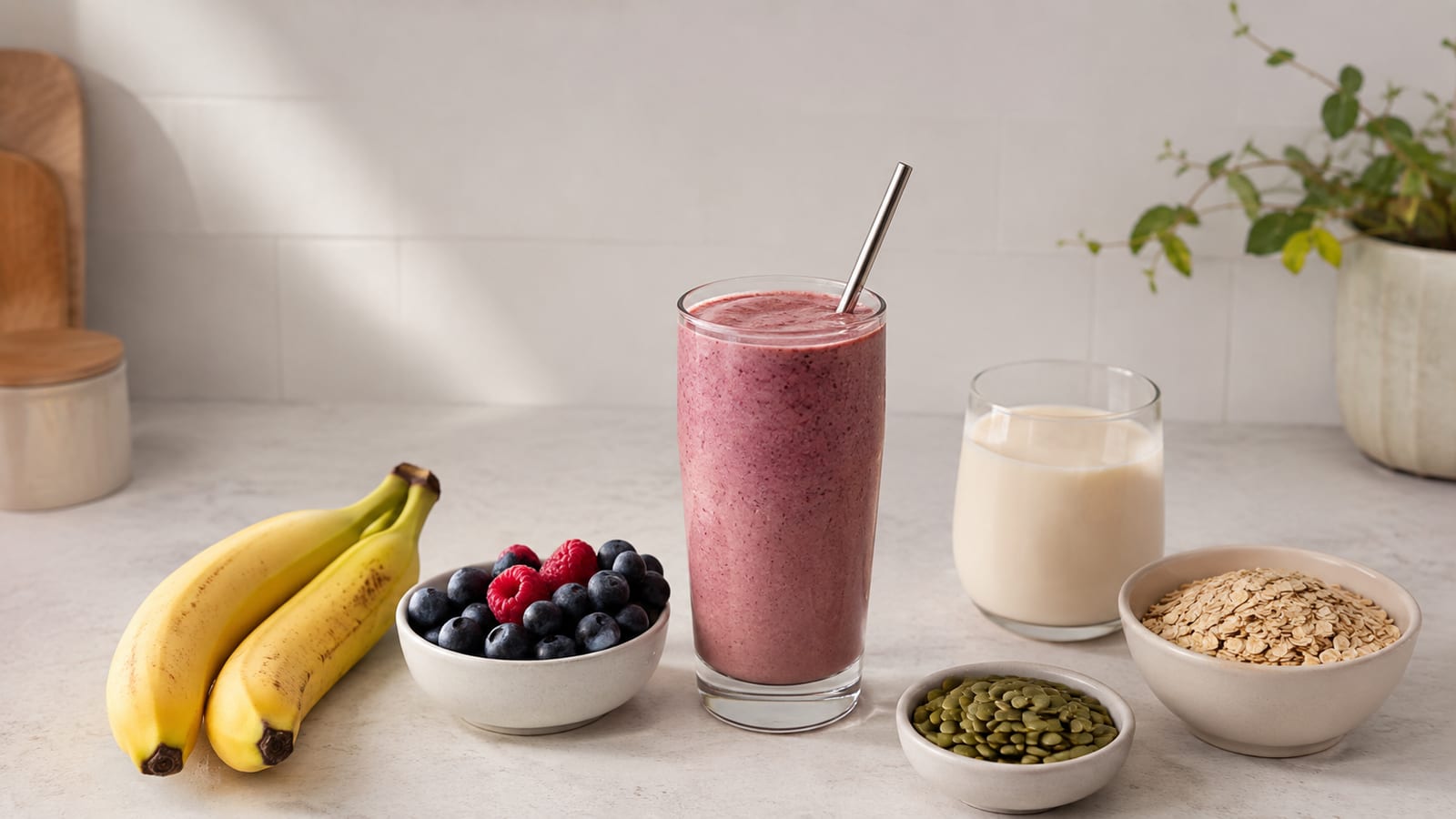
Use soy milk, silken tofu, berries, and banana for the best vegan recovery smoothie. Soy and tofu provide a strong plant-protein base, while the fruit covers carbohydrates and makes the tofu less noticeable.
Silken tofu is softer than firm tofu and blends into a creamy drink. Start with a modest amount if you have not used it before. Some athletes digest soy well, while others need a different protein source.
A tested pea-and-rice protein blend can work if tofu does not suit you. Pea protein isolate is also an option. Myprotein Pea Protein Isolate is made with 100% pea protein isolate, provides 25g per serving, and lists 40 servings per container. Its discounted price is $34.99, but the price matters less than whether the product agrees with your stomach and fits your budget.
Verdict: Choose soy milk and tofu first if you want a food-based vegan option. Use a tested protein powder when convenience or protein needs make that easier.
Chocolate peanut butter earns a place on hard training days
A chocolate peanut butter smoothie can include milk, Greek yogurt, banana, oats, and peanut butter. It provides substantial protein, carbohydrates, and energy, which suits long practices, heavy lifting days, or athletes who struggle to eat enough.
The catch is digestion. Peanut butter and oats make the drink heavier, and a large serving may sit poorly after hard intervals or a hot practice.
Use this option when you need a meal-sized recovery drink. Skip it after a short workout or when you feel nauseated. A banana, milk, and yogurt blend will be easier to finish.
Almond butter can replace peanut butter if you prefer its flavor or need to avoid peanuts. However, buying a bulk container is a poor recovery strategy for most households. Maisie Jane's BULK Almond Butter, Smooth is sold as an 18 lb product in a food-grade plastic pail and lists dry roasted California almonds as its ingredient. That is a commercial-sized purchase, not a sensible requirement for one athlete's blender.
Coconut water mango works best in the heat
Combine coconut water, mango, banana, and protein-rich yogurt or soy milk for a fluid-focused smoothie. This blend is useful after hot, sweaty sessions because it supplies fluid, carbohydrates, potassium, and some electrolytes.
It still may not replace enough sodium after prolonged sweating. Add a salty food or a sodium-containing drink when training has been long, repeated, or unusually hot.
Verdict: Choose this after a sweaty outdoor session. Do not assume the tropical flavor means the electrolyte job is complete.
The three-ingredient option keeps busy days moving
Use milk or soy milk, a banana, and plain protein powder when you need recovery food with almost no preparation. This is the best option for a rushed commute, an early practice, or a blender you need to clean quickly.
It offers predictable protein and carbohydrates, but fewer antioxidants and less food variety. That is fine for an occasional busy day. It becomes a weak routine if it replaces fruit, meals, and other useful foods across the week.
A whey powder can make the protein target easier to reach. Optimum Nutrition GOLD STANDARD 100% WHEY Protein Powder lists 24 g of protein and 5.5 g of naturally occurring branched-chain amino acids per serving. Its listed price is $74.49, so compare the cost with Greek yogurt, milk, or soy milk before deciding that powder is the budget answer.
Verdict: Keep this for convenience. For regular use, the yogurt-and-fruit blend gives you more food value.
Build a simple smoothie without overspending
Start with ingredients that work in several meals:
- Plain Greek yogurt or fortified soy milk
- Frozen bananas and berries
- Oats for extra carbohydrates
- Silken tofu for vegan protein
- Peanut or almond butter for extra energy
- Plain protein powder only when food alone is inconvenient
Frozen fruit usually reduces waste because it keeps longer than fresh fruit. It also gives you a cold smoothie without relying on a large amount of ice.
Buy oats for smoothies only if you will use them. Millborn Seeds Certified Grain Oats are listed in a 50 lb bag and a 2000 lb tote, with a price range from $18.00 through $750.00. Those sizes make sense for grain purchasing, not for a household that needs a small container for breakfast and recovery drinks.
Skip cleansing additives, greens powders, and premium blends that promise to fix a poor eating schedule. Spinach is fine if you enjoy it, but it does not turn a low-protein, low-carbohydrate smoothie into a complete recovery meal.
Your best budget pick is the berry-banana Greek yogurt smoothie. It uses ordinary ingredients, supports routine recovery, and does not require a branded powder.
Lighter blends work better for sensitive stomachs
Avoid a heavy or high-fiber smoothie when nausea, reflux, or cramping follows training. Large amounts of oats, nut butter, seeds, raw greens, and thick yogurt can make the drink harder to finish.
For early-morning training, use a smaller blend with banana, milk or soy milk, and yogurt or protein powder. Then eat a normal breakfast later. You do not need to force a large meal into your stomach before sunrise.
After a short or easy workout, keep the smoothie modest. A full meal-sized drink can add more food than you need, especially if lunch or dinner is ready soon.
If vomiting, persistent pain, bloody stool, or symptoms that limit training keep happening, speak with a qualified clinician. Keep changing smoothie ingredients only if the problem is mild and clearly linked to a food.
Match the smoothie to the workout and your schedule
Use this decision guide:
- Short strength session: Banana with milk or soy milk and yogurt
- Routine practice: Greek yogurt, berries, banana, and milk
- Long endurance workout: Add oats or extra fruit for more carbohydrates
- Hot outdoor session: Use coconut water, mango, banana, and protein-rich yogurt or soy milk
- Second workout later the same day: Choose a larger protein-and-carbohydrate blend
- Sensitive stomach: Keep fat and fiber low
- No kitchen time: Use the three-ingredient protein smoothie
The smoothie should support the next task. If you have a full meal waiting, a smaller drink may be enough. If you need to drive to work, attend class, or train again, make the blend more substantial and pack it before the day starts.
Recovery nutrition is also covered in our guide to recovery meals after morning workouts.
FAQ
Can you drink a recovery smoothie if you trained late at night?
Yes. Choose a smaller blend if a large drink affects your sleep. Milk or soy milk with banana and a moderate protein source can provide recovery nutrition without feeling like a full dinner.
Is a smoothie enough after every workout?
No. A smoothie can cover recovery after many sessions, but it may not provide enough total food after long training or repeated workouts. Add a meal when your training load is high or your next session is soon.
Should children use protein powder in recovery smoothies?
Most young athletes can meet their protein needs through regular meals and snacks. Use yogurt, milk, soy milk, eggs, tofu, or a sandwich first, and ask a pediatric clinician or sports dietitian before adding supplements.
Can you prepare a smoothie ahead of time?
You can blend it ahead when needed, but texture and flavor may change as fruit and oats sit. A better busy-day plan is to portion the ingredients in the freezer and add the milk, yogurt, or soy milk when you are ready to blend.
What should you do if smoothies cause bloating?
Reduce the portion and remove one ingredient at a time. Test the dairy base, protein powder, oats, nut butter, and high-fiber fruit separately so you can identify the likely problem instead of abandoning every smoothie at once.