

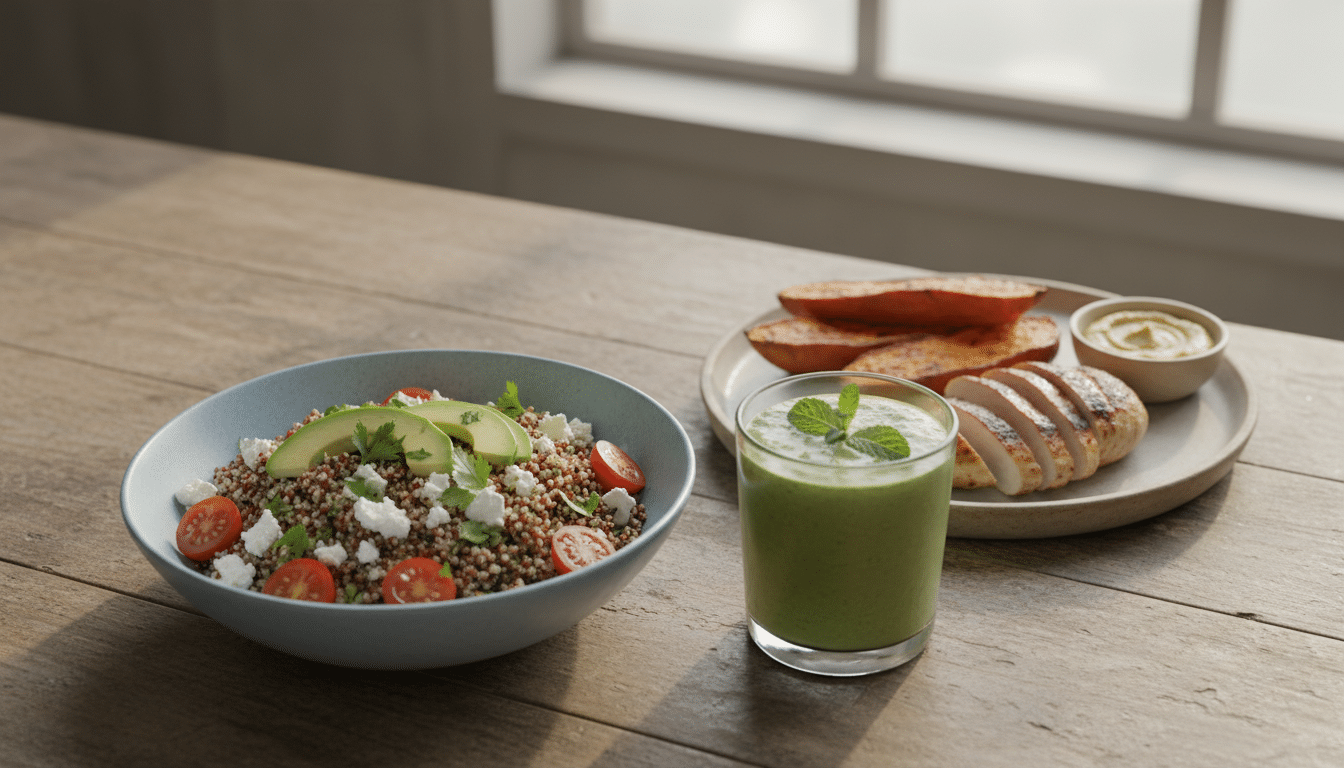
What if the most important part of your workout happens at the breakfast table?
You push hard in the gym or on the road. Your effort burns through stored fuel and breaks down tissue. This is normal. But what you do next makes all the difference.
Your muscles are primed to absorb nutrients. There’s a critical window—about 30 to 60 minutes—where your system is most efficient at refueling. Missing it can leave you feeling drained and slow your progress.
This isn’t about complicated science. It’s about smart, simple choices. Your body needs specific building blocks to repair muscle and restore energy.
This guide cuts through the noise. You’ll learn the straightforward nutrition principles that power real results. We’ll cover what to eat, why it works, and how timing boosts your efforts.
Let’s turn your next post-workout meal into your greatest training advantage.
Understanding Nutrition for Recovery
Think of your muscles as a construction site after a hard day’s work. They need the right materials to rebuild.
Post-workout nutrition provides those raw materials. It’s how you supply your body with the nutrients required for repair.
Fueling Your Muscles
Your muscles run on glycogen during physical activity. This is your primary fuel source.
Intense exercise drains these stores. It also creates small tears in muscle fibers.
This breakdown is a normal part of getting stronger. But you must help your system fix the damage.
Eating soon after your workouts kickstarts the repair process. It helps rebuild glycogen and regrow proteins.

Balancing Macronutrients
The three key nutrients—protein, carbs, and fats—each have a job.
Protein repairs damaged tissue and builds new fibers. Carbs refill your glycogen for future energy.
Healthy fats support your hormones and calm inflammation.
You don’t need perfect ratios. Just include all three in your next meal to speed healing and boost performance.
Key Components: Protein, Carbs, and Healthy Fats
Effective refueling comes down to mastering three essential nutrients. Your body uses each one for a specific job.
Together, they repair tissue, restore fuel, and support your systems. Don’t overcomplicate it—just include all three.
Role of Protein
Protein is your muscle’s repair crew. It provides amino acids that rebuild the small tears from physical effort.
Experts suggest getting 20-40 grams of high-quality protein every few hours. Aim for this within two hours following your session.
Good sources are eggs, Greek yogurt, chicken, and fish. This intake supports muscle growth and strength.
Role of Carbohydrates
Carbs are not the enemy—they’re your primary fuel. They restock your glycogen stores, which you burn during activity.
Without enough carbs, you’ll feel drained. Your next session will suffer.
Aim for a 3:1 ratio of carbs to protein. Choose complex sources like sweet potatoes and oatmeal for steady energy.
Healthy fat from avocados or nuts aids hormone function. It also helps you absorb vitamins.
Optimal Timing for Post-Workout Nutrition
Your body’s ability to use nutrients changes dramatically in the hours following physical activity. This period is when your systems are primed for repair and refueling.
Getting your food intake right during this phase can significantly boost your results.
Timing Guidelines
The first 30 to 45 minutes post-exercise are often called the golden window. Your muscle cells are highly sensitive to insulin then.
This sensitivity helps them rapidly absorb carbs and amino acids. It’s the ideal time to kickstart the repair process.
Don’t stress if you miss that immediate window. Newer studies show the benefits extend for several hours. Your body remains receptive.
If you ate a substantial post-workout meal before your session, you have even more flexibility. Your fuel stores aren’t as depleted.
For intense strength sessions, aim to eat within an hour. For lighter activities, waiting for your next regular meal is fine.
Listen to your hunger signals. If you’re hungry right away, have a snack. Pack something convenient so you’re always prepared.
The Role of Carbohydrates in Muscle Recovery
Skipping carbs post-session is like expecting your car to run on an empty tank. You might get moving, but you won’t get far.
Glycogen Replenishment
Your body stores carbohydrates as glycogen in your muscle and liver. This is your immediate fuel source.
During exercise, you burn through these reserves. Long runs or bike rides drain glycogen much faster than a strength session.
Low levels are a primary cause of fatigue. You literally run out of gas.
Your system is primed to restock glycogen for about four hours following physical activity. This is the critical window.
For fastest replenishment, aim for 0.4 grams of carbs per pound of your body weight each hour during this time. Pair it with some protein.
This timing is crucial if you train hard multiple times a day. It ensures you have the energy to perform.
Focus on complex carbs like oatmeal or sweet potatoes. They provide steady energy without crashes. For specific guidance, learn more about the ideal carb-to-protein ratio.
Don’t neglect this part of your recovery. Your next training session depends on it.
Importance of Protein Intake After Exercise
The work doesn’t stop when your session ends. It’s when protein steps in to do its job. Physical activity breaks down muscle tissue. Consuming adequate protein gives your body the amino acids it needs to repair and rebuild.
Muscle Repair and Growth
Every workout creates tiny tears in your muscle fibers. Protein provides the building blocks to fix this damage. Amino acids from protein are incorporated into your muscles during muscle protein synthesis.
This process makes your muscles stronger and bigger over time. You need protein throughout the day. The post-exercise window is especially important for maximizing growth.
Aim for 20-30 grams of high-quality protein within the first two hours. More than that doesn’t provide extra benefits. Good sources include chicken, fish, eggs, and Greek yogurt.
If you ate protein before your workout, you may not need as much afterward. Your body is still using those amino acids. Consistency matters more than timing alone.
| Protein Source | Protein (grams) | Key Additional Benefit |
|---|---|---|
| Chicken Breast (3 oz) | 26g | Lean, supports muscle growth |
| Greek Yogurt (6 oz) | 17g | Contains probiotics for gut health |
| Eggs (2 large) | 12g | Provides choline for brain function |
| Lentils (1 cup cooked) | 18g | High fiber, plant-based option |
| Whey Protein Powder (1 scoop) | 24g | Fast-absorbing, convenient |
Don’t rely solely on supplements. Whole food protein sources provide additional nutrients your body needs. Vegetarians can combine rice and beans or use quinoa for complete protein.
Incorporating Healthy Fats in Your Recovery Meals
The role of dietary fat in your refueling strategy is often misunderstood. Many believe it slows digestion and blocks nutrients.
Fat Benefits Post-Workout
Studies show fat doesn’t hurt your progress. A 2006 study found whole milk promoted more muscle growth than skim milk.
A 2017 study showed whole eggs were better than egg whites for building muscle post-exercise.
Healthy fats offer real advantages. They help you absorb vitamins A, D, E, and K. These vitamins support your overall health.
Fats also make your post-workout meal more satisfying. This helps you feel full and supports stable energy.
Omega-3 fats from salmon or walnuts can help curb inflammation. This is helpful when you train regularly.
Good sources include avocados, nuts, seeds, and olive oil. You don’t need to add extra fat to every meal.
Many protein sources, like salmon or Greek yogurt, already contain it.
Focus on getting enough protein and carbs first. Then, include fat to make meals taste better and keep you satisfied.
This approach turns your post-workout meal into a powerful tool for repair.
Recovery Meals After Morning Workouts
The best nutrition plan is the one you’ll actually eat consistently. Let’s look at real foods you can combine.
Meal Examples
Build a complete plate with protein, carbs, and healthy fats. Try these balanced ideas.
- Grilled chicken with roasted veggies and brown rice. This classic covers all your bases.
- An egg omelet with avocado on whole-grain toast. It provides protein, good fats, and complex carbs.
- Salmon with a baked sweet potato. You get omega-3s, protein, and quality carbohydrates.
- A quinoa bowl. Add roasted sweet potatoes, berries, and nuts for a versatile power meal.
Snack Ideas
Short on time? These quick options still deliver the nutrients you need.
- Greek yogurt with berries and granola. It’s fast, portable, and packed with protein.
- Rice crackers with peanut butter and a banana. This gives you quick energy and protein.
- Cottage cheese with fruit. The casein protein digests slowly, feeding your muscles.
- A protein shake with a banana. This is the fastest option when you need to refuel immediately after a workout.
Quick Post-Workout Snacks Ideas
When minutes matter, having a go-to snack ready makes all the difference. You don’t always have time for a full post-workout meal.
A smart snack solves this problem. The key is to eat after a workout with foods that combine protein and carbs.
Greek yogurt with berries and granola takes two minutes. It gives you 15-20 grams of protein.
A protein shake with a banana is the fastest option. Just blend and go.
Chocolate milk has the ideal carb-to-protein ratio. It’s a surprisingly effective drink.
Tuna with whole grain crackers needs no fridge. String cheese with an apple is another easy pick.
| Snack Idea | Protein (grams) | Key Carbs Source | Prep Time |
|---|---|---|---|
| Greek Yogurt & Berries | 15-20g | Berries, Granola | 2 minutes |
| Protein Shake & Banana | 20-25g | Banana | 1 minute |
| Chocolate Milk | 8-10g | Lactose | 0 minutes |
| Tuna & Crackers | 20g | Whole Grain Crackers | 3 minutes |
| String Cheese & Fruit | 7g | Apple or Grapes | 0 minutes |
Keep these options in your fridge. You’ll never skip the fuel your body needs.
Hydration and Electrolytes: Supporting Recovery
Hydration isn’t an afterthought. It’s a core component of effective physical preparation.
Your body needs fluids to function, especially during exercise. Water makes up about 75% of your muscles. It’s essential for every process.
Hydration Tips
Start your day well-hydrated. Drink 500-600ml of water two to three hours before your workout.
Have another 200-300ml within 20 minutes of starting. This primes your system.
After your session, replace what you lost. For every pound of weight shed, aim for 20-24 ounces of fluid.
Check your urine color. Pale yellow means you’re on track. Dark yellow is a clear signal to drink more.
For intense or long training, plain water isn’t enough. You lose electrolytes like sodium through sweat.
Sodium helps your body retain fluid. This speeds up rehydration. Good sources include electrolyte drinks, coconut water, or a pinch of salt in your water.
You don’t need fancy sports drinks for every session. Save them for efforts over 60 minutes or very sweaty conditions.
Remember, hydration supports overall recovery. It helps your muscles repair and prepares you for your next workout. Pair smart drinking with the right foods for muscle repair for the best results.
Drink consistently throughout the day, not just around exercise. This maintains your optimal internal environment.
Planning Your Recovery Meals to Enhance Performance
The secret to nailing your post-workout nutrition isn’t magic—it’s preparation. A good plan removes daily guesswork. It ensures you always have the right foods ready to refuel.
The main goal is to supply your body with the nutrients it needs. This supports repair and maximizes your session’s benefits.
Meal Prep Strategies
Dedicate a block of time each week. Cook proteins like chicken or salmon in bulk. Prepare complex carbs like quinoa or brown rice in large batches.
Chop vegetables ahead for quick sides. Portion everything into containers. Your post-exercise meal becomes grab-and-go.
Keep your freezer stocked with pre-made options. This strategy supports your diet and overall health during busy weeks.
Portion Control Tips
Match your intake to your effort. Your body’s needs change based on training intensity and duration.
Use this guide to simplify your choices.
| Workout Type | Recommended Intake | Example |
|---|---|---|
| Under 60 mins, Moderate | Post-Workout Snack | Greek yogurt with fruit |
| Intense Strength Training | Full Post-Workout Meal | Grilled chicken, sweet potato, greens |
| Long Run or Bike Ride | Full Meal + Hydration Focus | Salmon, brown rice, extra electrolytes |
| Two Sessions in One Day | Timing is Critical | Snack immediately after first workout, meal later |
| Light Activity | Wait for Next Regular Meal | Listen to hunger signals |
Listen to your body’s signals. Track your energy over a few weeks. Adjust portions based on your goals.
Consistency is key. Eating something good beats waiting for the perfect meal every time.
Conclusion
Your body’s request for specific nutrients after exertion is a powerful opportunity.
What you eat soon post-session directly shapes your recovery and next performance. Protein repairs tissue, while carbs refuel your energy systems.
Timing matters—your body best uses these nutrients within a short window. Don’t forget to rehydrate. This completes the picture.
Experts and research agree on this simple strategy. Plan ahead to make post-exercise nutrition easy.
Listen to your body, stay consistent, and enjoy the benefits of stronger, more energized training.
FAQ
Why is what I eat after a morning session so important?
What should my plate look like after I exercise?
How soon should I eat after finishing my workout?
Are carbohydrates really necessary after a strength session?
How much protein do I actually need after a workout?
What are some quick, no-cook options I can grab?
Is hydration part of my recovery nutrition?
How can I make post-workout eating easier to stick to?
Related: What to Eat After a Late Workout for Recovery
Related: What to Eat After Training for Less Muscle Soreness