


After a late workout, choose a simple meal with protein and carbohydrates that you can digest before bed. Greek yogurt with fruit and oats is the best default for most sessions. Chicken with rice fits harder training, while hummus with pita is the budget-friendly plant-based choice. Your appetite, training load, and sleep matter more than the clock.
Last updated: 2026-08-28
What are the best food options after a late workout?
The best choice depends on the session and your bedtime. Use this table to match the food to the work instead of forcing a full dinner after every workout.
| Food option | Best use | Why it works | Main catch |
|---|---|---|---|
| Greek yogurt with fruit and oats | Most late workouts | Convenient protein and carbohydrates with little preparation | Dairy or added sugar may bother some athletes |
| Chicken, rice, and vegetables | Long or demanding sessions | Replaces energy and provides a complete meal | More cooking, volume, and digestion time |
| Hummus with whole-grain pita | Budget-friendly plant-based recovery | Provides carbohydrates, fiber, fat, and plant protein | Usually needs extra protein for serious recovery |
| Cottage cheese with fruit | Filling nighttime snack | Protein-rich and quick to assemble | It can feel heavy or salty before bed |
| Protein shake with a banana | Low appetite or limited time | Compact, portable, and easy to consume | Too small for regular hard training |
Greek yogurt with fruit and oats earns the best overall spot because it solves the late-night problem cleanly. It gives you useful protein and carbohydrate without asking you to cook a full dinner while tired.
The simplest post-workout strategy
Pair a protein source you tolerate with an easy carbohydrate source. That can mean yogurt and fruit, chicken and rice, cottage cheese and toast, or a shake and a banana.
Protein supports muscle repair after training. Carbohydrates replace some of the fuel used during the session and help you feel ready for the next practice or workout. Fluids matter too, especially if you sweated heavily.
Keep the portion moderate if bedtime is close. A large meal may cover recovery on paper but leave you lying awake with reflux, fullness, or a stomach that is still working.
If you train late often, prepare one reliable option before practice. Keep yogurt, fruit, oats, milk, bananas, pita, or cooked rice available so hunger does not force a poor decision.
For more guidance on the timing question, see this practical guide to post-workout eating.
How much protein and carbohydrate recovery actually requires

Your recovery needs rise with the work you did. A short, easy session may only call for a snack. A long practice, hard interval workout, tournament day, or double-session schedule deserves a fuller meal.
Body size matters as well. A larger athlete may need more total food than a smaller athlete after the same session. Your next training session also changes the decision. If you have another hard workout soon, under-eating at night can show up as flat energy the next day.
A controlled study of healthy older men used 40 g of protein before sleep and measured overnight muscle protein synthesis. That finding shows that protein before bed can support overnight repair in that setting. It does not mean every athlete needs that exact amount after every workout.
Start with a protein food and add enough carbohydrate to match the session. Then adjust based on hunger, body size, sport demands, and how well you sleep.
Greek yogurt is the best default after most late workouts
Greek yogurt with fruit and oats is the easiest starting point for most late workouts. You can assemble it in minutes, and the combination supplies protein, carbohydrates, and enough volume to settle hunger without becoming a full dinner.
Choose plain or lightly sweetened yogurt if added sugar bothers you. Add berries, a banana, applesauce, or another fruit for carbohydrate. Oats make the bowl more filling, but skip them or use a smaller amount if fiber tends to sit heavily at night.
Lactose tolerance decides this pick for some athletes. If dairy causes bloating, choose lactose-free Greek yogurt, soy yogurt, or another protein source you already know you digest well.
This option is worth keeping in your routine because it requires no serious preparation. It falls short when training was long and demanding enough to leave you needing a substantial meal.
Chicken-based meals restore energy after hard training
Chicken with rice, potatoes, or noodles is the stronger choice after a long or demanding session. The chicken provides protein, while the starch restores more training fuel than a small snack usually can.
Add vegetables if you tolerate them well at night. Cooked vegetables may be easier to handle than a large raw salad before bed. Keep sauces moderate if rich or spicy foods trigger reflux.
This meal is worth the effort when you trained hard, have another session coming, or feel genuinely hungry. It is excessive after an easy workout if cooking will delay sleep or leave you uncomfortably full.
Use leftovers whenever possible. A prepared rice bowl is more practical than a carefully planned meal that never gets made.
Athletes who train in the evening can also use the advice in this guide to post-workout meals for evening training, especially when dinner needs to do most of the recovery work.
Hummus works best as part of a recovery meal
Hummus with whole-grain pita is a solid budget-friendly plant-based option. The pita supplies carbohydrates, while hummus adds plant protein, fat, and fiber.
Hummus alone is less reliable after serious training because its protein contribution may not cover the meal’s full recovery needs. Add soy yogurt, tofu, lentils, milk, or another protein source if the workout was long or hard.
Fiber and fat can slow digestion. That is useful when you need a filling meal, but it may feel uncomfortable if you are eating close to sleep. Choose a smaller portion and less fibrous sides when your stomach is sensitive.
This pick earns its place because the ingredients are affordable, portable, and easy to keep on hand. It needs support from another protein food after demanding training.
Protein-rich nighttime snacks that support muscle recovery
A snack works well when dinner already covered much of your energy needs or when you are only mildly hungry. Choose the option that fits your appetite and tolerance.
- Cottage cheese with fruit: Filling and protein-rich. Choose it if dairy sits well and you want food that stays satisfying.
- Greek yogurt with berries: Lighter and easier to customize. Add oats when you need more carbohydrate.
- Milk with a banana: Simple, affordable, and useful when you want something drinkable.
- Protein shake with fruit: Convenient when chewing feels unappealing or the kitchen is closed.
- Toast with cottage cheese: A practical carbohydrate and protein pairing for athletes who prefer savory food.
Cottage cheese is the best nighttime snack in this group for athletes who tolerate dairy and want stronger hunger control. Greek yogurt is the better default for most people because it feels lighter and takes less effort to flavor.
A shake is useful, but do not treat it as automatically superior. Food may satisfy you better, and a shake can leave you hungry if the workout created a large energy gap.
Sleep-friendly food choices
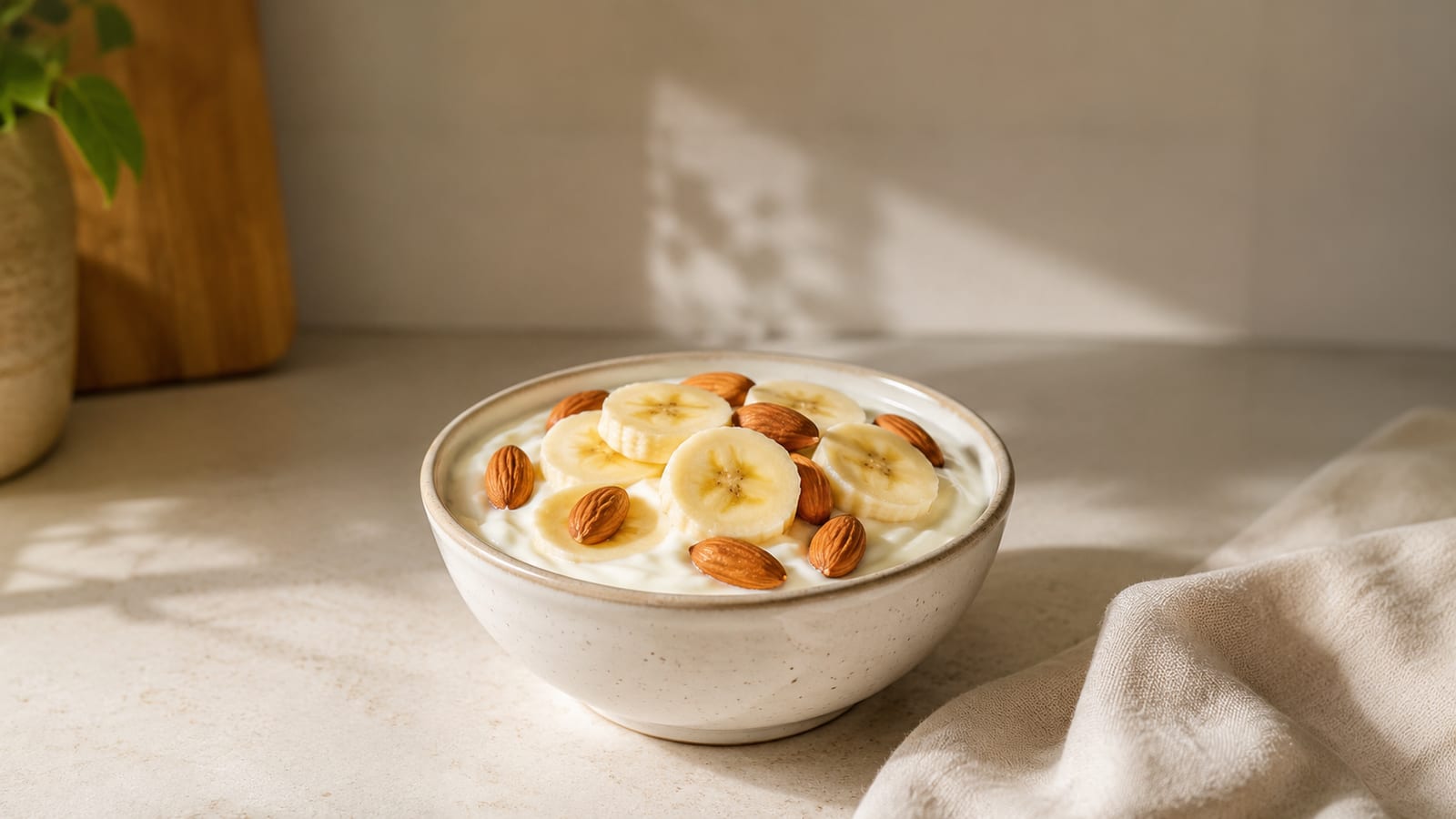
A late recovery meal should help you settle down. Moderate portions, familiar ingredients, and mild seasoning usually work better than a large, rich plate.
If digestion is sensitive, choose lower-fat and lower-fiber foods before bed. Rice, noodles, toast, bananas, yogurt, and a modest serving of lean protein may work better than fried food, a large salad, or a heavy bean dish.
Watch for foods that worsen reflux or thirst. Spicy sauces, very rich meals, and salty packaged foods can make sleep harder even when they provide useful nutrients.
Eating dinner late after a workout is fine if the portion fits your bedtime and digestion. Your body still needs fuel after training, and skipping food can leave you hungry, restless, or poorly recovered.
For the bigger connection between food and sleep, read about sleep and athletic recovery.
When a shake or small snack beats a full meal
A compact option wins when you have little time before bed, low appetite, limited kitchen access, or a tight food budget. A protein shake with a banana, milk with toast, or yogurt with fruit can cover the immediate need without making sleep harder.
This is also the practical choice after an easier workout. You do not need to cook chicken and rice because a small group fitness class left you slightly hungry.
Still, a small snack should match the situation. If you regularly finish hard practices and rely on a shake alone, you may be missing the total carbohydrate and energy needed for recovery.
Keep emergency foods in your bag or refrigerator. Shelf-stable milk, bananas, oat packets, crackers, and protein powder can prevent a missed meal on a busy schedule.
When a full meal is worth the effort
Choose a full meal after long sessions, high training loads, heavy sweating, or any workout followed by another hard effort. You need more total food in those situations, and a snack may leave you waking hungry.
Chicken, rice, and vegetables are a strong choice because the meal covers protein, carbohydrates, and fluids from the food itself. A tofu rice bowl, pasta with lean meat, or a bean burrito can serve the same purpose.
Eat enough to feel satisfied, but do not force a giant plate because you think more recovery food is always better. The right portion is the one that restores energy without interfering with sleep.
If your evening session is part of a larger training plan, your earlier meals count too. A strong dinner cannot fully repair a day spent under-fueled.
Common mistakes in late-workout recovery eating
Late training creates a few predictable problems. Most come from chasing a rule instead of paying attention to the workout and your stomach.
- Chasing maximal protein: More protein does not fix a meal with too little total food. Add carbohydrates when the session used a lot of training energy.
- Avoiding all carbohydrates at night: Carbohydrates after training help replace used fuel. Cutting them automatically can leave you flat for the next session.
- Eating a huge meal because you skipped dinner: A large portion may be hard to digest before bed. Start with a manageable meal and add food later if hunger remains.
- Choosing high-fiber foods right before sleep: Beans, large salads, and heavy whole-grain portions may cause bloating for some athletes.
- Trying a new food on a hard training night: Keep game-day and late-workout meals familiar. Your gut does not need a surprise after practice.
- Relying on supplements by default: A shake can help, but ordinary foods often cover recovery at lower cost.
- Ignoring fluids: Drink steadily after training, especially after hot sessions or heavy sweating. Avoid forcing a large volume right before lying down.
The fix is simple: match the food to the training load, your schedule, and your tolerance.
A quick decision guide for choosing your food
Use this guide when you are tired and want a clear answer.
- Easy workout and normal appetite: Choose Greek yogurt with fruit and oats. It gives you enough food without turning a light session into a full dinner.
- Hard or long workout: Choose chicken, rice, and vegetables, or a similar full meal. A small snack may leave the energy gap open.
- Plant-based and budget-conscious: Choose hummus with pita, then add tofu, soy yogurt, or another protein food. Hummus and pita alone may not carry serious recovery.
- Hungry but close to bed: Choose cottage cheese with fruit or a smaller yogurt bowl. You need something satisfying that still has a chance of settling before sleep.
- Low appetite or no kitchen: Choose a protein shake with a banana. It is practical in a pinch, but too small for regular hard training.
- Sensitive stomach: Choose a smaller portion of low-fat, lower-fiber foods such as yogurt, rice, toast, or a banana. Familiar food beats an ambitious meal at midnight.
- Another hard workout soon: Favor the full meal and include a clear carbohydrate source. The next session will expose under-fueling quickly.
- Already ate a solid dinner earlier: A protein-rich snack may be enough. There is no reason to rebuild dinner if dinner already did much of the work.
The best food options after a late workout are the ones you can prepare, digest, and repeat. Greek yogurt with fruit and oats is the best overall starting point. Chicken with rice covers heavier recovery needs, while hummus with pita gives you an affordable plant-based base that needs extra protein for harder training.
FAQ
Is it okay to eat dinner late after a workout?
Yes. Eating after training can support recovery even when dinner is late. Keep the food familiar, stop at comfortable fullness, and avoid a rich meal that keeps you awake.
What is the best evening post-workout snack for weight loss?
Choose a snack that controls hunger without becoming an unplanned second dinner. Greek yogurt with fruit suits a lighter appetite, while cottage cheese or milk with a banana may work better if you need more staying power.
What should you eat after a night workout if you are not hungry?
Start with a small option that takes little effort to finish. A shake, milk, yogurt, banana, or toast can cover immediate recovery while you wait for your appetite to return.
Should you avoid fat after a late workout?
No. A modest amount of fat can fit comfortably, but rich meals may linger and worsen reflux. Keep the serving smaller if fatty foods make bedtime uncomfortable.
What should you eat after a late-night workout with no meal prep?
Use a combination you can assemble without cooking. Yogurt and fruit, milk and a banana, or hummus with pita can keep recovery moving when the refrigerator is sparse.