
Most athletes stress over the post-workout shake and barely think about the rest of the day, which is backwards. After a hard session, eat a meal or snack with protein in it within a few hours. The International Society of Sports Nutrition (ISSN) puts the per-serving target for athletes at about 0.25 grams of high-quality protein per kilogram of body weight, or a flat 20 to 40 grams. That is how much protein is needed after intense workouts for most athletes. Your total for the whole day does more for recovery than any race to the blender.
How much protein is needed after intense workouts?
Use the per-kilogram figure if you want precision. Use the gram range if you want speed. Both come from the same ISSN guidance for athletes, and both land in the same place for most people.
A lighter runner or gymnast sits near the bottom of the gram range. A big lifter or a heavier team-sport athlete sits near the top. If you weigh yourself in pounds, convert to kilograms with your phone's calculator, then multiply. A few grams either way won't change your recovery, so round to an easy food portion.
Lean toward the higher end if:
- You just finished a heavy full-body lifting session that worked many muscles at once.
- You're eating fewer calories than you burn and want to keep your muscle.
- You're an older athlete, because aging muscle tends to respond less to small servings.
- You trained on an empty stomach and haven't had protein for many hours.
Stay near the lower end if you're a smaller athlete, a young athlete eating regular meals, or your session was hard but short.
Timing matters less than your total day
Eat within a few hours of finishing and you've handled the timing question. The idea that your gains vanish unless you drink a shake within minutes was overstated. Muscle stays ready to use protein for many hours after hard training. Also, a protein-rich meal eaten before the session keeps supplying amino acids afterward. Amino acids are the building blocks your body uses to make protein.
Two situations make it more urgent:
- You trained fasted. If your last protein was dinner the night before, eat soon after you finish. Our guide to recovery meals after morning workouts has easy options.
- You train again soon. For two-a-days or tournaments, get protein and carbohydrates in early. The next session exposes whatever you skipped.
For a deeper look at the clock, see the best time to take protein after a workout. However, if you train in the evening and eat a normal dinner afterward, you don't need a shake in the locker room. Dinner is your recovery meal.
Daily protein is the bigger recovery lever
Your total protein across the day drives most of the muscle repair you'll see over weeks of training. For most exercising individuals, the ISSN says 1.4 to 2.0 grams per kilogram of body weight per day is enough to build muscle and keep it.
Compare that with the baseline for adults in general. An international working group from the UN's food and health agencies (FAO/WHO/UNU) set the adult requirement at 0.6 grams per kilogram per day of high-quality, easily digested protein. So hard training more than doubles what a sedentary adult needs.
Here's where different athletes should aim within the daily range:
| Who you are | Where to aim | Why |
|---|---|---|
| Recreational exerciser, a few sessions a week | Lower end | Modest training load; regular meals usually cover it |
| Hard-training athlete, most days | Middle | Repeated sessions mean ongoing repair |
| Trying to gain muscle | Middle to upper end | New tissue needs a steady supply plus enough calories |
| Training while dieting for fat loss | Upper end | Helps protect muscle when calories run short |
Most people who eat meat, dairy, eggs, or soy at every meal land close to this without tracking. The athletes who fall short tend to skip breakfast, graze on snacks all day, or eat plant-based without a plan.
Match protein to the work you are actually doing
Your sport changes the food mix more than it changes the protein target. Here's how it plays out:
- Resistance training. Protein takes the lead. Both the post-lift serving and the daily total count, because repair is the main job.
- Endurance work. Carbohydrates are the main fuel for long runs, rides, and swims. Still, protein repairs muscle and supports adaptation, so pair a carb-heavy meal with a solid serving.
- Mixed and team sports. Sprints, contact, and long practices hit both energy and repair. Soccer is a good example, and our guide to meeting your protein needs as a soccer player covers match days and training weeks.
- High-volume blocks. Preseason, camps, and two-a-days push total food needs up. Appetite often drops at the same time, so pack portable protein before the day starts.
- Occasional hard sessions. A normal meal afterward is plenty. You don't need a special plan for one tough workout a week.
How much protein do you need to build muscle?
You need enough protein every day, spread over several meals, plus training that gets harder over time and enough total calories. Think of it this way. Protein is the raw material, training is the signal to build, and calories pay for the construction.
One oversized shake after the gym can't rescue a day with little protein in it. Muscle responds to repeated servings, and each one nudges repair forward. Meanwhile, if you're under-eating overall, your body pulls some of that protein toward energy instead of new muscle.
So the athletes who gain best eat steadily all day and train with a plan. If you're trying to add size during a season, read how athletes can bulk without slowing training.
Protein after workouts for fat loss
Keep protein high when you cut calories. In a calorie deficit, your body is more willing to break down muscle for energy. Enough protein, combined with strength training, helps you hold onto it.
Protein also tends to keep you full longer than the same calories from refined carbs or fat. As a result, a deficit is easier to stick with when every meal carries a real serving. Still, protein is a muscle-keeping tool, not a fat-loss shortcut. Piling extra on top of a calorie surplus won't make you leaner.
One common wrong turn is stripping carbohydrates out of the post-workout meal to "save calories." That works poorly if you have another hard practice coming. You'll feel it in your legs, your speed, and your mood.
Build the meal around a real protein serving
Pick a protein food you'd eat anyway, make it a full portion, and add carbohydrates when you train again soon. Real food covers the target easily for most athletes.
Quick snacks:
- Greek yogurt with granola and berries
- Chocolate milk with a bagel
- Cottage cheese with fruit and crackers
- A tuna or chicken pouch in a wrap
- A protein shake with a banana, when nothing else is practical
Full meals:
- Chicken, rice, and vegetables
- Eggs scrambled with cheese, plus toast and fruit
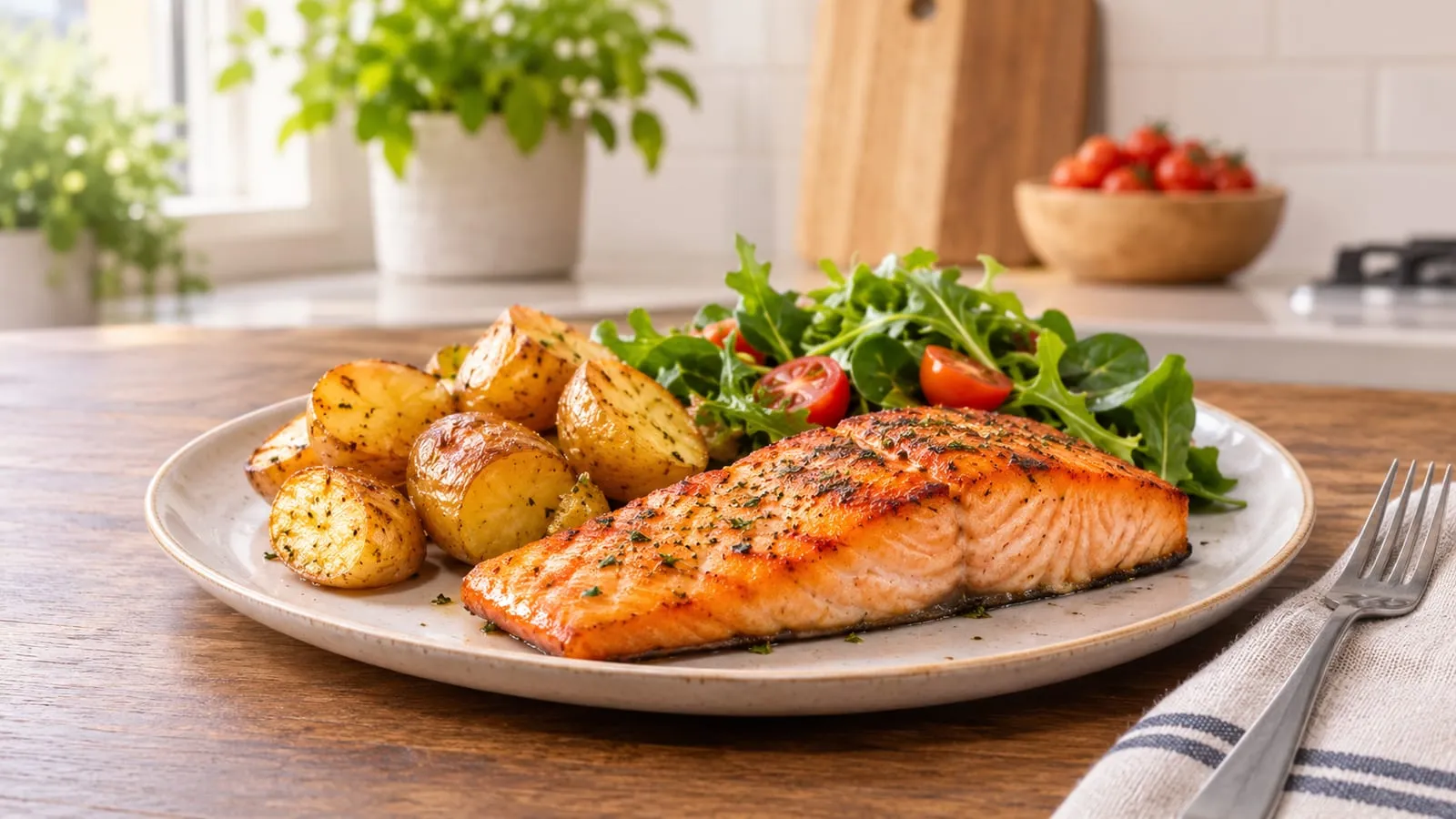
- Salmon with potatoes
- Tofu stir-fry over noodles
- Lentil pasta with meat sauce or tofu
- A bean and cheese burrito with rice
For a quick portion check, use a palm-sized piece of meat, fish, or tofu, a large bowl of Greek yogurt, or a few eggs with a glass of milk. Add more carbohydrates when you need to refuel fast, such as before a second session or tomorrow's game. The ideal carb-protein ratio after training explains how to balance the plate.
Do plant proteins do the job?
Yes, with a little more planning. A complete protein contains all the essential amino acids in useful amounts. These are the amino acids your body can't make, so food has to supply them. Animal foods, soy, and quinoa fit that description, while most beans, grains, nuts, and seeds run low in at least one.
You don't need rice and beans on the same plate. Instead, eating a mix of plant proteins across the day covers the gaps for most people.
Leucine deserves special attention. It's the amino acid most closely tied to switching on muscle repair. The ISSN says each protein dose should contain 700 to 3,000 milligrams of leucine, along with a balanced spread of essential amino acids. Many plant proteins carry less leucine than dairy or eggs. So plant-based athletes often do better with a slightly larger serving or a blend.
These options make the job simpler:
- Soy: tofu, tempeh, edamame, soy milk
- Dairy and eggs: if you eat them, they're easy wins
- Blended plant powders: pea and rice combined, for days when cooking isn't realistic
Choose the option your stomach, schedule, and budget can handle
A brutal session can wipe out your appetite for a while. In that case, a drink often goes down easier than a plate of chicken. On the other hand, if you're hungry and near a kitchen, a solid meal is cheaper and more filling.
| Option | Digestion | Convenience | Cost | Best for |
|---|---|---|---|---|
| Solid meal | Slower; can feel heavy right after hard intervals | Needs a kitchen or meal prep | Usually cheapest | Normal days with time to eat |
| Milk, shake, or drinkable yogurt | Easy when appetite is low | Grab and go; dairy needs a cooler | Powder costs more than milk | Early mornings, low appetite |
| Shelf-stable foods (tuna pouches, jerky, roasted chickpeas, boxed milk) | Varies; jerky is salty, chickpeas cause gas for some | Lives in a bag for days | Moderate | Travel, tournaments, no fridge |
Your budget goes furthest with milk, eggs, canned tuna, dried lentils, and store-brand Greek yogurt. Protein powders cost the most per serving, and nobody needs them. If you do use one, choose a product with third-party testing for banned substances. That matters most for athletes in drug-tested sports.
Spread protein through the day to manage hunger
The ISSN recommends distributing protein servings evenly, every 3 to 4 hours across the day. Each spaced serving gives your muscles a fresh signal to repair. Saving most of your protein for one big dinner gives them fewer.
In practice, each main meal and your post-training snack should carry a real serving. Breakfast is the usual weak spot, because toast and coffee contain almost none. For example, a simple swap like eggs on toast, yogurt with cereal, or a smoothie made with milk fixes that.
Spacing protein out also helps appetite. Athletes who eat protein at every meal tend to feel steadier between meals, with fewer late-night kitchen raids. A glass of milk or a cup of cottage cheese before bed is an easy add if you're short for the day.
When protein targets need medical guidance
Generic sports targets don't apply to everyone. Get individual advice from a doctor or registered dietitian if any of these fit you:
- Kidney disease. Protein needs often change with reduced kidney function. The National Institute of Diabetes and Digestive and Kidney Diseases explains eating and nutrition for chronic kidney disease.
- Liver disease or other chronic conditions that affect how your body handles protein.
- Pregnancy and breastfeeding. Needs shift, so follow your prenatal care team.
- Medically prescribed diets, including those for metabolic disorders or recovery from surgery.
- A history of disordered eating. Counting grams can feed unhealthy patterns, so work with a professional.
- Young athletes. Food comes first. Skip powders unless a clinician or sports dietitian recommends one.
In each of these cases, individual advice overrides anything on this page.
The simple rule to follow after intense workouts
Get a normal meal or snack with a real serving of protein within a few hours, then hit your daily target. That rule handles how much protein is needed after intense workouts for nearly every healthy athlete.
Follow these steps:
- Eat within a few hours. Move faster if you trained fasted or have another session soon.
- Make it a full portion of protein. Size it up if you're bigger or just did a heavy full-body session.
- Add carbohydrates when you need to refuel for the next practice or game.
- Spread protein across your day so each meal carries a share.
- Use a shake only when food is impractical, such as on the road or with no appetite.
FAQ
Should I eat less protein on rest days?
Keep it about the same. Muscle repair keeps going on the days you don't train, and that's when much of the rebuilding happens. If you're less hungry, trim carbohydrates a little instead.
Do teenage athletes need protein powder?
Usually not. Growing athletes who eat regular meals with milk, eggs, meat, beans, or yogurt get plenty. Supplements are loosely regulated and can be contaminated, so a sports dietitian should weigh in before a teen uses one.
Is a very large protein serving wasted?
Your body still digests and uses it. However, past a point the extra goes toward energy or storage instead of more muscle repair. Splitting that same protein across separate meals gives you more value.
Is a high-protein diet harmful for healthy athletes?
For people with healthy kidneys, intakes in the usual sports range appear safe in research. The more common problem is crowding out carbohydrates and fiber. That leaves you flat in training and uncomfortable in your gut.