

Creatine helps only a narrow group of teen athletes, and it's almost never the first nutrition problem to fix. An older teen doing steady, coached sprint or strength training may see a small boost in repeated hard efforts. For everyone else, regular meals, enough carbohydrates and protein, fluids, and sleep will do far more for performance. The American Academy of Pediatrics does not advise anyone under the age of 18 to take creatine, as this sports nutrition guide for young athletes explains.
Is Creatine Useful for Teen Athletes?
Whether creatine is useful for a teen athlete depends on three things: the training, the age, and what's already on the plate. Creatine helps short, hard, repeated efforts like sprints, lifts, jumps, wrestling scrambles, and hockey shifts. So the only teens likely to notice anything are doing that kind of work most days, under a coach, with a real plan.
A teen who plays rec basketball now and then won't feel a difference. Neither will a cross-country runner, because long, steady efforts rely on a different energy system. Meanwhile, a 14-year-old who just started lifting gets stronger fast from growth and practice alone. Any creatine effect would get lost in that noise.
Age matters too. Under 18, the pediatric default is no, and this page follows that default. Older athletes still follow the same food-first rules, and the decision belongs with a clinician.
| Teen athlete | Practical call |
|---|---|
| Younger teen new to structured training | Skip it. Technique, food, and sleep do the work. |
| High schooler who skips breakfast and practices after school | Skip it. Fix the meals first. |
| 16- or 17-year-old in a coached strength and sprint program, eating well | Pause. Talk with a pediatric clinician or sports dietitian first. |
| 18- or 19-year-old sprinter, lifter, or field-sport athlete | Reasonable to consider with adult guidance. |
| Distance runner or other endurance athlete | Little to gain. |
How Does Creatine Help Muscles Work?
Creatine is a compound your body makes from amino acids, the building blocks of protein. You also get some from meat and fish. Most of it is stored in your muscles, ready for quick energy.
Muscles run on ATP, the molecule they spend every time they contract. During an all-out sprint, muscles burn through ATP fast. Stored creatine, in a form called phosphocreatine, rebuilds ATP fast enough to keep that burst going a little longer.
Taking creatine tops up those muscle stores. As a result, muscles may recover slightly faster between short sprints or heavy sets. That's the whole mechanism. It doesn't build muscle on its own, and it does little for a long, steady run.
The practical payoff is slightly better training quality. For example, an athlete might squeeze out an extra good rep or hold sprint speed a bit better late in a drill. Over weeks of training, that can add up. Over a single game, it's hard to notice.
The Teen Research Is Thin
Most of the confident creatine advice online comes from adult studies. Reviews such as the International Society of Sports Nutrition position stand on creatine, published in August 2007, draw mainly on research in adults. However, adults aren't going through puberty. Their results don't automatically carry over to a 15-year-old.
The adolescent studies that exist are few, small, and short. They mostly involve trained older teens, such as competitive swimmers or soccer players. Overall, they point toward small gains in sprint, jump, or repeated-effort tests, with no major short-term harms reported.
A study of young soccer players shows the limits. Claudino and colleagues followed young elite soccer players, most of them already adults, for seven weeks. Their plan used a seven-day loading phase at 20 grams a day, then six weeks at 5 grams a day. That's an adult-style protocol, and seven weeks can't tell you anything about a teen taking creatine across several seasons.
So read headlines carefully. "Proven safe and effective" usually means proven in adults over months. For teens, the evidence looks promising in a few trained groups and is missing entirely for long-term use.
Expect Small Gains That Show Up in Training

Creatine's benefits are modest, and they arrive slowly. In athletes who respond, you might see slightly better repeated sprints or a little more work done in the weight room. Some people barely respond at all, especially if they already eat plenty of meat or fish.
What creatine won't do matters just as much. It won't add muscle without hard lifting and enough food. It won't fix a slow first step, poor footwork, or weak conditioning. Most important, it can't compete with the strength a teen gains naturally through growth, which is the biggest strength boost most athletes will ever get.
Early weight gain is another common misread. The first bump on the scale is usually water pulled into muscle. It looks like progress, but real muscle only comes later, from training and food.
If a teen's goal is "get bigger fast," creatine is the wrong tool.
Safety Questions Are Different for a Growing Body
In healthy adults, creatine at normal doses has a long safety record. Teens are a different group, though, and three gaps stand out.
First, long-term youth data is missing. Nobody has followed large groups of teens on creatine for years. Short studies that report no harm can't speak to a whole high school career of use.
Second, product quality varies. In the United States, supplements don't need approval for safety or effectiveness before they go on sale. Some products have turned up contaminated with stimulants or banned substances, which can affect a teen's health and their eligibility to compete.
Third, health history matters. Anyone with kidney disease, past kidney problems, diabetes, or a regular medication should not start creatine without a clinician's sign-off. Common side effects include bloating, stomach upset, and water-weight gain. These are usually worse when a large amount is taken at once.
When Should Parents Say No or Pause?
Some situations make creatine a poor choice, no matter what a teammate says. Say no, or at least pause, if any of these apply:
- Meals are inconsistent. A teen who skips breakfast or lunch needs food. A supplement only covers up the gap.
- Fluids are already a struggle. Hot preseason double sessions, heavy sweaters, and teens who rarely drink water need a hydration plan first.
- There's a kidney concern. That includes past kidney problems, medications that affect the kidneys, or frequent use of pain relievers like ibuprofen.
- Weight is a source of stress. Disordered eating, body-image distress, or cutting weight for a sport like wrestling all clash with a supplement that moves the scale.
- It's being bought or used in secret. Powder from a gym friend, a quiet online order, or a scoop from a teammate's tub skips every safety check.
- The goal is appearance. If the motivation is how they look, that conversation needs to happen before any purchase.
Pausing costs very little. Another year of training, steady meals, and maturity often delivers more than the supplement would.
Fix the Plate Before the Powder
Food covers far more of a teen's performance than any supplement. Most under-fueled teen athletes aren't missing creatine. They're missing breakfast, an afternoon snack, or a real dinner after practice.
Start with these basics:
- Enough total food. Growth plus training uses a lot of energy. A teen who comes home exhausted and cranky often just hasn't eaten enough.
- Carbohydrates before training. For the long gap between lunch and after-school practice, pack a bagel with peanut butter, a turkey wrap, or yogurt with cereal.
- Protein spread across the day. Think eggs at breakfast, chicken or beans at lunch, and milk after practice. Our guide to how much protein teen athletes need breaks down the amounts.
- Fluids all day. Drink water through the school day, and more in the heat.
- Sleep. Muscle repair happens overnight, so short sleep wastes good training.
After practice, chocolate milk with a sandwich or rice with eggs covers refueling and repair. For more options that pack and travel well, see these recovery meals for youth athletes. A teen who eats like this consistently is already getting some creatine from food.
Foods That Naturally Provide Creatine
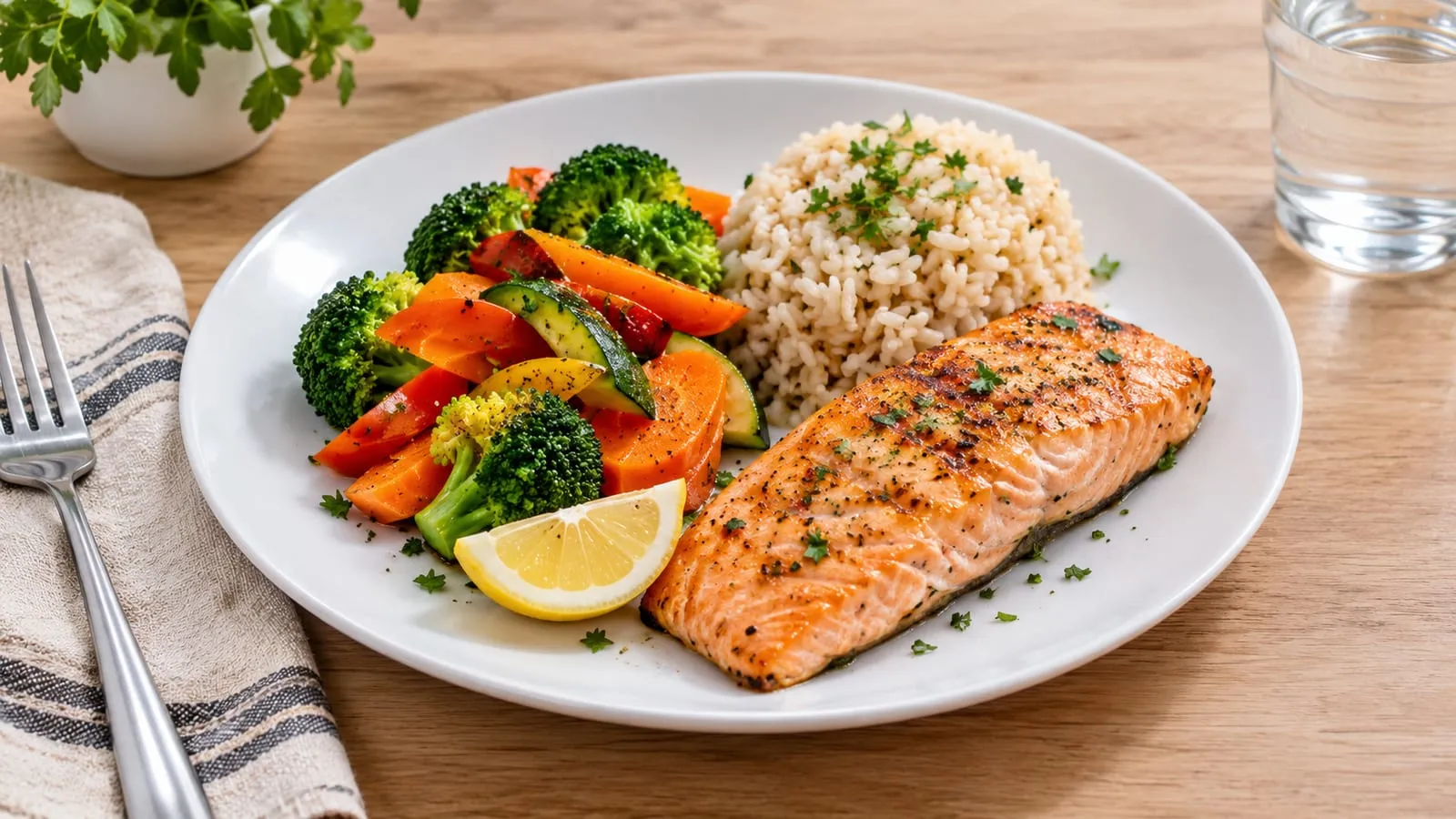
Creatine comes almost entirely from animal foods, especially meat and fish. Good everyday sources include:
- Beef, such as ground beef or a budget roast
- Pork
- Chicken and turkey
- Salmon, tuna, and herring
- Canned fish, an affordable option for sandwiches and rice bowls
Cooking reduces creatine somewhat, especially long, high-heat cooking. That's no reason to eat meat rare. Instead, it's a reason to stop counting creatine from food at all.
Plant foods contain little to no creatine. As a result, vegetarian and vegan athletes tend to have lower muscle stores, and some studies find they respond more to supplements. Still, that doesn't make a supplement automatic for a vegetarian 15-year-old. The first job is enough total food and protein, which our vegetarian diet tips for teen athletes cover in detail.
Don't try to eat your way to a supplement dose, because it would take a huge amount of meat every day. Aim for balanced meals with a protein source most of the time. That way, food creatine is a bonus, not a target.
Talk About Weight and Goals Before Anyone Buys a Tub
Teens usually hear about creatine from teammates or social media, often next to before-and-after body photos. That framing turns a sports supplement into a body project. Parents can steer the talk back to performance.
A few points worth covering:
- The scale may go up. Creatine pulls water into muscle. That gain is expected and temporary, and it isn't fat or instant muscle.
- Puberty runs on its own timeline. Teammates grow at different speeds. A late bloomer won't catch up through a supplement, and that's normal.
- Influencers sell things. Many creatine claims online come from people paid to promote it. Ask who profits from the post.
- Name the real goal. "Faster in the fourth quarter" is a training goal. "Look bigger" is a different conversation.
Meanwhile, watch for warning signs during that talk: skipped meals, constant mirror checks, new food rules, or distress about weight. Those call for a doctor's visit, and the supplement question can wait.
If a Teen Uses Creatine, Keep the Plan Boring and Accountable
If a family decides to go ahead, usually with an older teen in serious training, treat it like any other training decision. Keep it simple, supervised, and measured.
- Involve a professional first. A pediatric clinician or registered sports dietitian should review health history, medications, and diet.
- Choose plain creatine monohydrate. It's the most studied form. Fancier versions cost more without better evidence.
- Pick third-party-tested products. Look for a certification that screens for banned substances, especially if the teen gets drug tested.
- Avoid proprietary blends. These labels list ingredients without exact amounts, so you can't know what's in a scoop.
- Skip megadoses and DIY loading. Loading phases show up in studies, but a teen doesn't need to copy a research protocol. Let the clinician set the amount.
- Track a single training goal. Pick something measurable, like a repeated-sprint drill or a lifting log, and check it over a full training block.
- Stop if it doesn't help. No change, stomach trouble, or a growing focus on weight are all reasons to quit.
Once a clinician has cleared it, the practical details are covered in our guide to creatine timing on training days. Keep a parent involved the whole time, and keep the tub at home where everyone can see it.
FAQ
Is creatine a steroid, and is it banned in high school sports?
No. Creatine is a compound your body already makes, and it doesn't work like a hormone. It isn't on the major anti-doping banned lists. However, some schools and leagues set their own supplement rules, so check with the athletic department.
What happens when a teen stops taking creatine?
Muscle stores drift back to their normal level over several weeks. Any extra water weight usually goes with it, and there's no known withdrawal effect. Strength built through training during that time doesn't disappear overnight.
Are pre-workout powders the same as creatine?
No. Many pre-workouts mix creatine with large amounts of caffeine and other stimulants. Those can cause a racing heart, jitters, and poor sleep. Teens should skip them entirely.
Does creatine cause hair loss?
There's no solid evidence that it does. The worry traces back to a small study in young adult rugby players. It found a rise in a hormone linked to hair loss. That finding hasn't been confirmed, and no study has shown creatine directly causing hair loss.