

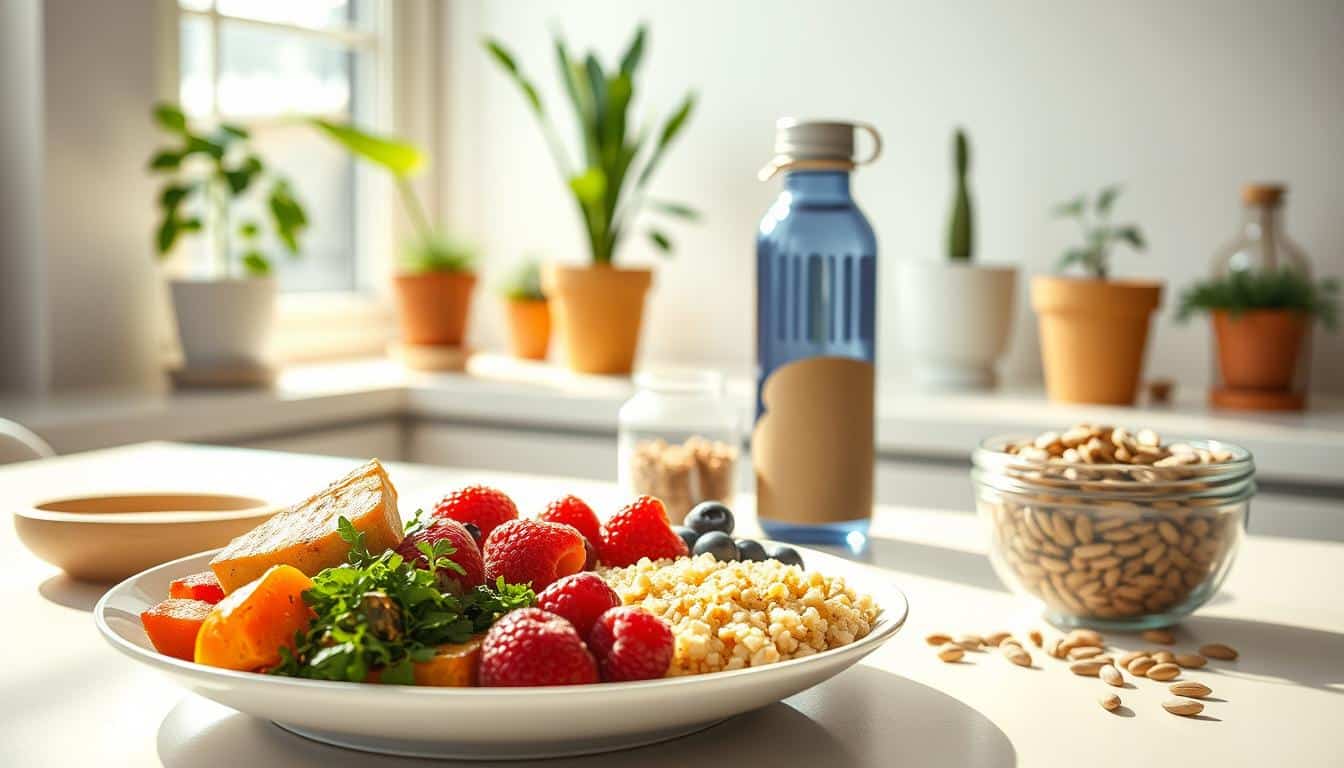
I run practices and classes on long days, and I learned you can keep up strong with a vegetarian diet for teen athletes that’s simple and reliable.
Many elite competitors—Venus Williams, Martina Navratilova, and Dave Scott—show that a plant-based plan can power intense training. Build meals around fruits, vegetables, legumes, nuts, seeds, and grains, and add eggs or dairy if you include them.
Growth spurts and heavy schedules raise calorie needs a lot; some teens need up to 4,000 calories daily. Watch key nutrients—calcium, vitamin D, iron, B12, and zinc—so recovery and immune health stay on track.
Keep plates colorful and balanced each time you eat. Simple swaps and packed options like smoothies or grain-and-bean bowls save time and boost steady energy during school and practice.
Set up a balanced plan that supports training and growth
Match what you eat to practice and growth phases so energy and recovery stay reliable. Pick a pattern you can follow during the season—lacto-ovo if you want eggs and dairy, lacto if you keep dairy only, or a vegan diet if you avoid all animal foods.
Plan calories around workload. Teens can need up to 4,000 calories during growth spurts and double-practice days. Add high-calorie, nutrient-dense choices like whole milk, nuts, nut butters, seeds, and avocado to boost intake without extra meals.
Use whole grains, fruits, and vegetables at every meal. Fill half the plate with produce, a quarter with whole grains, and a quarter with beans, lentils, or tofu. Rotate colors daily to cover calcium, vitamin D, iron, B12, and zinc.
- Map sport demands to meals: more carbs on heavy days, steady protein each meal.
- Keep a two-week rotation to simplify shopping and prep.
- Cap ultra-processed snacks and swap in yogurt, trail mix, or hummus with veggies.
| Plate Portion | Example | Why it helps |
|---|---|---|
| Half | Mixed vegetables & fruit | Micronutrients and hydration |
| Quarter | Whole grains (oats, brown rice) | Steady energy |
| Quarter | Beans, lentils, tofu | Protein and iron |
Track appetite, sleep, mood, and training quality. Adjust portions before changing your overall plan. For a complete meal plan and sample menus, check this complete vegetarian meal plan.
Meet protein needs with plant-based proteins, eggs, and dairy
Protein targets should be clear and simple. Use 0.55–0.64 g per pound for endurance and 0.73–0.77 g per pound for strength. Add about 10% more total protein to cover lower digestibility on mostly plant menus.
High-quality protein sources
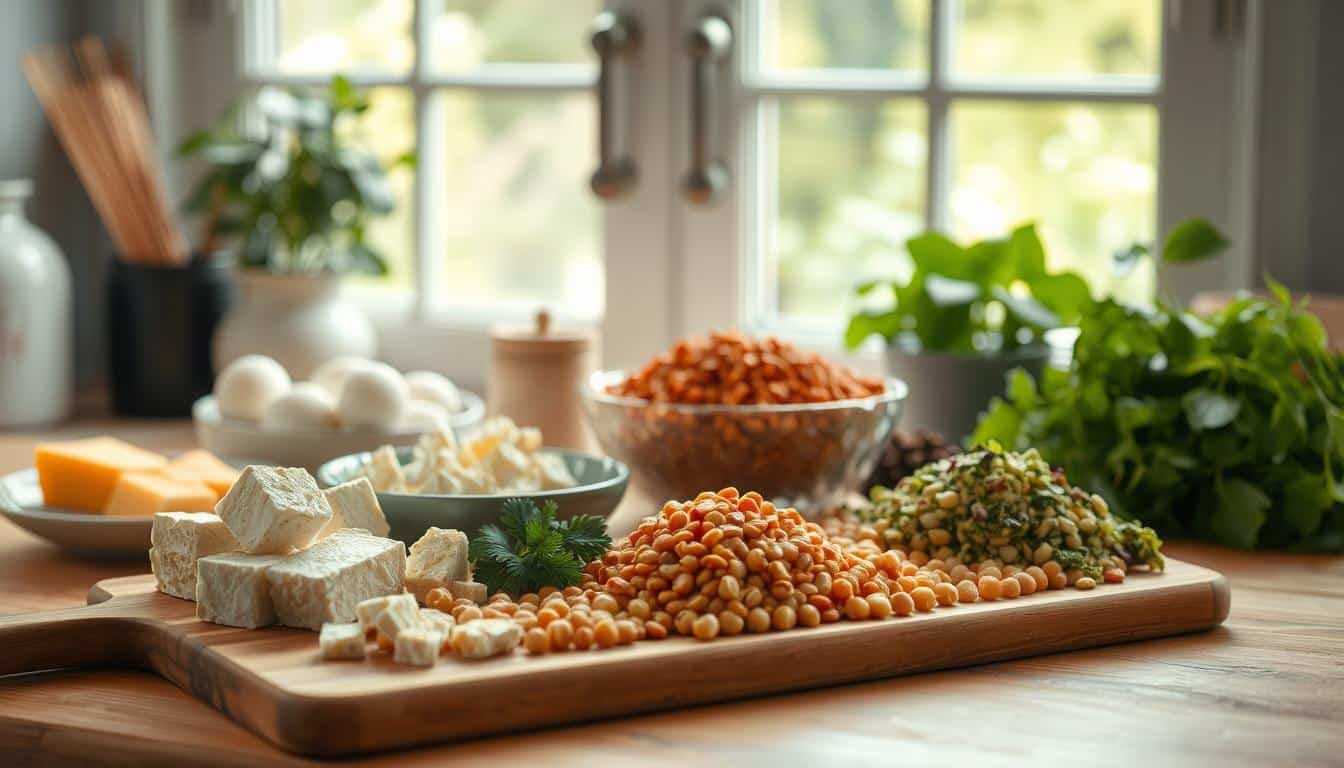
Build meals around beans, lentils, tofu, tempeh, nuts, seeds, and whole grains. These protein sources combine well to improve amino acid balance.
Eggs and dairy options
If you include animal products, use eggs for quick breakfasts and dairy like yogurt or cottage cheese to boost calcium and protein fast. Eggs and dairy are compact, reliable choices.
Shakes and smoothies for busy days
Blend ice, frozen fruit, chia, a spoon of peanut butter, a scoop of protein powder, and soy milk or water. Aim for 20–30 g protein per main meal and 10–15 g per snack.
- Spread protein across 3–4 meals and 1–2 snacks.
- Mix grains + legumes in bowls or burritos to upgrade quality.
- Pack roasted chickpeas, edamame, or trail mix for long travel.
| Goal | Endurance (g/lb) | Strength (g/lb) |
|---|---|---|
| Target | 0.55–0.64 | 0.73–0.77 |
| Practical rule | 20–30 g/meal | 20–30 g/meal |
| Snack | 10–15 g | 10–15 g |
Key vitamins and minerals teen athletes cannot miss
Key vitamins and minerals power recovery, growth, and game-day performance. Missing them slows training and raises injury risk.
Iron and vitamin C: energy and performance
Eat iron-rich plants like spinach, beans, lentils, fortified cereal, and dried apricots. Pair those with vitamin C — bell peppers, berries, or orange juice — to boost absorption.
Calcium and vitamin D: protect bone density
Build bones with dairy products, calcium-set tofu, kale, broccoli, almonds, and fortified milk or plant milks. Get short sun exposure (15–30 minutes) and use fortified foods or eggs for vitamin D.
B12 and zinc: repair and immunity
Vitamin B12 comes from eggs, dairy, and fortified cereals; vegans often need supplements. Zinc is higher in animal products but is found in pumpkin seeds, cashews, chickpeas, and wheat germ.
- Watch fatigue, frequent colds, pale skin, or stalled strength gains.
- Ask your pediatrician (Children’s Hospital guidance) about blood tests if symptoms appear.
- Consider a multivitamin or targeted supplements after a clinical review.
| Nutrient | Top plant sources | Quick tip |
|---|---|---|
| Iron | Spinach, beans, fortified cereal | Pair with vitamin C |
| Calcium | Dairy products, kale, tofu | Include fortified milk or yogurt |
| Zinc | Pumpkin seeds, cashews, chickpeas | Add to snacks or bowls |
vegetarian diet for teen athletes: timing, GI strategy, and sample meals
Use the clock as a guide: when you eat matters as much as what you eat. Time carbs to match practice intensity and duration. Follow simple rules and you’ll keep energy steady and recovery quick.
Time carbohydrates by the clock for practice and games
Eat a carb-rich snack 1–2 hours before practice. Good choices: oatmeal with banana or a peanut butter sandwich on whole wheat.
If you need a top-up 15–30 minutes pre-game, pick quick carbs like applesauce, a small bagel, or a ripe banana.
Use low and high glycemic foods at the right time
High-GI foods help right after long endurance work. Reach for white rice, instant oatmeal, or a bagel in the first 30 minutes post-workout.
Most other meals should use lower GI choices: brown rice, black beans, hummus, apples, or whole wheat bread. These keep energy steady between sessions.
Build a day of eating with a practical meal plan
Breakfast: oats with yogurt and berries or a smoothie with soy milk, chia, nut butter, and protein powder.
Lunch: quinoa bowl with lentils and salsa, or pasta with tofu and vegetables.
Dinner: chickpea curry with salad and baked sweet potato, or black bean burgers with peppers and hummus.
- During long sessions, sip a sports drink or eat dried fruit every 60–90 minutes.
- Keep snacks ready: fruit, nuts, roasted chickpeas, popcorn, or yogurt.
- Hydrate with water most of the day; add electrolytes on hot, high-sweat days.
| Timing | Example | Why it helps |
|---|---|---|
| 1–2 hours pre | Oatmeal + banana | Sustained carbs and some protein |
| 15–30 min pre | Small bagel or banana | Quick energy top-up |
| 0–30 min post | White rice or instant oats | Fast glycogen refill |
For a full week plan and sample menus, see the complete vegetarian meal plan.
Conclusion
Keep a simple weekly plan to lock in calories, protein, and color so training stays strong. Set meals that repeat across the week to remove guesswork and hit energy goals.
Check key nutrients: iron, calcium, vitamin D, B12, and zinc. Use dairy products, eggs, or fortified products if your pattern includes them; add plant proteins and fats like nuts, seeds, avocado, and olive oil on high-load days.
Watch red flags: skipped meals, rapid weight change, narrow food variety, or using a vegan diet mainly to cut calories. Female athletes need extra focus on iron and bone density markers.
Do quick daily checks on appetite, sleep, mood, and training. See your pediatrician or a registered dietitian if you notice fatigue, stalled growth, or frequent illness. A planned approach supports growth and performance.