


Sodium matters in a sports drink because it helps replace sweat losses and helps your body hold on to some of the fluid you drink. However, most athletes don’t need electrolytes for every workout. Use water for short, easy sessions, and choose a sodium-containing drink when exercise is prolonged, hot, highly sweaty, or hard enough that replacing fluid and carbohydrates supports the work. Sports drinks: what’s up with sodium? The answer depends on the session, your sweat, and what your stomach can handle.
Last updated: 2026-08-25
What does sodium do in a sports drink?
Sodium is an electrolyte, which is a mineral that carries an electrical charge in body fluids. It helps control fluid balance, nerve signaling, and muscle function. Sodium has a job during exercise because athletes lose it through sweat.
A rush of sodium tells a nerve cell to fire. Those signals help your muscles contract, your heart keep its rhythm, and your body respond to the demands of training. If you’re sweating for a long time, replacing some sodium can support the fluid and nerve function you’re asking your body to maintain.
Sodium also helps your body retain some of the fluid you consume. That doesn’t mean a salty drink hydrates every athlete better than water. It means sodium becomes more useful as sweat losses, heat, session length, or repeated training demands increase.
A sports drink may also provide carbohydrates. Those carbohydrates can help fuel prolonged exercise, while sodium supports the electrolyte side of the drink. You’re paying for a combination of fluid, fuel, and sodium in one portable option.
How much sodium do you lose when you sweat?
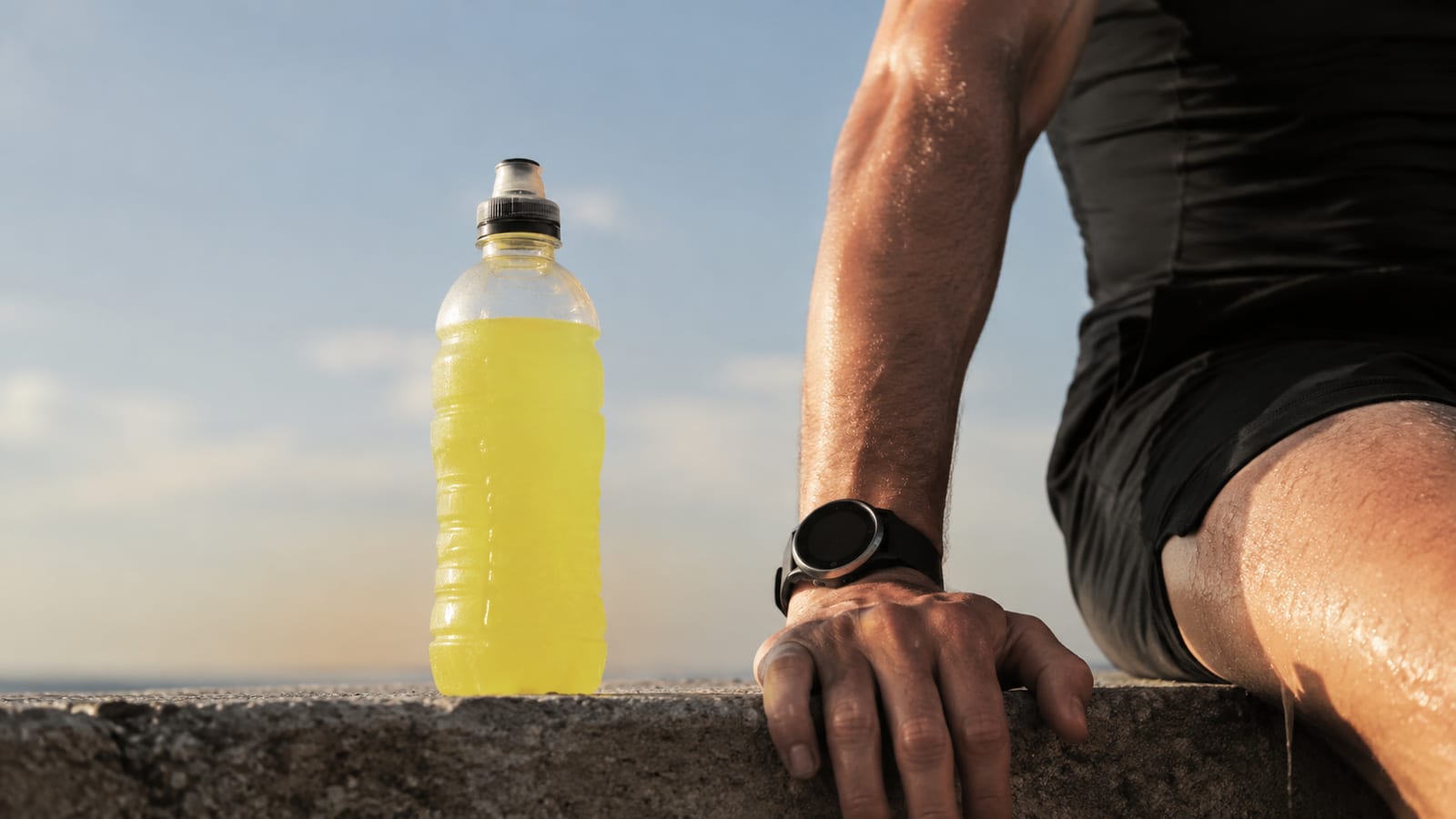
Sweat sodium losses vary widely. Your sweat rate, sweat sodium concentration, pace, clothing, weather, body size, and training conditions all affect the amount you lose.
Two athletes can finish the same practice with different sweat losses. One may leave a white salt mark on a shirt and feel the need for more sodium. Another may sweat less and do fine with water and a normal meal afterward.
That variation makes a universal sodium rule unreliable. A label promising a precise solution for every athlete is selling a simpler story than your body can provide.
Look for useful clues instead:
- Your clothes or hat show visible white salt after training.
- You finish long sessions soaked and lose a large amount of fluid.
- You train in heat or heavy clothing.
- You have another demanding session later.
- You regularly develop headaches, nausea, unusual fatigue, or poor focus after prolonged exercise.
- You struggle to replace fluid and carbohydrates with separate food and water.
These clues don’t diagnose a medical problem. They tell you that your usual water-only plan may deserve a closer look. A qualified sports dietitian can help if your training is long, frequent, or difficult to fuel.
When does sweating make electrolytes necessary?
Electrolytes become more useful when the work creates meaningful sweat losses. The strongest case is prolonged exercise in heat, hard sessions with heavy sweating, tournaments with repeated games, and long training days where you can’t replace food and fluid soon afterward.
Short, easy exercise usually doesn’t create the same need. If you’re lifting at a comfortable pace, jogging briefly in mild weather, or attending a normal practice, water and regular meals can usually cover the basics.
Choose a sodium-containing drink during exercise when several of these conditions apply:
- The session is prolonged. More time exercising gives you more time to lose fluid and sodium.
- The weather is hot or humid. Heat can increase sweating and make fluid replacement harder.
- You’re a heavy sweater. Soaked clothing and visible salt provide practical clues.
- The work is hard. Repeated sprints, long climbs, races, and back-to-back games create higher fuel and fluid demands.
- You’re training again soon. There’s less time to replace what you lost through ordinary meals and drinks.
- Carbohydrates are useful too. A sports drink can put fluid, sodium, and fuel in the same bottle.
You don’t need to check every box. A long, hot practice may justify a sports drink even if you don’t see salt on your clothing. A short workout may not justify one even if you sweat heavily.
The useful threshold is the point where water alone stops matching the work. That point changes with the athlete and the day.
How much sodium should a sports drink contain?
A standard sports drink contains about 80-110 milligrams of sodium per 8-ounce serving. That figure gives you a way to read a label, but it doesn’t establish one ideal amount for every workout.
Start by checking three parts of the label:
- Sodium per serving
- Serving size
- Number of servings in the bottle
A bottle may contain more than one serving. If you compare only the front label, you can underestimate what you’re drinking. Compare the full container with the amount you actually plan to consume.
A drink with more sodium isn’t automatically the better choice. More may suit an athlete with heavy sweat losses during long, hot exercise. It may be unnecessary for a short session and unpleasant for someone who dislikes a salty taste.
The carbohydrate content matters too. A drink with sodium but little carbohydrate may help with fluid and electrolyte replacement while doing little for training fuel. A carbohydrate-heavy drink may support long exercise but feel too sweet or heavy for your stomach.
Use the label to compare options, then test the drink in practice. Don’t make your first trial during a race, tournament final, or important game.
Should you drink water or a sports drink?
Water is the better default for most shorter, easier workouts. It’s cheap, easy to find, and less likely to add ingredients you don’t need.
A sports drink earns its place during prolonged or demanding exercise when you need some combination of fluid, sodium, and carbohydrate. That includes long runs, hot practices, endurance events, and repeated games with limited time between them.
| Training situation | Practical starting choice | Why |
|---|---|---|
| Short, easy session | Water | Sweat and fuel demands are usually modest |
| Hard session in hot weather | Water or a sports drink | Your sweat losses and tolerance decide |
| Prolonged exercise | Sports drink may help | You may need fluid, sodium, and carbohydrate together |
| Tournament with repeated games | Sports drink plus portable food | You need steady refueling across the day |
| Light workout followed by a normal meal | Water | Food can handle recovery needs afterward |
| Long session with stomach trouble | Small sips of a tolerated drink | Large amounts at once can make digestion worse |
The drink is not automatically more athletic, and water is not automatically better. Match the bottle to the work. That’s the whole decision.
For a broader comparison, see sports drinks versus water. The sodium question fits inside that larger choice, but it doesn’t replace it.
Can a sports drink prevent dehydration and electrolyte imbalance?
A sports drink can support hydration, but it can’t guarantee that you’ll avoid dehydration or a serious electrolyte problem. Your total fluid loss, drinking rate, sweat losses, weather, and exercise duration still matter.
Dehydration means you’ve lost more fluid than you’ve replaced. A drink with sodium and carbohydrate can help during prolonged exercise, but you still need to drink enough for the conditions. Drinking very little leaves you short on fluid.
Drinking too much can also cause trouble. Exercise-associated hyponatremia is defined as a blood sodium concentration below 135 millimoles per liter during or up to 24 hours after prolonged physical activity. It can occur when an athlete drinks more fluid than the body can handle, especially during long events.
A sports drink doesn’t make excessive drinking safe. It contains sodium, but that sodium may not match the amount of fluid consumed or the athlete’s losses. Follow thirst and a sensible plan rather than forcing down bottle after bottle.
Get medical help for confusion, severe headache, repeated vomiting, unusual drowsiness, trouble breathing, or a seizure during or after prolonged exercise. Those symptoms require medical attention. Another electrolyte drink is not the right response.
There’s also a daily health issue. High sodium intake has a close relationship with hypertension, or high blood pressure. Salt-sensitive people’s blood pressure rises by 5 points or more when switching from a low-salt to a high-salt diet.
That doesn’t make sodium-containing drinks dangerous for every athlete. It does mean you shouldn’t add them to every workout without a reason, especially if your diet already includes many salty packaged foods or a clinician has advised you to limit sodium.
What should you drink during prolonged exercise?

Build your plan around the work you’ll actually do. A long session may need fluid, sodium, and carbohydrate, but the best combination still has to digest well and fit your schedule.
Use this approach:
- Start with the session demands. Consider duration, heat, pace, clothing, and whether another session follows.
- Choose a drink you’ve tolerated in practice. Test the taste and sweetness before competition.
- Sip steadily. Large amounts at once can leave your stomach sloshing.
- Pair the drink with portable food when needed. A banana, pretzels, a bagel, applesauce, or a jam sandwich can provide carbohydrate without making the bottle do every job.
- Check the sodium per serving. Then check how many servings the container holds.
- Adjust for your sweat clues. Salt marks, soaked clothing, and repeated heavy sweating may support a sodium-containing option.
- Stop forcing it if your stomach objects. A drink you can’t tolerate won’t help your performance.
The right plan may be a sports drink during the hardest part of a long session, then water alongside it. You may also use water during practice and eat a carbohydrate snack when a full drink feels too sweet.
If you’re unsure how much fluid fits your training, use this guide to how much water athletes should drink. Don’t chase a bottle target just because a coach, teammate, or label says you should finish it.
Do you need electrolytes after every workout?
No. Routine electrolyte use adds cost and extra ingredients without solving a real problem for many workouts.
After a short or moderate session, eat a normal meal and drink water. Rice with eggs, a turkey sandwich with fruit, yogurt with cereal, or a bean burrito can replace carbohydrates, protein, fluids, and sodium through ordinary food.
Electrolyte replacement matters more after prolonged exercise, heavy sweating, hot conditions, or repeated sessions. It also matters when you can’t eat a proper meal soon and need something portable.
After a hard session, combine fluids with food instead of treating sodium as the entire recovery plan. Sodium may help with fluid retention, but it doesn’t replace carbohydrates for used training energy or protein for muscle repair.
You also don’t need to fear ordinary sodium in food after exercise. The concern is routine overuse of salty drinks when the training demand is small, especially alongside a diet high in packaged and restaurant foods.
The best recovery drink is the one that fills the gap. Sometimes that’s water with a meal. Sometimes it’s a sports drink and a snack on the way home.
How can you choose the simplest sodium strategy for your training?
Use the smallest plan that covers the actual demand. Start with water, then add sodium and carbohydrate when your session gives you a reason.
| Ask yourself | Choose this approach |
|---|---|
| Is the workout short and easy? | Drink water and eat normally afterward |
| Are you training hard in heat? | Consider a sodium-containing drink |
| Are you sweating heavily or leaving salt marks? | Test a sports drink during practice |
| Do you have repeated games or sessions? | Combine fluids with carbohydrate and sodium |
| Does your stomach dislike sweet drinks? | Use water with portable carbohydrate food |
| Is your budget tight? | Use ordinary food and water when they cover the job |
| Do you have high blood pressure or sodium advice from a clinician? | Ask your clinician before making electrolyte drinks routine |
| Are you unsure what your sweat losses look like? | Track symptoms, clothing, conditions, and drink tolerance |
Keep a simple training note for a few sessions:
- What you drank
- What you ate
- The weather and clothing
- How soaked your clothes became
- Your energy during the final part
- Any nausea, headache, cramping, or stomach trouble
- How you felt later that day
This won’t give you a laboratory sweat test. It will show patterns that are useful enough for daily decisions.
For example, if water works during normal practice but you fade during hot tournament days, reserve the sports drink for tournaments. If a sweet drink causes stomach trouble, use smaller sips and add pretzels, fruit, or a sandwich for fuel.
Sports Drinks: What’s Up with Sodium? The practical answer is simple: sodium has a job, but every workout doesn’t create the same job for your drink. Spend it where sweat, heat, duration, and training load make it useful.
FAQ
Does sodium make a sports drink taste salty?
It can. The taste depends on the drink’s sodium level, carbohydrate content, flavor, and temperature. If the drink tastes unpleasant, you’re less likely to sip it steadily, so choose a flavor and strength you’ll actually use.
Can food replace sodium during a long workout?
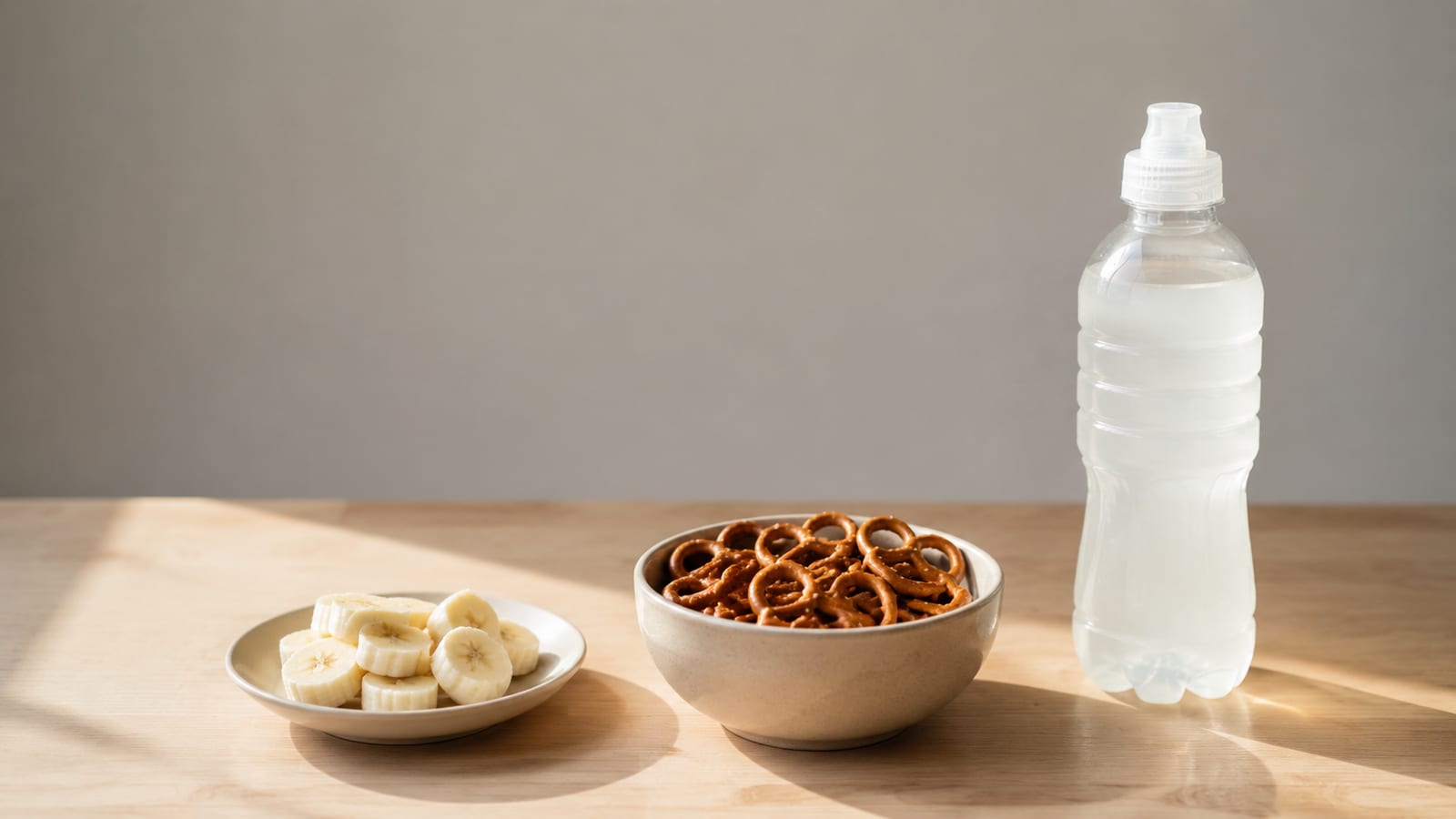
Sometimes. Salty pretzels, crackers, sandwiches, and other portable foods can provide sodium and carbohydrate while you drink water. During very demanding exercise, chewing may be difficult, so a drink can be easier to manage.
Should you choose a low-sodium sports drink?
Choose based on the workout and your overall diet. A lower-sodium option may be enough for lighter sweating, while an athlete with long, heavy sweat losses may need a stronger option. The label and your response matter more than the marketing name.
Are electrolyte tablets better than sports drinks?
Neither is automatically better. Tablets may provide electrolytes without much carbohydrate, while sports drinks often combine sodium, fluid, and fuel. Pick the format that fits your training, stomach, budget, and access to food.
Can young athletes use sports drinks?
Young athletes should start with regular meals, water, and a dependable snack. A sports drink may fit prolonged activity in heat or repeated games, but it shouldn’t replace meals or become the default drink for normal practice. Parents should also consider allergies, medical advice, and the child’s ability to tolerate the product.