

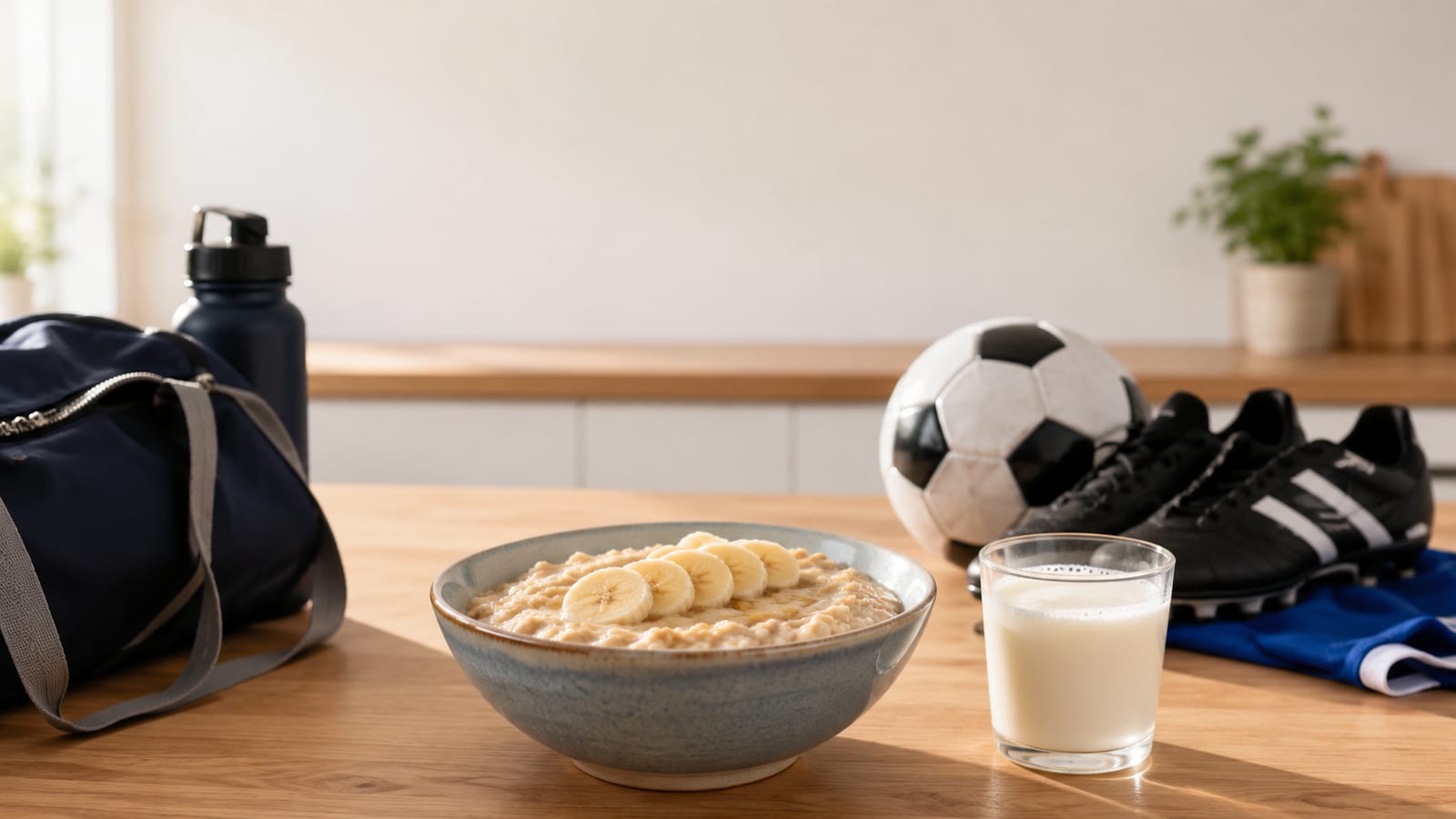
Start with familiar carbohydrates, a manageable amount of protein, and water. Safe pre-workout meals for youth athletes should be easy to digest and matched to the time before practice or competition. A turkey sandwich with fruit, oatmeal with banana and milk, or rice with eggs can support training better than a supplement or oversized “performance” meal.
Last updated: 2026-08-28
The simplest safe pre-workout formula
Most young athletes need three things before activity:
- Carbohydrates for training energy
- A modest amount of protein for growth and recovery
- Fluids to start practice hydrated
Carbohydrates should lead the meal. Oats, rice, bread, cereal, fruit, potatoes, and crackers give muscles usable fuel for running, jumping, skating, swimming, and repeated drills.
Add protein in a portion the athlete can comfortably digest. Milk, yogurt, eggs, turkey, tofu, or a small amount of peanut butter can work. A large steak, greasy sandwich, or heavy protein shake creates more stomach work without solving the main pre-workout need.
Keep the food familiar. Game day is a poor time to test a new bar, spicy meal, supplement, or large serving of beans. Use regular practice days to learn what feels good, what causes trouble, and how much food the athlete can handle.
Match the meal to the training demand
An easy recreational activity does not need the same fuel as a hard practice or a full day of games. The athlete’s age, body size, appetite, schedule, and training load all matter.
Match the plan to the work ahead:
| Activity | Practical approach |
|---|---|
| Easy practice or short recreational activity | A normal meal earlier in the day may be enough. Add a small snack if the athlete is hungry. |
| Hard conditioning or intense practice | Give carbohydrates in a meal or snack, with modest protein and water. |
| Long practice or competition | Plan a larger meal several hours beforehand and pack extra fluids and portable fuel. |
| Tournament or back-to-back games | Eat between events instead of waiting until the end. Choose small portions that digest easily. |
| Early morning practice | Use a light carbohydrate snack if a full breakfast feels impossible. Eat a real breakfast afterward. |
A child who has eaten regular meals may need only a banana or toast before an ordinary practice. A teen heading into hard conditioning after a long school day may need a sandwich, fruit, and fluids.
Food needs rise with training load and growth. Still, more food is not automatically better right before movement. Match the meal to the work ahead and the athlete’s appetite.
Carbohydrates provide the main pre-workout fuel
Muscles use carbohydrate during fast and repeated activity. That makes carbohydrate-rich foods the most useful part of the pre-workout meal.
Good choices include:
- Oatmeal
- Rice
- Bread, toast, or a bagel
- Cereal
- Bananas and other fruit
- Potatoes
- Crackers or pretzels
- Pasta
- Applesauce
These foods are affordable, easy to find, and simple to pack. A costly performance product does not improve a meal that lacks enough total food.
Choose higher-fiber grains earlier if the athlete tolerates them. As practice gets closer, lower-fiber options such as white toast, plain cereal, crackers, or applesauce may feel better. Fiber is useful across the day, but a large serving right before running can mean gas, cramps, or an urgent bathroom stop.
The goal is steady training energy. The goal is also a stomach the athlete can trust.
Add protein without making the meal hard to digest
Protein supports growth and helps repair muscle after activity. It still does not need to dominate the pre-workout meal.
Useful additions include:
- Milk or drinkable yogurt
- Greek yogurt
- Eggs
- Turkey or chicken
- Tofu
- Cottage cheese
- Soy yogurt
- A small amount of peanut or sunflower-seed spread
Keep high-fat protein foods for meals farther from practice. Fried chicken, sausage, bacon, large amounts of nut butter, and creamy sauces can sit heavily in the stomach.
Allergy safety comes first. A peanut butter sandwich is useful only for an athlete who can safely eat peanuts and who will not expose teammates in a shared food setting. Sunflower-seed spread, soy yogurt, turkey, or eggs may offer practical swaps, depending on the allergy plan.
Timing determines what the athlete can comfortably eat
The farther practice is from the meal, the more complete the meal can be. As the start time gets closer, reduce the portion and choose foods that digest easily.
Several hours before activity
Serve a normal meal with carbohydrates, moderate protein, fruit or vegetables, and fluids. Good choices include:
- Turkey sandwich with fruit
- Rice with eggs and fruit
- Pasta with chicken and tomato sauce
- Baked potato with cottage cheese
- Oatmeal with Greek yogurt and a banana
Avoid making this meal unusually large. Athletes often eat more comfortably when the meal resembles what they already eat at home.
A few hours before activity
Choose a balanced meal or a substantial snack. A bagel with peanut butter, yogurt with cereal, a turkey wrap, or crackers with milk can work.
If the athlete has a sensitive stomach, use less fat and less fiber. Keep the food familiar and leave enough time for digestion.
Closer to activity
Use a smaller snack with mostly carbohydrates and a little protein if the athlete wants it:
- Banana with milk
- Toast with a thin spread of peanut butter
- Yogurt with berries and a small amount of granola
- Applesauce with crackers
- Cereal with milk
A child who is not hungry does not need to force a full meal. However, skipping food after a long school day can leave the athlete flat before practice.
Shortly before activity
Keep it light. Choose a banana, applesauce pouch, plain crackers, pretzels, toast, or a small sports drink if the session calls for it.
This is not the time for a large sandwich, salad, fried food, or a new smoothie. Small bites and a few sips are easier to manage during the final stretch before warm-ups.
What are safe pre-workout meals for youth athletes?
Choose based on four questions:
- How much time is left? More time allows a fuller meal.
- How hard will the session be? Hard training needs more carbohydrate than easy activity.
- Is the athlete hungry? Appetite should guide the size.
- Has this food worked before? Familiar food wins before competition.
For example, give oatmeal with banana and milk before an early practice if the athlete has enough time to digest. Use a turkey sandwich and fruit for an after-school workout when the schedule allows digestion. Choose applesauce and crackers if the athlete has little time or cannot handle a full meal.
Safe pre-workout meals for youth athletes do not need special ingredients. They need enough fuel, reasonable timing, and a food plan that respects digestion.
Six reliable options for real schedules
Oatmeal with banana and milk
This is the best all-around option for an early practice when the athlete has enough time to digest. Oats and banana provide carbohydrates, while milk adds protein and fluid.
Use a smaller bowl if the athlete struggles with early-morning appetite. For a very early start, a banana and toast may work better, followed by a full breakfast after practice.
Turkey sandwich with fruit
This is the most practical balanced meal for a midday or after-school workout when the schedule allows digestion. Bread supplies carbohydrate, turkey adds moderate protein, and fruit gives more training fuel.
Pack it in a lunch bag with an ice pack if needed. Skip heavy sauces and large amounts of cheese if they have caused stomach trouble before.
Yogurt, granola, and berries
This is a convenient choice with carbohydrate and protein, provided dairy sits well with the athlete. Choose a familiar yogurt and keep the granola portion reasonable.
For a dairy allergy or intolerance, try soy yogurt. If berries or granola cause discomfort close to practice, switch to banana and plain cereal.
Peanut butter toast with a banana
This budget-friendly option suits moderate training. It gives carbohydrate from the toast and banana, with some protein and fat from peanut butter.
Use less peanut butter when the workout is close. A thick layer can slow digestion and leave a young athlete feeling heavy during running or drills.
Rice with eggs and fruit
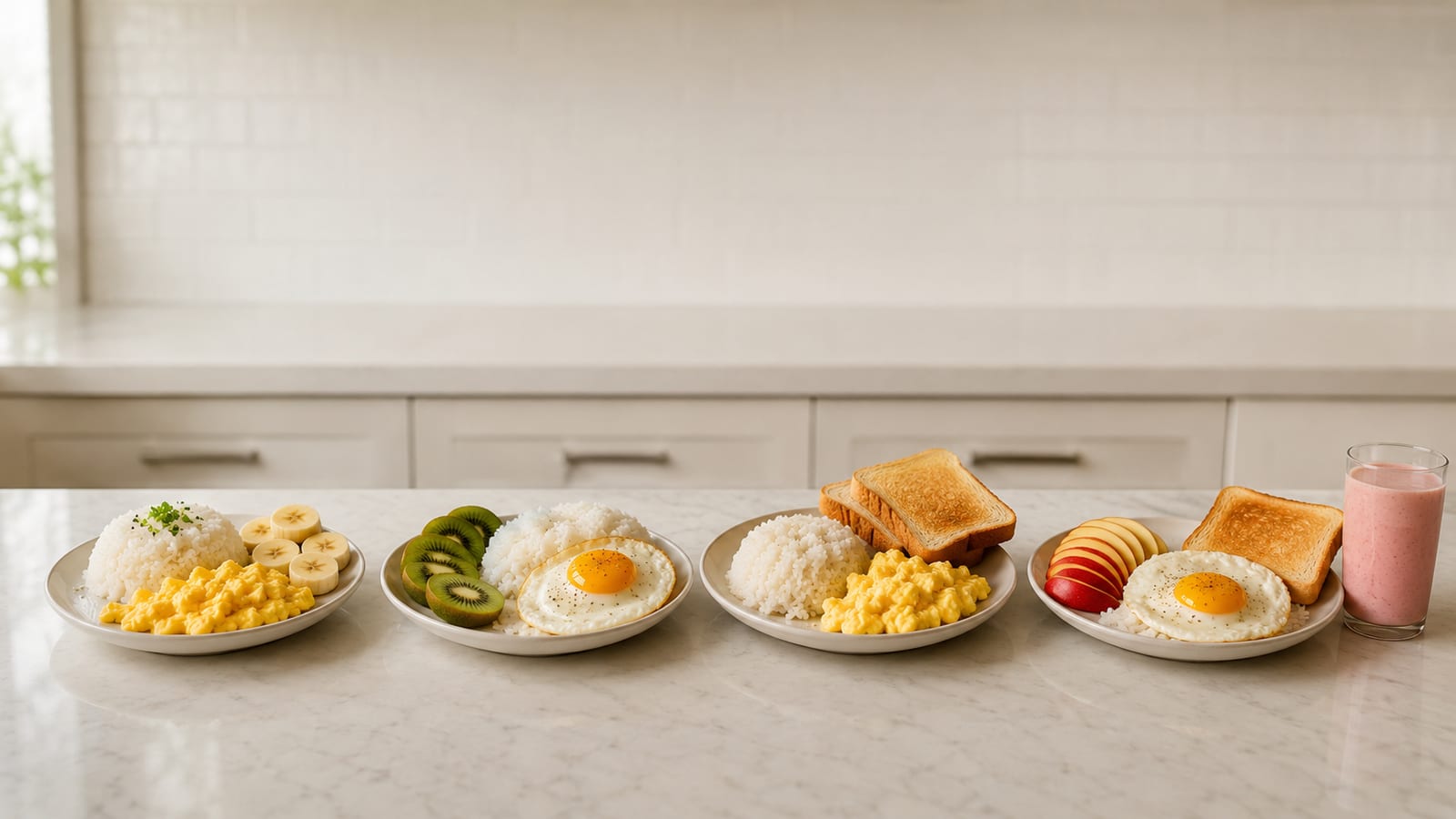
This is a filling, familiar meal for a hard session when eaten well before activity. Rice supplies the main carbohydrate, eggs add protein, and fruit rounds out the meal.
Keep the eggs and cooking oil moderate. A greasy rice dish may taste good but can become a problem during sprints or repeated changes of direction.
Applesauce pouch and crackers
This is the best light portable option when time is short or a full meal would feel heavy. The food is easy to carry, low in mess, and mostly carbohydrate.
Add milk, yogurt, or a small turkey roll-up if enough time remains and the athlete wants protein. Otherwise, serve a normal meal after practice.
Hydration starts before practice or competition
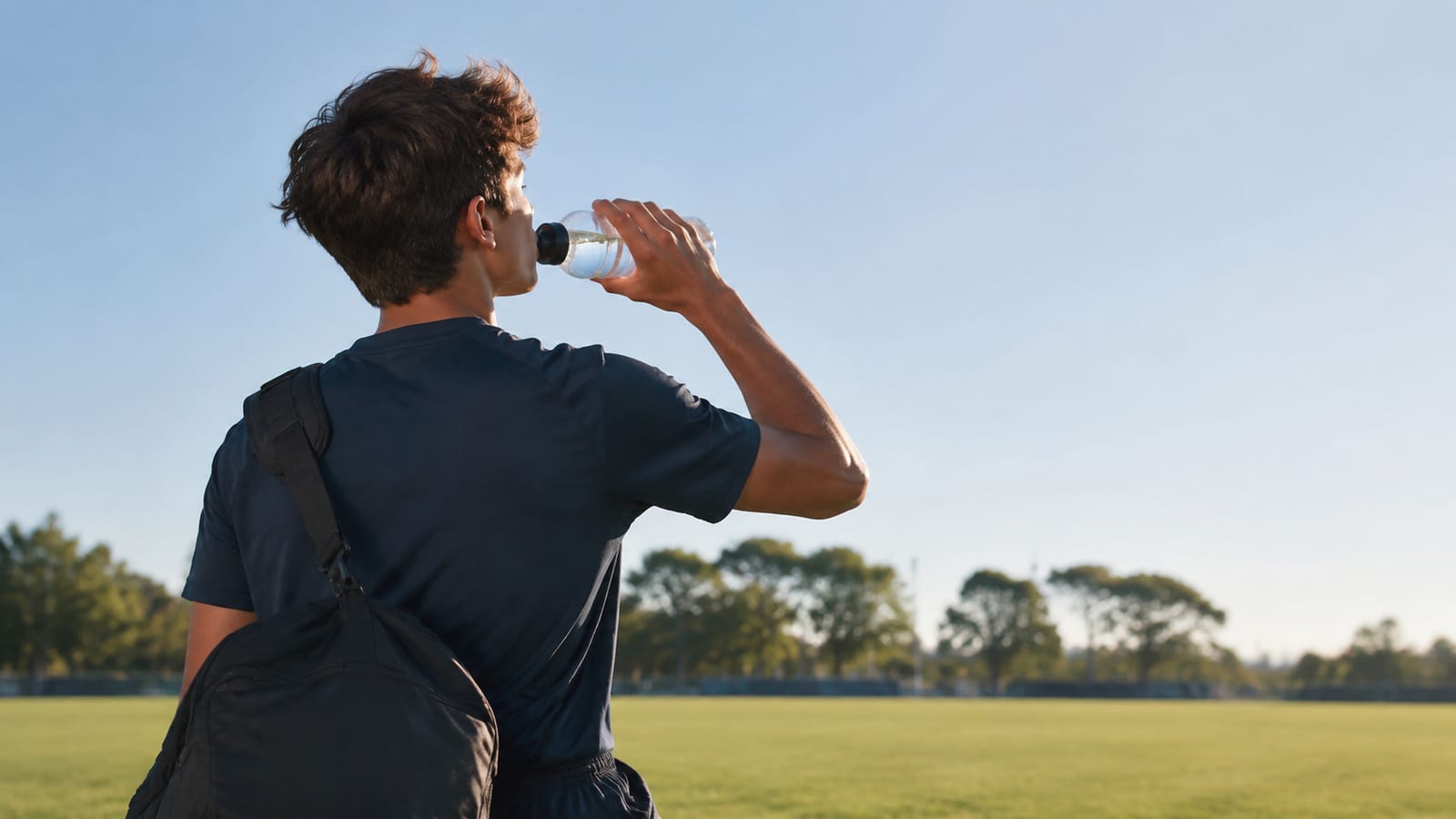
Water should be available across the day. Athletes should drink regularly instead of waiting until warm-ups to take large amounts.
For athletes, the recommended pre-exercise fluid amount is approximately 5 to 7 ml of fluid per kilogram of body weight at least 4 hours before exercise. Families do not need to turn every practice into a math exercise, but this guidance shows why pre-practice hydration starts well before the field or gym.
A sports drink may help during long events, hot conditions, heavy sweating, or back-to-back games. It supplies fluid and carbohydrate, and some products also contain electrolytes. Use adult guidance for young athletes, especially if the child has a medical condition or has been told to follow a specific fluid plan.
For an ordinary practice, water and regular meals are usually enough. Energy drinks are a poor choice for children and teens because they can contain large amounts of caffeine and other stimulants. The American Academy of Pediatrics advises against energy drinks for children and adolescents.
Portable snacks for busy schedules
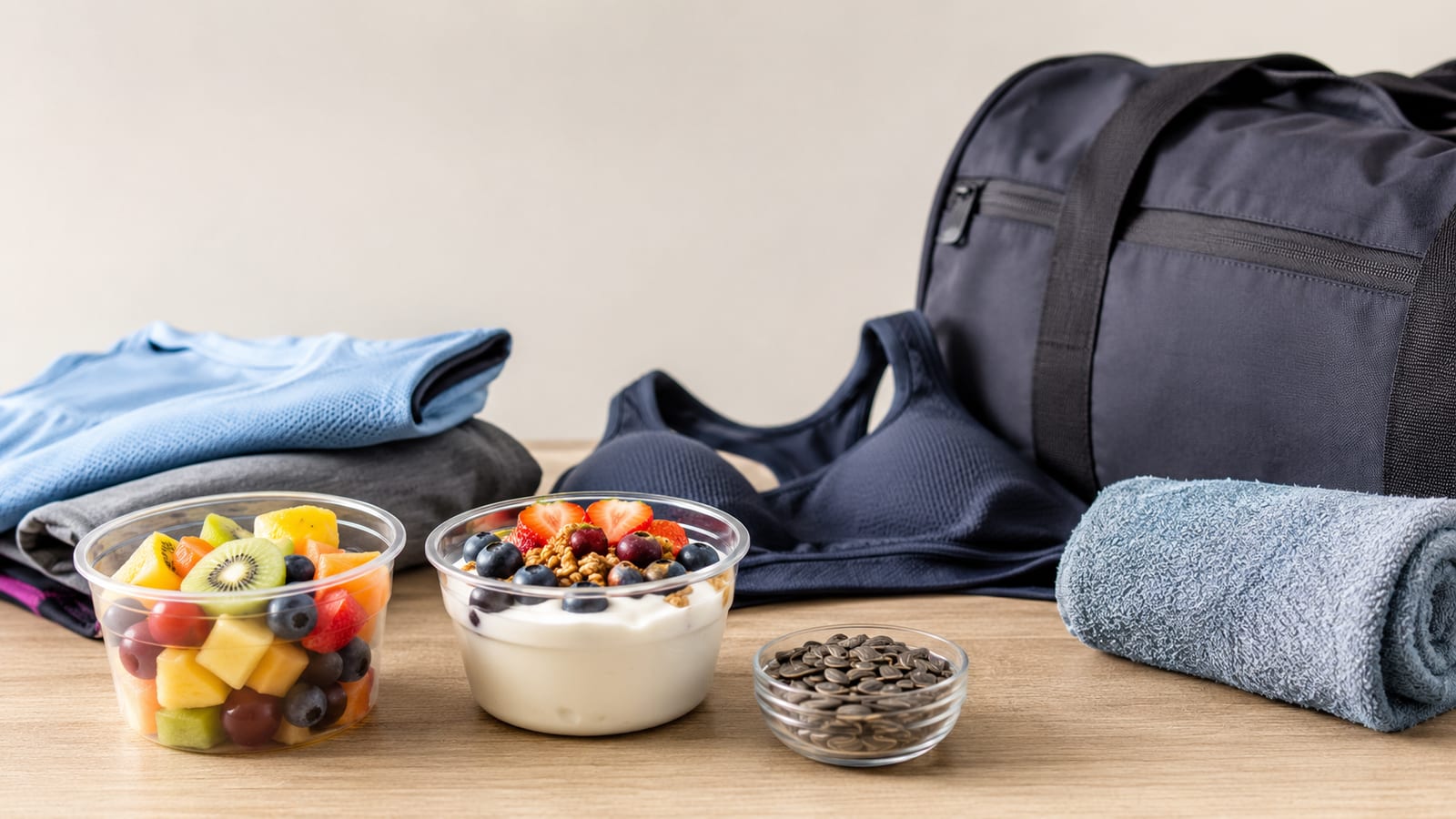
After-school practice creates a predictable problem: the athlete leaves school hungry and reaches the field with no plan. Pack food before the morning rush.
Affordable, low-mess choices include:
- Banana
- Applesauce pouch
- Pretzels
- Plain crackers
- Bagel
- Jam sandwich
- Low-fiber cereal in a container
- Fig bar
- Yogurt pouch with an ice pack
- String cheese with crackers
- Turkey roll-up
- Toast or a simple muffin
Keep one shelf-stable option in the sports bag and another in the car. Replace food that melts, spoils, or gets crushed. A snack that stays home cannot fuel practice.
For more after-school timing ideas, use this guide to what to eat before after-school practice. It belongs in the same plan as school lunch, not as a last-minute rescue after the athlete is already tired.
Post-workout recovery still matters
The pre-workout snack supports the session. The meal afterward replaces used energy and supports growth and recovery.
After demanding activity, offer carbohydrates, protein, and fluids. Try:
- Chocolate milk with a bagel
- Rice with chicken or tofu
- Pasta with lean meat
- A bean and cheese burrito
- Yogurt with cereal and fruit
- Eggs with toast and fruit
The meal does not need to arrive the moment practice ends. However, a young athlete who has another practice, game, or long school day ahead should not wait until bedtime to eat.
See the full guide to recovery nutrition for youth athletes for ideas that fit normal family meals.
Mistakes that make pre-workout eating less safe
Several common habits create trouble before activity:
- Using energy drinks or stimulant supplements: Young athletes do not need them for normal practice.
- Testing unfamiliar foods on game day: A food can be nutritious and still cause cramps or diarrhea.
- Eating too much fat close to practice: Fried foods and heavy sauces digest slowly.
- Eating too much fiber right before running: Large salads, beans, and bran-heavy foods may cause gas or urgency.
- Skipping meals, then overeating before practice: The athlete may feel both under-fueled and uncomfortably full.
- Following rigid timing rules: Appetite, tolerance, travel, and training load vary.
- Treating sports products as a meal: A bar or drink cannot replace enough food across the day.
- Chugging fluids at the last minute: Large amounts can slosh in the stomach and make warm-ups uncomfortable.
Supplements deserve extra caution. Products can contain ingredients that young athletes do not need, and labels do not always make the full risk easy to judge. The U.S. Anti-Doping Agency supplement guidance explains why athletes and families should check products carefully.
Adjust for digestion, allergies, budget, and medical needs
Start with ordinary groceries. Rice, bread, bananas, oats, eggs, milk, yogurt, potatoes, and crackers can cover most pre-workout needs without a specialty product.
If an athlete gets stomach trouble, change one thing at a time. Test the food during an easy practice and record the meal, timing, heat, pace, and symptoms. Persistent pain, vomiting, bloody stool, fainting, or symptoms that limit training need a qualified clinician.
Allergies and food restrictions require a real plan. Parents, coaches, and athletes should know the allergy-safe swaps before competition day. A sports dietitian can help if the athlete follows a restricted diet, loses weight without trying, has repeated stomach symptoms, or struggles to eat enough for training.
Protect the athlete’s relationship with food, too. Young people need regular meals and enough total energy for growth, school, movement, and recovery. Fear-based rules about sugar, weight, or “perfect” eating can do more harm than a familiar snack that contains a little processed food.
A simple after-school practice plan
Pack the snack before school. Then use the time available:
- Several hours before practice: Eat a normal meal with rice, pasta, potatoes, bread, or oats, plus protein and fluids.
- A few hours before: Choose a sandwich, wrap, yogurt with cereal, or bagel with a modest spread.
- Closer to practice: Use fruit, toast, cereal, yogurt, or crackers.
- Shortly before practice: Choose a small banana, applesauce pouch, pretzels, or plain crackers.
- After practice: Offer a normal meal or snack with carbohydrates, protein, and fluids.
This plan works because it starts with the athlete’s schedule. It does not ask a tired child to follow a complicated food chart from the car.
FAQ
Should a child eat before every practice?
Not always. A child who recently ate a normal meal may need only water before an easy practice. However, an athlete coming from a long school day or heading into hard training will often benefit from a small carbohydrate snack.
Are whole-grain foods safe before sports?
They can be, especially when eaten well before activity. Close to running or competition, some athletes digest lower-fiber bread, cereal, or crackers more comfortably. The athlete’s response matters more than a label.
Is a smoothie a good pre-workout meal for a young athlete?
A small smoothie can work if the athlete has used it in practice and dairy or other ingredients digest well. Keep it simple with fruit, yogurt or milk, and a carbohydrate such as oats. A large smoothie close to activity may feel heavy.
What if the athlete refuses food before practice?
Do not force a full meal. Offer a small familiar option such as toast, a banana, crackers, or applesauce, then provide a normal meal after practice. Repeated refusal, poor growth, low energy, or weight loss deserves help from a clinician or sports dietitian.
Does a young athlete need a sports drink at every game?
No. Water is usually enough for ordinary activity. A sports drink may make sense for long events, heat, heavy sweating, or several games in one day, with adult guidance and regular food still part of the plan.