

What if your biggest performance hurdle isn’t your training, but your travel day?
Competition means movement. You drive, fly, or ride to events—local trips or international journeys. Your usual routine shatters.
On the road, good food choices vanish. Airport terminals and gas stations offer few nutrient-rich options. Dehydration creeps in during long flights or bus rides.
Your body feels it. Cross-time zone travel and poor sleep spike stress. Inflammation rises. Energy drains.
Your fueling plan needs to be as smart as your training plan. This isn’t about complex science. It’s actionable steps.
You’ll learn how to prep meals, stay hydrated, and make smart picks. Time your intake to support your body even when schedules are chaotic. For example, packing healthy desserts for athletes can be a simple win.
These tips protect your edge. They help you feel ready when it matters most.
Pre-Trip Nutrition Planning
Smart fueling starts long before you leave your front door. Take time to plan your meals and snacks. Calculate your travel time and pack a buffer for delays.

This preparation saves you from scrambling for decent food when tired. It keeps your energy steady.
Meal and Snack Preparation
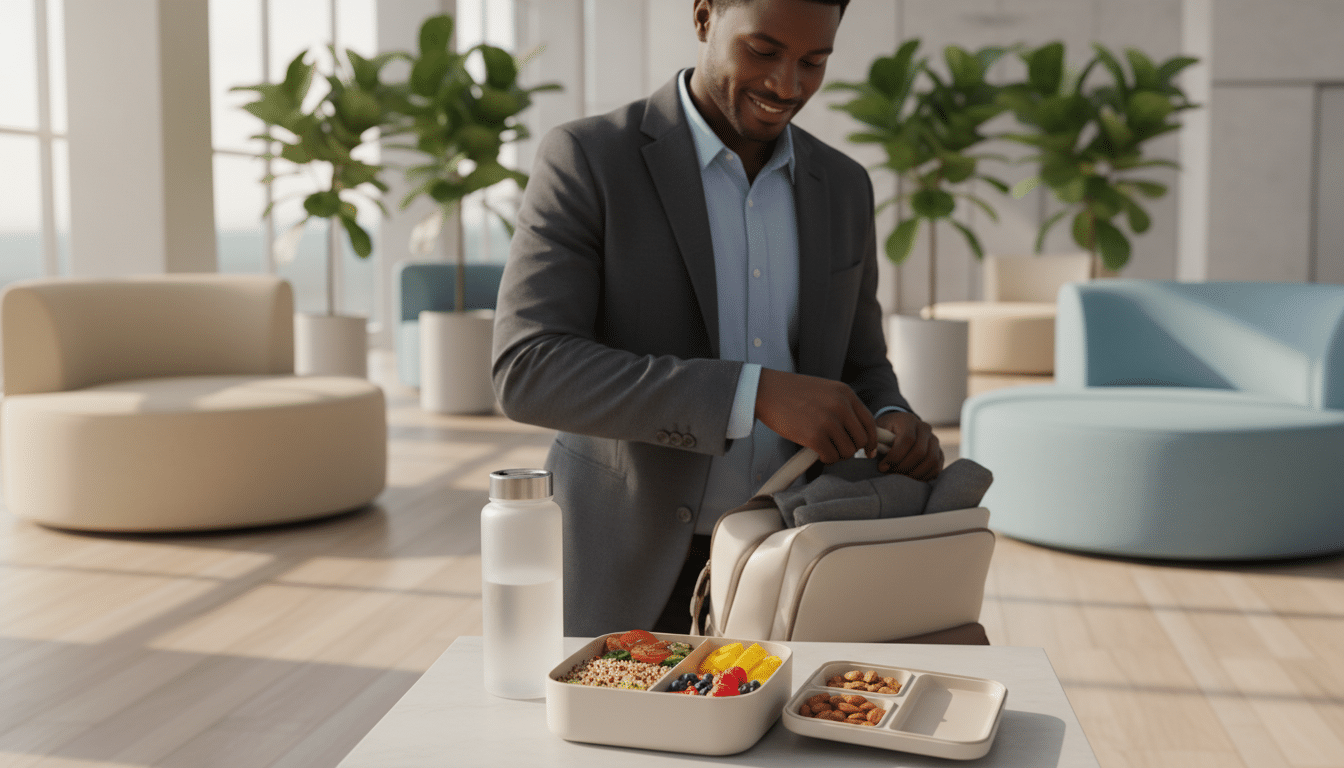
Pack a dedicated food bag to replicate your home environment. Include protein-rich options like jerky, nuts, and tuna packets. They promote satiety and prevent crashes.
Choose higher-fiber carbohydrates. Whole-wheat products and oatmeal cups support digestion. They keep you full longer.
Pre-make sandwiches or overnight oats the night before. This ensures you have real food ready.
Supplement and Hydration Strategies
Optimize hydration with electrolyte mixes and salty snacks. Use an empty water bottle to fill after security.
Sip fluids steadily. This maintains levels without frequent bathroom trips.
Organize supplements in a pill container. Pack extras for delays. Consistency supports your immune system and meets your needs.
On-Road Fueling Options
Your energy on the move depends on the fuel you pack, not the options you find. Good food choices vanish at terminals and rest stops.
Having your own supply prevents desperate, poor decisions. It keeps your mood and stamina steady during long hauls.
Portable Protein and Carbohydrate Choices
Protein-rich foods are essential for satiety. They help you avoid mindless eating. Shelf-stable items like jerky or tuna packets are perfect.
Protein bars are a top pick. Look for ones with clean ingredients and at least 15 grams of protein. They’re a compact, mess-free solution.
Nuts like almonds or cashews deliver lasting energy. Their healthy fats and protein curb hunger. Pack them in small bags for easy access.
For carbohydrates, choose higher-fiber options. Whole-wheat crackers or oatmeal cups support digestion. They provide sustained energy without crashes.
Fresh fruit is another great snack. Apples and bananas offer quick, natural sugars and fiber. They require zero preparation.
If you run out, seek smart airport options. Greek yogurt, hard-boiled eggs, or deli sandwiches are solid backup foods. The key is planning ahead.
Recovery Nutrition for Travel Days
Timing your intake correctly can turn a chaotic travel day into a productive part of your training cycle. It’s about strategic fueling.
Nutrient Timing for Performance
Your body needs specific nutrients at key moments. Eat a balanced meal with protein and carbs within 60-90 minutes after training.
This window is critical for muscle recovery and glycogen replenishment. Keep protein intake consistent—aim for 20-30 grams per meal.
If crossing time zones, adjust your meal schedule a few days before departure. This helps your body adapt faster and minimizes digestive stress.
Consider adding immune-supporting supplements like blackcurrant powder three days before you leave. It enhances antioxidant status.
For morning training, a caffeinated version can boost performance. Use non-caffeinated options in the evening to protect sleep quality.
Food Selection for Quick Energy
Choose foods that provide rapid fuel without causing digestive distress. Easily digestible carbs like white rice or bananas are excellent.
Pair them with lean protein for a complete refuel. This combination helps you bounce back quickly when time is tight.
Small, frequent meals work better than large ones during heavy travel periods. They maintain steady energy levels and are easier on your system.
Prioritize antioxidant-rich foods to combat oxidative stress from training and transit. This supports your immune function on the road.
Healthy Eating at Airports and Restaurants
You don’t have to sacrifice your fueling goals when you’re eating away from home. Good nutrition is possible whether you’re in an airport terminal or at a restaurant.
Smart Choices with Limited Options
At an airport food court, scan all your options first. Look for Greek yogurt with granola or a deli sandwich with lean meat and veggies.
Hard-boiled eggs and ready-to-drink protein shakes are other solid airport food picks. Choosing Greek yogurt over a pastry makes a big difference.
In sit-down restaurants, pick grilled, baked, or steamed proteins. Avoid fried food to limit excess oil.
Build your meal with vegetables filling half the plate. Add a lean protein and a whole grain like rice or quinoa.
Always ask for dressings and sauces on the side. This simple step lets you control what you eat.
Skip sugary drinks—stick with water or unsweetened tea. A little research before you travel finds better restaurants and grocery stores near your destination.
Eating well on the road requires attention, but these strategies keep your nutrition on track.
Maintaining Hydration and Energy Levels
Keeping your energy up and your mind sharp on the road starts with one simple habit: consistent hydration. Dehydration is common on long plane or bus rides. It directly saps your stamina and focus.
Effective Use of Water and Electrolytes
Always carry a reusable water bottle. Make refilling it a core part of your daily routine. Sip steadily throughout your day instead of drinking large amounts at once.
For road trips, bring a gallon container to refill your bottle easily. This saves time and ensures you always have access.
Add electrolyte tablets or powders to your water when training hard or in hot climates. They replenish key minerals your body loses through sweat. These drinks are a travel-friendly boost.
Pair your water intake with salty snacks like pretzels or trail mix. This helps your body retain fluids and minimizes frequent bathroom breaks.
Include water-rich foods in your meal. Watermelon, cucumbers, and oranges boost your fluid intake from multiple sources.
Monitor your hydration by checking urine color. Pale yellow means you’re well-hydrated. Dark yellow means drink more immediately.
Conclusion
The difference between feeling drained and feeling ready often comes down to a well-packed bag.
Your travel nutrition success relies on planning and consistency. Preparing your meal and snacks removes guesswork when you’re tired.
Stick to familiar foods on the road. Trying new cuisine right before an event risks stomach issues that hurt your performance.
Spend 15-20 minutes before leaving. Organize your bag with protein sources, fruit, and whole grains. Keep a checklist on your phone for essentials.
This protects your health and energy. These strategies become automatic with practice, fitting seamlessly into your pre-trip routine.
You’ll show up prepared, no matter the journey.