


What if the food you eat between games is the deciding factor in winning your next match?
You compete in events where matches happen back-to-back. Sometimes you have less than 48 hours to reset. What you consume in that window directly shapes your speed, strength, and focus for the following contest.
Your body needs specific fuel to rebuild muscle and restore energy stores. This isn’t just about eating—it’s about strategic replenishment. Athletes who plan their intake around a tournament schedule bounce back quicker. They maintain a high level of performance across multiple games and lower their risk of injury from fatigue.
This guide cuts through the confusion. It gives you practical, evidence-based strategies for what to eat and drink. You’ll learn how to time your meals, choose the right foods, and stay hydrated when the schedule is tight.
Understanding this process helps you make confident food choices. You support your goals instead of guessing or grabbing whatever’s convenient.
Foundations of Recovery Nutrition During Tournaments
Your tournament success hinges on two key nutrients that work together like a well-oiled machine. A solid plan starts with knowing what your body needs to perform and repair.
Importance of Carbohydrates and Protein
Carbohydrates are your main fuel source. They should make up 60-70% of your sports diet. This powers every sprint and jump.
Protein is your repair crew. Aim for 15-20% of your intake. It rebuilds muscle tissue after hard games.
Your long-term goals involve three meals and two snacks daily. This pattern supports growth and meets training demands.
Short-term goals focus on specific pre and post-game foods. This maximizes your output for each event.
| Nutrient | % of Diet | Primary Role | Best Timing |
|---|---|---|---|
| Carbohydrates | 60-70% | Primary energy for high-intensity effort | Before & during games |
| Protein | 15-20% | Muscle repair & strength support | After games & with snacks |
| Healthy Fats | 15-20% | Supports overall body health | With meals, not right before play |
Understanding Glycemic Index
The glycemic index (GI) measures how fast foods raise blood sugar. Low GI carbs give you steady energy.
High GI foods like sweets and white bread cause sharp spikes. This leads to crashes and cravings.
Your snacks should pair protein with low GI carbohydrates. This combo avoids the blood sugar roller coaster. For ideas on effective post-game combinations, explore these smart food choices.
This foundation helps your body adapt to a tight schedule. It supports your long-term athletic development.
Meal Timing and Balanced Diet for Competition
Timing your meals correctly is just as important as choosing the right foods for competition. Your plan should cover the night before, the hours leading up to play, and the window after your event.
Pre-Game Carb Loading
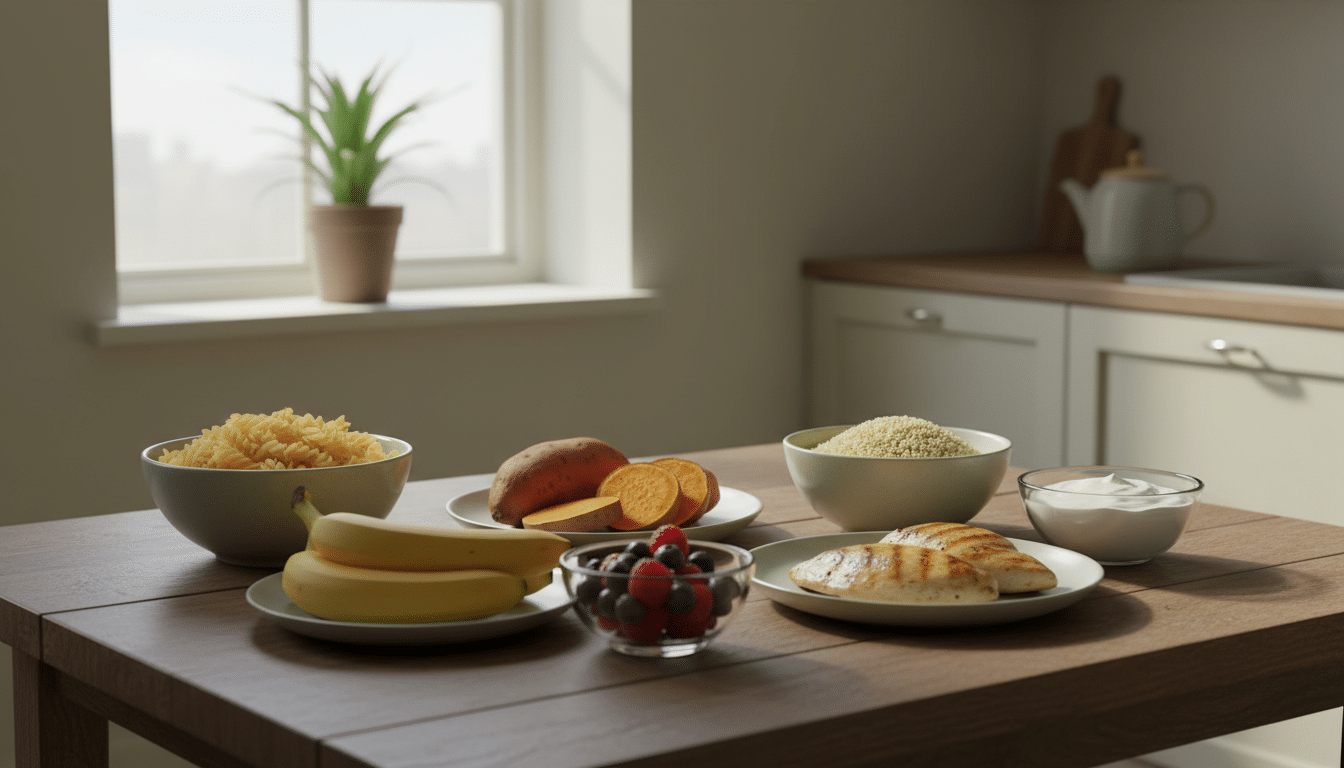
Eat a carb-rich meal the night before. Choose whole-wheat pasta, rice, or potatoes with grilled chicken. This stocks your muscles with energy.
Have your main meal three to four hours before game time. Include complex carbohydrates like oats or beans and about 25 grams of protein. These foods provide sustained energy.
Consume a light snack one to two hours before playing. A banana or graham crackers offer quick fuel. Avoid fatty or high-fiber foods right before your game.
Post-Game Protein Repair
Eating after your game is crucial for repair. Competition breaks down muscle tissue.
A high-protein meal helps rebuild it. Good choices include poultry, fish, or legumes.
Snacking Options for Young Athletes
During a long game, simple carbohydrates can refuel you. They give a fast energy boost.
Smart mid-game options include dried fruit, orange slices, or half a banana. These are easy to digest and provide quick energy.
| Phase | Timing Window | Primary Goal | Food Examples |
|---|---|---|---|
| Pre-Game | 3-4 hours before | Sustained energy release | Oatmeal, chicken, rice |
| During Game | Breaks in play | Quick energy boost | Graham crackers, dried fruit, banana |
| Post-Game | Within 1-2 hours after | Muscle repair and replenishment | Grilled chicken, fish, lentils |
Hydration Strategies and Prevention of Dehydration
Even mild dehydration can sabotage your focus and physical output during sports. Your body loses water and electrolytes through sweat when you exercise. This increases the effort needed to perform and hurts your concentration.
Fluid Replacement and Electrolyte Balance
You can calculate your daily water needs with a simple formula. Divide your body weight in pounds by two. Drink that number in ounces each day.
Proper hydration on game day prevents muscle cramps and fatigue. It is a core part of your tournament day strategy.
During long games, drink both water and sports drinks. Sports drinks have the right salt and sugar to help your body absorb electrolytes. Plain water alone can dilute them if you overdrink.
Check your urine color to monitor your status. Light or pale yellow means you’re well-hydrated. Dark yellow means you need more fluids.
| Age Group | Daily Water Recommendation |
|---|---|
| 4-8 years | 57 ounces |
| Girls 9-13 | 71 ounces |
| Boys 9-13 | 81 ounces |
Most young athletes do not meet these targets. Staying on top of your hydration supports your overall health and performance.
Foods and Snacks for In-Game Energy and Recovery
Smart food choices between events are your secret weapon for sustained power. The right foods provide steady fuel and the building blocks your body needs.
Whole Grains and Lean Protein Choices
Base your meals on whole grains like rice, quinoa, and pasta. These carbohydrates refill your muscle energy stores.
Add lean protein like chicken, fish, or tofu. This combo supports repair without heavy fats that can slow you down.
For quick energy, pack portable snack options. They bridge the gap between games and main meals.
| Snack Type | Primary Benefit | Serving Example |
|---|---|---|
| Whole Grain Carbs | Long-lasting energy | Rice cakes, whole-wheat toast |
| Lean Protein Combos | Muscle repair support | Greek yogurt, tuna sandwich |
| Fruit & Dairy | Quick carbs + protein | Fruit salad with yogurt, a smoothie |
| Convenient Sports Foods | Grab-and-go energy | Granola bar, cereal bar (check label) |
Include vegetables and fruits for essential vitamins. Eating this way keeps your energy high all day long.
Effective Recovery Nutrition During Tournaments
Scientific evidence provides clear guidelines for what to eat after a game to speed up your body’s repair process. When your schedule packs multiple events into a few days, your dietary strategy must adapt.
Adapting Nutrition for Fixture Congestion
Playing games with only 48 to 72 hours between them demands higher daily intake. You need to fully replenish energy stores and support muscle repair.
Injury risk jumps 6.2-fold for athletes playing two matches weekly versus one. Most injuries stem from overuse and accumulated fatigue.
Your targets change with a congested calendar. The table below outlines key daily goals.
| Nutrient | Daily Target (per kg body mass) | Example for 80 kg Athlete | Primary Goal |
|---|---|---|---|
| Carbohydrates | 6-10 g | 480-800 g | Restore muscle & liver glycogen |
| Protein | >1.5 g | >120 g | Maximize muscle protein synthesis |
| Fluid Replenishment | 150% of mass lost | Drink within 1 hour post-game | Replace sweat losses & electrolytes |
Evidence-Based Recovery Strategies
Start your refueling within 20 minutes of the final whistle. Consume about 1.2 grams of carbs per kilogram of body weight each hour plus 40 grams of protein. This jump-starts glycogen restoration and muscle repair.
Spread your protein across the day. Six smaller feedings of 20-40 grams every three hours optimizes synthesis.
Many young competitors run a daily energy deficit of 300-500 calories. This deficit can suppress immune function and heighten fatigue.
Strategic use of supplements like creatine or omega-3s may offer practical support. Always base your plan on whole foods first.
Conclusion
A planned dietary approach turns recovery time into a performance advantage. What you eat plays a direct role in how you feel and compete over multiple days.
Athletes who time meals, choose the right food, and hydrate well gain a measurable edge. This strategy directly supports your energy, strength, and focus.
Start at your next event. Pack smart snacks, calculate your fluid needs, and eat soon after playing. This supports your immediate goals.
This nutrition plan also aids long-term health and growth. Treat your diet with the same intention as your training—it’s competitive preparation.
Mastering this gives you confidence. You make decisions that help you show up ready. Quality sleep, hydration, and balanced meals work together for consistent results.