

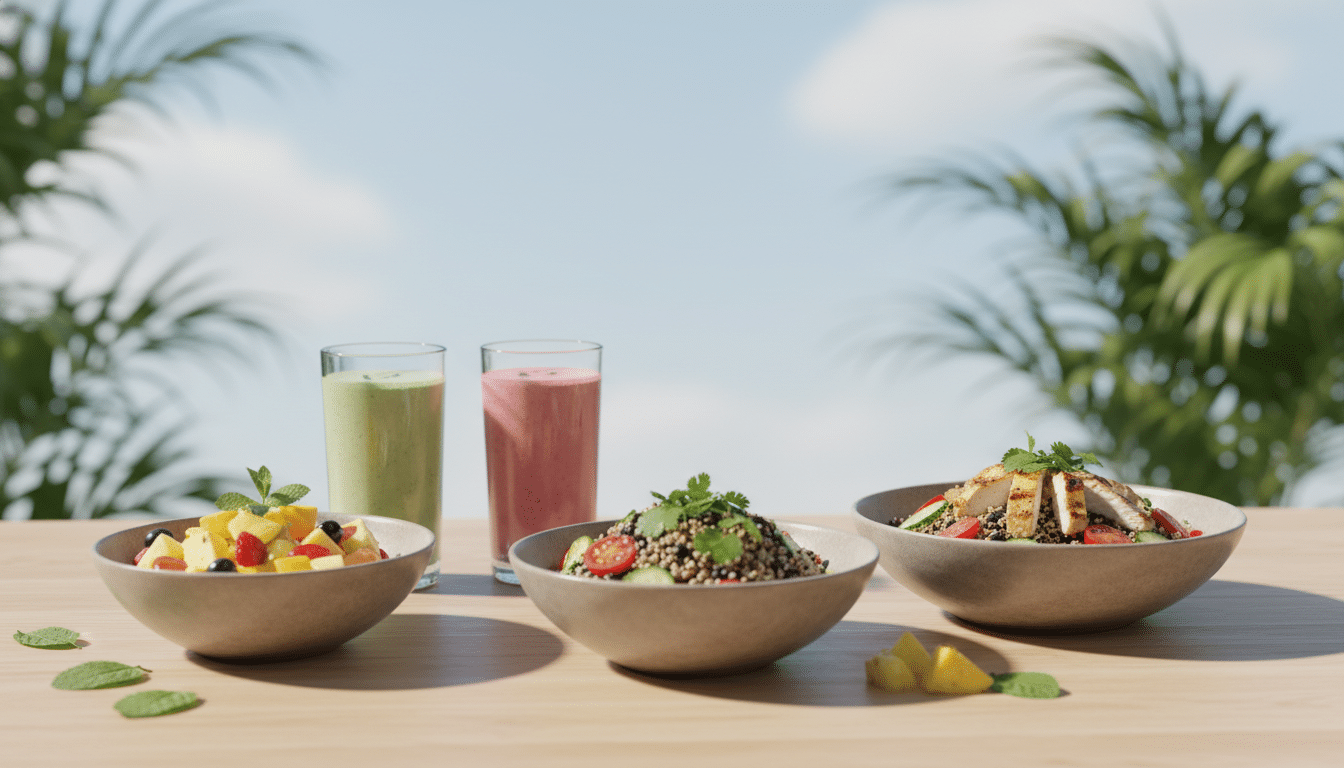
Pre workout meals for hot weather should fuel your session without leaving you soggy and slow in the heat. You’ll learn simple timing tips, smart macros, and fridge-friendly choices that keep energy steady and performance sharp.
This intro explains what “pre-workout” food means in warm conditions and why heat changes what you want to eat. In short: aim to eat about 2–3 hours before training when you can. If your appetite is low, choose lighter or liquid options.
Expect clear guidance on timing, carbs and protein, hydration, and safe packing in summer heat. I’ll offer both full meal ideas and fast snack swaps you can grab on busy days. The focus stays on cold, no-cook, and fridge-friendly options that work for active adults across the United States.
Main goal: give you usable fuel for workouts without stomach heaviness. By the end, you’ll know what to eat, when to eat it, and how to keep food safe and practical in summer humidity.
What changes with fueling in hot weather workouts
When temperatures climb, your appetite often falls—and that shifts the kind of fuel your body will accept. You may not want a big plate. That’s normal. Adjusting how and what you eat can keep energy up without discomfort.
Heat can blunt hunger. Your body diverts blood to the skin to cool down. That reduces stomach signals. Smaller portions often feel easier to handle before exercise.
Why lighter choices work
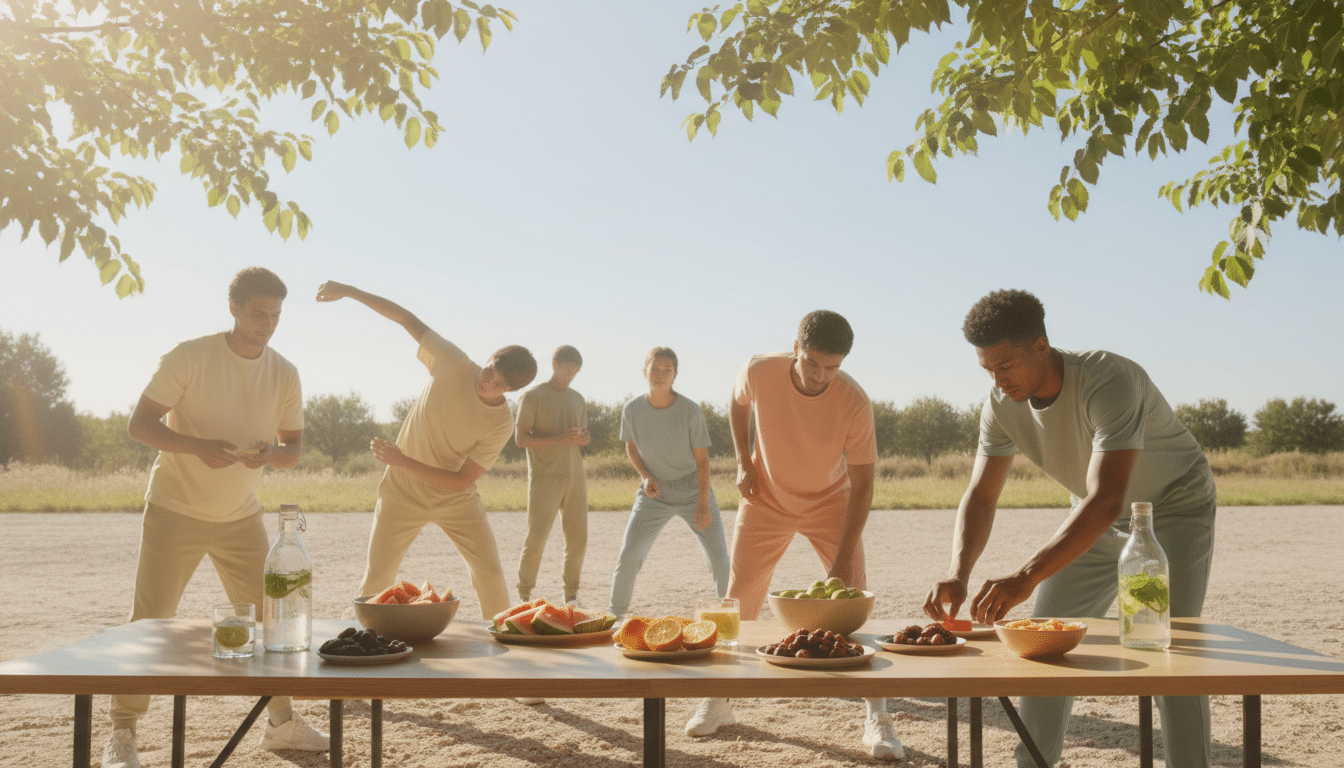
Cold or room-temperature options sit lighter in the stomach. They usually need less digestion. That makes them a practical way to get calories in when appetite is low.
- Yogurt with fruit — easy, quick carbs and protein.
- Fresh fruit or a banana — simple sugars and fluid.
- Cold grain bowls — rice or quinoa with lean protein.
| Option | Typical portion | Why it works |
|---|---|---|
| Greek yogurt + berries | 1 cup yogurt, 1/2 cup fruit | Protein plus quick carbs; cool and easy to eat |
| Cold grain bowl | 1 cup grain, 3–4 oz protein | Sustained energy without heavy fats |
| Fruit + nut butter | 1 banana, 1 tbsp nut butter | Compact calories when appetite is low |
Remember: lighter doesn’t mean weak. Include carbs and protein so your session stays strong. Match portion size to how your stomach feels, not just what you think you should eat.
These appetite shifts also affect timing. If you feel off, choose smaller, cooler bites and read on to learn when to eat them.
Timing your pre-workout meal in the heat
Plan your eating around training time so you feel steady and light during exercise. Good timing keeps energy high without weighing you down.
Eat a fuller meal about two to three hours before exercise
A balanced meal 2–3 hours before training should pair carbs and protein with moderate unsaturated fat. Think a grain bowl with lean protein, or yogurt with fruit and a small handful of nuts.
Use this window for midday sessions or after-work training. You have time to digest, so portions can be fuller and more varied.
Use a small snack about 30 minutes before training when you need quick fuel
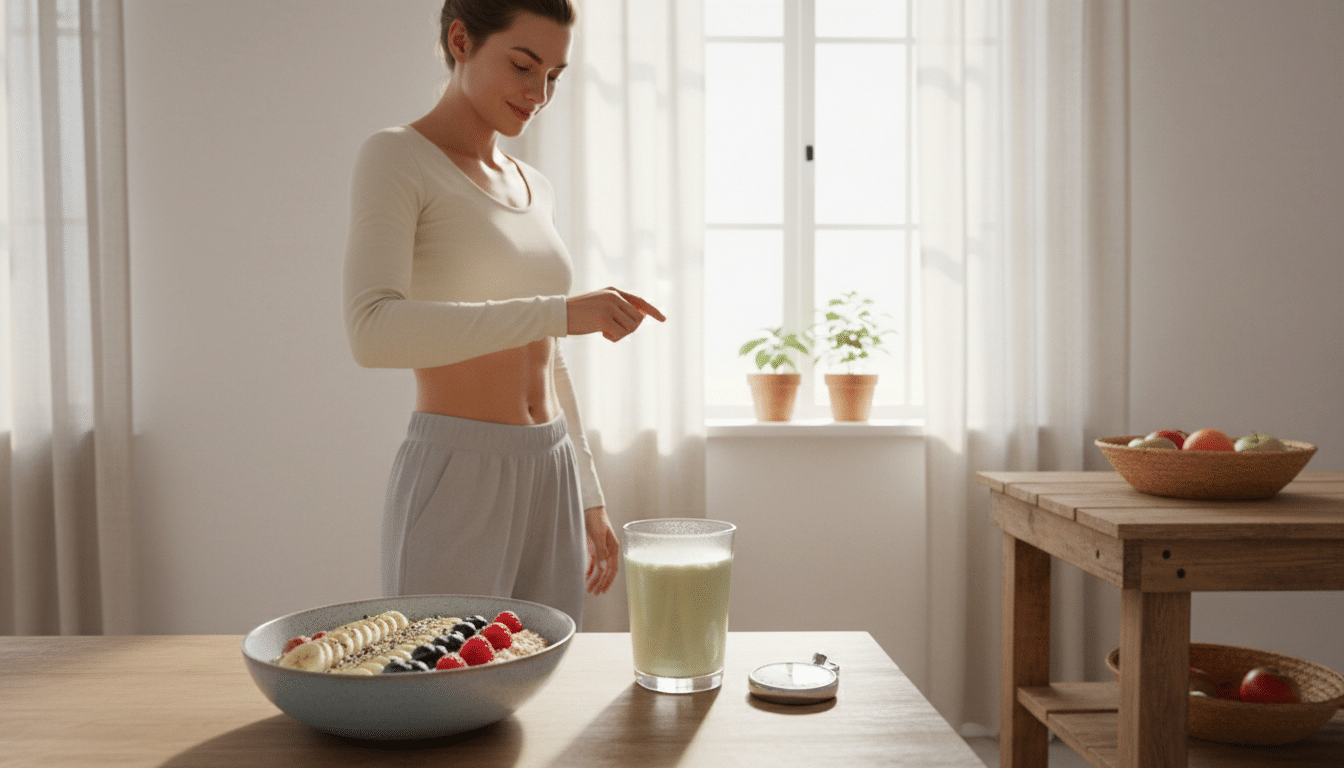
A 30-minute snack tops off energy with quick carbs and a little protein. Examples: a banana with a smear of nut butter, or a small yogurt cup. Keep it low in fat to speed digestion.
Choose a meal or a snack based on your schedule, appetite, and session length. Simple rule: the closer the time to training, the smaller and lower-fat the portion should be.
- Early morning tip: grab cold, pre-made options to skip cooking and decision fatigue—see morning training tips here.
- Consistency: eat on a similar schedule each day so your stomach learns when to expect fuel.
| When | What to eat | Why it works |
|---|---|---|
| 2–3 hours before | Grain + lean protein + small fat | Sustained energy and fuller nutrition without heaviness |
| 30 minutes before | Quick carb + little protein | Immediate fuel, easier digestion, steadier energy |
| Early morning | Cold, ready-to-eat options | Reduces cooking, eases low appetite, saves time |
Macros that work before summer training
Pick light, familiar carbohydrates and compact protein sources to keep energy steady and digestion calm.
Carbohydrates support training energy
Carbohydrates are the body’s main short-term fuel. They break down quickly into sugar that your muscles use during activity.
Easy summer carb picks: oats, rice, fruit, honey, noodles, and tortillas. These digest faster and feel lighter when it’s warm.
Protein supports muscle and adaptation
Protein helps repair tissue and supports muscle gains after sessions. You don’t need a heavy plate to get benefit.
Choose light options like Greek yogurt, cottage cheese, tuna, chicken, tofu, or edamame to add steady amino acids without heaviness. That helps recovery and performance.
Keep fat moderate close to training
Fat slows digestion, so large amounts can feel heavy before you move. Unsaturated fat is healthy, but keep portions small near exercise.
Watch high-fat add-ons such as nut butter and even butter. Use a smaller spoonful or skip them when you’re about to train.
| Macro | Why it helps | Quick examples |
|---|---|---|
| Carbohydrates | Immediate energy | Oats, rice, fruit |
| Protein | Muscle repair and adaptation | Greek yogurt, tuna, tofu |
| Fat | Slows digestion; use sparingly | Olive oil small portion, nut butter scaled down |
Hydration and electrolytes you can get from food
Sweat raises fluid and salt losses, so food can be a simple way to top up before exercise. Eating items that contain water and electrolytes helps your body feel steady and keeps energy steady on humid days.
Coconut water and sweet fruit as drinkable options
Coconut water is a handy, drinkable choice that adds potassium and mild sodium. It’s easy to sip when you don’t want a heavy drink.
Whole fruit also supplies quick carbs and fluid. Good picks: watermelon, grapes, oranges, berries, and mango. Pair a piece of fruit with a small protein source to make it a true pre-session snack.
Water-rich produce you can eat cold
Veggies and melon add water plus light nutrients without weight. Try cucumbers, tomatoes, leafy greens, and cantaloupe chilled in a container.
- Keep produce cold in an insulated bag so it stays appealing.
- Food helps hydration, but it does not replace drinking water—drink regularly.
| Food | Main benefit | Quick pairing |
|---|---|---|
| Coconut water | Electrolytes and fluid | Half bottle + banana |
| Watermelon | High water content, carbs | Handful of berries + yogurt |
| Cucumber & greens | Hydration + micronutrients | Slice with cottage cheese |
Pre workout meals for hot weather
Short, chilled breakfasts can deliver steady fuel without leaving you sluggish when temperatures rise. Below are simple, fridge-friendly recipes that pack carbs and protein without heavy digestion.
Greek yogurt parfaits with berries, chia, oats, and optional protein powder
Layer plain Greek yogurt, a handful of berries, 1 tsp chia, and a small scoop (2 tbsp) of quick oats. Add a half scoop of protein powder if you want more protein without extra volume. Swap frozen berries when fresh are pricey.
Overnight oats with yogurt, berries, and honey
Combine 1/2 cup oats, 1/2 cup yogurt, 1/4 cup berries, and 1 tsp honey. Refrigerate overnight. Eat cold for an easy early-morning breakfast.
Cinnamon oatmeal with banana
Make a small bowl: 1/3 cup oats, water or milk, a dash of cinnamon, and half a sliced banana. Keep portions modest to avoid heaviness.
Peanut butter smoothie with banana
Blend 1 banana, 1 tbsp peanut butter, 6–8 oz cold milk (or alternative), and ice. Sip slowly when appetite is low.
Banana oat pancakes
Mash 1 banana + 1 egg + 1/3 cup oats. Cook small pancakes and top lightly. Use yogurt or a drizzle of honey rather than heavy syrups.
| Option | Why it works | Swap |
|---|---|---|
| Parfait | Protein-forward, cooling | Use cottage cheese |
| Overnight oats | Ready early, steady energy | Use maple instead of honey |
| Smoothie | Low-volume calories | Use almond butter |
Cold bowl meals that hold up well in the fridge
Cold grain bowls make a dependable, fridge-ready option that keeps energy steady when you need it.
Use these builds as templates. Pack components separately when you can. That keeps texture and flavor fresh.
Chicken burrito bowl template
Build: brown rice, grilled chicken, black beans, salsa, and crunchy veggies like corn and bell pepper.
Why: brown rice gives slower-release energy thanks to lower glycemic index. It keeps carbs steady for later sessions.
Grilled chicken and veggie bowl
Combine chicken, quinoa or brown rice, cucumber, tomato, and sliced peppers. Dress with lemon and olive oil.
Quinoa adds protein and texture while staying light on the stomach.
Cold soba noodle and edamame bowl
Rinse noodles cold to stop cooking. Toss with edamame and a sesame-soy vinaigrette. Add scallions and sesame seeds.
This bowl is refreshing and easy to digest.
Prawn and grain poke bowl with mango
Use cooked prawns, a mixed grain, diced mango, and a lime-soy drizzle. It feels light but energizing.
Portion tip: eat larger bowls 2–3 hours out; choose half-portions closer to training.
| Dish | Main ingredients | Why it works |
|---|---|---|
| Chicken burrito bowl | Brown rice, chicken, beans, salsa | Slow carbs, solid protein, holds well chilled |
| Grilled chicken bowl | Quinoa/brown rice, chicken, veggies | Balanced macros, light digestion |
| Soba & edamame | Soba, edamame, sesame-soy | Cold-friendly, easy carbs, plant protein |
| Prawn poke bowl | Mixed grain, prawns, mango | Light, quick digestion, refreshing |
Fridge tips: use airtight containers and ice packs if you’ll be out. Keep chicken and seafood chilled until you eat to protect body and flavor.
Fast pre-workout snacks when it is too hot for a full meal
Light, ready-to-eat bites work best when you have minutes to eat and training is close. Use these snacks when your appetite is low, the day is busy, or you want something cold and easy.
Frozen berries + nuts
Build: 3/4 cup frozen mixed berries and a small handful (12–15) raw almonds or walnuts.
This cold option adds fiber, a little fat, and lasting protein. Eat slowly about 30 minutes before activity. Keep portions modest so nothing sloshes during movement.
Fresh fruit salad with hemp hearts and coconut flakes
Build: 1 cup diced melon and pineapple, 1 tbsp hemp hearts, 1 tsp toasted coconut flakes, squeeze of lemon.
The mix gives hydrating fruit, added fiber, and a boost of plant protein. Pair with a glass of water for quick, cool energy.
Cottage cheese snack boxes
Build: 1/2 cup low-fat cottage cheese, 3/4 cup watermelon or pineapple, and 2–3 turkey slices or 1 hard-boiled egg on the side.
These boxes supply dairy protein plus fruit and a lean protein side. Eat about 30 minutes before training and keep the portion light.
- Timing cue: aim to eat these snacks ~30 minutes before activity if you tolerate food close to exercise.
- Portion tip: stick to small servings so you feel fueled but not full.
- Hydration pairing: sip water and pick a water-rich fruit to help fluid balance.
| Snack | Main benefit | Portion |
|---|---|---|
| Frozen berries + nuts | Fiber + fat + protein | 3/4 cup berries + 12–15 nuts |
| Fruit salad + hemp + coconut | Hydration + fiber + plant protein | 1 cup fruit + 1 tbsp hemp |
| Cottage cheese box | Dairy protein + fruit + lean protein | 1/2 cup cottage cheese + fruit + 2 turkey slices |
Freezer-friendly pre-workout snack ideas for hot days
Freezer snacks are a smart way to stay refreshed and fueled without turning on the oven. They cool you down, cut prep time, and give tidy carbs and a bit of protein. Keep portions small so digestion stays calm before activity.
Frozen peanut butter banana bites
Slice slightly green bananas and sandwich a thin layer of peanut butter between rounds. Freeze on a tray and transfer to a sealed container.
Use slightly green bananas for more fiber and lower sugar. Each serving: 4–6 bites. That keeps the snack light and easy to digest.
Dark chocolate drizzled berry skewers
Thread berries onto skewers, freeze, then add a light drizzle of dark chocolate. Keep the drizzle thin so the berries stay the main carb source.
Portion: 6–8 berries per skewer. Enjoy 20–30 minutes before activity.
Mango chia pops with coconut water
Blend ripe mango with a splash of coconut water and 1 tbsp chia. Pour into molds and freeze. The coconut water adds mild electrolytes and fluid.
Frozen yogurt bark
Spread Greek yogurt on a sheet, scatter chopped berries and a few chips of dark chocolate. Freeze, then break into pieces.
Keep portions to 1/2–3/4 cup equivalent. Store all snacks in airtight containers to avoid freezer burn and off-flavors.
- Why it works: icy snacks cool you and cut cooking time.
- Storage: seal and label portions so you can grab and go.
| Snack | Main benefit | Portion |
|---|---|---|
| Peanut butter banana bites | Fiber + quick carbs | 4–6 bites |
| Berry skewers | Cooling carbs | 1 skewer (6–8 berries) |
| Mango chia pops | Electrolytes + carbs | 1 pop |
| Yogurt bark | Protein + carbs | 1–2 flakes (small) |
Light, no-cook protein options that pair well with carbs
No-cook protein picks save kitchen heat and speed prep so you stay cool and ready to train. These builds are quick, fridge-friendly, and mix easily with simple carbs when you need extra fuel.
Tuna lettuce wraps (Greek yogurt option)
Build: 1 can tuna (drained), 2 tbsp plain Greek yogurt, 1 tbsp lemon juice, 2 tbsp diced celery, pinch of black pepper, 1 tsp chopped dill.
Mix gently and spoon into crisp lettuce leaves. The Greek yogurt cuts fat and adds protein without heaviness.
Chickpea lettuce wraps (hummus option)
Build: 1 cup mashed chickpeas, 2 tbsp hummus, 2 tbsp diced cucumber, 1 tbsp red onion, a squeeze of lemon, smoked paprika to taste.
This plant-based swap gives fiber and plant protein. It’s tasty, filling, and fully no-cook.
- Pairing tip: add a small side of rice, whole-grain crackers, or a piece of fruit when you want more carbohydrates or carbs during longer sessions.
- Why no-cook: less kitchen heat, faster assembly, and cooler digestion on warm days.
Rotisserie chicken plate with raw veggies
Build: 3–4 oz shredded rotisserie chicken, mixed raw veggies (cucumber, cherry tomatoes, bell pepper), 1/3 cup Greek yogurt mixed with lemon, garlic, and herbs as a dressing.
Note: choose skin-off chicken to cut fat if you plan to eat close to activity. This keeps the plate lighter and easier to digest.
| Dish | Main ingredients | When to eat |
|---|---|---|
| Tuna lettuce wraps | Tuna, Greek yogurt, celery, lemon | 30–90 minutes before |
| Chickpea wraps | Chickpeas, hummus, cucumber | 30–90 minutes before |
| Rotisserie plate | Chicken (skin off), raw veggies, yogurt dressing | 1–2 hours before |
Packing tip: keep protein chilled in an insulated bag with an ice pack and pack carbs separately to preserve texture and safety until you eat.
Pre-workout ideas for longer sessions vs short workouts
Long sessions need more carbohydrates. You burn energy over many hours, so pack steady carbs that digest well and release fuel slowly.
Use more carbohydrates for longer training sessions
Choose rice bowls, overnight oats, pancakes, or fruit plus oats before a long training block. These give sustained carbs and mix easily with a small portion of protein.
Aim to eat that bigger meal about 2–3 hours before you start. That timing lets your body absorb carbs and keeps your stomach calm during long work.
Keep portions smaller for short workouts in high heat
When sessions are short, smaller snacks are smarter. Big portions can make you sluggish or cramp in warm conditions.
Try a small bowl of yogurt and fruit, frozen berries with a few nuts, or a tiny smoothie 20–40 minutes before you move. They top off energy without upsetting your stomach.
- Test foods on regular training days, not on race day or a hard benchmark session.
- Performance tip: steady energy and fewer GI issues help you train harder and recover faster.
| Session length | When to eat | Example picks | Why it helps |
|---|---|---|---|
| Long (90+ minutes) | 2–3 hours before | Rice bowl, overnight oats, pancakes | Sustained carbs, stable energy over hours |
| Moderate (45–90 minutes) | 1–2 hours before | Parfait, grain bowl (smaller) | Balanced carbs + protein, light digestion |
| Short ( | 20–40 minutes before | Fruit + yogurt, frozen berries + nuts, small smoothie | Quick carbs, low volume, less stomach stress |
| Any length | Test on practice days | Keep a trial log | Find what fuels your body and performance |
Foods that can feel heavy before training in hot weather
Foods high in fat often take longer to digest and can feel sluggish in warm conditions. That matters when you want energy without a heavy belly during exercise.
Large high-fat meals can slow digestion close to exercise
Big fried plates, creamy sauces, and oversized portions are common culprits.
Butter, cheese, and rich dressings add concentrated fat that delays stomach emptying.
Very spicy or very large portions can increase discomfort
Spicy dishes may raise gut sensitivity and make you feel hotter while you move.
Huge portions simply sit too long; they can steal blood flow and comfort away from working muscles.
- Common heavy choices: large fried meals, creamy sauces, greasy sandwiches.
- Why they backfire: fat slows digestion and can stay in your stomach during workouts.
- Quick fix: reduce portion size, pick lean protein, and favor easy carbs.
- Smart swaps: yogurt bowls, cold smoothies, or chilled grain bowls work well.
- Try it first: avoid new or spicy food right before exercise—test on easy days.
| Problem food | Main issue | Better choice |
|---|---|---|
| Large fried meal | High fat, slow digestion | Grilled lean protein + rice |
| Creamy sauce or butter-rich dish | Concentrated fat and heaviness | Yogurt-based dressing or salsa |
| Very spicy, oversized portions | GI upset, heat discomfort | Smaller chilled bowl or smoothie |
Balancing blood sugar for steady energy
Keeping blood sugar steady helps you move with more focus and less fatigue. Stable blood sugar means fewer crashes, better focus, and less irritability during training.
Pair smartly: carbs with protein, fiber, and a little fat
Combine a quick carb with protein and fiber to slow digestion and smooth blood sugar. Add a small amount of unsaturated fat when you have more time. This mix reduces spikes and crashes.
Eat every three to four hours when possible
A simple schedule helps. Aim to eat on a similar rhythm roughly every 3–4 hours. That keeps you from showing up to sessions under-fueled or shaky.
- What steady energy feels like: no mid-session slumps, clearer focus, stable mood.
- Pairing rule: carbs + protein + fiber, plus a little fat if timing allows.
- Quick examples: fruit + Greek yogurt; oats + yogurt; rice + chicken; cottage cheese + berries.
- Summer note: heat can shrink appetite and lead to missed eats, so plan snacks ahead.
- Portion tip: eat smaller servings when you’re within an hour of training; larger portions 2–3 hours out.
| Snack | Main combo | When |
|---|---|---|
| Fruit + Greek yogurt | carbs, protein, fiber | 30–90 minutes |
| Rice + chicken | carbs + protein | 2–3 hours |
| Cottage cheese + berries | protein + fiber | 30–90 minutes |
Practical tip: small, regular eats support training consistency and overall nutrition and health.
Simple pre-workout meal prep to reduce cooking in summer
Spend one afternoon making a base protein and grain, then mix and match all week. This saves time and keeps your fridge full of ready options.
Start with a simple weekly plan: cook one protein and one grain. Add roasted or raw veggies and a light sauce. Assemble bowls, jars, or boxes so you can grab a full meal or a small snack quickly.
- Protein ideas that work cold: chicken, tuna, tofu, chickpeas, edamame.
- Grains that hold up: brown rice, quinoa, soba noodles rinsed cold.
- Snack prep: portion cottage cheese, fruit, nuts, and yogurt into small containers.
Portion like this: larger bowls 2–3 hours before activity; half-size portions within an hour. That removes guesswork on training days.
| Plan | What to prep | Why it helps |
|---|---|---|
| Batch-cook | 1 protein + 1 grain | Fast assembly, less kitchen heat |
| Portion snacks | Cottage cheese, fruit, nuts, yogurt | Grab-and-go fuel, consistent portions |
| Time saver | Buy rotisserie chicken | Quick protein without cooking |
Keep two simple recipes and ingredient lists on your phone. That cuts decision fatigue and gets you eating well with less effort.
Food safety for training days in high temperatures
Summer heat speeds spoilage, so how you pack food matters as much as what you eat. Take a few simple steps and you protect both performance and health. Little prep keeps snacks safe and appetizing.
Pack perishables the right way
Use an insulated bag plus ice packs for yogurt, chicken, prawns, and other cooked proteins. That keeps temperatures low and slows bacterial growth.
Keep cold foods chilled until you leave
Store perishables in the fridge up to the moment you walk out the door. Minimize how many minutes they sit in a warm car or locker.
- Heat raises risk: summer conditions speed spoilage, so packing matters as much as choice.
- Insulated + ice: carry yogurt, chicken, and seafood with frozen packs.
- Keep time short: limit exposure outside refrigeration to 30–90 minutes when possible.
- Pack water: bring a separate cold bottle so you always have a drink ready.
- Set a timer: remind yourself not to leave food in the car after training.
- Single-serve containers: open only what you need so less food warms and then cools again.
| Action | Why it helps | Quick tip |
|---|---|---|
| Insulated bag + ice packs | Lowers temperature to slow bacteria | Freeze packs overnight; swap daily |
| Refrigerate until departure | Reduces time at unsafe temps | Keep items in a cooler drawer near the door |
| Separate water bottle | Cold drink without opening food pack | Use an insulated bottle and refill after session |
| Single-serve containers | Less warming and re-cooling | Portion into small jars the night before |
These steps are simple and quick. Use them and you lower risk, protect your health, and keep snacks tasty on busy training days.
Ingredient swaps for allergies, preferences, and budgets
Simple ingredient swaps keep your snacks safe, light, and familiar without losing fuel. Use easy swaps when an item won’t sit well or costs too much. Small changes can keep digestion calm and energy steady.
Swap spreads and adjust portions
If you avoid peanut butter, try almond butter, sunflower seed butter, or tahini. Each gives similar texture and calories, but tastes and allergen profiles differ.
Keep portions small—about a teaspoon to a tablespoon—so your snack stays light close to activity. That way you keep fat modest and digestion quick.
Protein and dairy alternatives
Use tofu, chickpeas, or frozen edamame as plant protein options in bowls, wraps, and snack boxes. They hold up in the fridge and pair with grains or greens.
Swap dairy yogurt with lactose-free Greek yogurt or a higher-protein plant yogurt when needed. These keep nutrients similar so performance doesn’t suffer.
- Budget-friendly proteins: canned tuna, canned beans, eggs, tofu, chickpeas, frozen edamame.
- Apply swaps directly in templates: use chickpeas in burrito bowls, tofu in cold grain bowls, or seed butter on banana rounds.
- Pick a few repeatable ingredients each week to simplify planning and shopping.
| Swap | Why | How to use |
|---|---|---|
| Almond or sunflower | Allergy-friendly, similar texture | Smooth on fruit or in a small smoothie |
| Tofu / edamame | Plant protein, budget friendly | Fold into bowls or wraps |
| Lactose-free / plant yogurt | Easier digestion, keeps protein | Use in parfaits or dips |
Conclusion
Find a simple fuel you can eat without fuss, then make it your go‑to when heat hits.
Pick one snack or small plate you tolerate well and repeat it on busy, warm days. Match portion size to how long you’ll train so your stomach stays calm and your energy lasts.
Stick with a carbs-plus-protein pattern to support performance and day-to-day recovery. Choose 2–3 recipes from the list—parfaits, overnight oats, a chilled bowl, or a freezer snack—and stock the ingredients.
After each workout, do a quick check: note energy levels, stomach comfort, and hydration. Tweak timing or portions next time.
Keep it simple. Eat well, stay cool, and show up ready to train.