

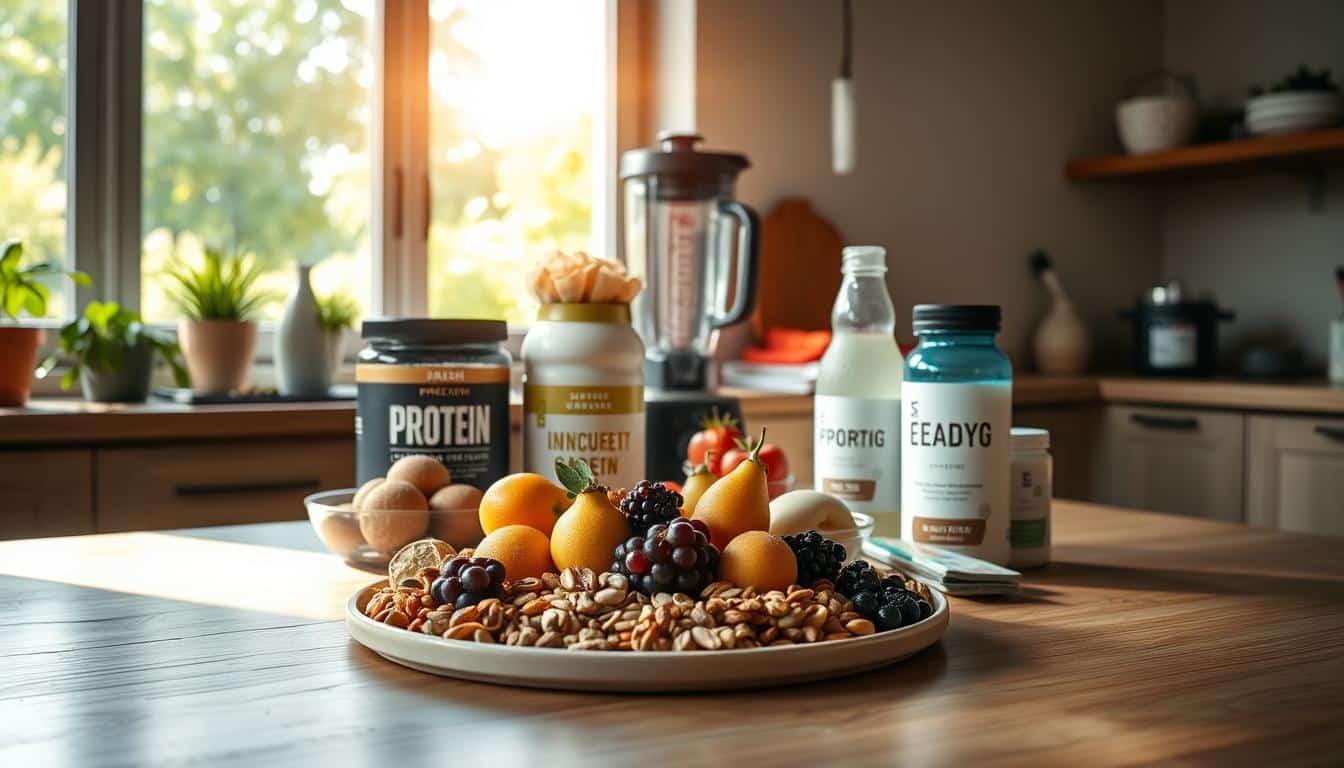
The Dairy-Free Nutrition Guide for Athletes starts with one clear promise: you can reach your performance and recovery goals without cow’s milk. I’ll show how plant-based foods and smart protein choices keep your energy steady and your body rebuilding after hard sessions.
You’ll get practical protein targets that match training demands, plus simple swaps—like pea milk or soy—that mirror cow’s milk for muscle repair. These choices also cut common issues tied to lactose and milk allergies.
The plan focuses on real foods, timing, and easy meals that protect long-term health and support consistent training. Use this guide to set diet goals for your sport, hit nutrient targets, and keep recovery reliable so you can train and perform with confidence.
Why athletes in the United States choose dairy-free fueling
Many U.S. athletes now choose plant-forward fueling to stay light and train consistently.
Performance and recovery benefits from plant-based foods
Plant-based meals give fast energy from carbs and lots of antioxidants. That combo helps recovery and lowers chronic inflammation. A heart-healthy, plant-forward diet supports steady oxygen delivery during hard efforts. That means more consistent training and better long-term health.

Prevalence of lactose intolerance and allergy risks
About 65% of people are lactose intolerant. Bloating and stomach pain can disrupt workouts and make session quality drop. Milk is also a top-eight allergen, so removing it can reduce reactions and simplify pre-event fueling.
- Replace milk with pea milk or organic soy milk to match cup-for-cup protein and avoid lactose-related GI issues.
- Use soy, pea, pumpkin seeds, lentils, and navy beans for leucine and muscle repair.
- Note that high milk intake doesn’t guarantee better bone health; some studies link it to higher fracture rates.
Action steps: Try removing dairy for two weeks and track energy, sleep, skin, and digestion. If you make big changes, consult a registered dietitian or your doctor to protect performance and health.
Macronutrient targets for training and competition
Targeting the right macronutrient mix makes training days more productive and recovery faster. Adjust targets by session type, body weight, and your current phase so calories match workload.
Carbohydrate needs by intensity and duration
Set carbohydrates at 5–10 g/kg/day depending on volume and intensity. Use the lower end for light weeks and 8–10 g/kg for intense, multi-hour sessions.
During long efforts, simple, high‑GI carbs deliver glucose quickly and sustain performance.
Protein ranges for endurance, strength, and cutting phases
Hit protein at 1.2–1.4 g/kg on endurance days and 1.6–1.8 g/kg for strength or power blocks.
In short cutting phases, aim for 2+ g/kg to preserve lean mass. Spread protein evenly across meals to keep amino availability high.
Fat intake, saturated fat limits, and omega-3 options
Keep fat at 20–35% of daily calories and limit saturated fat to under 10% to support heart health and training fuel flexibility.
Add plant omega‑3s from walnuts and an algae-based supplement to aid recovery and reduce inflammation.
- Quick checklist: carbs 5–10 g/kg; protein 1.2–2+ g/kg by phase; fat 20–35% of calories; sat fat <10%.
- Adjust intake based on weight trends, session quality, soreness, and sleep.
| Phase | Carbohydrates (g/kg) | Protein (g/kg) | Fat (% of calories) |
|---|---|---|---|
| Low volume / recovery | 5–6 | 1.2–1.4 | 25–35 |
| High intensity / long sessions | 7–10 | 1.2–1.6 | 20–30 |
| Strength / power block | 5–7 | 1.6–1.8 | 20–30 |
| Cutting / fat loss | 4–6 | 2.0+ | 20–30 |
How to fuel before, during, and after exercise without dairy
Plan simple, bite-sized meals that keep your energy steady before, during, and after a session. Follow clear choices so your stomach stays calm and your body repairs faster. Below are short, action-focused steps you can use today.
Pre-workout: carbs that sit light
Eat a small, higher-carb snack 30–60 minutes before training to hold energy without upsetting your stomach. Choose easy foods like oatmeal with banana and maple syrup or a roasted sweet potato. Keep fat and heavy protein low in this window.
During exercise: fluids, electrolytes, and steady carbs
Sip water and add electrolytes for sessions over an hour or in heat. Take 30–60 g of carbohydrates per hour during long efforts using gels, chews, a sports drink, or rice-based bites. These choices help maintain blood glucose and steady energy.
Post-workout: protein, carbs, and leucine for recovery
Eat 15–30 g of protein soon after training, with whole-food carbohydrates and veggies to jump-start recovery. Include a leucine-rich source like soy or pea protein, pumpkin seeds, lentils, or navy beans to trigger muscle repair.
- Quick ideas: a smoothie with pea protein, oat milk, berries, greens, almond butter, and ginger.
- Or build a grain bowl with lentils and quinoa, or a tofu stir-fry with brown rice and nuts.
- Keep your first full meal within 60 minutes after hard strength work for best recovery.
- Rehydrate before, during, and after so the body absorbs nutrients efficiently.
| Timing | Action | Example |
|---|---|---|
| 30–60 min before | Higher carbs, low fat/protein | Oatmeal + banana or roasted sweet potato |
| During (1+ hr) | Fluid + electrolytes; 30–60 g carbs/hr | Sports drink, gels, rice bites |
| 0–60 min after | 15–30 g protein + carbs + leucine | Smoothie with pea protein; lentil grain bowl |
dairy free sports nutrition: best protein sources and powders
Strong protein choices make the difference between a stalled recovery and steady progress.
Build meals around whole-food proteins like beans, lentils, tofu, tempeh, nuts, and seeds. These sources deliver protein, fiber, iron, and minerals that support training and daily health.
Leucine-rich options to trigger muscle repair
Use soy foods, pea protein, pumpkin seeds, lentils, and navy beans to boost leucine intake. Leucine helps start muscle protein synthesis after hard sessions.
Plant milks and matching cup-for-cup protein
Pick pea milk or organic soy milk when you want a cup that matches cow’s milk protein and gives a quality amino profile. These milks contain leucine and fit well in shakes and bowls.
Evidence for soy and plant proteins
When total protein is matched, trials show plant proteins support strength and muscle size similar to animal proteins. A 2018 meta-analysis found soy protein as effective as animal protein for strength and size. Research also shows soy and isoflavones do not lower testosterone.
- Practical tips: rotate beans, tofu, tempeh, nuts, and seeds across meals.
- Choose a soy protein powder or pea-based blend if you want a clean powder that supports muscle and recovery.
- Aim for 20–35 g protein per post-workout shake or meal and pair it with carbs for best results.
- Check labels on powders for complete amino profiles and minimal additives.
| Source | Why use it | Quick serving |
|---|---|---|
| Tofu / tempeh | Whole-food protein, versatile | 100–150 g |
| Pea or soy protein powder | Concentrated protein, high leucine | 20–30 g powder |
| Pumpkin seeds / nuts | Leucine, healthy fats | 1–2 tbsp |
| Lentils / navy beans | Leucine-rich, fiber | 1 cup cooked |
For quick meal ideas and dairy-free protein meals tailored to athletes, see dairy-free protein meals for athletes.
Sample dairy-free plans, snacks, and shopping tips
Here’s a sample day that keeps energy steady, aids recovery, and fits a busy athlete schedule.
One-day athlete menu for energy, performance, and recovery
Breakfast: Smoothie with pea protein, oat milk, berries, spinach, and almond butter. Drink water and add an electrolyte tab if you sweat a lot.
Mid-morning snack: Hummus with whole-grain pita and carrot sticks or roasted chickpeas for crunch and steady energy.
Lunch: Lentil and quinoa bowl with greens, roasted vegetables, and pumpkin seeds. Pack a small fruit for extra vitamins.
Pre-workout: Banana plus a small rice cake with a light smear of peanut butter.
Post-workout: Tofu stir-fry with brown rice, mixed veggies, and cashews, or a quick smoothie when you need fast recovery.
Portable high-protein snacks for practice, travel, and work
- Pack tuna pouches or smoked salmon for B12 and omega-3s (limit tuna 1–2x/week).
- Carry roasted chickpeas, trail mix with almonds and walnuts, or seed packs for on-the-go calories and protein.
- Bring hard-boiled eggs or jerky sparingly; check labels for sodium and added sugar.
- Store a pea protein powder or soy protein bar in your gym bag to hit protein targets quickly.
| Item | Why | Quick portion |
|---|---|---|
| Roasted chickpeas | Fiber and plant protein | 1/2 cup |
| Tuna pouch | Low-calorie protein, B12 | 1 pouch |
| Trail mix (nuts & seeds) | Calories, healthy fats, protein | 1/4 cup |
Shop list: beans, lentils, tofu/tempeh, pea or soy milk, whole grains, nuts, seeds, fruit, vegetables, electrolyte packets, and a simple protein powder.
Conclusion
Use simple rules to make meal timing and protein targets automatic.
Match carbohydrates, proteins, and fat to the role of each training day. Keep fat under 10% saturated and carbs in the ACSM ranges for long sessions.
Choose pea or organic soy milk when you want milk-level protein without lactose or allergen risk. Hit 15–30 g protein after hard work and add leucine-rich sources for fast muscle repair.
Keep electrolytes and fluids on hand. Track soreness, sleep, and energy so you can adjust calories and intake as training changes.
Pack a pea or soy protein, electrolyte packets, and simple whole-food snacks to make consistent recovery easy. See practical meal ideas at dairy-free protein meals for athletes.