

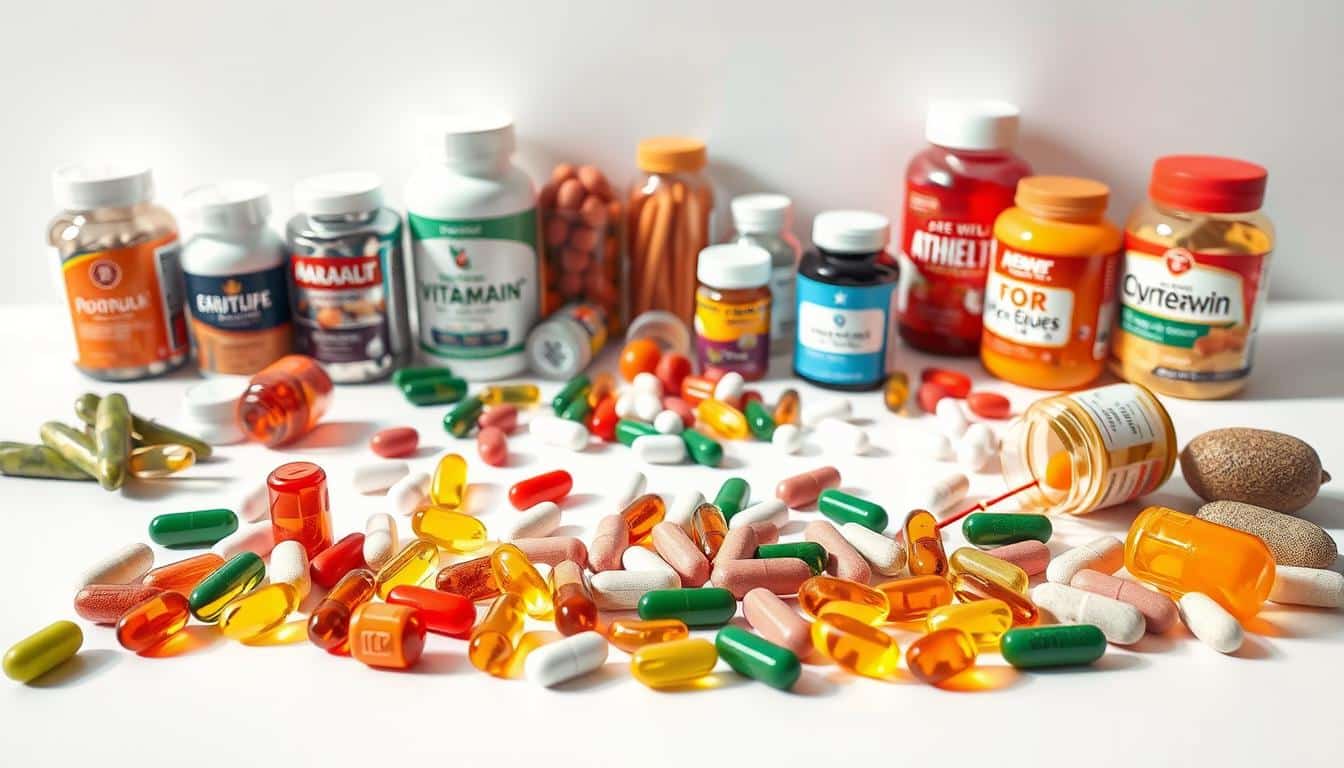
I use clear tests and label checks to pick multivitamins that help training, recovery, and daily health.
I wrote this guide to help you find a safe, effective multi that matches your schedule and budget. I focus on third‑party testing, like NSF Certified for Sport, because the FDA does not pre‑approve supplements and drug‑tested competitors need extra assurance.
Brands I watch: Thorne Basic Nutrients 2/Day and Klean Athlete Klean Multivitamin are NSF Certified for Sport. Athletic Greens and Ladder Greens are popular but miss key vitamins and minerals. Nature Made has USP but not NSF, and it combines calcium and iron in one tablet, which affects absorption and use by men and women.
Key Takeaways
- Choose third‑party tested products to lower banned‑substance risk.
- NSF Certified for Sport items like Thorne and Klean Athlete score high on safety.
- Greens powders can lack specific vitamins and minerals you need.
- Check iron and calcium differences by sex before you buy.
- I compare serving size, per‑bottle price, and per‑serving cost to help you decide.
What athletes need from a multivitamin right now
I judge a product by its batch testing, ingredient forms, and realistic dose targets. Safety comes first. That means third‑party seals such as NSF Certified for Sport or Informed Sport.

Current guidance asks athletes to use certified items to avoid banned substances. Labels must be clear. I avoid blends that hide amounts. I also watch bioavailable forms like methylfolate and chelated minerals.
Key nutrients tied to performance and recovery
- Vitamin D, B12, and folate — support energy and red blood cell health.
- Magnesium and zinc — help recovery and sleep quality.
- Iron — include only when tests show a need.
- Look for realistic daily values and GI tolerance in tablet form.
Review checklist: certification, bioavailability, dose, convenience, and cost. I pick products that fill gaps without mega doses. Simple AM/PM routines win for adherence.
How to choose safely: third‑party testing and banned substances
Start with verification: a quick check can keep banned substances out of your regimen. I look for clear seals and batch links before I buy any multivitamin.

NSF Certified for Sport vs NSF vs USP vs Informed Sport
NSF Certified for Sport and Informed Sport screen for banned substances and verify label contents. NSF general certification and USP focus on label accuracy and manufacturing quality.
Why the FDA does not pre-approve supplements
The FDA does not OK supplements before sale. It can remove unsafe products later, but that is after problems appear. That is why third‑party checks matter now.
Label claims, ingredients, and accuracy
I scan labels for exact doses, not “proprietary blends” that hide amounts. I verify batch numbers link to test results on the certifier site.
- I pick certified sport seals when drug testing is a concern.
- I use NSF or USP when sport testing isn’t needed, to confirm label accuracy.
- I avoid products with stimulants or vague botanical blends that can trip a test.
- I compare per‑serving dose to Daily Value to avoid mega doses.
| Certifier | Primary focus | When I choose it |
|---|---|---|
| NSF Certified for Sport | Banned‑substance screening & label verification | Drug‑tested competition or high‑risk sport use |
| Informed Sport | Banned‑substance screening | Competitive sport with strict testing |
| NSF general / USP | Manufacturing quality and label accuracy | Everyday health products where sport testing isn’t required |
Core selection criteria for products in this roundup
I base product picks on clear certification, realistic doses, and forms that aid quick absorption.
Certification status
I require a visible third‑party seal on the bottle before I include a product. That usually means NSF Certified for Sport or Informed Sport. This step cuts banned‑substance risk and confirms label claims.
Bioavailability and form
I favor methylfolate, bioactive B vitamins, and chelated minerals because they help absorption. I avoid vague blends that hide amounts.
Dose per serving and daily value targets
I target close to 100% of Daily Value for key nutrients, with sensible upper limits. I note the per serving dose so you can compare real intake.
Cost per serving and total price
I calculate cost and monthly price before recommending a product. Price matters, but quality and testing come first.
Convenience: capsules, tablets, powders, gummies
I record capsules per day or scoops per day to predict adherence. Travel needs can make powders or gummy vitamins more useful, but check nutrient completeness.
- Must have: visible batch testing or certifier link.
- Preferred forms: methylfolate, chelated minerals, active B forms.
- Red flags: hidden blends, mega doses, or iron/calcium co‑formulation that impairs absorption.
| Criterion | What I check | Target | Why it matters |
|---|---|---|---|
| Certification | NSF Certified for Sport / Informed Sport | Visible seal & batch report | Reduces banned‑substance risk |
| Absorption | Forms like methylfolate, chelated minerals | Bioavailable forms listed | Improves nutrient uptake |
| Dose | Per serving %DV and AM/PM split | ~100% DV for key vitamins | Avoids under‑ or over‑dosing |
| Convenience & cost | Capsules, tablets, powders, gummy vitamins; price per serving | Low daily cost with good adherence | Makes consistent use more likely |
Top pick: Thorne Basic Nutrients 2/Day (NSF Certified for Sport)
I picked this product because it pairs sport‑grade testing with bioactive vitamins and chelated minerals. The label is clear, the routine is simple, and the sport SKU removes a major risk for tested competitors.
Why it fits training needs
Bioactive B complex and chelated minerals support absorption and recovery. I see solid coverage of vitamins A, D, K, zinc, and magnesium. Label transparency is strong, so you know exact amounts per serving.
Dose, cost, and timing
Serving is two capsules daily. I use one capsule AM and one PM to spread intake and limit GI effects. Cost is about $32 per 30 servings — roughly $1.06 per serving.
Notable callouts
This product exceeds common upper limits for niacin and has high B6 and B12. That can cause flushing or be unnecessary if your diet already covers B12. Pick the NSF certified sport SKU — a non‑sport version exists and differs in testing.
- Good: NSF Certified for Sport seal and bioavailable forms.
- Caution: high niacin and elevated B6/B12 levels for some users.
- Routine: simple 2‑capsule schedule aids adherence.
| Attribute | Detail | Why it matters |
|---|---|---|
| Certification | NSF Certified for Sport | Reduces banned‑substance risk for tested athletes |
| Serving | 2 capsules / day (1 AM, 1 PM) | Spreads dose and improves tolerance |
| Per serving price | ≈ $1.06 | Affordable daily cost with high quality |
| Key cautions | High niacin; elevated B6 & B12 | May cause flush or be excessive if dietary intake is high |
Best vegetarian option: Klean Athlete Klean Multivitamin
This pick suits plant‑forward competitors who need a clean, tested daily formula. I like that it carries an nsf certified sport seal, which lowers banned‑substance risk and gives clear batch proof.
NSF status and athlete use
The product is NSF certified and labeled as a certified sport SKU. That matters if you face testing or want stricter quality checks.
Serving, ingredients, and price
Serving is two tablets daily, taken with a meal. The label favors methylfolate and a full B complex in absorbable forms.
It costs about $38.40 per 30 servings — roughly $1.28 per serving. Note: vitamin K and iron are absent, so you may need separate dosing if blood work shows a gap.
Who should choose this option
- Vegetarian, plant‑forward eaters: clean label and no animal ingredients.
- Drug‑tested competitors: trust the nsf certified sport seal.
- Those who want easy routines: two tablets with a meal supports tolerance and travel.
- Need to top up iron or K: the formula is easy to stack with single nutrients based on labs.
| Attribute | Detail | Why it matters |
|---|---|---|
| Certification | NSF Certified for Sport | Reduces banned‑substance risk and verifies label claims |
| Serving | 2 tablets / day with a meal | Improves GI comfort and adherence |
| Key forms | Methylfolate, active B complex, absorbable minerals | Better uptake and training support |
| Missing nutrients | No vitamin K; no iron | May require separate supplements based on food intake and labs |
| Price | $38.40 per 30 servings (~$1.28 per serving) | Mid‑range cost for certified product |
Powder greens used as multis: Athletic Greens and Ladder Greens
Powdered greens are convenient, but they often leave gaps you should know about. I compare two popular products and call out what they include and what they miss.
What they include and what they miss
Athletic Greens (AG1) is nsf certified sport and has probiotics and a large superfood blend. It does not include vitamin D, K, or iron. That makes it a supplement, not a full multivitamin.
Ladder Greens is also certified sport. It adds higher vitamin D and magnesium and very high vitamin K. It still lacks vitamins A, C, E, calcium, and iron.
Serving form, travel, and storage
AG1 ships single‑serve packets and must be refrigerated after opening. Packets solve travel issues. Ladder comes in packets too and is easier to stash in a gym bag.
Gaps in D, K, magnesium, iron and price
- Both are greens powders with big blends but incomplete nutrient coverage.
- AG1 per serving price: $2.57 (subscribe) to $3.23 (one‑time).
- Ladder per serving price: about $2.33 per serving.
- Consider adding a simple D3 or an iron tablet if blood work shows low levels.
| Product | Key inclusions | Notable gaps | Per serving price |
|---|---|---|---|
| Athletic Greens (AG1) | Probiotics, superfood blend | No D, K, iron | $2.57–$3.23 |
| Ladder Greens | Higher D, magnesium, high K | No A, C, E, calcium, iron | ≈ $2.33 |
| Practical note | Packets available | Added blends may hide true %DV | Travel friendly |
Bottom line: Treat these powders as convenient nutrient boosters. Pair a basic multivitamin or targeted D3/iron if you need full coverage. Watch vitamin K if you take blood‑thinning meds and check sugar on flavored mixes.
multivitamins for athletes: certified sport options compared
I focus on head-to-head factors—testing, serving count, and real cost per day. That helps you pick a product that fits your routine and testing needs.
Thorne Basic Nutrients 2/Day vs Klean Athlete
Both are nsf certified sport SKUs with clear batch testing. Thorne Basic Nutrients 2/Day is two capsules a day, about $1.06 per serving.
Klean Athlete is two tablets a day, vegetarian, and roughly $1.28 per serving. It lacks vitamin K and iron, so you may need separate tests and supplements.
AM/PM formula and adherence concerns
Thorne Elite AM/PM requires 3 AM + 3 PM capsules and costs about $2.17 per serving. That many pills raises miss-rate risk.
- Certification: both are sport-certified; pick the certified sport SKU.
- Dose & serving: 2/day options score higher on adherence than 6/day AM/PM.
- Price vs form: Thorne 2/Day is cheaper but higher in niacin, B6, B12.
| Attribute | Thorne Basic Nutrients 2/Day | Klean Athlete Klean Multivitamin | Thorne Elite AM/PM |
|---|---|---|---|
| Certification | NSF Certified for Sport | NSF Certified for Sport | NSF Certified for Sport |
| Serving / dose | 2 capsules / day | 2 tablets / day | 6 capsules / day (3+3) |
| Per serving price | ≈ $1.06 | ≈ $1.28 | ≈ $2.17 |
| Notable notes | Higher niacin, B6, B12 | Vegetarian; missing K & iron | Costly; harder to stick to |
My take: I recommend Thorne 2/Day for simplicity and price. Pick Klean if you need a vegetarian sport-tested option. Check labs and add D or iron as needed.
Budget and big-bottle options: what to know
Big bottles can save money, but they are not always the best fit. I look past a low sticker price to the ingredient list and certification. A cheap product that misses key forms can cost you more in the long run.
Nature Made Multi and USP certification
Nature Made Multi for Adults with Calcium and Iron carries a USP mark. That tells me the label amounts and manufacturing quality are checked. It is not nsf certified, so I avoid it when sport testing matters.
Iron and calcium in one tablet: absorption trade‑offs
The math is attractive: about $19 for 300 tablets — roughly $0.06 per serving. That low per serving cost explains the appeal.
But calcium and iron together can limit iron absorption. The iron dose suits many women but is unnecessary for most men unless blood work shows deficiency.
- When to pick it: budget shoppers who need label accuracy and are not drug‑tested.
- Caution: split iron and calcium dosing if you need better absorption.
- My tip: consider single‑nutrient iron or a different product if you need methylfolate or sport certification.
| Attribute | Detail | Why it matters |
|---|---|---|
| Certification | USP | Label accuracy, not sport screening |
| Price | $19 / 300 tablets | ≈ $0.06 per serving; very low cost |
| Key combination | Calcium + Iron in one tablet | Calcium can reduce iron absorption |
Gummy vitamins for active people: pros, cons, and sugar
Gummy options often win on taste and ease, but they trade off coverage and dose control. I see them as an adherence tool when someone can’t swallow pills.
Pros: Gummies improve daily use and often include omega‑3s or fun flavors that help consistency.
Cons: They usually miss vitamin K, niacin, calcium, iron, and magnesium. Many include added sugar and syrups that raise calories without nutrient benefit.
Smarty Pants vs Kirkland: what I note
Smarty Pants Adult Formula is NSF certified (not NSF Certified for Sport). It requires six gummies per serving, lacks several key nutrients, includes tapioca syrup and cane sugar, and costs about $0.90 per serving.
Kirkland Adult Gummy is not sport certified, is nutrient‑poor, and costs about $0.09 per serving. It contains sugar and oils.
- I don’t recommend non‑sport certified gummies if you face drug testing.
- Taste can boost adherence but doesn’t fix nutrient gaps.
- If you stack gummies, check total daily sugar.
| Product | Certification | Serving | Key gaps | Price / serving |
|---|---|---|---|---|
| Smarty Pants Adult Formula | NSF certified | 6 gummies / day | No K, niacin, Ca, Fe, Mg; contains sugars | ≈ $0.90 |
| Kirkland Adult Gummy | Not sport certified | 1–2 gummies typical serving (label varies) | Many missing nutrients; contains sugar & oils | ≈ $0.09 |
| My recommendation | Depends on needs | Gummy = adherence; capsules = coverage | Use gummies if you must; prefer tablets/capsules for full coverage | Balance taste, gaps, and price |
Whole food based multis: what “food-based” means
Some brands use food concentrates and cultured media to make nutrient blends that read more like foods than lab mixes. That phrase can mean concentrated fruits, vegetable extracts, or cultured yeast that carry added vitamins.
I check the label closely. MegaFood Men’s Advanced multivitamin is a product that lists nutrients derived from food, uses methylfolate, and is vegetarian and NSF certified. It may leave a slight aftertaste and includes botanicals like turmeric and ginger.
Methylfolate, digestibility, and real forms
Look for methylfolate instead of folic acid to support folate status. I also read the ingredient list to confirm the actual form of each vitamin.
- I expect good digestibility, but note any aftertaste or GI signals.
- I confirm third‑party testing and check if sport testing is needed.
- I evaluate added botanicals by amount and purpose, not just marketing language.
- I compare DV coverage and price per dose to decide if the product fills real nutrient gaps.
Finally, I suggest labs to confirm status rather than relying on claims. That keeps health decisions evidence based and practical.
Men vs women: iron, calcium, and dose differences
Men and women often need different nutrient strategies when iron and calcium come into play.
Why many men do not need iron
Most men get enough iron from diet and do not need iron in a multivitamin. High iron doses in a product can add risk and cause stomach upset.
I advise men to skip iron unless labs show low ferritin or anemia. A simple blood test tells you if added iron is necessary.
Women’s iron needs and timing with calcium
Menstruating women and those pregnant or lactating often need more iron. Choose an iron‑containing option or a single iron supplement when labs support it.
Calcium reduces iron absorption. I recommend separating iron and calcium doses by 2–4 hours to improve uptake and reduce GI issues.
- Most men: skip iron unless lab-proven deficiency.
- Women with higher needs: use an iron product guided by tests.
- Timing: take iron away from calcium and high‑fiber meals.
- GI tips: try lower doses or a gentler iron form if nausea occurs.
- Endurance athletes: test iron status during heavy training blocks.
| Group | Iron guidance | Timing tip |
|---|---|---|
| Men | Usually no added iron unless ferritin low | Avoid iron in daily multivitamin serving if labs normal |
| Women (menstruating) | Consider iron-containing product or single iron dose | Take iron separate from calcium by 2–4 hours |
| Endurance & heavy training | Test ferritin regularly; supplement if indicated | Use food sources (red meat, legumes) plus timed supplements |
If you want a quick primer on how nutrition affects performance and testing, see my guide at how nutrition affects athletic performance. Match your product and dose to labs, not marketing, and you’ll protect both health and performance.
Ingredient forms and absorption that matter to athletes
I focus on the actual chemical forms on a label because they change how well a supplement is absorbed. That choice affects tolerance, uptake, and training day comfort.
Methylfolate vs folic acid
I prefer methylfolate. It raises folate status consistently and avoids conversion issues some people have with folic acid.
This matters if you want reliable support for red blood cells and recovery.
Magnesium: glycinate or citrate vs oxide
Magnesium glycinate or citrate absorb better and are gentler on the stomach. I avoid magnesium oxide except when cost is the only driver—GNC Mega Men Sport uses oxide, which is poorly absorbed.
B12, choline, inositol, and blends
I look for B12 as methylcobalamin or adenosylcobalamin. Thorne includes choline and inositol, which can help focus and recovery.
I avoid products that hide amounts in “blend” labels. I also check mineral chelates to improve uptake and reduce GI issues.
- I compare label forms line by line before I recommend a product.
- Match forms to training schedules to cut stomach upset and boost absorption.
- Prioritize clear ingredients and tested forms over marketing claims.
| Issue | Preferred form | Why it matters |
|---|---|---|
| Folate | Methylfolate | Consistent status, better uptake |
| Magnesium | Glycinate / Citrate | Higher absorption, less GI upset |
| B12 | Methylcobalamin / Adenosylcobalamin | Active forms, reliable energy support |
Serving convenience: capsules, tablets, powders, gummies
Choosing the right format makes daily intake simpler and keeps you consistent. I look at how a product fits travel, taste, and the number of pills you can handle each day.
I favor simple routines. Thorne uses 2 capsules per day. Klean uses 2 tablets per day. Athletic Greens is one scoop; packets exist but the jar needs refrigeration after opening. Smarty Pants asks for six gummies daily, which raises sugar and adherence questions.
- Capsules: easy swallowing and an AM/PM split if you want to spread dose.
- Tablets: often lower cost and stable with meals for GI comfort.
- Powders: drinkable and travel‑friendly when single packets are included.
- Gummies: tasty, but I avoid them when I need full nutrient coverage and low sugars.
I match format to travel needs—single packets help at events and on flights. Time servings with meals to aid fat‑soluble vitamins and reduce stomach upset.
| Format | Typical serving | Best use |
|---|---|---|
| Capsules | 2/day | Simple AM/PM split, gentle swallowing |
| Tablets | 2/day | Cost conscious, take with food |
| Powders | 1 scoop/serving | Drinkable option, packets aid travel |
Quick rules: keep routines under 2 daily doses when possible. Check per serving counts and pill size so you actually stick with the plan. I also keep a backup pack in my gym bag to avoid missed doses on busy days.
Per serving cost and value: how price relates to quality
Price alone doesn’t tell the whole story — I weigh what you get in each serving against safety and real absorption.
Value means certification, active nutrient forms, and meaningful %DV, not just a low sticker price. I compare per serving cost across products to set realistic expectations.
- I pay more for NSF Certified sport SKUs when testing risk is high.
- I accept higher price when a product uses methylfolate, chelated minerals, or active B forms.
- I avoid blends that add marketing weight but not extra %DV or absorption.
- I check monthly cost to keep the plan sustainable and not waste money on unused pills.
- Subscription savings are worth it only when the formula matches labs and goals.
| Product | Per serving | Certification | Why it matters |
|---|---|---|---|
| Thorne Basic Nutrients 2/Day | $1.06 | NSF Certified for Sport | Good balance of price and tested forms |
| Klean Athlete Klean Multivitamin | $1.28 | NSF Certified for Sport | Vegetarian option; may need iron or K separately |
| Thorne Elite AM/PM | $2.17 | NSF Certified for Sport | High cost and pill load; less adherence |
| Greens & budget examples | AG1 $2.57–$3.23; Ladder $2.33; Nature Made $0.06; Kirkland gummy $0.09; Smarty Pants $0.90 | Varies | Powders and gummies often cost more per serving yet miss key nutrients |
In short, match price to quality. Pay a bit more when certification and forms matter. Save when your labs show no gaps and you do not need sport testing. That approach keeps cost down and protects performance.
Who might skip a multi and use single nutrients
Sometimes a single nutrient fixes the gap faster than a daily pill. I start with diet and bloodwork before I suggest any supplement plan. That keeps dosing precise and waste low.
Vitamin D and B12: diet‑first guidance
If labs show only low vitamin D, I skip a full multivitamin and treat D directly. A clear D dose is easier to monitor and adjust during heavy training.
Vegans or people with very low animal intake usually take b12 alone. A B12 tablet or spray is simpler and avoids unnecessary extra vitamins.
Work with a sports dietitian before starting
Work with a sports dietitian to set targets, timing, and testing intervals. They help you track iron and ferritin and stop unsafe stacking.
- I skip a multi when labs show only vitamin D is low.
- I add B12 alone for vegans or low animal intake.
- I use diet and targeted supplements to fill specific nutrient gaps.
- I run periodic labs during heavy training blocks and reassess each season.
| Case | Action | Why |
|---|---|---|
| Low D only | Supplement vitamin D | Easy to dose and monitor |
| Low B12, vegan diet | Take B12 alone | Targets deficiency without extra products |
| Low ferritin | Add iron under guidance | Avoids unnecessary iron in men and prevents overload |
When you need a deeper plan, see a practical meal and timing guide at complete vegetarian meal plan. I keep doses simple, pick quality single nutrients, and watch interactions like calcium with iron or zinc with copper.
Conclusion
Here’s a compact checklist to help you choose a tested product and stick with it every day.
Key actions: pick a sport‑certified product when you face drug testing. Favor proven forms and avoid mega doses. Compare per‑serving cost and the number of pills so you keep the habit.
Treat greens powders as add‑ons, not complete solutions. Use single vitamins to fill clear lab gaps. Confirm iron needs by sex and bloodwork, and separate iron and calcium dosing to improve uptake.
Focus on food first. Use high‑quality products to support training, recovery, and long‑term health. Talk with a sports dietitian to adjust targets as goals change.