

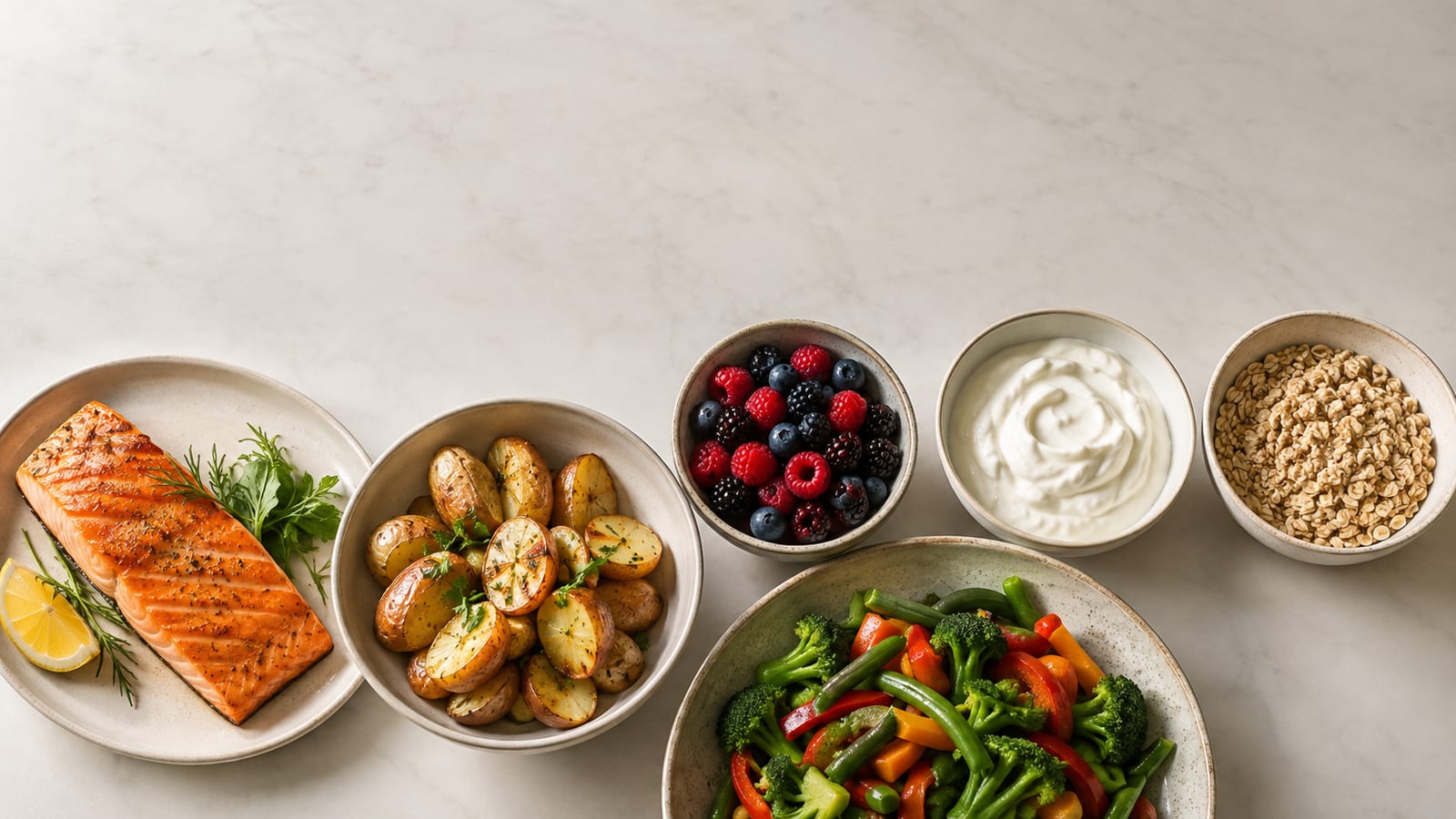
Start with a meal you can digest: Greek yogurt with fruit and oats, eggs with oatmeal and berries, or salmon with potatoes and vegetables. These are the best foods for muscle soreness recovery because they provide protein for repair, carbohydrates for training energy, and fluids that support recovery. Tart cherries and omega-3 foods can help, but they won’t rescue a plan that lacks enough food, sleep, or sensible training.
Last updated: 2026-08-28
Muscle soreness after hard or unfamiliar exercise is common. Delayed-onset muscle soreness, or DOMS, often appears later and can limit your range of motion and training quality. Food can support the repair process, but no single ingredient switches soreness off.
What are the best foods for muscle soreness recovery?
Choose the food that covers the most recovery needs while fitting your schedule and stomach. Greek yogurt with fruit and oats is the best overall option for most athletes. It combines substantial protein, carbohydrates, fluid, convenience, and a reasonable price.
| Food or meal | Protein | Carbohydrates | Hydration | Anti-inflammatory potential | Convenience | Price | Verdict |
|---|---|---|---|---|---|---|---|
| Greek yogurt, fruit, and oats | Strong | Strong | Good | Moderate | Excellent | Good | Best overall |
| Eggs, oatmeal, and berries | Strong | Strong | Moderate | Moderate | Good | Excellent | Best budget choice |
| Salmon, potatoes, and vegetables | Strong | Strong | Moderate | Strong | Fair | Higher | Best for hard training |
| Milk or chocolate milk | Moderate | Moderate | Strong | Low to moderate | Excellent | Good | Best for low appetite |
| Beans, rice, and fruit | Good | Strong | Moderate | Moderate | Fair | Excellent | Best plant-based choice |
| Tart cherries or tart-cherry juice | Little on its own | Low | Good if used as a drink | Moderate | Good | Higher | Useful add-on |
Greek yogurt, fruit, and oats: best overall
Greek yogurt, fruit, and oats give you a fast recovery meal without much cooking. The yogurt supplies protein, the fruit and oats provide carbohydrates, and the food contains enough fluid to help you start rehydrating.
This is also easy to adjust. Add a banana when you need more carbohydrate, berries for extra plant compounds, or honey if plain oats are hard to eat after training. Choose a lactose-free yogurt if regular dairy causes trouble.
A large tub of Great Value Greek Plain Nonfat Yogurt holds 32 oz and costs USD $2.97 in the researched example. That makes it a practical meal-prep food, although prices vary by store and location.
Eggs with oatmeal and berries: best budget-friendly option
Eggs with oatmeal and berries are the best low-cost recovery meal. Eggs provide quality protein, while oatmeal restores carbohydrate stores for your next practice or lifting session. Berries are rich in antioxidants that help repair muscle damage and reduce inflammation.
This meal takes more preparation than yogurt, but the cost stays low. Use frozen berries when fresh fruit is expensive, and cook oats in milk when you need more protein and fluid.
Choose this meal after training if you’ll be home soon. If you’re leaving the gym for work or school, pack a banana and a ready-to-drink milk option instead.
Salmon with potatoes and vegetables: best complete meal for hard training
Salmon with potatoes and vegetables is the strongest full-meal choice for a demanding training block. Salmon supplies protein and omega-3 fatty acids, while potatoes provide the carbohydrates your muscles need to restore glycogen.
Fatty fish such as salmon, mackerel, and sardines contain omega-3 fatty acids with anti-inflammatory effects. Omega-3s help reduce muscle soreness and joint stiffness. The effect is useful, but it’s still one part of recovery.
The catch is practical. Salmon costs more than eggs or beans, and a full meal may feel heavy immediately after exercise. Save it for dinner or for a later meal if your appetite is low right after training.
Milk or chocolate milk: best when time and appetite are limited
Milk or a simple chocolate-milk recovery drink works when chewing a full meal sounds unpleasant. You get protein, carbohydrates, and fluid in one portable option.
This choice is worth keeping in your bag or refrigerator for busy training days. It’s less complete than a meal because it usually provides less fiber and fewer vegetables. Still, getting something useful in your body beats waiting several hours and then trying to recover on coffee.
Lactose-sensitive athletes should choose lactose-free milk or a suitable fortified alternative. Don’t force dairy because someone called it the best recovery drink.
Beans, rice, and fruit: best plant-based and low-cost choice
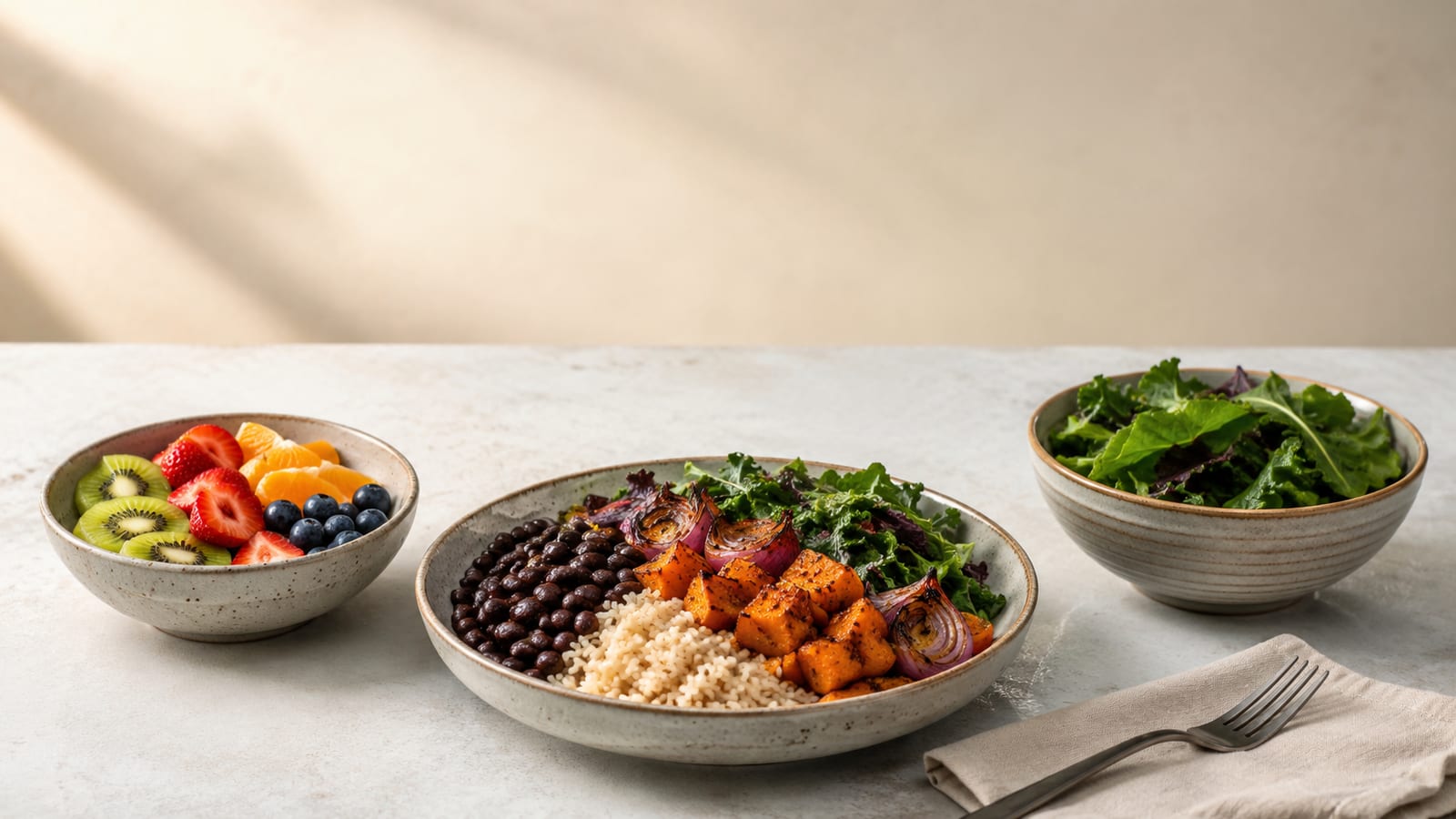
Beans, rice, and fruit cover the main recovery needs at a low cost. Beans provide protein and carbohydrates, rice restores training fuel, and fruit adds fluid and plant compounds.
This meal is better several hours after training than immediately before another hard session. A large serving of beans may be difficult to digest close to exercise, especially if your gut already struggles after training.
Use tofu, lentils, soy yogurt, or a simple plant-based protein drink if beans feel too heavy. The goal is enough food that you can tolerate and repeat.
Tart cherries: a targeted add-on
Tart cherries or unsweetened tart-cherry juice may help during repeated hard sessions or a dense training block. Consuming tart cherry juice several days before and after exercise can accelerate muscle recovery and lower markers of inflammation.
That makes tart cherries a reasonable add-on for recurring soreness. They are not a replacement for dinner, and they don’t provide enough protein to repair muscle on their own.
The price also matters. If tart-cherry juice strains your budget, use berries, bananas, or regular fruit with a complete meal. You’ll gain more from covering your total food needs first.
Build the meal around protein and carbohydrates
Protein supports muscle repair. Carbohydrates restore glycogen, the stored fuel your muscles use during hard training. After a demanding workout, you need both if you want to be ready for the next session.
Aim for 20-40 grams of high-quality, lean protein after a workout. Good choices include eggs, Greek yogurt, milk, whey protein, fish, tofu, and lean meat.
Most people who exercise should consume 1.4-2.0 g of protein per kg of body weight each day. That daily total matters more than chasing a special food after every session.
Carbohydrates deserve equal attention. Add oatmeal, rice, potatoes, pasta, bread, fruit, or cereal to your protein source. A protein-only snack may support repair, but it won’t replace the training fuel you used.
Try these combinations:
- Greek yogurt, oats, banana, and berries
- Eggs, oatmeal, and fruit
- Salmon, potatoes, and vegetables
- Chocolate milk with a bagel
- Rice, beans, and fruit
- Tofu stir-fry with rice
- Turkey sandwich with yogurt and a banana
A balanced plate can also follow the basic food-group approach in MyPlate. You don’t need a specialized recovery menu if ordinary foods cover the job.
The practical shortlist for busy training days

Your best muscle soreness food depends on when you can eat and how your stomach feels. Use the simplest option that fits the day.
Fast recovery foods
Choose these when you need food within minutes:
- Milk or chocolate milk
- Greek yogurt with fruit
- Whey protein with a banana
- Applesauce with a cheese stick
- A turkey sandwich
- Cereal with milk
Whey protein is useful when food access is limited. Research cited for this topic suggests consuming whey protein can decrease muscle soreness and speed recovery. It still works best alongside carbohydrates and enough total food.
Portable foods
Pack these before leaving for practice or competition:
- Bananas
- Oat bars
- Pretzels
- Bagels
- Fruit cups
- Trail mix
- Peanut butter sandwiches
- Shelf-stable milk
- Jerky with crackers
Portable food removes the most common recovery problem: having no plan after training. Don’t wait until you’re exhausted to search for dinner.
Budget-friendly foods
Use these for regular meal prep:
- Eggs
- Oats
- Potatoes
- Rice
- Beans
- Frozen berries
- Bananas
- Milk
- Canned fish
- Peanut butter
Eggs, oats, and potatoes are especially useful because they work across breakfast, lunch, and dinner. Nuts and seeds add healthy fats and some protein, but they aren’t a complete recovery meal by themselves.
Full meals
Choose a full meal when you have time and a normal appetite:
- Chicken, rice, and vegetables
- Salmon, potatoes, and greens
- Lentil pasta with tofu
- Bean burrito with fruit
- Eggs, toast, and spinach
- Turkey pasta with tomato sauce
The best foods for sore muscles are often the meals you can prepare repeatedly. A complicated recipe that happens once does less for recovery than a simple meal you eat after every hard session.
Foods that may help when inflammation is part of the problem
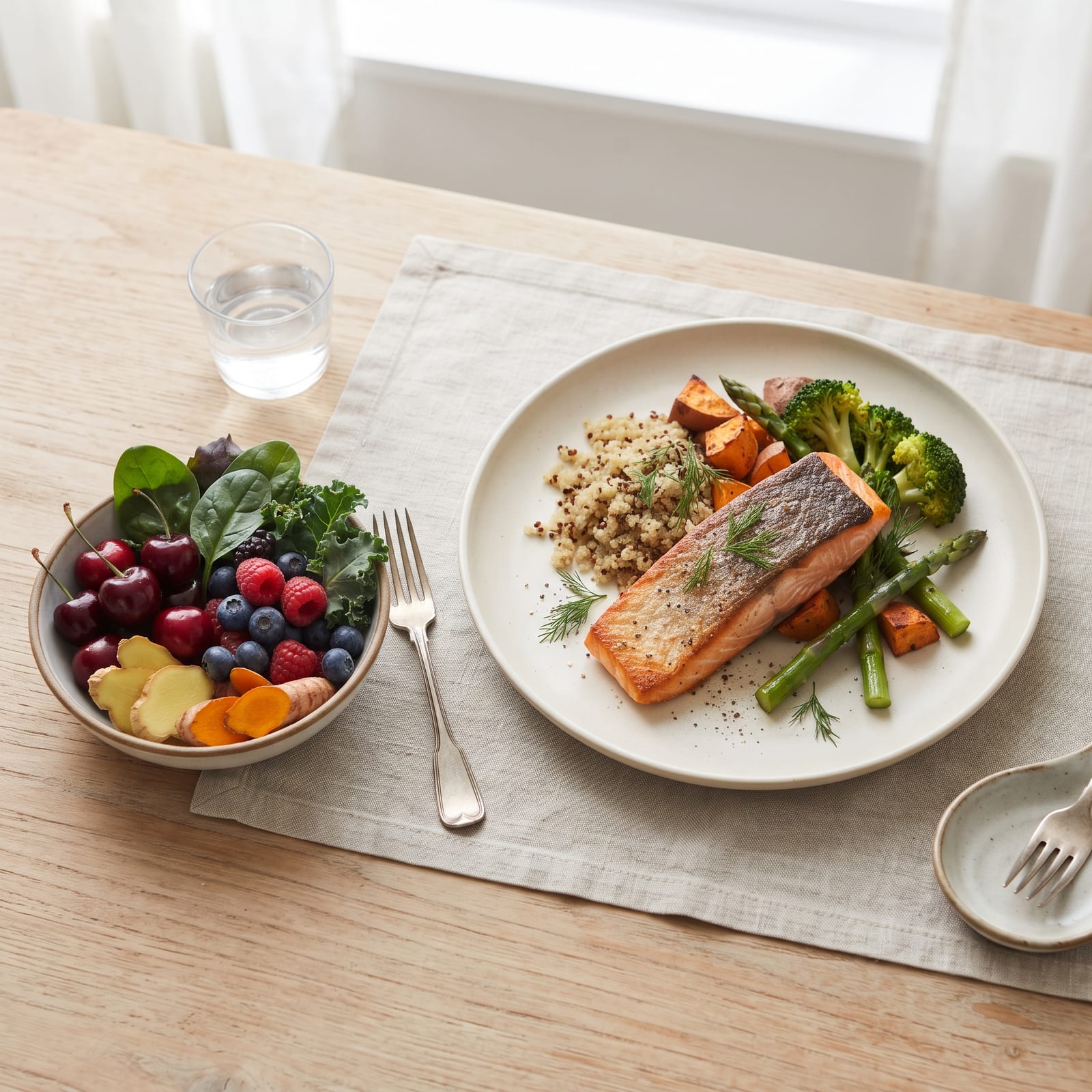
Some foods contain plant compounds or fats that may support the body’s response to hard training. Their effects on delayed-onset soreness are usually modest, and the research does not make them a substitute for protein, carbohydrates, sleep, or adequate calories.
Berries
Berries are rich in antioxidants that help repair muscle damage and reduce inflammation. Add them to yogurt, oats, cereal, or a smoothie.
They’re an easy choice because they provide carbohydrates and are usually simple to digest. Frozen berries work well and often cost less.
Leafy greens
Spinach and other leafy greens provide plant compounds and useful nutrients. They fit well in eggs, rice bowls, pasta, and smoothies.
Still, a giant raw salad is a poor immediate post-workout meal for some athletes. It may leave you full without providing enough carbohydrate. Cook the greens or eat them later if your stomach is sensitive.
Ginger and turmeric
Ginger may be useful for athletes who tolerate it in tea, smoothies, or meals. Curcumin in turmeric can help reduce muscle soreness and inflammation.
The food form is easy to include in a curry, rice bowl, or soup. Skip strong supplement claims that promise a dramatic change. More concentrated products also deserve caution, especially if you take medication or have a medical condition.
Olive oil, nuts, and seeds
Olive oil, nuts, and seeds provide healthy fats that help make meals satisfying. They also help you reach enough total calories during a high training load.
Use a modest amount around training because high-fat meals can digest slowly. Peanut butter on toast may work well for you, while a large serving of nuts before a run may not.
Pomegranate and watermelon
Pomegranate juice is one researched option for exercise recovery, along with starchy vegetables and eggs. Watermelon or watermelon juice after a workout may help alleviate muscle pain and promote recovery.
These drinks can add fluid and carbohydrate. They don’t contain enough protein to stand alone after hard training, so pair them with yogurt, milk, eggs, or a meal.
Hydration and electrolytes belong in the plan
Water is usually enough for a normal workout that lasts less than an hour, especially in comfortable conditions. Choose a drink with electrolytes when you train for longer, sweat heavily, exercise in the heat, or play repeated games.
Sodium is the main electrolyte lost through sweat. Other electrolytes also support fluid balance and muscle function, but you don’t need a supplement for every short session.
Dehydration can worsen fatigue, headaches, cramping, and poor performance. It also makes recovery harder because you’re replacing fluid after the workout instead of staying ahead of the loss.
Drink with your meal and continue steadily afterward. If you’re training again soon, include a salty food such as pretzels, soup, crackers, or a regular meal. Water alone may leave you short after a long, sweaty session.
Time recovery food around the next session
Eat a protein-and-carbohydrate option soon after training when the workout was hard, long, or followed by another session. Greek yogurt with oats, chocolate milk with a bagel, or rice with eggs can cover the first step.
You don’t need to panic about a narrow post-workout window. If you ate a normal meal before training and won’t exercise again soon, your next regular meal can handle recovery.
The plan changes when training load is high. Eat sooner if you have another workout later, because the next session will expose a missed meal quickly.
A practical schedule looks like this:
- Drink water after training.
- Add electrolytes if the session was long, hot, or very sweaty.
- Eat protein and carbohydrates soon after hard exercise.
- Have a full meal later if the first snack was small.
- Keep eating enough across the day.
For more meal ideas, use these guides to recovery meals after morning workouts and post-workout nutrition timing.
Match the food to your body and schedule
A recovery meal only works if you can eat and digest it. Choose from these adjustments when the standard options fall short.
Sensitive digestion
Start with smaller portions and lower-fiber foods. Try toast, bananas, rice, yogurt, eggs, applesauce, or a simple milk drink.
Save large salads, beans, greasy meals, and unfamiliar supplements for later. Persistent pain, vomiting, bloody stool, or symptoms that limit training deserve a conversation with a qualified clinician.
Low appetite
Use liquids and soft foods first. Milk, chocolate milk, drinkable yogurt, smoothies, oatmeal, and soup are easier for many athletes than a large plate.
Then eat a proper meal when your appetite returns. A drink buys you time; it shouldn’t become your entire recovery plan every day.
Dairy avoidance
Choose soy yogurt, fortified soy milk, tofu, eggs, fish, beans, rice, and plant-based protein drinks. Soy foods are especially useful because they provide protein without requiring dairy.
Check your personal tolerance rather than following a blanket rule. Some athletes avoid dairy by preference, while others need to avoid it for allergy or digestive reasons.
Plant-based eating
Build each meal around a plant protein and a clear carbohydrate source. Try tofu with rice, beans with potatoes, lentil pasta, soy yogurt with oats, or a peanut butter sandwich with milk or soy milk.
Large portions of beans may be hard to digest soon after training. Use tofu, soy yogurt, or a smaller bean serving when you need food quickly.
Tight budget
Buy oats, eggs, rice, potatoes, beans, bananas, frozen fruit, and milk first. Add fish or specialty recovery products only after your basic meals are covered.
A recovery powder can be convenient, but it isn’t a required purchase. Your grocery list should support the whole training week, not just the hour after one workout.
High training demands
Increase both meal size and frequency when you train hard several times per week. Include carbohydrates at meals and snacks, then add protein each time you eat.
Soreness that keeps worsening may reflect a training problem, poor sleep, or inadequate calories. More tart cherry juice won’t fix a schedule that gives your body no chance to recover.
Stop overvaluing these recovery claims
Supplement-heavy plans often make soreness sound like a single-nutrient problem. It isn’t.
Quercetin supplementation at 1 g/day for 14 days improved recovery from exercise-induced muscle damage and deterioration of neuromuscular function in healthy men. That finding came from a specific study group and protocol. It doesn’t prove that every athlete needs quercetin.
Alcohol deserves a clear skip after hard training. It can displace useful food and fluids, interfere with sleep, and make it harder to recover well.
Chronically eating too little is also a problem. Your body needs enough total energy to repair muscle, restore glycogen, and support the next session. A large salad with no protein or carbohydrate may look nutritious while leaving the actual work underfunded.
Finally, don’t treat soreness as the only sign of a productive workout. Less soreness doesn’t always mean better recovery, and more soreness doesn’t prove a session worked better. Track performance, sleep, appetite, pain, and how you move.
The recovery meal decision
Choose Greek yogurt with fruit and oats when you want the best mix of protein, carbohydrates, fluid, convenience, and digestion. Choose eggs with oatmeal and berries when budget matters most.
Use salmon with potatoes and vegetables for a complete meal after hard training. Use milk or chocolate milk when appetite and time are limited. Choose beans and rice for a low-cost plant-based meal, and use tart cherries as a targeted add-on during dense training blocks.
The best foods for muscle soreness recovery are the ones that help you refuel, repair, and train again without upsetting your stomach or your budget.
FAQ
Do I need a supplement for muscle soreness?
No. A supplement may help with convenience, but regular meals can provide protein, carbohydrates, fluids, and fats. Use whey protein when food is hard to carry or prepare, not because a powder is automatically better.
Can food remove muscle soreness overnight?
No food reliably removes soreness overnight. A complete meal, enough fluids, sleep, and a sensible training plan can support recovery. You should also reduce training stress when soreness changes how you move.
Are anti-inflammatory foods always helpful after exercise?
Not always. Foods such as berries, fatty fish, ginger, and turmeric may support a healthy inflammatory response. Still, extreme efforts to suppress inflammation can ignore the normal adaptation process and distract from basic fueling.
Should you eat more protein when you’re sore?
You need enough protein across the day, especially after hard training. Most people who exercise should consume 1.4-2.0 g of protein per kg of body weight each day. Adding more and more protein won’t replace carbohydrates, calories, fluids, or sleep.
What should you eat if soreness lasts longer than expected?
Return to regular meals and check your training load, sleep, hydration, and total food intake. If pain is sharp, one-sided, swollen, unusually severe, or limiting normal movement, seek medical advice instead of treating it as ordinary soreness.