

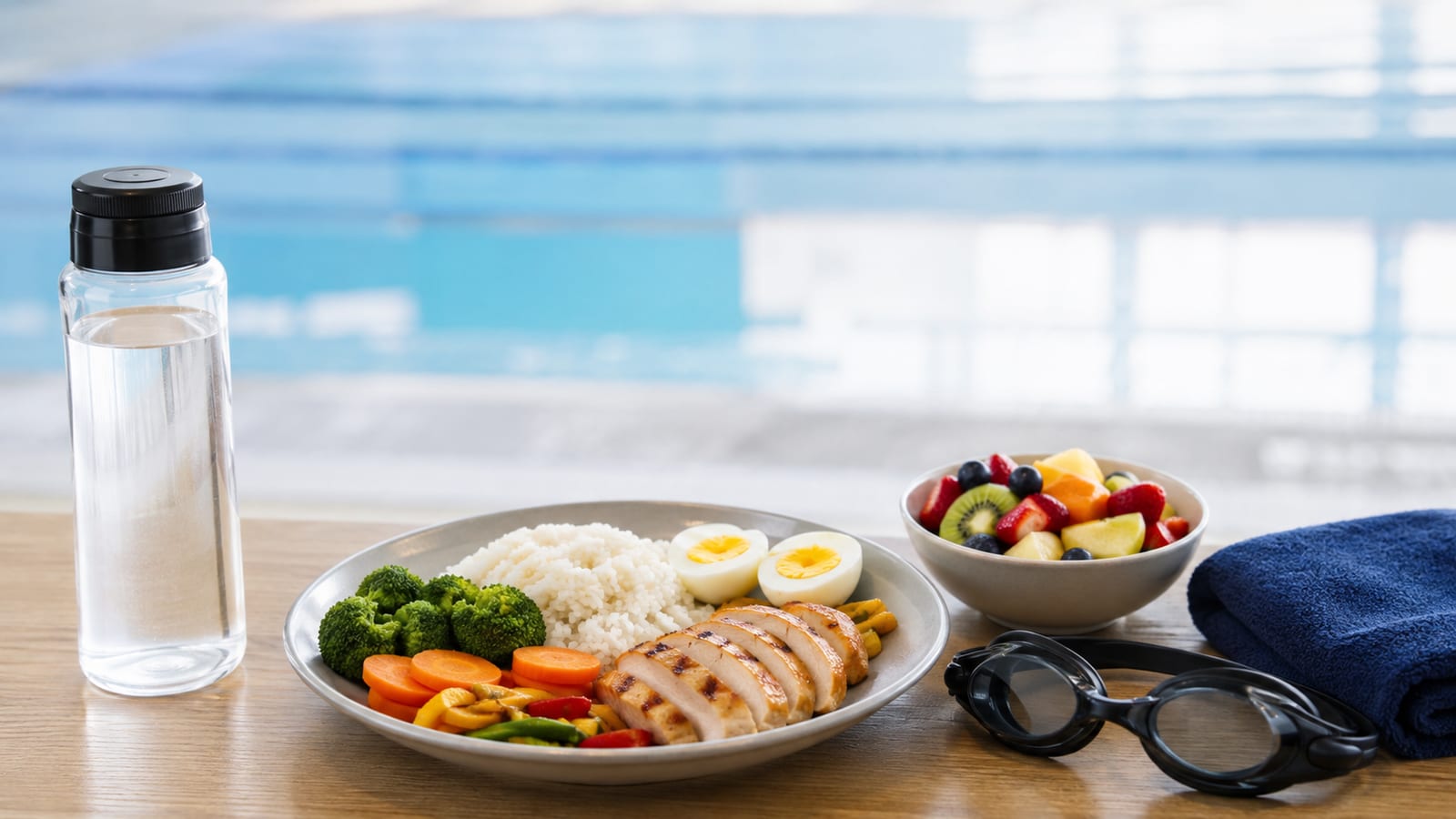
Start with regular meals built around carbohydrates, add protein at each meal, include fats away from hard sessions, and plan fluids before you reach the pool. The best foods and diet plan for swimmers are simple: oats, rice, pasta, potatoes, bread, fruit, yogurt, eggs, beans, chicken, tofu, nuts, and milk. Your portions should grow with training load, while meet-day food should stay familiar and easy to digest.
Last updated: 2026-08-27
What does the best foods and diet plan for swimmers look like?
A strong swim diet has four jobs:
- Provide carbohydrates for repeated hard efforts.
- Supply protein for muscle repair and recovery.
- Add enough fat to support health and total energy needs.
- Replace fluids and electrolytes lost during long or sweaty sessions.
Carbohydrates carry most of the training load. Rice, pasta, potatoes, oats, bread, cereal, fruit, and beans all work. Protein matters after practice and across the day, so include eggs, dairy, poultry, fish, tofu, lentils, or other familiar options.
Fat belongs in your daily plan too. Use olive oil, avocado, nuts, seeds, peanut butter, and fatty fish. Keep large amounts of fat away from the session if it makes you feel heavy or slows digestion.
There is no prize for making this complicated. A swimmer who packs a sandwich and fruit will usually fuel better than one who owns a shelf of expensive powders but skips lunch.
Food options compared
| Food or strategy | Best use | Why it works | Catch | Verdict |
|---|---|---|---|---|
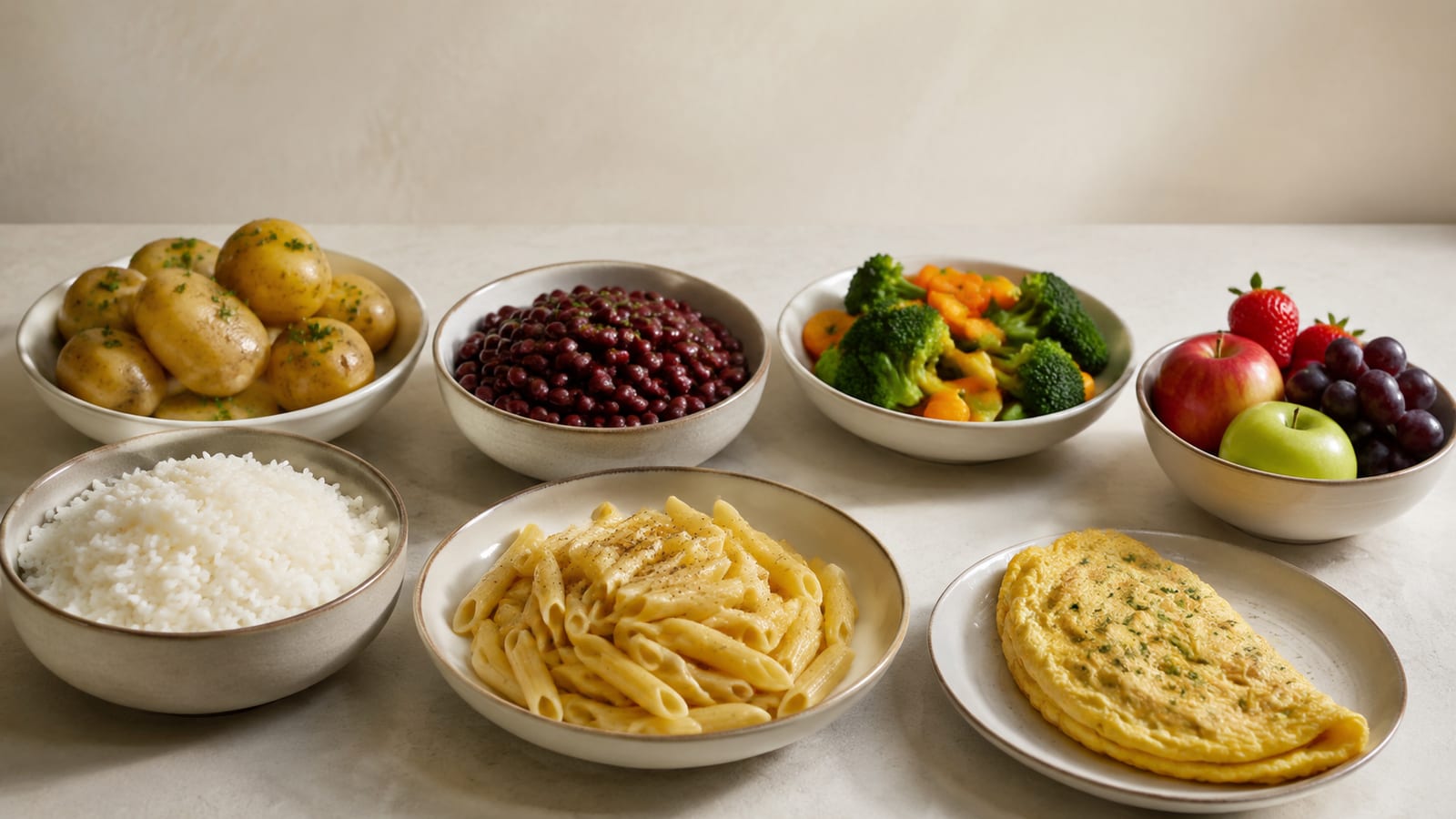
| Rice bowl with protein | Main meal before or after practice | Easy carbohydrate, flexible protein, simple meal prep | Can feel repetitive without different sauces or vegetables | Best overall |
| Oats, yogurt, and fruit | Breakfast or post-practice meal | Soft texture, steady carbohydrates, protein, and fruit | May not sit well before intense swimming for some athletes | Keep for breakfast or recovery |
| Turkey sandwich with fruit | School, work, or meet days | Portable, familiar, and easy to portion | Bread and fillings can dry out or become unappealing in a warm bag | Best portable meal |
| Pasta with chicken or tofu | Dinner before a hard training day | High-carbohydrate meal with useful protein | Heavy sauces can create stomach trouble | Keep the plain version |
| Potatoes with eggs or cottage cheese | Budget meal and recovery dinner | Filling carbohydrates with protein | Takes more planning if you lack a kitchen | Best budget meal |
| Sports drink | Long sessions, hot conditions, or repeated races | Delivers fluid, carbohydrate, and electrolytes together | Unneeded for many short practices | Use for the right session |
| Bars, gels, and chews | Emergency meet fuel | Portable and quick to eat | Cost adds up, and some products upset the stomach | Backup option |
Best overall: the rice bowl
Choose a rice bowl as your main default. Add chicken, eggs, tofu, beans, or fish, then include vegetables and a modest amount of sauce.
Rice is easy to batch cook and usually digests well. You can change the protein and seasoning without rebuilding your meal plan. That matters during heavy training weeks, when complicated recipes become another job.
Use a larger serving on a hard or long practice day. Use less on an easy day if your appetite is lower. The meal should support the work ahead, not follow a rigid rule.
Best budget: potatoes with eggs
Potatoes and eggs are the strongest low-cost pairing for many swimmers. Add fruit, frozen vegetables, or beans if you have them.
Size A potatoes weigh more than 10 ounces, while Size B potatoes weigh between 5 and 10 ounces. Use the size that matches your appetite and training day. You don't need the biggest potato in the bag to build a useful meal.
This option works best at home, where you can cook ahead. It is less useful between school and practice unless you have access to a microwave.
Best portable choice: a sandwich and fruit
A turkey sandwich with a banana, apple, or applesauce is a practical pool-bag meal. Peanut butter, sunflower-seed spread, egg, cheese, tofu, or hummus can replace turkey.
Choose a filling you already tolerate. A meet is a poor time to test a new spread, unusual bread, or a large amount of raw vegetables.
Pack the sandwich so it stays cool when needed. Food safety still matters, especially during long meet days.
Build meals around training carbohydrates
Your main meals should start with a carbohydrate source. Then add protein, produce, and fat according to your hunger and schedule.
Useful combinations include:
- Rice, chicken, vegetables, and avocado.
- Pasta, tomato sauce, tofu, and fruit.
- Potatoes, eggs, spinach, and toast.
- Oatmeal, Greek yogurt, banana, and peanut butter.
- A bean burrito with rice and salsa.
- A turkey sandwich with yogurt and fruit.
Choose white rice, regular pasta, or lower-fiber bread before a hard session if high-fiber foods bother your stomach. Whole grains are useful at other meals, but more fiber isn't automatically better right before fast swimming.
A simple meal pattern from USDA MyPlate can help you balance food without tracking every detail. Still, swimmers with high training loads often need more carbohydrate and total food than a general healthy-eating plate suggests.
Pre-practice fueling
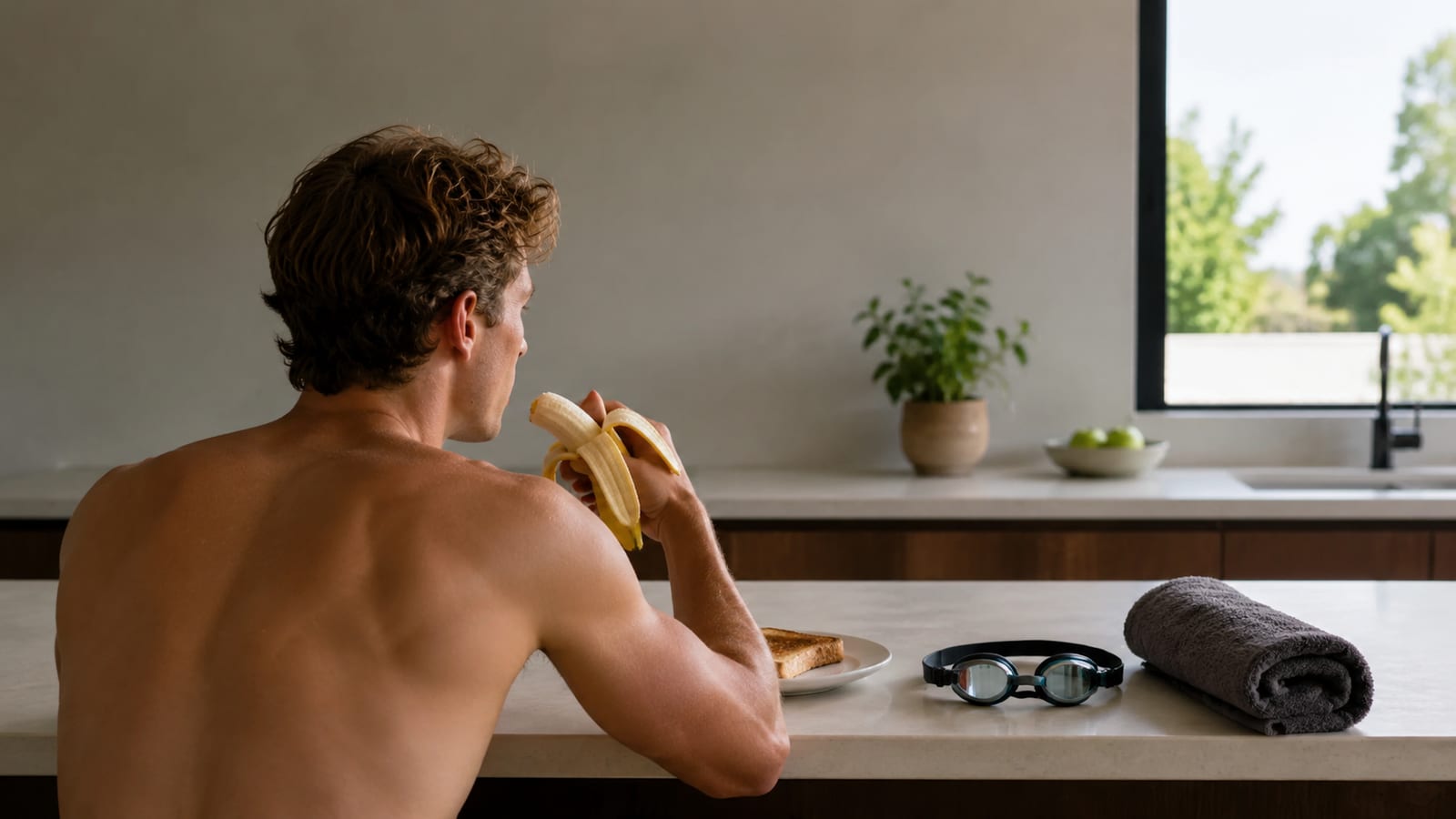
Eat a normal meal several hours before practice when your schedule allows. Build it around rice, pasta, potatoes, bread, or oats, then add a moderate serving of protein and a small amount of fat.
Good choices include:
- Chicken and rice with cooked vegetables.
- Pasta with tomato sauce and tofu.
- A turkey sandwich with fruit.
- Oatmeal with Greek yogurt and a banana.
- Potatoes with eggs and toast.
If you need food closer to practice, keep it smaller and easier to digest. Try a banana, toast with honey, applesauce, pretzels, a plain bagel, or low-fiber cereal.
For early practice, don't force down a full breakfast before sunrise. Have a small carbohydrate snack if you can tolerate one, then eat a real breakfast afterward. This gives you usable training energy without asking your stomach to handle a large meal in the dark.
For more timing ideas, see this guide to nutrient timing for athletes.
Hydration before and during swimming
Consume 14–20 ounces of water or a sports drink before training. Start early enough that you aren't gulping the entire amount on the pool deck.
For a normal practice, water is usually the better default. Choose a sports drink for longer or harder sessions, hot conditions, heavy sweating, or back-to-back races when you need both fluid and carbohydrate.
The drink is not automatically more athletic, and water is not automatically better. Match it to the work. A short technique practice may need water, while a long session or packed meet may justify carbohydrate and electrolytes.
During long sessions, sip regularly rather than waiting for strong thirst. Afterward, keep drinking with your meal and include salty foods if you sweat heavily.
The Ready Light Classic Lemonade pack listed for sports drink use contains 16.9 ounces per drink in a 12-count case. Treat a packaged drink as one tool in your plan, not as a requirement for every practice.
Fuel between races and sessions
Meet days punish poor preparation. Bring food you can eat quickly, store safely, and digest without trouble.
Pack a mix of:
- Bananas and applesauce pouches.
- Pretzels and crackers.
- Bagels or jam sandwiches.
- Low-fiber cereal.
- Granola bars you have already tested.
- Yogurt pouches or milk.
- Jerky, cheese, or a small turkey roll-up.
Start with fluids, then eat a modest carbohydrate portion. Add protein when several races or sessions remain. Save the giant meal for after the final event, because a full stomach makes the next warm-up harder.
Between two practices, refuel as soon as your schedule permits. Combine carbohydrates and protein in a meal or snack, then drink steadily before the next session. Put the food in your bag before leaving home. A plan that stays in the kitchen will not help you at the pool.
Recovery meals after practice
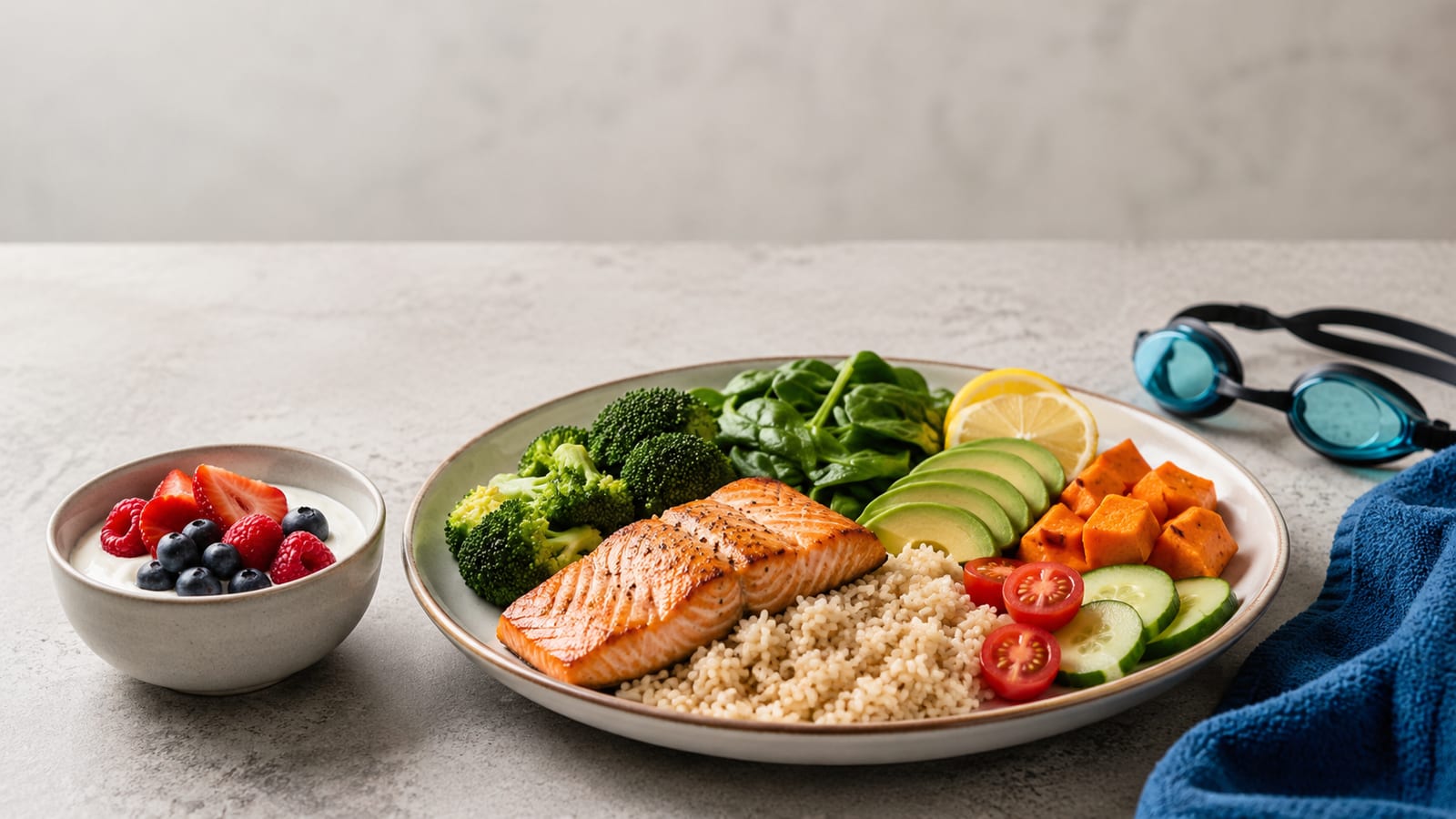
Recovery starts with carbohydrates, protein, fluids, and enough total food. You don't need a special shake or a strict countdown.
Easy recovery choices include:
- Chocolate milk with a bagel.
- A fruit smoothie with yogurt.
- Rice with eggs.
- A chicken burrito.
- Salmon with potatoes.
- Lentil pasta with tofu.
- A peanut butter and jam sandwich with milk.
If your appetite is low, start with a drinkable option. Follow it with a proper meal when your stomach settles.
The harder the session and the sooner you train again, the more attention recovery deserves. After an easy practice, your next regular meal may cover the job. After a demanding session followed by another workout, delaying food can show up as flat energy in the water.
The Dietary Guidelines for Americans also support a broad food pattern rather than a supplement-heavy plan. That fits swimmers well because real meals cover more needs and cost less.
A practical one-day swim diet plan
Adjust portions to your hunger, body size, training load, and access to food. The structure matters more than copying a fixed menu.
Before morning practice
Choose one:
- Banana and toast.
- Applesauce and a small bagel.
- Low-fiber cereal with milk.
- A sports drink if solid food feels impossible and the session is demanding.
Breakfast after practice
Choose one:
- Oats with yogurt, banana, and peanut butter.
- Eggs with potatoes, toast, and fruit.
- A breakfast sandwich with milk.
- A smoothie with yogurt, oats, and fruit.
Lunch
Build a meal around:
- Rice, pasta, potatoes, or bread.
- Chicken, fish, eggs, beans, tofu, or turkey.
- Cooked or raw vegetables based on your tolerance.
- Fruit and water.
Afternoon snack
Choose one:
- Yogurt with cereal.
- A peanut butter sandwich.
- Cheese and crackers.
- Fruit with milk.
- A granola bar and a banana.
Dinner
Use a carbohydrate base, a protein source, and vegetables:
- Rice bowl with chicken or tofu.
- Pasta with meat sauce or lentils.
- Potatoes with eggs and vegetables.
- Bean burrito with rice.
- Fish with potatoes and cooked vegetables.
Evening snack
Add food if you are hungry, training again soon, or struggling to meet your needs:
- Cereal with milk.
- Toast with peanut butter.
- Yogurt and fruit.
- Cheese and crackers.
- A simple sandwich.
Rice and potato choices for a tight budget
Rice is useful because it stores well and works across many meals. The listed 1kg RICE, white broken 5% has a budget price of CH 0.45. The listed 1kg RICE, parboiled has a budget price of CH 0.47, and the listed 1kg RICE, white, long grain, irri6/2 has a budget price of CH 0.52.
All three are reasonable choices. Pick the one your household will cook and eat consistently. A slightly different rice type will matter less than skipping meals because the plan takes too much time or money.
Potatoes can stretch a meal without requiring a complicated recipe. Pair them with eggs, beans, yogurt, or leftover meat, then add whatever vegetables are available.
Foods to limit before hard sessions
Some foods are nutritious but poorly timed. Test them away from competition first.
Limit these close to swimming if they cause trouble:
- Fried meals.
- Large servings of beans.
- Heavy cream sauces.
- Spicy foods.
- Large salads.
- Greasy meats.
- Unfamiliar supplements.
- Excessively large portions.
This doesn't make those foods forbidden. It makes them a poor choice before repeated sprints when you need your stomach to cooperate.
Packaged foods also have a place. A bar, sports drink, or applesauce pouch can solve a real timing problem. The concern starts when convenience food replaces regular meals, protein, fruit, vegetables, and enough total fuel.
Supplements and restrictive diets
Most young swimmers should fix meal timing and total food before considering supplements. Protein powder cannot repair a day with no breakfast, no lunch, and a rushed dinner.
Be cautious with products that promise rapid performance gains or weight changes. Supplements can contain ingredients that are missing from the label, and young athletes have more reason to involve a parent, sports dietitian, or qualified clinician.
A vegetarian swimmer can meet training needs with rice, pasta, oats, potatoes, beans, lentils, tofu, eggs, dairy, nuts, and seeds. A swimmer with food allergies needs safe substitutions, not a smaller diet. For ongoing stomach pain, major fatigue, missed periods, fainting, or repeated illness, seek professional care.
The simple swim nutrition checklist
Use this before the week starts:
- Do I have a carbohydrate source for every main meal?
- Do I have protein ready after practice?
- Is there a snack in my swim bag?
- Have I packed fluids before leaving home?
- Have I tested meet-day foods during practice?
- Do I have a plan for double-practice days?
- Am I eating more on the hardest training days?
- Does my food plan fit my budget and kitchen access?
If your energy keeps dropping, start by checking missed meals and snacks. Under-fueling is often a planning problem before it is a food-quality problem.
FAQ
Should swimmers follow a low-carbohydrate diet?
Usually, no. Swimming includes repeated hard efforts, and carbohydrates provide useful training fuel for that work. A swimmer who cuts major carbohydrate foods may feel flat before the session ends.
Is a sports drink needed at every swim practice?
No. Water generally covers a normal, shorter practice. A sports drink makes more sense for long or demanding sessions, hot conditions, heavy sweating, or multiple races.
What should a swimmer eat with no appetite after practice?
Start with something easier to drink or chew, such as a smoothie, milk, yogurt, or fruit. Then eat a fuller meal once your appetite returns.
How can a swimmer eat well without a kitchen?
Pack sandwiches, bagels, fruit, cereal, shelf-stable milk, yogurt, pretzels, and tested bars. Add prepared rice, potatoes, or pasta when you have access to a refrigerator and microwave.
Should swimmers count every calorie?
Most swimmers can start with regular meals, planned snacks, and changes based on training energy, hunger, recovery, and performance. A sports dietitian can help if under-fueling, rapid weight change, or persistent fatigue becomes a concern.