


The best athlete meal plan for healthy weight loss is a high-protein, carbohydrate-supported plan built around training. Eat slightly less energy overall, keep enough fuel for hard sessions, and make meals simple enough to follow on real practice days. A crash diet may lower body weight quickly, but it also makes weak workouts, poor recovery, and constant hunger more likely.
Last updated: 2026-10-07
The simplest athlete meal plan for healthy weight loss
Build most meals from four parts:
- Protein to support muscle repair and fullness
- Carbohydrates to fuel training
- Colorful produce for fiber, vitamins, and minerals
- A moderate amount of fat for health and satisfaction
Then place more carbohydrates around hard training and slightly fewer around easy or rest days. Your total intake still matters, but timing helps you train well while creating a manageable energy deficit.
Useful meal combinations include:
- Chicken, rice, vegetables, and avocado
- Oatmeal with Greek yogurt, berries, and peanut butter
- Turkey on whole-grain bread with fruit and milk
- Tofu stir-fry with noodles and frozen vegetables
- Beans, potatoes, salsa, and cheese
- Salmon, couscous, and roasted vegetables
Keep protein steady across the day. Adjust the starch portion based on the session ahead, rather than cutting carbohydrates from every meal.
A cutting diet plan for lean muscle can help if you need more meal combinations. However, the same rule applies: the plan must support your training schedule, appetite, budget, and digestion.
What a healthy meal plan for athletes should include
A repeatable plate makes meal planning easier than tracking every ingredient.
| Meal part | Practical choices | Why it belongs |
|---|---|---|
| Protein | Eggs, chicken, fish, lean meat, Greek yogurt, cottage cheese, tofu, beans | Supports muscle repair and helps meals satisfy you |
| Carbohydrates | Rice, potatoes, oats, pasta, bread, cereal, fruit | Provides training energy and supports recovery |
| Produce | Fresh or frozen vegetables, berries, bananas, apples, salad greens | Adds fiber, vitamins, and volume |
| Healthy fats | Olive oil, nuts, seeds, avocado, peanut butter | Supports health and helps food taste satisfying |
| Fluids | Water, milk, fortified soy milk, broth, sports drinks when useful | Supports hydration and training output |
For snacks, pair two food groups when possible. Try yogurt and fruit, a turkey sandwich, cheese and crackers, or a banana with milk.
You can also use a single carbohydrate before a short session. Toast, pretzels, applesauce, or a banana may be enough if you ate a recent meal.
How to set calories without underfueling training
Start with what you currently eat while your training and body weight are fairly stable. Then make a small change rather than removing a large amount of food at once.
Your appropriate intake depends on:
- Body size and current body weight
- Training frequency and session length
- Sport demands
- Recovery needs
- Daily movement outside training
- Sleep, stress, and appetite
- Your weight-loss goal and competition schedule
There is no useful universal calorie target for every athlete. A runner completing long sessions needs a different plan from a lifter training briefly after work.
The deficit should come mainly from lower-demand periods. Keep the meal before hard practice, fuel during long work, and recovery meal strong. Reduce extras, oversized portions, or low-value snacks elsewhere first.
Aggressive restriction often shows up as:
- Sessions that feel flat
- Persistent soreness
- Poor sleep
- Irritability
- Strong food preoccupation
- Repeated late-night overeating
- More illness or injury
- Menstrual changes or other hormone-related symptoms
These signs can point to Relative Energy Deficiency in Sport, often called RED-S. This means your body is not getting enough energy for both training and normal health. Low energy availability can affect health as well as performance. If these symptoms continue, involve a sports dietitian or qualified clinician.
Macronutrients for an athlete weight loss meal plan
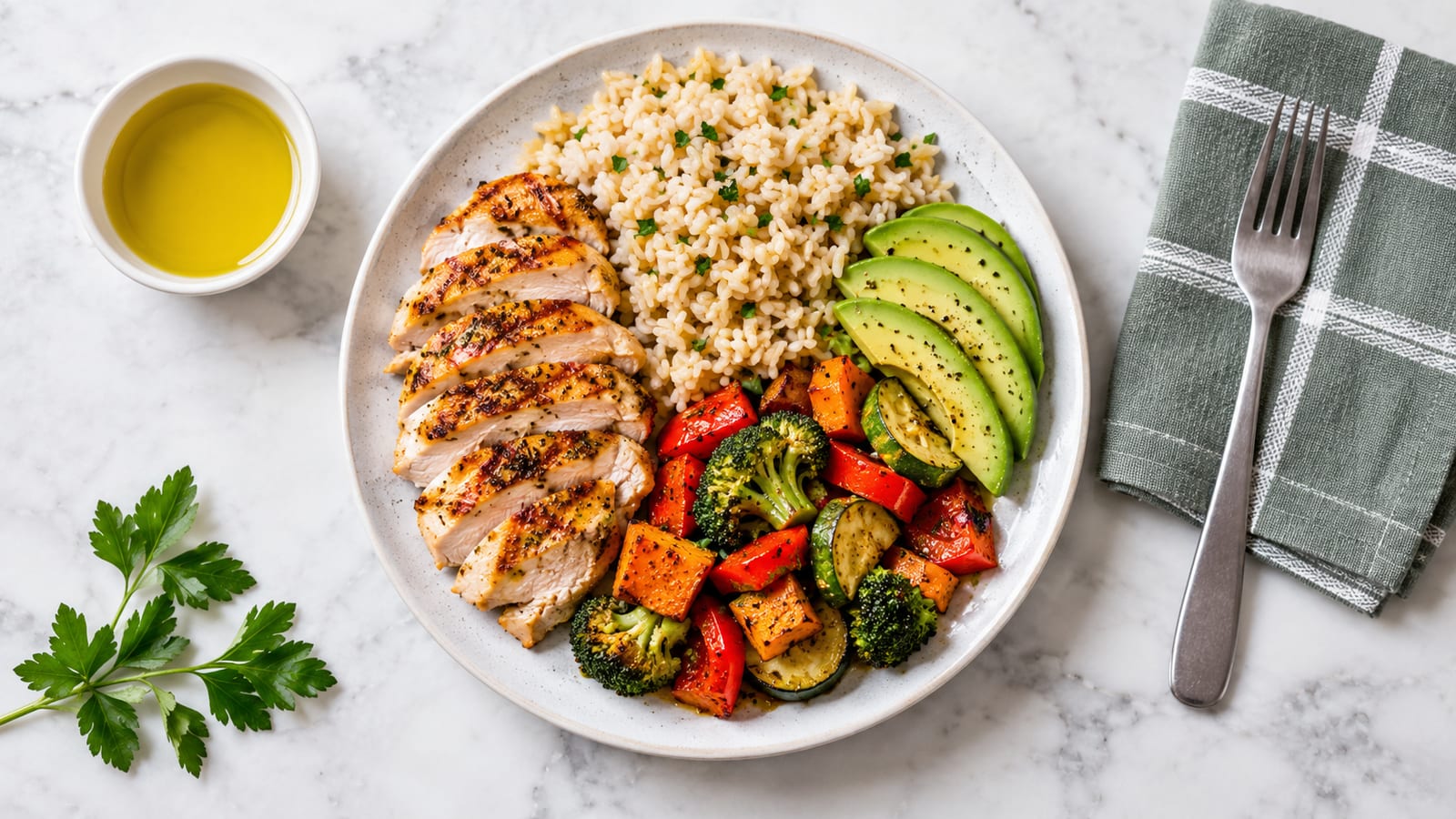
Keep protein steady
Most exercising individuals can use an overall daily protein intake of 1.4–2.0 grams per kilogram of body weight per day. Spread that protein across meals instead of saving it all for dinner.
Good choices include:
- Eggs and egg whites
- Greek yogurt or cottage cheese
- Chicken, turkey, fish, and lean meat
- Tofu, tempeh, lentils, and beans
- Milk or fortified soy milk
You don't need a protein-heavy meal that leaves no room for carbohydrates. A chicken-and-rice bowl can support training better than a plate of chicken and vegetables alone.
Adjust carbohydrates to workload
Carbohydrates should rise with training demand. Hard intervals, long runs, tournaments, and repeated practices need more fuel than a rest day.
Choose foods you digest well:
- Rice
- Potatoes
- Pasta
- Oats
- Bread and bagels
- Cereal
- Fruit
- Pretzels
On an easy day, you may use a smaller serving of starch while keeping protein and produce steady. Do not turn every rest day into a very low-carbohydrate day if another hard session follows soon.
Keep enough dietary fat
Fat supports health, flavor, and satiety. Include olive oil, nuts, seeds, avocado, eggs, and fatty fish across the week.
Keep large amounts of fat away from hard training if they make you feel heavy. A peanut butter sandwich may work well before an easy workout, while toast, fruit, or pretzels may digest better before intervals.
Rigid macro ratios are rarely useful here. Your carbohydrate needs change with training, while protein should stay more consistent.
Personalize portions to your body and training load
Use your hand and plate as a starting point if calorie tracking makes meals stressful.
For a main meal, try:
- A palm-sized serving of protein
- A cupped-hand serving of carbohydrates
- At least one fist of vegetables or fruit
- A thumb-sized serving of added fat
Add more carbohydrate when training is hard, long, or close to the meal. Use less when the day is mostly sedentary and recovery needs are lower.
Larger athletes may need larger portions. Smaller athletes may need less food but still require enough carbohydrates and protein to train. Appetite also matters. A plan that leaves you hungry every night needs more food or more filling meals.
Track patterns rather than chasing perfect numbers. If performance drops, recovery slows, or hunger becomes difficult to manage, increase food around training first.
Fuel hard training and create the deficit around it
Training load should decide where your food goes.
| Day type | Food focus | Simple adjustment |
|---|---|---|
| Hard training | More carbohydrates, steady protein, enough fluids | Add rice, oats, bread, fruit, or a sports drink |
| Moderate training | Balanced meals and a planned snack | Keep normal portions and fuel the session |
| Easy training | Steady protein and produce | Use a smaller starch portion if appetite is lower |
| Rest day | Recovery, protein, produce, and fluids | Reduce training extras without skipping meals |
Do not eat as if every day is a competition day. However, do not eat as if every training day is a rest day either.
If you train twice in one day, refuel after the first session before the second. A meal or snack with carbohydrates and protein can prevent the second workout from exposing a missed meal.
Pre-workout meals that support performance and weight loss

The best pre-workout meal is one you can digest and repeat. Before exercise, choose carbohydrates, a moderate amount of protein, and less fat and fiber if your stomach is sensitive.
For the one to four hours before exercise, athletes may use 1–4 grams of carbohydrate per kilogram of body weight. Gatorade's carbohydrate guidance supports this range. The higher end suits longer or harder work, while a smaller amount may suit a shorter session.
Useful meals include:
- Rice with chicken and a small serving of vegetables
- Oatmeal with yogurt and a banana
- A turkey sandwich with fruit
- Pasta with tomato sauce and lean meat
- A baked potato with cottage cheese
- Cereal with milk and a banana
Give yourself more time after a large meal. If you have less time, reduce the portion and choose lower-fiber, lower-fat foods.
Avoid testing a new spicy dish, a huge salad, or a heavy fried meal before a hard session. Nutritious food can still be poor training fuel if your stomach can't handle it at the right time.
For more ideas, use this guide to pre-workout meals for endurance training.
Simple carbohydrates for early-morning workouts
Early training doesn't require a full breakfast before sunrise. Use a small carbohydrate snack when time and appetite are limited, then eat a proper breakfast afterward.
For a short, easy session, try:
- A banana
- Toast with jam
- Applesauce
- Dry cereal
- A small granola bar
For a longer or demanding workout, add more fuel if you can tolerate it:
- A bagel
- A larger serving of cereal
- Toast with honey
- A sports drink
- A banana with drinkable yogurt
A small snack is enough for some morning sessions. It is not enough for every long workout. Match the food to the work and practice the plan before competition.
A practical seven-day athlete meal plan template
Use this template as a structure, not a rigid prescription. Swap foods based on allergies, budget, cooking access, and tolerance.
Day 1: Hard training
- Breakfast: Oatmeal with banana, Greek yogurt, and peanut butter
- Lunch: Chicken rice bowl with vegetables
- Pre-workout snack: Pretzels and fruit
- Dinner: Turkey pasta with tomato sauce and salad
- Evening option: Milk or fortified soy milk
Use the larger carbohydrate servings around the workout. Cook extra rice and chicken for the next day.
Day 2: Easy training
- Breakfast: Eggs, toast, and berries
- Lunch: Turkey sandwich, yogurt, and an apple
- Snack: Cottage cheese with fruit
- Dinner: Salmon, potatoes, and green vegetables
Keep protein steady. If the session is easy, you may need less starch than on the first day.
Day 3: Hard training
- Breakfast: Cereal with milk, banana, and a boiled egg
- Lunch: Leftover turkey pasta with vegetables
- Pre-workout snack: Bagel with a small amount of peanut butter
- Dinner: Tofu stir-fry with rice
- Evening option: Yogurt with cereal
Use frozen vegetables to keep this meal affordable and quick. Add more rice if the session is long or intense.
Day 4: Rest or light movement
- Breakfast: Greek yogurt, oats, berries, and seeds
- Lunch: Bean and cheese burrito with salsa
- Snack: Carrots with hummus and crackers
- Dinner: Chicken, roasted vegetables, and a moderate potato
Keep eating regular meals on rest days. Removing food all day often creates a large evening appetite.
Day 5: Hard training
- Breakfast: Whole-grain toast, eggs, fruit, and milk
- Lunch: Tuna or chickpea pasta salad
- Pre-workout snack: Applesauce and pretzels
- Dinner: Lean beef or lentil chili with rice
- Evening option: Cottage cheese and fruit
Choose the chickpea version if it digests well for you. If beans cause trouble before training, save them for afterward.
Day 6: Long or demanding session
- Breakfast: Oatmeal with raisins, yogurt, and banana
- During or after training: Water and carbohydrate fuel as needed
- Lunch: Chicken burrito bowl with rice, beans, and vegetables
- Snack: Cereal with milk
- Dinner: Fish or tofu, potatoes, and vegetables
Endurance athletes who sweat heavily may need sodium during long sessions. Around 300–600 milligrams of sodium per hour can suit endurance athletes in hot conditions, athletes with a high sweat rate, or very salty sweaters. Individual needs vary, so test the plan during training.
Day 7: Rest and meal preparation
- Breakfast: Eggs, potatoes, and fruit
- Lunch: Leftover rice bowl with added vegetables
- Snack: Yogurt and berries
- Dinner: Lentil pasta with tofu and tomato sauce
- Preparation: Cook a grain, protein, and vegetables for the next few meals
A useful week includes leftovers. Cooking a different meal every day is unnecessary work and makes the plan harder to follow.
Recovery meals that protect muscle during weight loss

After training, combine protein, carbohydrates, and fluids. This supports muscle repair and replaces some of the energy used in the session.
Practical recovery meals include:
- Salmon with potatoes and vegetables
- Lentil pasta with tofu
- A bean burrito with fruit
- Greek yogurt with cereal and a banana
- Chicken rice with vegetables
- Eggs on toast with milk
- A turkey sandwich with yogurt
If a full meal feels difficult, start with milk, yogurt, a smoothie, or a simple sandwich. Eat more when your appetite returns.
Recovery food still counts toward the day's intake. You don't need to erase the calorie deficit after every easy workout. Hard or long sessions deserve more recovery food because they create a larger demand.
The best diet for athletes to lose weight is one they can digest and repeat
The best diet for athletes to lose weight fits the athlete's real life. That includes school, work, travel, allergies, family meals, limited kitchen access, and food preferences.
Make simple swaps:
- Use frozen vegetables instead of fresh when cost or time is tight.
- Use beans, lentils, eggs, tofu, or canned fish when meat costs more.
- Use shelf-stable milk or soy milk for portable protein.
- Choose rice, potatoes, oats, bread, and bananas as affordable carbohydrates.
- Pack sandwiches, fruit, cereal, and yogurt for long days.
- Keep low-fiber options available if high-fiber food causes stomach trouble.
Social meals also fit. Eat a normal portion, include protein and carbohydrates, and return to your usual routine at the next meal. One restaurant meal does not decide the plan.
Supplements are not the foundation. A protein powder can help with convenience, but it cannot fix missed meals, low carbohydrate intake, poor sleep, or an overly aggressive deficit.
How to know whether the plan is working
Look at several signals together. Body weight alone can shift with fluids, sodium, menstrual cycle changes, and hard training.
Track:
- Training quality
- Recovery between sessions
- Hunger across the day
- Sleep
- Mood and concentration
- Body-weight trends over time
- Waist or clothing changes
- Menstrual regularity or other hormone-related signs
- Repeated soreness, illness, or injury
If performance stays steady, recovery is acceptable, and hunger is manageable, the plan may be working. If you feel weak, cold, distracted, sore, or unable to recover, increase intake around training and review the plan with a qualified professional.
Young athletes, athletes still growing, and anyone preparing for a major competition should avoid aggressive weight loss without professional guidance. Weight-class athletes also need careful planning because rapid restriction can reduce strength, coordination, hydration, and decision-making.
FAQ
Can athletes lose weight without cutting carbohydrates?
Yes. Keep carbohydrates around demanding sessions and reduce portions during lower-demand periods if needed. Cutting them across the whole day often makes training feel harder and recovery slower.
Is this plan suitable for vegetarian athletes?
Yes. Use tofu, tempeh, beans, lentils, eggs, dairy, and fortified soy products as protein choices. Pair them with rice, potatoes, pasta, bread, or other carbohydrates that support training.
What should I do if I miss a workout?
Eat a normal meal and skip the extra pre-workout snack. Do not punish yourself by skipping the next meal, especially if another session is scheduled soon.
Can I use intermittent fasting while training?
Some athletes can tolerate a shorter eating window, but it can make pre-workout fueling and recovery harder. If fasting causes poor sessions, strong evening hunger, or missed protein, it is a poor fit for your schedule.
Should I use a protein supplement?
Use one for convenience when real food is unavailable or difficult to digest. It is optional, and it should support regular meals rather than replace most of them.