


Choose about 1.5 grams of protein per kilogram of body weight each day if you’re a teen who trains regularly. The protein requirements for teen athletes are higher than the basic needs of less active teens, but more protein rarely fixes missed meals, low carbohydrate intake, poor sleep, or an overloaded training schedule. Spread protein across breakfast, lunch, dinner, and one or two snacks with foods such as milk, yogurt, eggs, chicken, fish, beans, tofu, and cheese.
Last updated: 2026-09-04
What are the protein requirements for teen athletes?
Protein supports growth, muscle repair, immune function, and recovery after practice. Teen athletes need those jobs covered while their bodies are still developing, so their needs can rise with regular training.
A useful daily target for a teen athlete is approximately 1.5 grams of protein per kilogram of body weight. This is a practical training target, not a score you need to hit perfectly every day.
The basic requirement for teens is lower than the needs of many athletes who train often. For reference:
- Teenage girls have a general protein requirement of 46 grams per day.
- Teenage boys have a general protein requirement of 52 grams per day.
- A young teenager weighing 110 pounds may need about 50 grams of protein per day as a general starting point.
Those figures describe basic needs for the named groups. Regular practices, lifting sessions, endurance work, and recovery from hard training can raise the useful target.
Protein also has to fit inside the full diet. For teens, protein commonly provides 10% to 30% of daily calories. A teen athlete does not need to push toward the top of that range just because a label says “high protein.”
Daily targets by body weight
Use body weight in kilograms for the clearest estimate. The examples below show how to apply the training target.
| Body weight | Practical approach |
|---|---|
| Around 110 pounds | About 50 kilograms, with a regular training target near 1.5 grams per kilogram |
| Less than 110 pounds | Use the same formula with your own weight |
| More than 110 pounds | Use the same formula with your own weight |
For the 110-pound example, multiplying about 50 kilograms by 1.5 gives a daily target based on training needs. That number is an estimate, not a demand for exact tracking.
A growing athlete who eats enough total food and includes protein at regular meals will often land close to the right place without counting every bite.
Training load changes the target
The right protein intake depends on what your week actually looks like. A light practice week does not need the same plan as a week with lifting, conditioning, and competition.
Use the lower end of your usual plan when:
- Training is light or less frequent.
- You have a rest day.
- You’re eating regular meals and recovering well.
- Your sport places limited stress on muscle tissue.
Use the higher end of your usual plan when:
- You’re lifting and practicing hard.
- Endurance training takes up much of the week.
- You have two demanding sessions in one day.
- You’re in a tournament or competition block.
- You’re returning from an injury under professional guidance.
More protein cannot replace enough energy. If you under-eat carbohydrates and total calories, your body has less fuel for training and less energy available for recovery. That problem shows up as low energy, poor practice quality, lingering soreness, and stalled progress.
Injury recovery needs extra care. A teen with a significant injury should work with a doctor or sports dietitian rather than setting a large protein target alone. The injury, treatment plan, appetite, and total energy needs all matter.
A simple protein calculation
Start with your body weight in pounds. Divide it by 2.2 to estimate kilograms. Then multiply that kilogram figure by about 1.5 for a regular training estimate.
For example, a teen who weighs 110 pounds weighs about 50 kilograms. A daily protein target may fit regular training.
You don’t need to weigh food forever. Use the calculation to understand the size of your target, then build a repeatable meal pattern. If you’re eating protein at breakfast, lunch, dinner, and a snack, you’re already using the right strategy.
A scale can also create stress for young athletes. If tracking starts to control your choices, skip the math and ask a parent, doctor, or sports dietitian for help.
Spread protein across the day
Trying to eat most of your protein at dinner is a poor recovery plan. Your body needs protein throughout the day, and a large evening serving can feel heavy or replace foods you still need.
Build each meal around a protein source:
- Breakfast: Eggs with toast, yogurt with oats and fruit, or milk with cereal.
- Lunch: Chicken in a rice bowl, tuna in a sandwich, beans in a burrito, or tofu with noodles.
- Dinner: Fish with potatoes, chicken with pasta, lentil curry with rice, or tofu stir-fry.
- Snacks: Cheese and crackers, yogurt, milk, a peanut butter sandwich, roasted soybeans, or a handful of nuts.
The best pattern is the one you can repeat during school, travel, and busy practice days. A strong dinner cannot fully rescue a day built from coffee, a small lunch, and vending-machine snacks.
For more portable ideas, use this guide to healthy snacks for teen athletes.
Protein timing around workouts

Protein before training can help if your last meal was several hours ago. Choose a familiar snack that digests well, such as yogurt, milk, a small turkey sandwich, cheese with crackers, or a peanut butter sandwich.
Keep the pre-training food smaller if your stomach is sensitive. High-fat meals, large portions, and unfamiliar foods can sit heavily during running, jumping, or hard intervals.
After practice, pair protein with carbohydrates. Try:
- Chocolate milk and a bagel.
- Yogurt with cereal and fruit.
- A chicken burrito.
- Rice with eggs.
- A turkey sandwich with juice or fruit.
- Tofu with noodles.
The post-workout meal matters most when your next meal is far away or you train again soon. If dinner is ready shortly after practice, you don’t need a special recovery product.
There is no narrow window that determines whether your training works. Eating a normal protein-containing meal before or after training is enough for many teen athletes. Consistent food across the day does more than chasing a perfect minute on the clock.
High-protein foods for a busy schedule
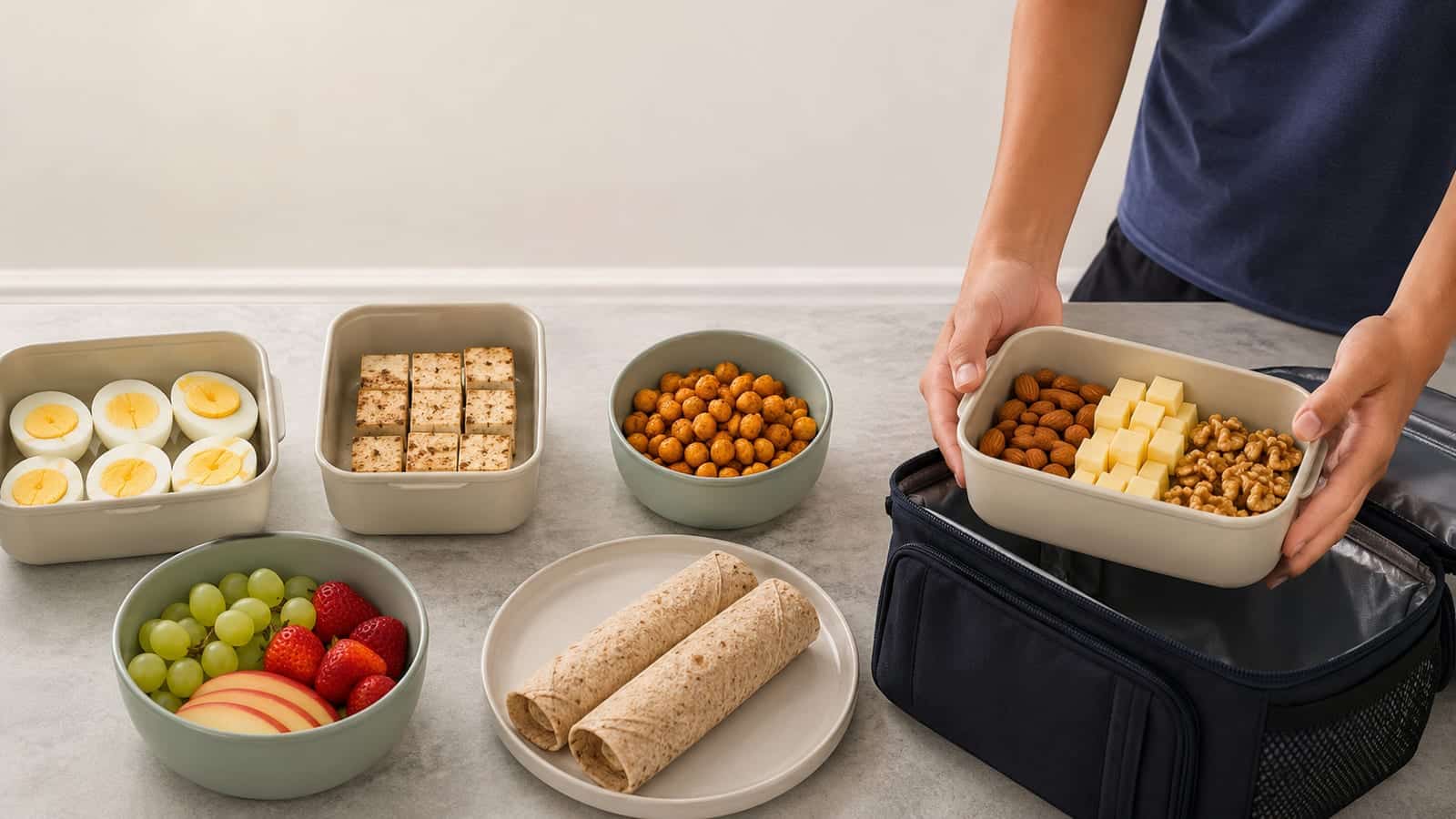
Whole foods should do most of the work because they bring more than protein. They can also provide carbohydrates, calcium, iron, fluids, fiber, and other nutrients that young athletes need.
Dairy foods
Milk, yogurt, Greek yogurt, cottage cheese, and cheese are easy options for school, home, and recovery. Choose lactose-free milk or yogurt if regular dairy causes digestive trouble.
A drinkable yogurt or carton of milk can work when appetite is low. It’s also easier to carry than a full meal before an early practice.
Eggs, poultry, and fish
Eggs are affordable and easy to prepare ahead. Chicken and turkey fit sandwiches, wraps, rice bowls, and pasta. Fish adds variety, but it doesn’t need to appear at every meal.
Pack a turkey sandwich for a travel day. Save the complicated recipe for a day when you have a kitchen and enough time to clean it.
Beans, tofu, and soy foods
Beans, lentils, tofu, tempeh, and soy yogurt can support a vegetarian or mostly plant-based plan. Combine them with rice, bread, potatoes, pasta, or tortillas for a more complete training meal.
Some athletes tolerate beans well, while others feel heavy after eating them before practice. Use smaller servings before training and save larger servings for after practice.
The vegetarian diet tips for teen athletes can help you build meals without making every snack a science project.
Nuts, seeds, and spreads
Peanut butter, sunflower-seed spread, almonds, trail mix, and pumpkin seeds are portable and useful when a refrigerator is unavailable. They also contain fat, so they may digest slowly for some athletes.
Use them before training only if you know your stomach handles them. Otherwise, choose a lower-fat snack before practice and eat the nut or seed food later.
Balanced meals fuel more than muscle repair
Protein is one part of a training diet. Carbohydrates provide much of the usable fuel for running, lifting, sprinting, and repeated efforts. If you replace rice, potatoes, bread, oats, fruit, or pasta with extra protein, your workouts may suffer.
Fats support health, hormone function, and energy intake. Produce adds vitamins, minerals, water, and fiber. Teen athletes also need enough total food to support growth, school, daily movement, and recovery.
A simple plate can include:
- A protein food.
- A carbohydrate food.
- Fruit or vegetables.
- A source of fat when tolerated.
- Water or another suitable drink.
For example, chicken with rice, vegetables, and avocado covers more of the job than chicken alone. Yogurt with oats and fruit supports training better than a protein product that leaves you hungry.
The best recovery meals for youth athletes show how to combine these pieces with ordinary foods.
Supplements are backup food
A protein shake can help when a teen has no appetite, faces a long ride home, or cannot reach a meal after practice. A protein-rich convenience food may also solve a real schedule problem.
That does not make supplements the default. Whole foods should remain the main source because they support the rest of the diet and teach useful meal habits.
Use a supplement only when it solves a clear problem:
- You can’t eat a full meal soon after training.
- You need a portable option during travel.
- Chewing feels difficult after a hard session.
- A qualified professional has recommended it.
- The product has a short, clear ingredient list.
A shake should add to the day’s food, not push out breakfast, lunch, or dinner. It also should not replace carbohydrates after hard training.
Some “mass gainers” and bodybuilding products contain far more ingredients than a teen needs. Their large serving sizes can also crowd out normal food and cause stomach trouble.
Supplement safety needs adult oversight
Teen athletes should involve a parent or guardian, doctor, or sports dietitian before using protein powders or performance supplements. This matters even more for athletes with allergies, digestive symptoms, kidney conditions, or a history of restrictive eating.
Supplements can contain contaminants, undisclosed ingredients, or amounts that differ from the label. A product sold for muscle gain is not automatically tested for every risk that matters to a young athlete.
Stop using a product and seek medical advice if it causes:
- Ongoing stomach pain or diarrhea.
- Vomiting or swelling.
- Hives, itching, or breathing trouble.
- A major change in appetite.
- Anxiety about eating normal food.
- Pressure to keep increasing the dose.
The U.S. Food and Drug Administration explains how dietary supplements are regulated. Read the label, check for allergens, and keep supplements away from younger siblings.
Protein does not build muscle by itself. Training provides the stimulus, food provides energy and building material, and sleep gives the body time to recover.
Adjust the plan to digestion and budget
The simplest affordable food strategy usually wins. If milk causes symptoms, try lactose-free milk or soy milk. If meat is too expensive, use eggs, beans, lentils, tofu, canned fish, or yogurt. If a full breakfast feels impossible, drink milk and eat toast, then have a larger meal later.
For school and travel, pack food before you leave:
- A yogurt pouch and fruit.
- A turkey or egg sandwich.
- Cheese and crackers.
- A peanut butter or sunflower-seed sandwich.
- Roasted chickpeas or soybeans.
- Milk in a cooler.
- A bean-and-cheese burrito.
Digestive tolerance matters more than a food’s reputation. A high-protein meal that leaves you nauseated before practice is a poor choice for that time of day.
If your teen is losing weight without trying, missing periods, feeling exhausted, getting injured often, or becoming fearful of ordinary foods, get professional help. Those signs may point to low energy availability or disordered eating, and adding a protein powder will not fix the cause.
The practical daily plan
Use this routine as a starting point:
- Eat breakfast with a protein food and carbohydrates.
- Include protein at lunch, even on school days.
- Pack a snack for the trip to practice.
- Eat protein with carbohydrates after training.
- Include a normal dinner rather than building the day around a shake.
- Add food on hard training days if hunger and recovery demand it.
- Reduce the focus on numbers if tracking makes eating stressful.
The protein requirements for teen athletes are best met through steady meals, practical snacks, and enough total energy. The exact target matters less than whether the athlete can train, recover, grow, and eat without constant stress.
FAQ
Can protein make a teen athlete gain muscle without strength training?
No. Protein supplies building material, but muscle gain also depends on training, enough total food, and recovery. Eating more protein without a suitable training plan usually adds little benefit.
Should a teen athlete eat protein on rest days?
Yes. Growth and tissue repair continue on rest days. Keep normal meals in place, though a lighter day may require fewer snacks than a day packed with training.
What should a teen athlete do if food feels difficult after practice?
Start with an easy option such as milk, drinkable yogurt, a smoothie, or a small sandwich. Then eat a fuller meal once your appetite returns. Repeated appetite problems deserve help from a parent and qualified clinician.
Can a teen athlete meet protein needs on a vegetarian diet?
Yes. Beans, lentils, tofu, soy foods, dairy, eggs, nuts, seeds, and grains can all contribute. Plan meals across the day instead of relying on one large serving at dinner.
Is a protein shake better than a meal after training?
Usually not. A meal gives you protein alongside carbohydrates and other nutrients. A shake is useful when time, appetite, or access to a kitchen makes a meal impractical.