

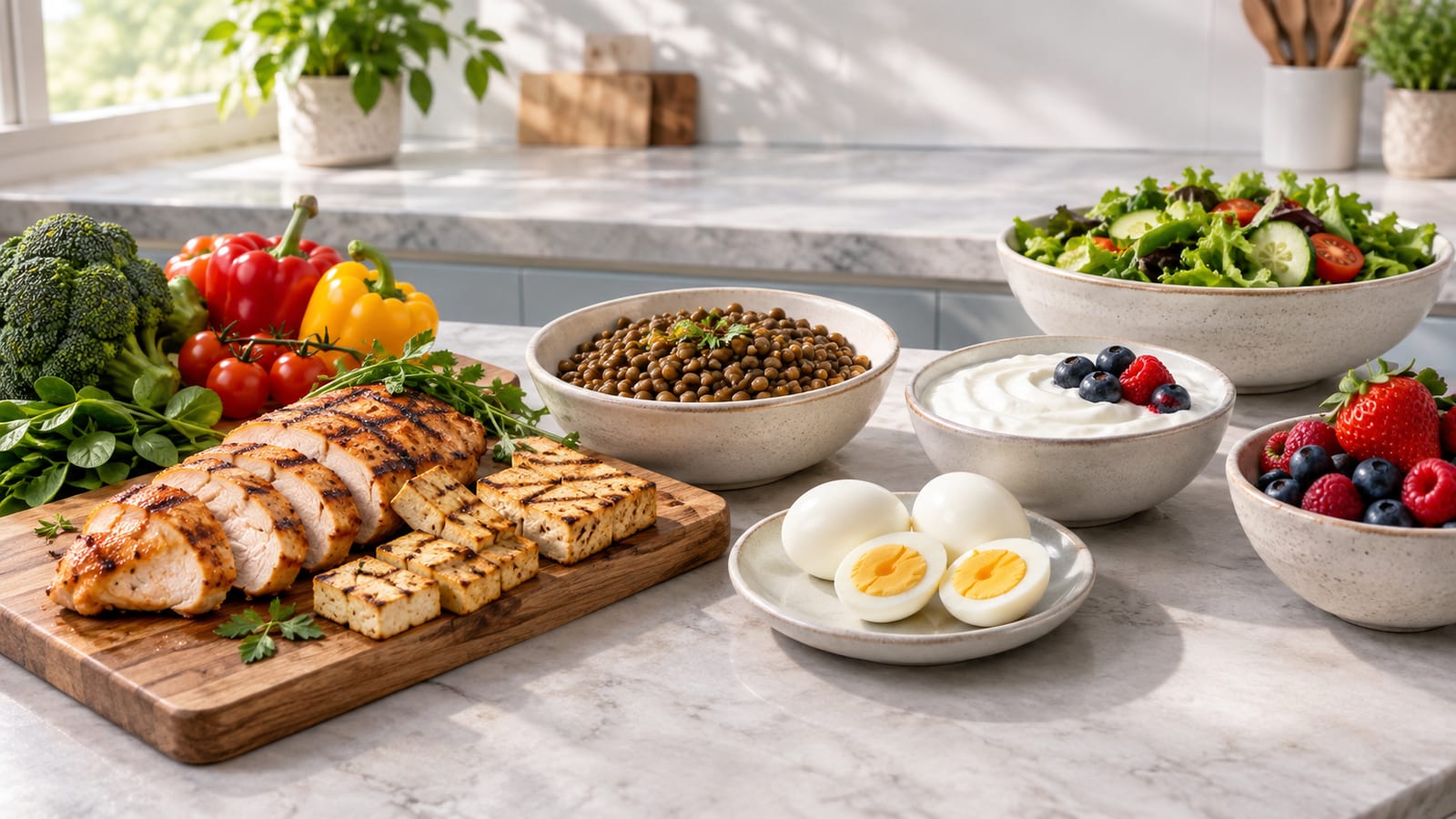
For muscle growth, eat enough total protein, around 1.6 grams per kilogram of body weight per day as a starting point, from sources you can digest, afford, and eat consistently. Comparing protein sources for muscle means weighing total daily protein, amino-acid quality, meal size, training load, budget, and stomach tolerance together. Omnivores have the easiest path with lean dairy, eggs, fish, and meat. Vegetarians and vegans can match results with soy, well-planned meals, and a blended plant-protein supplement when whole-food portions become impractical.
How should you approach comparing protein sources for muscle?
Start with the diet you can maintain through hard training weeks. A theoretically excellent protein source does little if you skip it, under-eat overall, or avoid it because it causes stomach trouble.
Use this decision order:
- Total daily protein: Your full-day intake matters more than one impressive meal.
- Protein quality: Essential amino acids, leucine, and digestibility affect how much usable protein each serving provides.
- Training demand: High-volume lifting, two-a-day sessions, and sport practice raise the cost of poor meal planning.
- Digestion: Bloating, dairy intolerance, and large portions can turn a good source into a poor choice.
- Budget and access: Beans, eggs, milk, tofu, canned fish, and powdered protein all solve different problems.
- Consistency: The best source is the one you can buy, prepare, pack, and eat repeatedly.
A strength athlete with a kitchen can build meals around ordinary foods. A student heading from class to practice may need yogurt, a sandwich, milk, or a shaker. Both plans can work if they supply enough total food and protein.
Animal versus plant protein for muscle growth
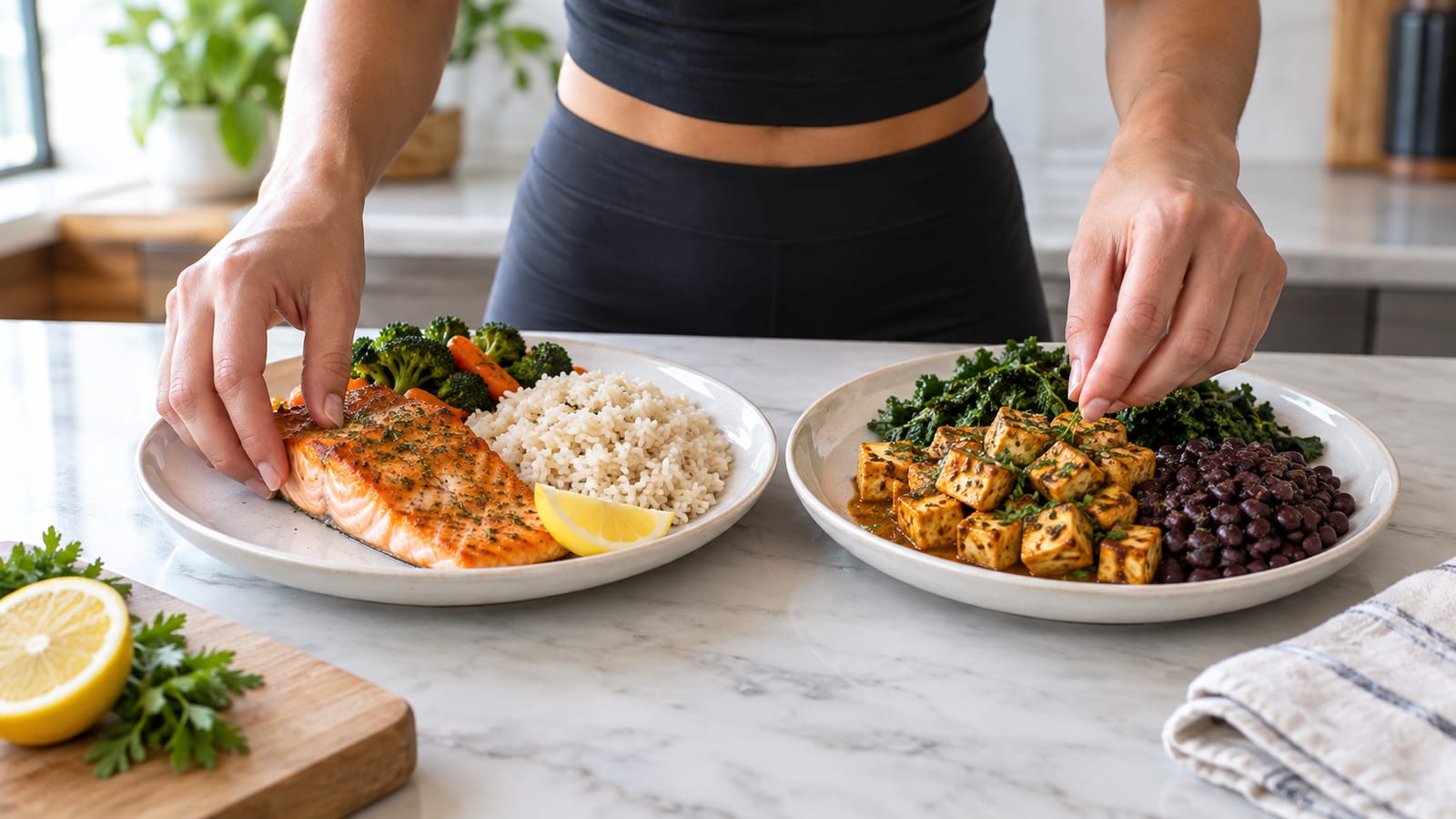
Eggs provide all essential amino acids in a compact, digestible serving. Lean dairy, fish, and meat also fit familiar meals, which helps if you need steady fuel around training.
Plant proteins can support muscle growth too. Soy foods, legumes, grains, nuts, seeds, and plant-protein powders work best when you eat enough total protein and vary your sources across the day.
The main practical differences are:
| Protein source | Diet fit | Why it works | Main catch | Verdict |
|---|---|---|---|---|
| Greek yogurt | Vegetarian, omnivorous | Convenient, protein-rich, and easy to pair with fruit or cereal | Dairy may bother some athletes | Best for quick meals and recovery |
| Cottage cheese | Vegetarian, omnivorous | Simple high-protein snack or meal addition | Texture and dairy tolerance limit appeal | Worth it if you digest dairy |
| Whey protein | Vegetarian, omnivorous | Fast preparation and a leucine-rich, highly digestible profile | It is a supplement, not a full meal | Best convenience-to-quality choice |
| Eggs | Vegetarian, omnivorous | Complete protein with easy meal use | Less portable unless prepared ahead | Excellent for home meals |
| Fish | Pescatarian, omnivorous | Protein for meals that also provide useful variety | Fresh options cost more and need planning | Excellent if access and preference line up |
| Lean meat | Omnivorous | Protein for substantial meals | Cooking and food cost can make it harder to use daily | Strong choice for larger meals |
| Tofu | Vegan, vegetarian | Versatile soy protein for bowls, wraps, and stir-fries | Some athletes dislike the texture or need seasoning | Best whole-food plant option for many athletes |
| Tempeh | Vegan, vegetarian | Dense soy food that works well in savory meals | Firmer texture and stronger flavor are not universal | Worth trying if tofu feels unsatisfying |
| Edamame | Vegan, vegetarian | Portable enough for some meals and easy to add to bowls | Usually works better as part of a meal | Useful supporting source |
| Legumes and grains | Vegan, vegetarian | Affordable foundation with beans, lentils, rice, pasta, or bread | Larger portions and meal planning may be needed | Dependable on a budget |
| Blended plant-protein powder | Vegan, vegetarian | Combines complementary proteins in a portable serving | Flavor, texture, and cost vary | Best insurance policy for hard training |
Whey protein is a dairy protein made from milk, so it fits vegetarian and omnivorous diets but not vegan ones. Soy protein is isolated from soybean, making it a plant-based option with a strong amino-acid profile.
Protein sources from plants often arrive with more fiber and a lower protein density per bite. That can help your overall diet, but it may also leave you full before you reach your training target. If a giant bean bowl makes you uncomfortable before practice, use a smaller serving and add tofu, soy milk, or a blended plant-protein drink.
Protein quality changes how much food you need
Protein quality describes how well a source supplies the essential amino acids your body cannot make. Leucine is one of those amino acids and helps signal muscle protein building after training.
Digestibility matters too. A protein can look impressive on a label, yet provide less usable amino acid content if your serving is small or the food passes through your system poorly.
That does not make protein quality more important than total intake. A high-quality serving cannot rescue a diet that consistently under-fuels you. It simply means that lower-density sources may require larger portions, more varied meals, or a convenient supplement.
For plant-based athletes, build meals around stronger protein anchors:
- Tofu, tempeh, edamame, or soy milk
- Lentils, beans, peas, or chickpeas
- Pea, rice, or blended plant-protein powder
- Oats, rice, pasta, bread, potatoes, nuts, and seeds alongside legumes
- Fortified foods that fit your budget and digestion
You do not need to combine complementary proteins in one mouthful. Across the day, varied plant foods can cover the amino-acid gaps. Still, pairing legumes with grains makes meal planning easier and usually produces a more satisfying plate.
What do randomized trials and reviews show?
The strongest practical message from randomized trials and systematic reviews is simple: adequate total protein and progressive resistance training do most of the work. Source differences become smaller when people eat enough protein and follow a sound lifting plan.
Babault et al.'s randomized trial compared pea-protein supplementation with whey-protein supplementation during resistance training. The study involved 161 males aged 18 to 35 and used a 12-week weight-training program performed three days per week.
Among the participants who started out weakest, the pea-protein group gained 20.2 ± 12.3% in biceps brachii thickness. That result shows pea protein can support muscle growth during resistance training. It does not prove that every pea powder matches every whey product, or that powder matters more than total food intake and training quality.
Research on muscle building converges on approximately 1.6 grams per kilogram of body weight per day. In practice, a well-planned vegan diet can support comparable training outcomes when protein intake is adequate and resistance training is structured.
Reviews still have limits. Trials differ in training experience, food choices, supplement formulas, age, body size, and how researchers measure lean mass. Lean mass also includes more than contractile muscle, so a small change in a scan does not tell you everything about performance or physique.
For broader background on protein intake and sports nutrition, the International Society of Sports Nutrition position stand gives a useful evidence review. Use it to understand the range of findings, not to hunt for a single food that does all the work.
Strength outcomes do not always mirror muscle size
Muscle size and strength overlap, but they are not the same result. A lifter can gain strength from better technique, improved coordination, and nervous-system adaptation before visible muscle growth catches up.
Body mass also affects strength. A heavier athlete may move more weight because of mechanical advantage or stability, while a lighter athlete may improve rapidly through practice. Protein supports the training process, but it does not explain every change in a one-repetition maximum.
That distinction matters in plant-based and animal-based comparisons. If two groups gain similar lean mass but one group improves strength more, the difference may reflect training familiarity, exercise selection, body size, or testing practice.
Judge your plan with more than one measure:
- Progress on key lifts
- Repeated training quality
- Body weight and appetite
- Recovery between sessions
- Muscle measurements or photos taken under similar conditions
- Digestion and willingness to repeat the meals
A protein choice that keeps you fueled and consistent can beat a theoretically better option that leaves you skipping meals.
Protein source and muscle hypertrophy across diets
Plant and animal sources can produce comparable muscle growth when the diet supplies enough protein, calories, and training support. The gap widens when plant-based athletes rely on low-protein foods, tiny portions, or fear convenient supplements.
Soy is the strongest single whole-food plant strategy for most athletes. Tofu, tempeh, and edamame offer useful protein density and work in meals without requiring a complicated recipe. Soy isolate adds a portable option for athletes who struggle to eat enough from food.
Legume-and-grain meals are a dependable vegan foundation. Rice and beans, lentil pasta with tofu, chickpea wraps, and oats with soy yogurt can all fit a muscle-building diet. However, these meals may take more volume than a whey shake, Greek yogurt, or chicken sandwich.
A blended plant-protein powder helps solve the schedule problem. Pea and rice proteins, or other complementary blends, can make it easier to reach your target after practice, during travel, or on days when appetite is low.
For a practical food plan, use this vegan bulking meal plan for strength gains as a template. Adjust the portions to your training load and hunger instead of copying a rigid day.
How does age change the decision?
Younger adults often have more room for error. They may stimulate muscle growth with ordinary meals, regular training, and enough total food.
Older lifters and aging athletes usually need more care with each meal. Age-related anabolic resistance means muscle may respond less strongly to a small or low-quality protein serving. A higher-quality source, enough leucine, and regular meals become more useful.
This does not make dairy or meat mandatory. Soy isolate, tofu, tempeh, pea-and-rice blends, and well-planned legume meals can all fit. The practical difference is that older athletes should be less casual about tiny protein portions and long gaps between meals.
Digestive tolerance also changes the answer. If beans cause trouble, use tofu, tempeh, soy yogurt, strained dairy, eggs, fish, or a powder that you tolerate. If chewing a large meal is difficult, a drinkable option may protect your total intake.
Athletes with kidney disease, significant gastrointestinal symptoms, or other medical concerns should get an individualized plan from a qualified clinician. A generic protein ranking cannot account for those conditions.
A practical protein target for every diet
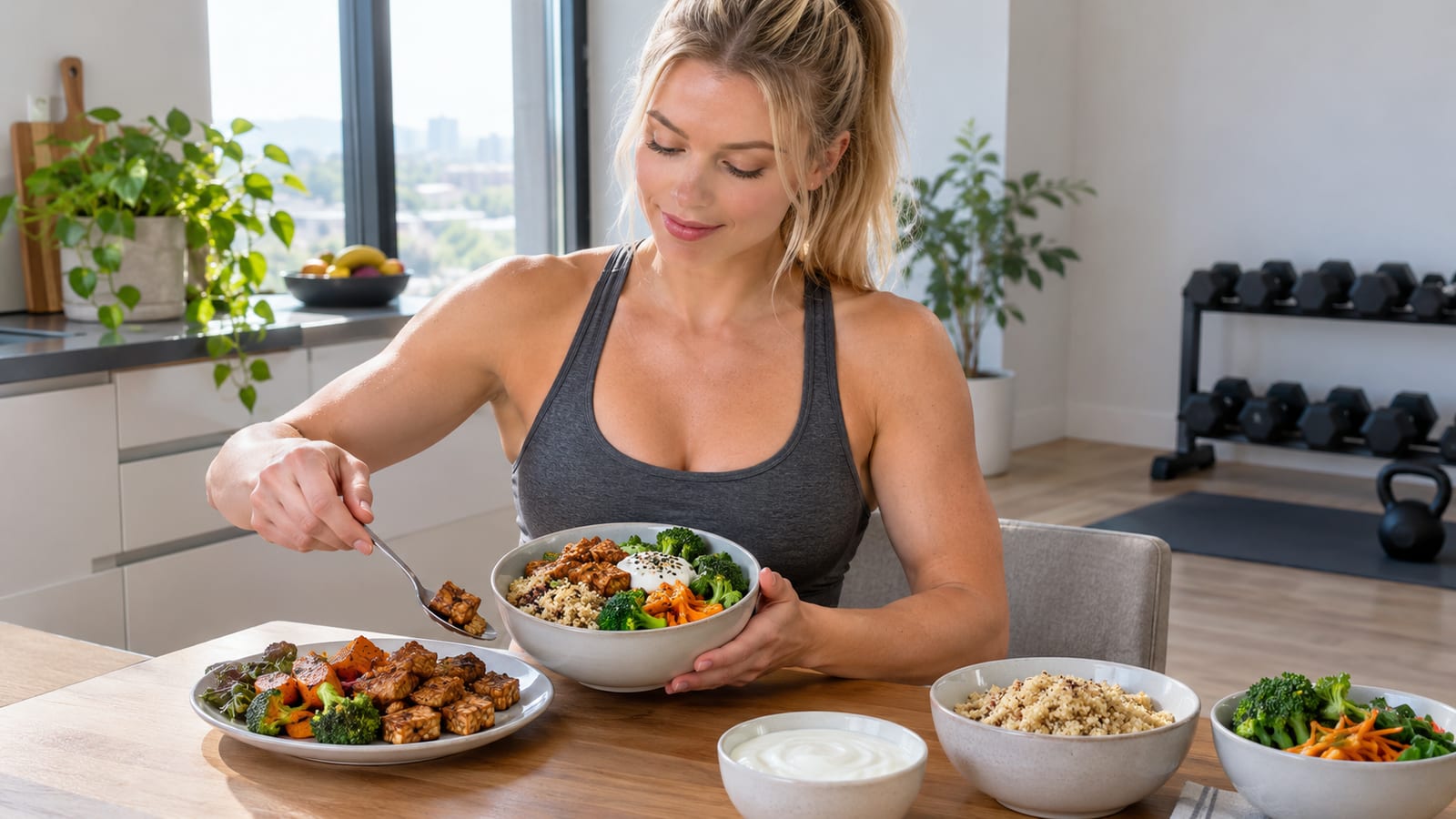
Set your daily protein target from body weight, training load, age, appetite, and the rest of your diet. The approximately 1.6 grams per kilogram per day that research converges on is a starting point, not a universal order for every athlete.
Spread protein across regular meals and snacks instead of saving most of it for dinner. Each eating occasion should contain a meaningful protein serving, with larger or more frequent servings if plant foods leave you short.
Use these diet-specific starting strategies:
Omnivores
Build meals around lean dairy, eggs, fish, or lean meat. Add carbohydrates such as rice, potatoes, pasta, oats, fruit, or bread so the meal supports training energy as well as muscle repair.
A simple day might include Greek yogurt and oats, eggs with toast, a chicken rice bowl, and cottage cheese with fruit. Whey can fill a gap when practice runs late or cooking falls apart.
Pescatarians
Use fish, eggs, Greek yogurt, cottage cheese, and whey if dairy fits your diet. Add tofu, tempeh, edamame, beans, and lentils for variety and easier budget control.
Canned fish can help with meal prep, but avoid relying on one food every day. Rotate sources based on cost, taste, and what you can pack safely.
Vegetarians
Lean on dairy, eggs, soy foods, and legumes. Greek yogurt, cottage cheese, tofu, and eggs make it easier to reach a useful protein amount without turning every meal into a large bean dish.
If dairy causes symptoms, choose lactose-free options or shift toward soy foods. A vegetarian diet does not need to be low in protein, but it does need deliberate meal anchors.
Vegans
Make soy foods and legumes the base, then add a blended plant-protein powder when meals become too bulky. Pair protein with enough carbohydrates and fats to support training energy and body weight.
A tofu rice bowl, lentil pasta with edamame, soy yogurt with oats, and a pea-and-rice shake can cover different schedule demands. The plan should still taste good. Athletes rarely stick with meals they resent.
The simplest meal strategy for each diet
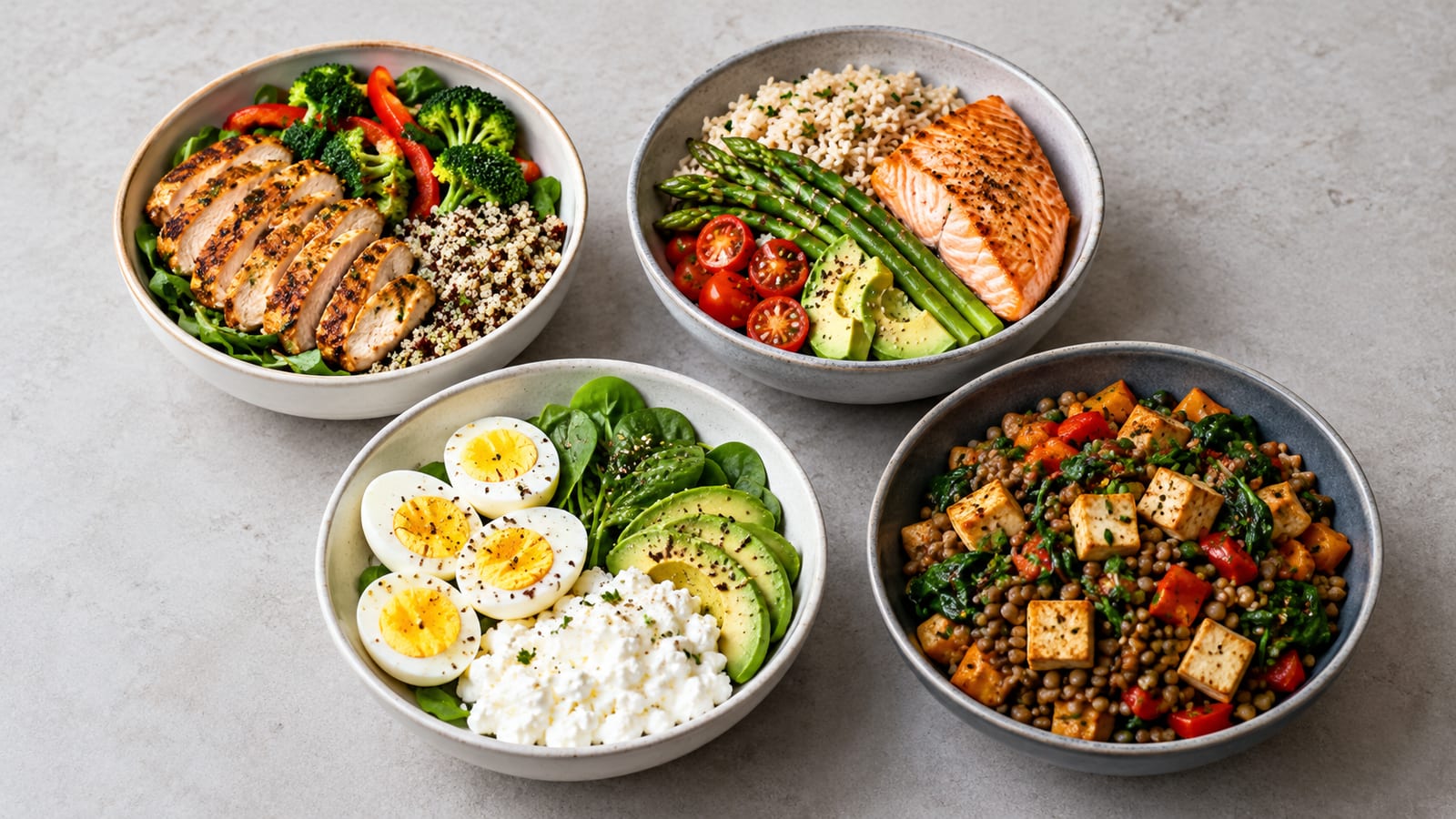
Choose meals that solve the next training problem. A pre-practice meal needs comfortable carbohydrates and tolerable protein. A post-workout meal needs enough total food to replace energy and start recovery.
Use these templates:
- Omnivore: chicken, fish, eggs, Greek yogurt, or cottage cheese with rice, potatoes, pasta, oats, fruit, or bread.
- Pescatarian: fish or eggs with rice and vegetables, yogurt with cereal and fruit, or a tuna-style sandwich with a side of fruit.
- Vegetarian: Greek yogurt with oats, eggs and potatoes, tofu with rice, or cottage cheese with toast and fruit.
- Vegan: tofu or tempeh with rice, beans with tortillas, lentil pasta with soy protein, or a blended plant-protein shake with a bagel.
For busy days, prepare the protein anchor first. Keep shelf-stable options in your bag, such as a plant-protein powder, roasted soy snacks, or a simple sandwich. Then add whatever carbohydrate is available and digestible.
If dairy-free meals are your main issue, use these dairy-free protein meals for athletes for practical swaps. A meal plan has to survive school, work, travel, and late practices.
Common mistakes that erase a good protein choice
A strong protein source cannot fix a weak eating pattern. These mistakes show up across every diet:
- Under-eating total calories: Muscle growth needs enough energy to support training and recovery.
- Counting incomplete portions too generously: A small spoonful of nut butter or a little grain does not replace a real protein anchor.
- Avoiding supplements on principle: Powder is not required, but it can be a sensible tool when food access or appetite falls short.
- Ignoring carbohydrates: Protein supports repair, while carbohydrates help you train with useful intensity.
- Skipping recovery meals: Waiting all evening after a hard session makes the next meal carry too much of the work.
- Using foods that upset your stomach: Bloating and urgency are training problems, even if the food looks nutritious on paper.
- Changing everything on game week: Test new powders, high-fiber meals, and unfamiliar recipes during practice.
- Following a restrictive rule that shrinks your food choices: A smaller menu makes adequate intake harder, especially for young athletes.
Protein quality matters, but food quantity and training consistency still set the ceiling. If you are missing meals, start there before debating small differences between powders.
Final ranking by athlete and constraint
The best strategy changes with the problem you need to solve.
- For maximum simplicity: Choose lean dairy, especially Greek yogurt, cottage cheese, or whey. These options deliver leucine-rich, highly digestible protein with minimal preparation.
- For omnivores and pescatarians: Use eggs, fish, and lean meat as reliable meal anchors. They provide useful protein without requiring a supplement at every meal.
- For the strongest single plant option: Choose soy foods or soy protein. Tofu, tempeh, edamame, and soy isolate offer a practical amino-acid profile and useful protein density.
- For a low-budget vegan foundation: Use legumes with grains. Beans, lentils, rice, pasta, oats, and bread are affordable, but portions and meal timing need attention.
- For vegan athletes with high training volume: Add a blended plant-protein powder. It is the simplest insurance policy when whole-food portions become too large or inconvenient.
- For sensitive digestion: Choose the sources you tolerate in smaller, repeatable meals. Strained dairy, eggs, tofu, rice-based meals, or a tested protein powder may work better than a large serving of beans.
- For older lifters: Prioritize a clear protein anchor at each meal and avoid letting plant-based or low-appetite meals become too small. Quality and regular intake matter more when muscle is less responsive.
The practical call: use animal proteins for convenience if they fit your diet, and use soy plus blended plant protein if you eat vegan. Both approaches can work. The losing strategy is the one that leaves you short on total food, misses training fuel, or cannot survive your actual schedule.
FAQ
Can you build muscle without whey protein?
Yes. Whey is convenient, but it is not required for muscle growth. Dairy foods, eggs, fish, meat, soy, legumes, and blended plant proteins can all support a well-fed resistance-training plan.
Is soy protein safe for male athletes?
For most healthy athletes, soy foods and soy protein can fit a normal diet. Choose tofu, tempeh, edamame, soy milk, or soy protein based on your tolerance and food preferences rather than fear-based claims.
Should you combine animal and plant proteins in the same meal?
You do not need to combine them at every meal. A mixed diet can use both across the day, while a vegan diet benefits from varied protein sources and strong anchors such as soy or a blended powder.
What should you do if protein powder causes bloating?
Reduce the serving, check the sweeteners and added ingredients, and test a different protein base. You can also replace the shake with yogurt, tofu, eggs, fish, or a simple sandwich if those foods digest better.