


Start with normal hydration, a small familiar meal, and an easy opening pace. That is how to prevent stomach cramps while running without turning every workout into a food experiment. Leave more time after a large meal, avoid greasy or high-fiber foods before hard sessions, and practice any gel or sports drink on long training runs first. Your stomach needs a plan it can repeat.
Identify the pain before changing your routine
A sharp pain under the ribs is often a side stitch. Cramping across the abdomen, nausea, bloating, sudden urgency, or diarrhea points more toward exercise-related stomach trouble. The two problems can overlap, but they don't respond to the same fix.
A side stitch often appears after a pace jump, hard breathing, or a large meal close to running. Runner's gut is more likely to involve food, fluid, heat, jostling, stress, or the reduced blood flow that comes with hard exercise.
Track the details after a bad run:
- Where the pain started
- Whether it felt sharp, tight, or crampy
- What you ate and drank beforehand
- How hard and how long you ran
- Heat, humidity, hills, and clothing
- Any nausea, urgency, diarrhea, or vomiting
Change one variable at a time. Otherwise, you won't know if the problem came from the gel, the greasy breakfast, the pace, or the fact that you tried all three together.
Why does running cause stomach cramps and abdominal pain?
Running puts repeated pressure on your digestive system. At the same time, hard exercise sends more blood toward working muscles and skin. That leaves less blood available for digestion, especially during fast running, heat, or dehydration.
Several factors can stack up:
- High intensity: Intervals, hills, racing, and sudden surges are harder on the gut than easy running.
- Jostling: Each foot strike moves food and fluid through the stomach and intestines.
- Poor meal timing: A large meal may still be sitting in your stomach when you start.
- Dehydration: Fluid loss can make exercise feel harder and may worsen gut symptoms.
- Too much fluid: A large volume of water or sports drink can slosh, stretch the stomach, and trigger nausea.
- Heat and humidity: Your body sends blood to the skin for cooling, which adds stress to digestion.
- Stress: Race nerves can speed up bowel activity before the first mile.
- Unsuitable fuel: High fat, excess fiber, dairy, sugar alcohols, and concentrated drinks cause trouble for some runners.
The same breakfast can work before an easy run and fail before a hard workout. Training load changes the demand on your stomach, so copy the meal only when the session is similar.
How do you prevent stomach cramps while running?
Use this sequence before changing supplements or buying special products.
Match the food to the workout.
A short, easy run usually needs a normal meal earlier in the day and perhaps a small snack if you're hungry. A long run or demanding workout may need more carbohydrate before and during the session.Start with a small, familiar option.
Try a banana, toast, pretzels, applesauce, a plain bagel, or a small bowl of low-fiber cereal. Add yogurt, milk, eggs, turkey, or another modest protein serving if you have enough time to digest it.Leave more time after larger meals.
A small snack can work closer to a run. A large meal with meat, vegetables, fat, and high-fiber ingredients needs a longer gap. If you still feel full when tying your shoes, wait or shorten the workout.Begin slower than your target pace.
Walk or jog easily at first. Let your breathing settle before adding speed, hills, or intervals.Drink normally before you leave.
Start the run hydrated, but don't force a large bottle immediately beforehand. Sip according to thirst and the conditions.Keep long-run fuel modest.
Use small portions of carbohydrate during endurance sessions when the distance demands it. Don't add gels to a short easy run just because the packet promises better performance.Test changes in training.
Introduce one gel, drink, or food at a time. Race day is a poor place to discover that a product turns your stomach.Stop treating repeated symptoms as a food puzzle.
If cramps keep returning despite sensible changes, or if symptoms limit training, speak with a qualified clinician.
For more background on choosing food before exercise, see this pre-workout meal timing guide. The useful decision is simple: eat enough to support the session, then give your stomach a fair chance to clear it.
Build a simple pre-run eating schedule
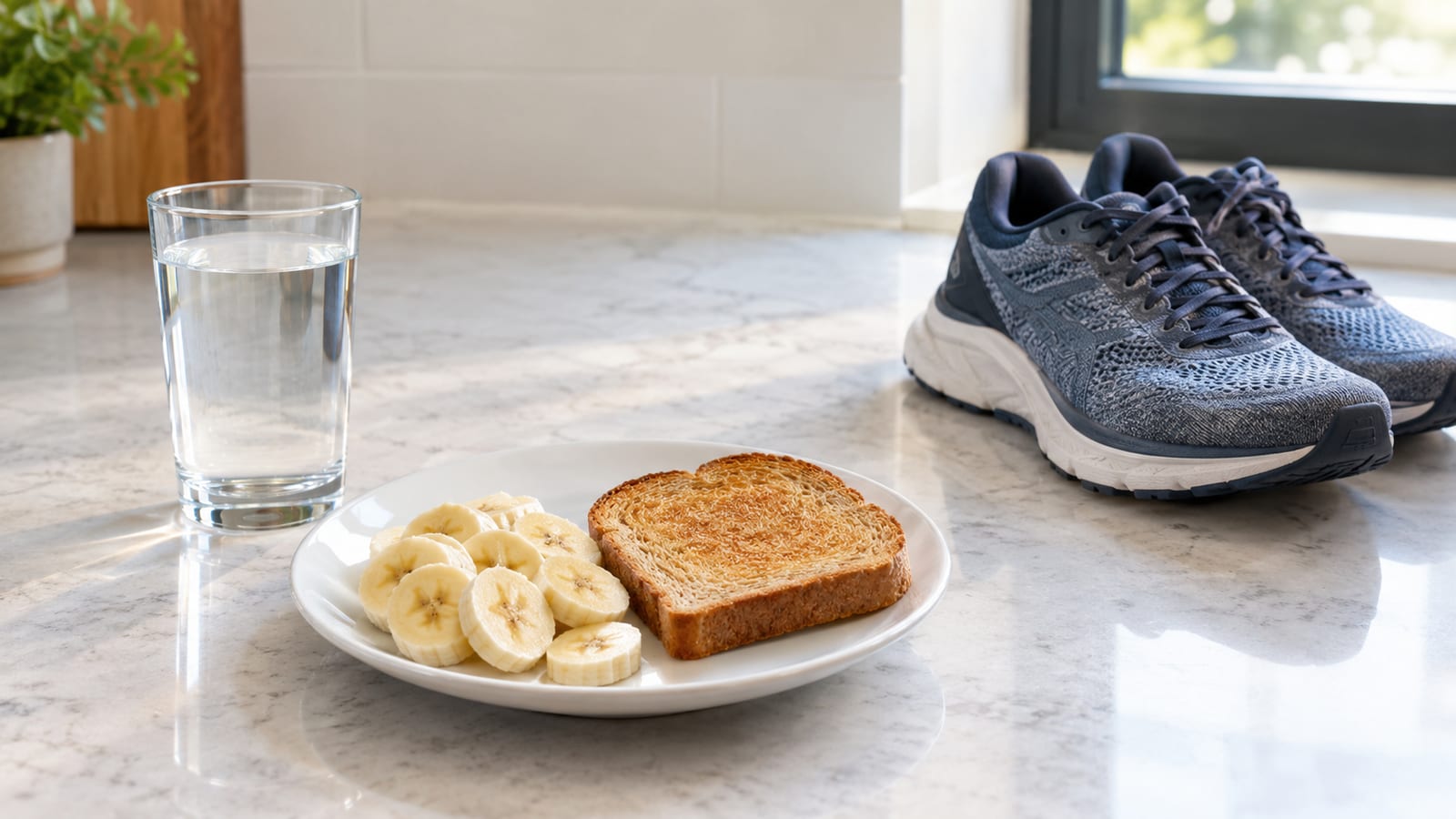
Your meal schedule should follow the workout, not a rigid rule copied from another runner.
Before an easy run
Eat your normal meals and drink fluids through the day. If you're hungry before the run, choose a small carbohydrate snack such as toast, a banana, pretzels, or applesauce.
You may not need a sports drink or gel for a short easy session. Extra fuel can create more stomach volume without solving a real energy problem.
Before a hard workout
Give yourself more digestion time and use a meal built around carbohydrates. Rice with eggs, a turkey sandwich with fruit, oatmeal with a banana, or pasta with a small amount of lean protein can work.
Keep fat and fiber modest before speed work. A high-fiber lunch may be nutritious, but it can also create urgency when your workout includes intervals.
Before a long run
Eat a familiar carbohydrate-rich meal earlier, then use a small snack closer to the start if you need it. Pack the fuel you plan to use during the run, including water or a sports drink if the conditions and distance call for it.
Your long-distance runner diet plan can help you build the full day's intake. The pre-run meal still needs to fit your own digestion. A plan that looks good on paper is useless if it leaves you searching for a bathroom.
Choose foods that digest predictably
Start with ordinary supermarket foods. They cost less than specialty products and make it easier to identify what your stomach tolerates.
Lower-risk choices for many runners
- Banana
- Toast or a plain bagel
- Pretzels
- Applesauce
- Rice
- Potatoes without a heavy topping
- Low-fiber cereal
- Turkey or chicken in a simple sandwich
- Yogurt or milk, if dairy agrees with you
- Oatmeal in a small serving, if you tolerate its fiber
You don't need to remove every vegetable, bean, or whole grain from your diet. Save larger servings of high-fiber foods for meals farther from hard running, then test your usual portions during easy training.
Common triggers
- Fried food and greasy sauces
- Large salads
- Big servings of beans
- Heavy cream or rich cheese
- Dairy, if you have lactose trouble
- Sugar alcohols in some protein bars and low-sugar foods
- Highly concentrated sports drinks
- Unfamiliar gels
- Large amounts of coffee
- Spicy food before a hard session
A low-FODMAP dietary intervention has helped some runners with exercise-related gastrointestinal symptoms, but it isn't a starting point for everyone. FODMAPs are certain short-chain carbohydrates that can ferment in the gut and draw in water. A low-FODMAP approach can also remove useful foods, so use guidance from a qualified dietitian rather than copying a restrictive menu from social media.
In one study of healthy recreational runners, 69% experienced an improvement in symptoms with a low-FODMAP diet. A separate case report followed a female ultraendurance runner with irritable bowel syndrome who applied a low-FODMAP dietary intervention for 6 days before a multistage ultramarathon and maintained it during the event at 5.1 g FODMAPs per day. Those findings support a targeted trial for some athletes. They don't prove that every runner needs to avoid wheat, dairy, fruit, or legumes.
Hydrate without creating a sloshing stomach
Begin your run normally hydrated. Drink with meals and through the day instead of trying to catch up with a large amount right before running.
During the run, match your intake to the heat, sweat rate, pace, and duration. Hot weather and heavy sweating increase fluid needs. A cool, short jog may require little more than your usual drinking pattern.
Water is a sensible default for many short workouts. A sports drink can make sense for long or hard sessions, hot conditions, heavy sweating, or back-to-back games because it supplies fluid and carbohydrate. It isn't automatically better than water.
Too little fluid can worsen fatigue and heat strain. Too much can leave your stomach full and uncomfortable. If your stomach feels like a bottle being shaken, slow down and stop forcing fluid until the sloshing settles.
Electrolytes replace minerals lost in sweat, especially during long or hot sessions. They won't correct a meal that was too large or a pace your body couldn't sustain. For broader guidance on hydration, the National Institute of Diabetes and Digestive and Kidney Diseases explains why fluid replacement matters when diarrhea is involved.
Fuel longer runs only when the distance demands it
Carbohydrates support training energy during sustained running. The longer and harder the session, the more useful during-run fuel becomes.
For a short easy run, you usually don't need a gel. Eat beforehand if you're hungry and carry water only if the weather, route, or access to fluids makes it sensible.
For a long run, practice small amounts of carbohydrate at regular points rather than waiting until you feel empty. Use a gel, chews, sports drink, banana, pretzels, or another familiar option. Take fluid with concentrated products if the label calls for it, but don't wash down every snack with a large volume.
A product that works during a steady long run may fail during a race with hills, heat, and surges. Practice the whole setup: breakfast, fuel, fluid, pace, clothing, and route. Your stomach responds to the complete workload.
Train your gut gradually
Your digestive system can adapt to taking in carbohydrate during exercise, but it needs repeated practice. Start with a small amount during an easy long run. Keep the product and timing consistent until you know how it feels.
Then change one part:
- Increase the portion slightly
- Try a different flavor
- Use a sports drink instead of water
- Add fuel during a faster section
- Test the plan in warmer weather
Keep a brief record after each test. Write down the food, amount, timing, pace, weather, and symptoms. This is more useful than declaring all gels terrible after one bad run.
If you have irritable bowel syndrome, frequent diarrhea, or ongoing bloating, a dietitian can help you test lower-FODMAP choices without cutting foods forever. The Monash University low-FODMAP diet explains the approach and why structured reintroduction matters.
Control pace and intensity at the start
A rushed opening can cause both side stitches and stomach distress. Start with an easy warm-up, then build toward a sustainable effort.
Keep your breathing controlled during the first part of the run. Avoid sprinting from the start, attacking the first hill, or matching a faster runner before your body is ready.
If a side stitch begins, slow down and take deeper, steady breaths. Some runners find relief by pressing gently on the painful area while exhaling. The point is to reduce strain, not prove that you can outrun the pain.
Heat, altitude, hills, and race nerves all raise the cost of a given pace. Use effort rather than a fixed speed when conditions change. Your stomach doesn't care what your watch predicted.
What should you do when cramps start during a run?

Act early. Continuing at the same pace while adding more fuel usually makes the problem harder to sort out.
- Slow to a jog or walk.
- Regulate your breathing and relax your shoulders.
- Check the heat, humidity, hills, and recent pace change.
- Stop fueling for a short period if nausea or cramping is active.
- Sip fluid only if you need it, rather than forcing a large drink.
- Resume easy running only after symptoms settle.
- End the run if the pain returns, worsens, or comes with dizziness, vomiting, or diarrhea.
Don't take pain medicine to push through unexplained abdominal pain. It can hide a problem and may create added stomach or kidney risks during dehydration.
When does running stomach pain need medical attention?
Get medical advice for severe, persistent, or repeated pain. You also need help if symptoms include bloody stool, fever, fainting, ongoing vomiting, marked dehydration, or pain that stops normal training.
Sudden severe abdominal pain is not ordinary runner's gut. Neither is unexplained weight loss, nighttime diarrhea, or a clear change in bowel habits that continues away from running.
A clinician can check for conditions that food timing won't fix. A sports dietitian can then help adjust carbohydrate, fiber, dairy, caffeine, and hydration around your training load.
FAQ
Can running on an empty stomach prevent cramps?
Not reliably. An empty stomach may reduce food volume, but it can leave you short on training energy and may cause weakness or nausea. Use a small carbohydrate snack if hunger affects your pace or focus.
Should you stop eating fiber before every run?
No. Fiber supports regular eating and health across the week. Keep large portions of beans, bran, and raw vegetables farther from hard or long runs if they trigger symptoms, then test your normal diet during easier sessions.
Do electrolytes stop stomach cramps?
Electrolytes may help replace sweat losses during long, hot, or very sweaty sessions. They won't fix a side stitch, a large meal, or a drink that is too concentrated for your stomach.
Why do cramps happen only during races?
Races often add pace, heat, nerves, hills, and unfamiliar fuel at the same time. Practice your breakfast and fueling plan at race effort before the event, then keep race day as predictable as possible.