

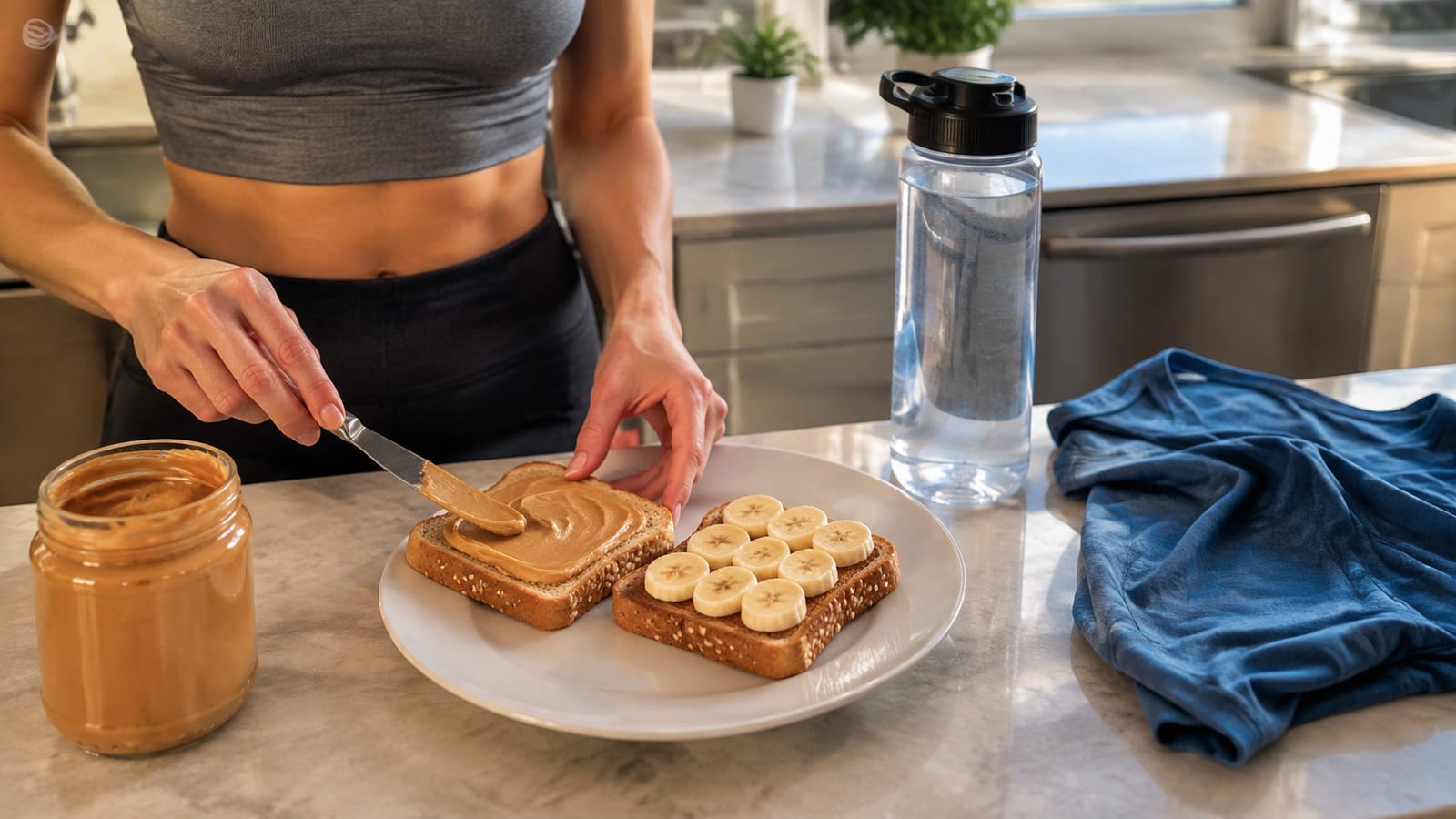
Yes, peanut butter can be a good pre-workout option when you eat a small portion with an easy carbohydrate. By itself, it gives you fat, some protein, and limited carbohydrate, so it may leave you short on quick training energy. It also takes longer to digest than a banana, toast, or a sports drink. Your workout intensity, schedule, appetite, and stomach tolerance should decide the choice.
Last updated: 2026-08-26
Is Peanut Butter a Good Pre-Workout Option?
Peanut butter works best before training when you have time to digest and need a snack that keeps hunger away. Spread it on toast, add it to oats, or eat it with a banana. That combination gives you carbohydrate for training, plus some protein and fat for staying power.
Peanut butter is a poor fit right before hard intervals, fast running, intense lifting, or a game. The fat can slow digestion, and the small amount of carbohydrate may not cover the work ahead. If you have only a short time before exercise, choose lower-fat carbohydrates instead.
The best use depends on the session:
- Easy or moderate workout: Peanut butter with toast or fruit can work well.
- Longer workout: Pair it with a larger carbohydrate source and fluids.
- Hard workout soon after eating: Choose a lighter, lower-fat snack.
- Early-morning session: Start with a small carbohydrate snack if your appetite is low.
- Sensitive stomach: Use a food you have already tested during practice.
So, is peanut butter a good pre-workout option? Yes, but it should support the carbohydrate in your snack rather than carry the whole job.
What does peanut butter provide before training?
Peanut butter provides calories from fat, along with some protein and a small amount of carbohydrate. That makes it filling and convenient. It does not make it a strong source of rapid training fuel.
Carbohydrates are the main fuel for hard exercise. They support repeated bursts, faster running, lifting volume, and long sessions. Peanut butter contributes some carbohydrate, but usually not enough by itself for demanding training.
The protein can help you meet your total daily needs. However, protein eaten immediately before exercise does not replace the carbohydrate your muscles use during hard work. Fat can help you stay satisfied, but it may sit heavily when you train soon after eating.
Look at peanut butter as one part of a snack:
| Peanut butter provides | What that means for training |
|---|---|
| Fat | More fullness, but slower digestion |
| Protein | Support for your overall recovery and daily intake |
| Limited carbohydrate | Some fuel, but usually not enough alone |
| Convenience | Easy to pack and pair with ordinary foods |
The useful question is not whether peanut butter is healthy enough. The useful question is whether it matches the work you need to do.
Should you pair peanut butter with carbohydrates?

Yes. Pairing peanut butter with carbohydrate usually makes it more useful before exercise.
Try:
- Peanut butter with a banana
- Peanut butter on toast
- Peanut butter stirred into oatmeal
- Peanut butter with crackers
- Peanut butter on a bagel
- Peanut butter with applesauce and toast
A medium banana provides 105 calories and weighs 118g. It also gives you an easy carbohydrate that many people tolerate well before training.
Peanut butter with a banana
This is the simplest choice for most workouts. The banana supplies quick carbohydrate, while peanut butter adds some protein and fat. Use a modest amount of peanut butter so the snack doesn't become harder to digest than the session requires.
This pairing suits a normal practice, a gym session, or an easy run when you have some time before starting. If you train soon after eating, use less peanut butter and more banana if your stomach handles that well.
Peanut butter on toast
Peanut butter on toast is a budget-friendly option when you have roughly one to two hours before training. The toast supplies the carbohydrate. The spread adds flavor and helps the snack keep you satisfied.
Choose plain toast if your stomach is unsettled. A dense, high-fiber bread may be nutritious, but it can feel heavy before running or repeated jumping.
Peanut butter in oatmeal
Oatmeal with peanut butter works best as part of a meal several hours before exercise. Add fruit if you need more carbohydrate. Keep the serving moderate if you tend to feel full during training.
This meal is better for a morning with time to eat and digest. It is a poor choice when you are rushing from bed to a hard workout.
For more early-training ideas, see these morning pre-workout meals.
How long before a workout should you eat peanut butter?
The more peanut butter and total food you eat, the more time you should allow for digestion. A full meal several hours before training can include peanut butter with oats, toast, fruit, or another carbohydrate. A small snack closer to exercise should contain less fat and less total food.
Use this as a practical guide:
- Several hours before training: Eat a normal meal with carbohydrates, moderate protein, and a small serving of peanut butter.
- A couple of hours before training: Try peanut butter on toast, a bagel, or fruit.
- Close to training: Choose banana, applesauce, toast, pretzels, or a sports drink. Add only a small amount of peanut butter if you already know it sits well.
- Right before hard exercise: Skip the spread if fat tends to cause heaviness or stomach trouble.
Your own tolerance matters more than a perfect schedule. If peanut butter feels fine before easy practice but causes problems before sprints, save it for the easier session.
This pre-workout meal timing guide can help you match the meal to the time available.
Is the fat in peanut butter helpful or harmful before exercise?
The fat is helpful when fullness matters and you have time to digest. It can make toast or fruit feel more satisfying, especially during a long school or workday. It also adds energy in a small, portable serving.
The same fat can be harmful when training starts soon. Fat slows stomach emptying, so a larger serving may leave you feeling heavy, full, or nauseated. That matters most during running, hard cycling, repeated jumping, and other sessions with a lot of movement.
Heat can make this worse. When you're already warm and sweating, a heavy snack may feel less appealing and digest less comfortably.
Don't remove all fat from your daily diet because of one workout. Simply keep the portion smaller before intense training, then include normal fat in meals that follow.
How much peanut butter should you eat before training?
Start with a small serving and pair it with enough carbohydrate for the session. Someone with a larger body, a higher training load, or a long practice may need more total food. Someone doing a short, easy workout may need only a light snack.
Use these decisions:
- Short, easy session: A small amount with fruit or toast may be enough.
- Hard lifting session: Add a clear carbohydrate source and avoid turning the snack into a large meal.
- Long endurance session: Build a larger meal earlier, with carbohydrate, fluids, and a modest amount of peanut butter if tolerated.
- Back-to-back practices: Choose more carbohydrate and fluids. Peanut butter alone won't replace what you use.
- Low appetite: Use a smaller snack such as banana, toast, applesauce, or a drinkable carbohydrate.
- Large appetite: Eat a proper meal earlier rather than piling several tablespoons onto one slice of toast.
There is no useful universal scoop for every athlete. Portion size should match your body, the training load, and the time left to digest.
Also consider the peanut butter itself. A smooth spread may be easier before training than one with large nut pieces. A product with fewer added ingredients can be easier to judge, but the bigger issue is still the amount and timing.
When should you skip peanut butter before exercise?
Skip peanut butter when you need fast fuel with little stomach work. Lower-fat carbohydrates are usually the better call in these situations:
- You have only a short time before training.
- You are doing hard intervals or repeated sprints.
- You run or jump and often feel food moving in your stomach.
- The weather is hot and your appetite is low.
- You have a history of reflux, nausea, or urgent bowel movements during exercise.
- You are heading into a game or race and haven't tested the snack before.
- You need carbohydrate and fluid more than fullness.
A sensitive stomach isn't a character flaw. It is useful information about what you can digest under pressure.
Test peanut butter during ordinary practice first. Don't make a new food experiment on competition day. If exercise causes persistent pain, vomiting, bloody stool, or symptoms that limit training, talk with a qualified clinician.
What are simple pre-workout meals besides peanut butter?
Peanut butter is only one option. These choices can work better when you need more carbohydrate, more protein, less fat, or faster digestion.
Greek yogurt with fruit
Greek yogurt with fruit is a better pick than peanut butter when you want more protein and less fat before a demanding session. Add cereal, toast, or another carbohydrate if the workout will be long or intense.
Choose a dairy-free yogurt if dairy causes problems. For more detail, read about Greek yogurt before exercise.
Oatmeal with fruit
Oatmeal works well before training when you have time to digest. Add banana, berries, or applesauce for more carbohydrate. Keep the portion reasonable if fiber makes your stomach unpredictable.
Toast and eggs
Toast with eggs gives you carbohydrate and protein in a familiar meal. It suits a morning when you have time before exercise. Reduce the eggs and choose plain toast if a larger meal feels heavy.
Rice with lean protein
Rice with chicken, turkey, tofu, or eggs works well several hours before practice. Add a small amount of vegetables if you tolerate them. Save a large serving of beans, rich sauces, or fried food for another meal if your gut tends to complain during training.
Yogurt and fruit
Yogurt with fruit is portable and easy to adjust. Add cereal or a bagel when you need more training energy. Use a non-dairy option if milk products cause symptoms.
Sports drink or carbohydrate snack
A sports drink or carbohydrate snack is the practical choice for intense or long workouts when solid food may digest too slowly. Use a sports drink when you need both fluid and carbohydrate. Pretzels, applesauce, a jam sandwich, or a banana can work when you want solid food without much fat.
For more portable choices, see these quick pre-workout snacks.
Do pre-workout supplements beat ordinary food?
No. Food and timing come first for most athletes.
Caffeine can improve alertness and may help some adults feel more ready to train. It can also worsen jitters, reflux, sleep, or a racing heart. Young athletes should be especially cautious with high-caffeine products and should discuss them with a parent, coach, or qualified health professional.
Carbohydrate drinks can be useful when training is long, intense, or repeated across a day. They solve a practical problem because they provide fuel without asking your stomach to handle a full meal.
Most powdered pre-workouts add cost and strong marketing to a basic need. They do not repair a missed breakfast, poor hydration, or an under-fueled training week. If you use caffeine, learn about it through the Food and Drug Administration's caffeine guidance.
How important is hydration before a workout?
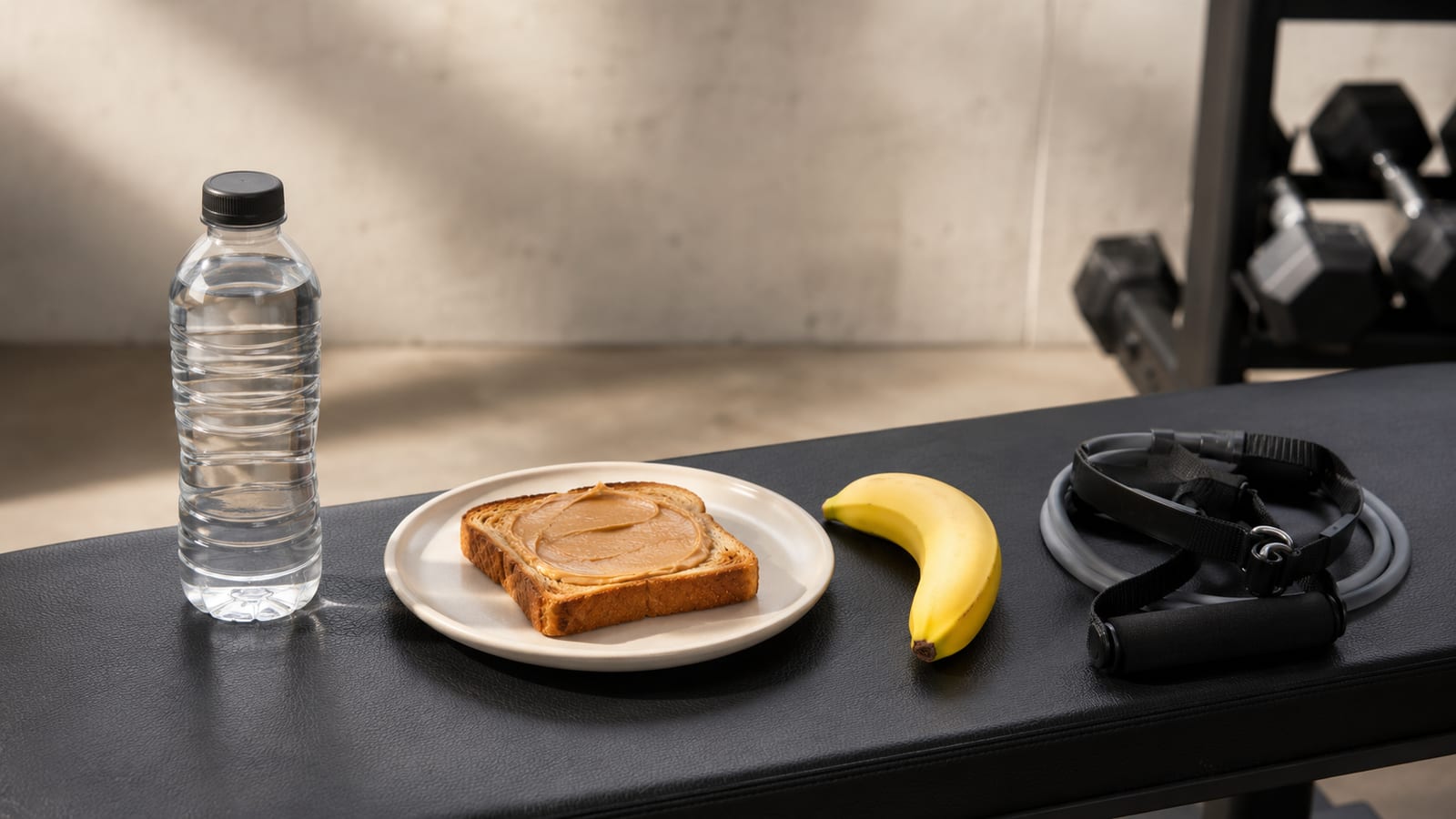
Hydration matters as much as the snack when you are training hard or sweating heavily. Peanut butter provides no useful replacement for the fluids you lose.
Drink regularly with meals and through the hours before training. Then take fluids with your snack if you feel thirsty or the session will be hot and demanding. Avoid waiting until you feel dizzy, headachy, or unusually tired.
Electrolytes are minerals involved in fluid balance and nerve and muscle function. They may matter during heavy sweating, long sessions, hot conditions, or repeated games. Water is usually enough for a normal workout, while a sports drink can make more sense when you also need carbohydrate. Learn the basic role of electrolytes before buying an expensive powder.
Your sweat rate, weather, clothing, and training length all change the answer. There is no prize for carrying a huge bottle you cannot finish or refusing a sports drink during a long summer tournament.
What should you eat after training?
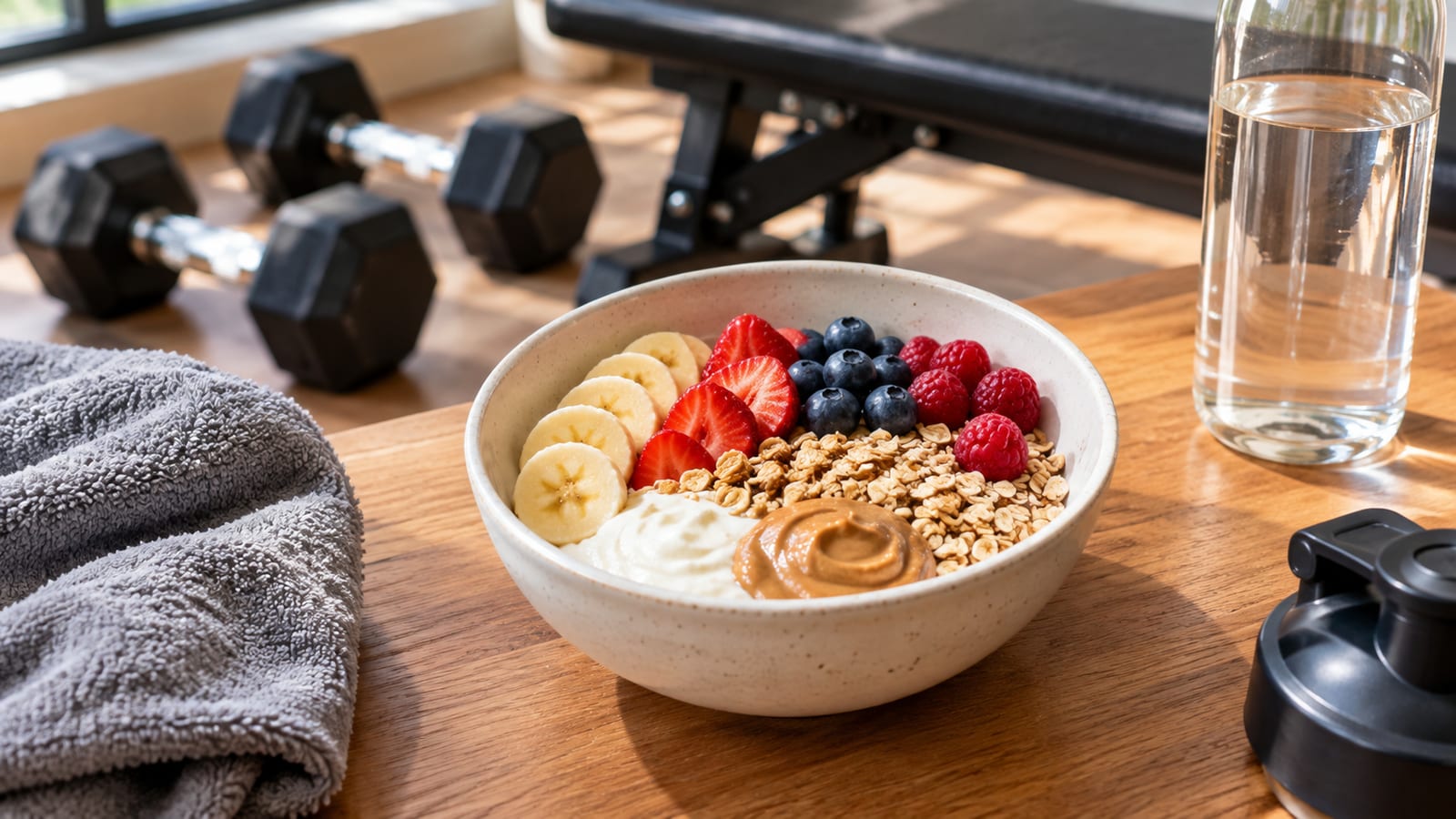
After training, eat carbohydrates, adequate protein, and fluids. The meal doesn't need to be expensive or built around a supplement.
Good options include:
- Rice with chicken, tofu, or eggs
- Pasta with lean meat and tomato sauce
- A bean burrito with fruit
- Salmon with potatoes
- Lentil pasta with tofu
- Chocolate milk with a bagel
- Greek yogurt with cereal and fruit
Your pre-workout snack doesn't need to do the work of recovery. If you ate peanut butter before training, add a stronger carbohydrate and protein meal afterward. This matters even more when you train again soon or have another practice later in the day.
If your appetite is low, start with a drink, fruit, toast, or yogurt. Then eat a fuller meal when your stomach settles. Recovery nutrition is about replacing energy, repairing muscle, and preparing for the next session.
FAQ
Is peanut butter good before a morning workout?
It can work if you wake up with enough time to digest it. Pair a small amount with toast, a banana, or oatmeal. If you train soon after waking, lower-fat carbohydrates will usually feel easier.
Can peanut butter help with muscle gain before exercise?
Peanut butter can add calories and some protein to your day. It cannot replace a complete eating plan with enough total food and regular protein. Pair it with carbohydrate before training and eat a full recovery meal afterward.
Is peanut butter good before running?
It depends on your stomach and the time available. A small amount on toast may work before an easier run with time to digest. Before a hard or fast run, banana, toast, pretzels, or applesauce will often sit more comfortably.
Should you eat crunchy or smooth peanut butter before training?
Smooth peanut butter is usually the easier choice because it has a simpler texture. Either type can work if you tolerate it. Test it during practice before using it before a race or game.
What can you use instead of peanut butter if you have an allergy?
Choose yogurt, eggs, turkey, tofu, cheese, or sunflower-seed spread for protein, depending on your tolerance. Pair the choice with bread, fruit, oats, rice, or another carbohydrate. Read labels carefully and avoid any product that may contain the allergen.