

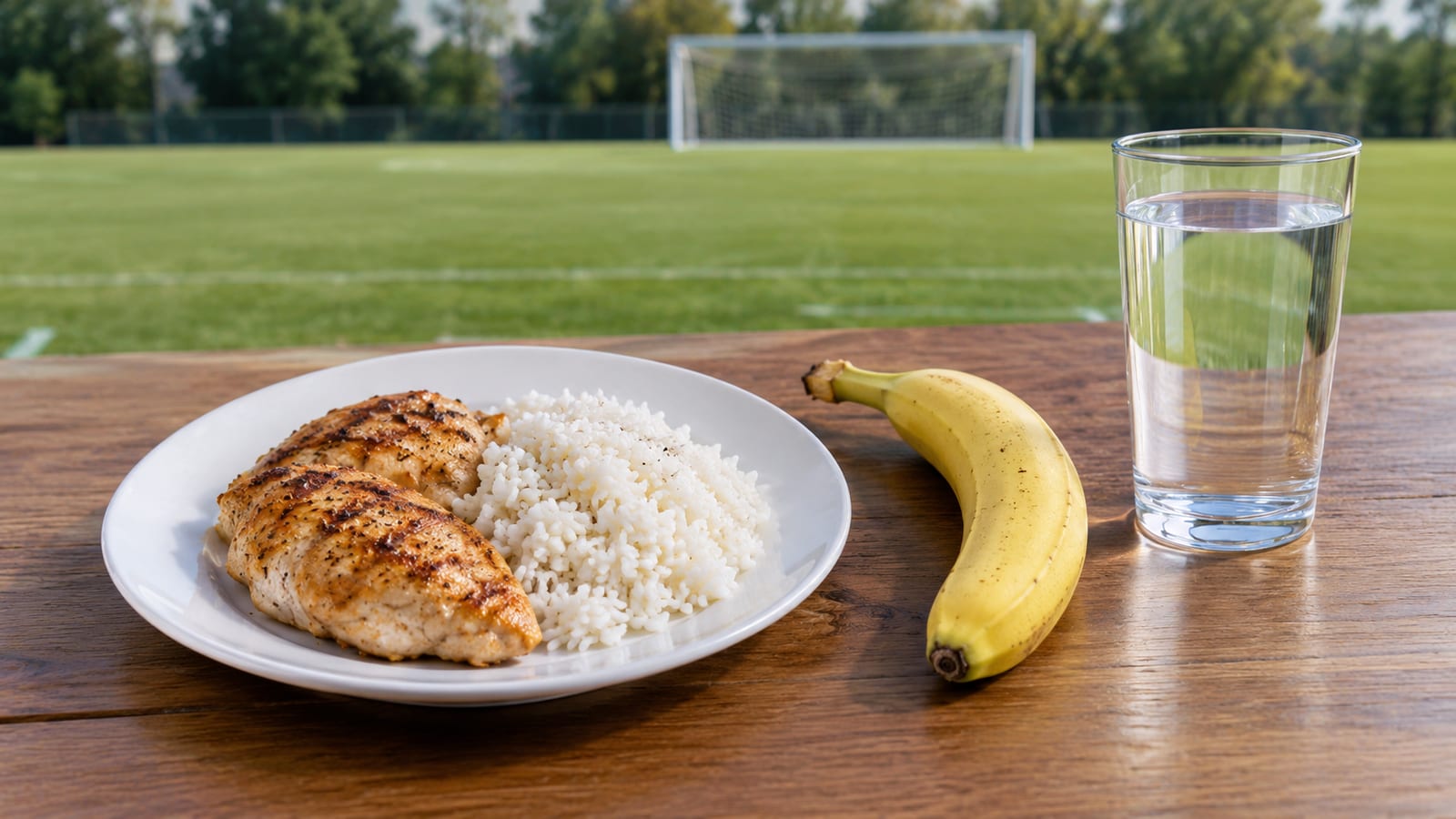
The best pre-game meal ideas for soccer players start with familiar carbohydrates three to four hours before kickoff, such as rice with chicken and a banana, pasta with lean protein, or a baked potato with eggs and fruit. Meals like these support repeated sprints, focus, and muscle function without making game day a nutrition experiment. If you’re hungry closer to kickoff, choose a small carbohydrate snack instead of forcing down another full meal.
Last updated: 2026-10-12
The simplest pre-game meal strategy
Carbohydrates should lead the meal because soccer demands repeated running, sprinting, and quick changes of direction. Your muscles store carbohydrate as glycogen, and what you eat across the day before kickoff builds the supply you draw on during a 90-minute match.
Add a moderate serving of protein, such as chicken, eggs, yogurt, tofu, or lean turkey. Protein supports muscle repair and helps the meal hold you over. However, a large protein-heavy plate provides less useful fuel for this job than a carbohydrate-centered meal.
Keep fat modest before the match. Greasy food takes longer to digest and can leave you feeling heavy during warmups. Large servings of beans, bran, raw vegetables, or other high-fiber foods can also cause trouble for players with sensitive stomachs.
Your portion should match your schedule, body size, and training load. A growing athlete with a long tournament day may need more food than an adult playing a short recreational match. A nervous player may need a smaller meal and a portable snack later.
What is the best pre-game meal for soccer players?
The best meal is familiar, carbohydrate-centered, and easy to digest. Eat it three to four hours before kickoff, when there’s plenty of time for the food to settle.
Use this simple formula:
- Choose a carbohydrate base: rice, pasta, potatoes, oats, bread, or a bagel.
- Add moderate protein: chicken, eggs, yogurt, tofu, turkey, or cottage cheese.
- Include a small amount of produce: a banana, applesauce, or cooked vegetables.
- Drink with the meal: water is usually enough for a normal match.
- Leave room to adjust: add a small snack later if hunger returns.
The right portion grows with the demands of the match. A small snack may suit a light session, while a full rice bowl makes more sense before a demanding match.
A reliable pre-game meal gives you carbohydrates for running, enough protein to support muscle function, and fluids to start the match prepared. It should leave you comfortable during warmups, not stuffed on the sideline.
What soccer players eat before a game
Soccer players don’t need special athlete food. Most can build a strong pre-game meal from ordinary supermarket ingredients.
| Meal | Why it works | Adjust it if |
|---|---|---|
| Rice with grilled chicken and a banana | High in usable carbohydrate, moderate in protein, and easy to portion | You need less food or dislike chicken |
| Pasta with tomato sauce and lean protein | Provides a familiar carbohydrate base with moderate protein | Tomato sauce bothers your stomach |
| Baked potato with eggs and fruit | Affordable, filling, and simple to prepare | You need a lighter meal closer to kickoff |
| Bagel with yogurt and a banana | Practical for travel and early games | Dairy does not sit well |
| Oatmeal with milk or a milk alternative, banana, and honey | Cheap carbohydrate with modest protein | Oats feel too heavy before running |
Best full meal: chicken, rice, and banana
Rice with grilled chicken, a banana, and water is the strongest default for a full meal. It gives you a large carbohydrate base, moderate protein, little added fat, and an easy way to change the portion.
Use more rice if you have a high training load or a long day ahead. This sports-science guidance on pre-exercise carbohydrate gives a range of 1-4 g of carbohydrate per kilogram of body weight in the 1-4 hours before exercise, not one fixed amount. Use less if you have a smaller appetite or tend to feel full during warmups. Cooked vegetables can work if you already tolerate them, but game day is a poor time to add a large salad.
Best early-game option: bagel, banana, and yogurt
A bagel with honey or jam, a banana, and low-fat yogurt can work well before an early game. It provides quick, practical carbohydrate without demanding a large breakfast soon after waking. This guide to what athletes should eat before a game suggests a similar meal, with peanut butter on the bagel instead of honey or jam.
Skip the yogurt if dairy causes stomach trouble. Use soy yogurt or a simple turkey sandwich instead. The bagel and banana can stay the same if those foods already work for the player.
Best budget option: banana-honey oatmeal
Oatmeal made with milk or a milk alternative, topped with banana and honey, is a cheap way to build a carbohydrate-rich meal. It also provides modest protein without requiring expensive powders or packaged sports products.
Keep the portion comfortable. Oatmeal is nutritious, but a large bowl with lots of nuts, seeds, and dried fruit can bring too much fat and fiber before a match.
Best last-minute snack: banana or applesauce with pretzels
A banana, applesauce pouch, pretzels, or a sports drink can work close to kickoff. Choose one familiar carbohydrate source rather than trying to eat a full meal at the last moment.
This snack is useful when school, travel, or nerves delay the main meal. Start with a modest amount, especially if running often causes stomach discomfort.
For more portable ideas, see these snacks for soccer training.
Timing the meal, snack, and fluids
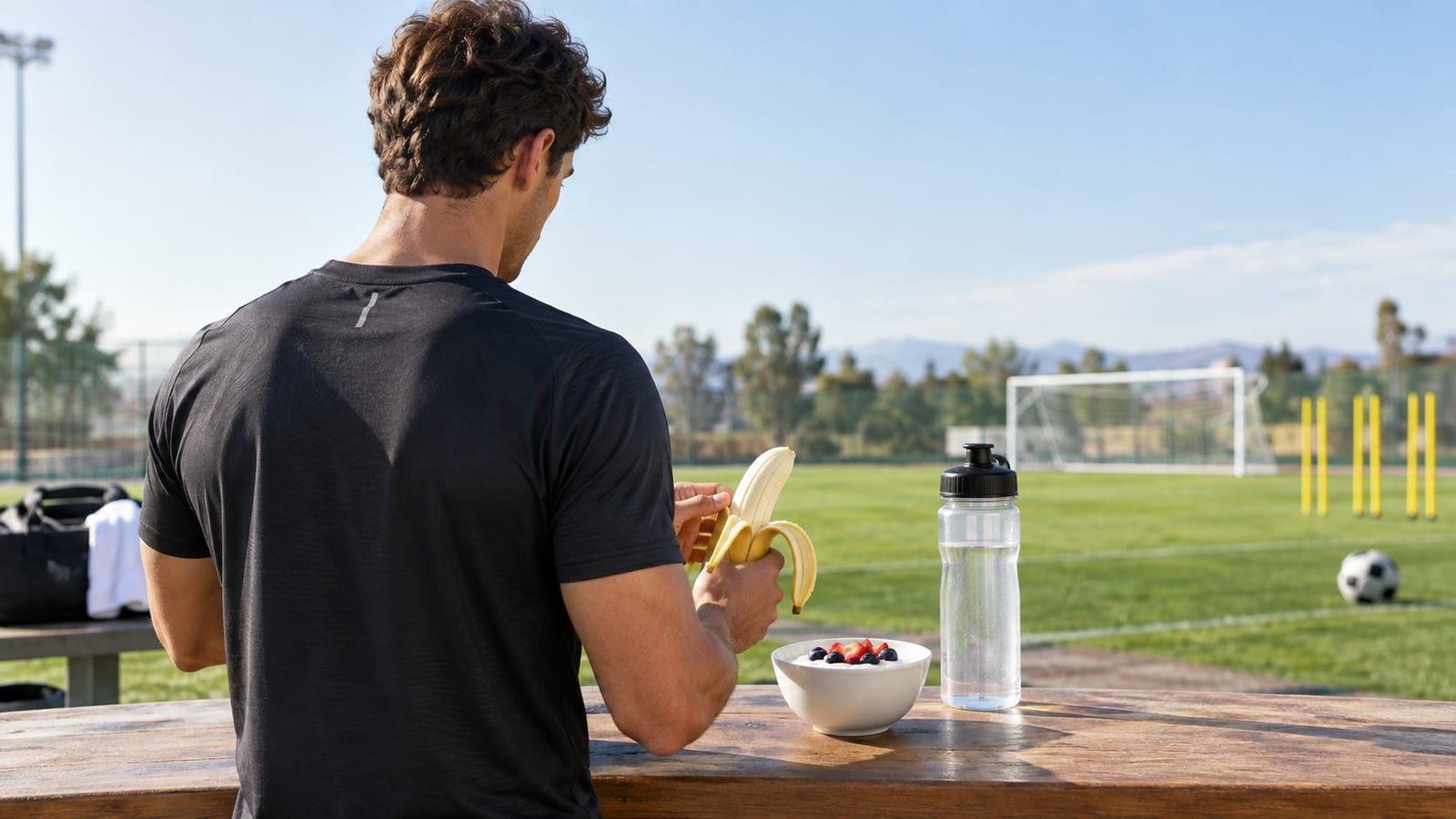
The main meal belongs three to four hours before kickoff. That gap gives your stomach time to digest the meal before warmups. This guide to the dos and don’ts of sports nutrition sets the same three-to-four-hour window.
That meal should include most of the day’s pre-game fuel. A rice bowl, pasta plate, potato meal, or bagel-based meal can all work. Keep the food familiar and avoid testing a new recipe on match day.
If you’re hungry closer to kickoff, use a small carbohydrate snack. A banana, toast, applesauce, pretzels, or a small sports drink is easier to manage than another full plate of food.
For fluids, the NSCA’s guidance on hydration and performance suggests you drink about 5 to 7 ml of fluid per kilogram of body weight at least four hours before exercise. You don’t need to chug everything at once. Drink steadily with meals and during the hours before the match.
The right timing depends on your stomach. Some players can eat a solid meal close to the game. Others need more distance and rely on a small snack. Practice tells you more than a generic schedule.
Light options for early games
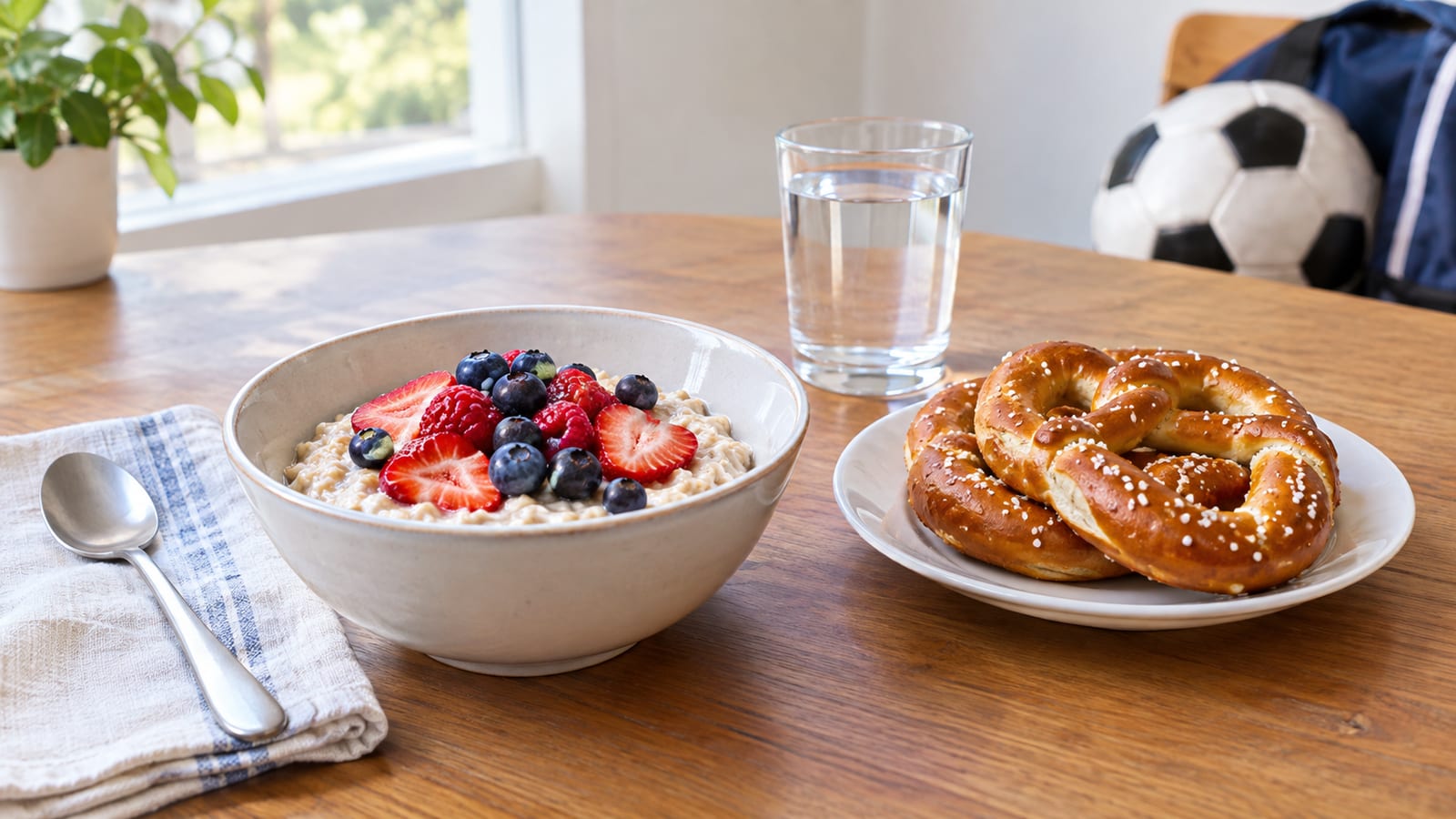
Early games create a simple problem: your alarm may come before your appetite. Don’t force down eggs, bacon, and a large bowl of oats if your stomach rejects breakfast at that hour.
Choose a small, low-fat carbohydrate option instead:
- Bagel with honey or jam
- Banana with toast
- Applesauce with pretzels
- Low-fiber cereal with milk or a milk alternative
- Drinkable yogurt with a banana
- Small oatmeal with honey
If the game is later in the morning, eat a larger breakfast when you wake up and carry a small snack for the trip. The goal is enough training energy without a heavy stomach.
Parents should also avoid turning an early game into a supplement project. A familiar breakfast and steady fluids cover most normal youth games.
What to eat before soccer practice
Match your food to the practice. A hard, long practice deserves more fuel than a short technical session with plenty of breaks.
For a demanding practice, eat a normal meal built around carbohydrates three to four hours beforehand. Rice with chicken, pasta with lean protein, or a potato with eggs can work.
For a lighter practice, a smaller snack may be enough:
- Banana
- Toast with jam
- Yogurt and fruit
- Pretzels
- Applesauce pouch
- Half a bagel
Avoid overfueling an easy practice with a huge meal or a large sports drink. That adds cost and may leave you uncomfortable without improving the session. Save the larger meal for days with higher training demands or limited time between sessions.
You can find more planning help in this guide to nutrient timing for athletes.
What should a soccer player eat the night before a game?
Eat a familiar carbohydrate-rich dinner the night before an early morning game. Pasta with tomato sauce, lean protein, bread, and fluids is a reliable choice because it replenishes carbohydrate without requiring a huge meal.
That dinner helps top up the glycogen you will draw on during the next day’s game. If you’re preparing for an early morning game, this game-day nutrition guidance for soccer players also recommends drinking extra water throughout the previous day.
You don’t need an oversized dinner. Your glycogen stores fill over the whole day before kickoff, so steady meals matter more than one enormous plate at night.
Good dinner options include:
- Pasta with tomato sauce and lean meat
- Rice with chicken and cooked vegetables
- Potatoes with eggs and bread
- Tofu stir-fry with rice
- Turkey sandwich with soup and fruit
Skip unfamiliar sauces, extreme portions, and foods that regularly upset your stomach. A late-night food challenge has no place in a pre-game plan.
Most players need a steady carbohydrate-rich day. A dramatic eating contest adds stomach risk without solving a clear fuel problem.
The best food to eat before a soccer game
There is no single food that works for every player. Rice, pasta, potatoes, oatmeal, bagels, bananas, and bread are strong default choices because they provide familiar carbohydrate and can be adjusted for appetite.
The best choice is the one you have already tested in practice. A food can look excellent on paper and still fail if it causes reflux, cramping, urgency, or a heavy feeling during sprints.
Use this guide:
- Choose rice if you want a simple full meal with chicken, eggs, or tofu.
- Choose pasta if you have several hours before kickoff and tolerate tomato sauce.
- Choose potatoes if you want an affordable meal with eggs or cottage cheese.
- Choose oatmeal for an early game when a warm, soft meal feels easiest.
- Choose a bagel when you need portable carbohydrate during travel.
- Choose a banana or applesauce when you need a small snack close to kickoff.
The strongest pre-game food is familiar, easy to digest, and available on your actual schedule.
Foods and drinks to limit before kickoff
Some foods are nutritious but poorly timed before a soccer match. The issue is usually digestion, not the food’s overall quality.
Limit or skip these before kickoff:
- Greasy or fried meals
- Very large servings of beans or raw vegetables
- Excessive fiber
- Heavy cream sauces
- Large amounts of protein
- Spicy foods you haven’t tested
- Alcohol
- Unfamiliar supplements
- Excess caffeine
- New energy drinks
High-fat meals can sit heavily. High-fiber meals can increase stomach activity. Large protein servings may crowd out the carbohydrates you need for running.
Caffeine also deserves caution. It may affect nerves, heart rate, sleep, or stomach comfort. Young athletes should be especially cautious with energy drinks and stimulant products. A sports drink may be useful in the right conditions, while a supplement needs a clear reason and careful review.
Hydration and electrolytes without overdoing it
Water is usually enough for a normal match, especially in mild conditions. Drink steadily before the game instead of waiting until warmup and trying to catch up.
An electrolyte or sports drink can help during hot conditions, heavy sweating, longer matches, repeated games, or a tournament day. It provides fluid and may add carbohydrate when water alone leaves you short.
Your plan should change with sweat rate, heat, match length, and the gap between sessions. A player who sweats heavily in hot weather has different needs from someone playing one short match in cool conditions.
Don’t force excessive fluid. Too much at once can cause sloshing, bathroom problems, or discomfort. Start prepared, sip as needed, and bring a drink you already tolerate.
Adjustments for sensitive stomachs, budgets, and real schedules
A good plan has substitutions. Travel, school, allergies, food access, and nerves can all change what fits.
Sensitive stomach
Start with lower-fat, lower-fiber foods. Try rice, toast, bananas, applesauce, pretzels, or a small sports drink. Change one food at a time and record what you ate, when you ate it, and how your stomach felt during training.
Limited budget
Oatmeal, bananas, potatoes, rice, eggs, beans, and peanut butter can provide useful fuel at a lower cost. If beans cause trouble close to kickoff, use them at another meal and choose rice, potatoes, or bread before the match.
Travel and school days
Pack food before leaving home. A bagel, banana, applesauce pouch, pretzels, yogurt, or turkey sandwich is more dependable than hoping a gas station or venue has a suitable meal.
Allergies
Replace dairy with soy yogurt or a milk alternative. Replace peanut butter with sunflower-seed spread if needed. Keep the carbohydrate base familiar and adjust the protein source around the allergy.
High or low energy needs
A player with a high training load may need a larger carbohydrate portion and a later snack. A player with a smaller appetite may split the meal into two smaller eating times. Neither athlete benefits from following a teammate’s portion by guesswork.
A pre-game plan athletes can repeat
Use this sample timeline as a starting point, then test it during practice:
- The night before: Eat pasta with tomato sauce, lean protein, bread, and fluids.
- Earlier in the day: Drink steadily and eat normal meals.
- Three to four hours before kickoff: Eat rice with grilled chicken and a banana, or another familiar carbohydrate-centered meal.
- Closer to kickoff if hungry: Choose a banana, applesauce, pretzels, or a small sports drink.
- During warmup: Sip fluids rather than chugging.
- After the match: Eat carbohydrates and protein to replace energy and support recovery.
Write the plan down if the schedule is busy. Put the snack in the bag before school, travel, or work begins. The second half is a poor place to discover that breakfast was too small.
For after-match ideas, use these meals for soccer recovery. A repeatable routine beats a clever meal you only manage once.
FAQ
Should soccer players eat a full meal before every game?
Not always. Eat a full meal when you have several hours before kickoff and the match demands substantial running. If the game is early or your stomach is unsettled, use a smaller carbohydrate meal and a snack later.
Is peanut butter good before soccer?
Peanut butter can work when eaten early enough and in a modest amount. It adds fat and protein, so it may feel heavy close to kickoff. Pairing a small amount with a bagel or toast works better than eating a large serving by itself.
Should young soccer players use sports drinks before games?
Usually, water and regular meals are enough for normal youth games. A sports drink may be useful during heat, heavy sweating, long tournaments, or repeated matches. It should solve a clear fluid or carbohydrate need, not replace everyday food.
How can a player find the right pre-game meal?
Test one meal during practice, then track energy, stomach comfort, hunger, and thirst. Keep the timing and portion consistent while you test the ingredients. Once the meal works, repeat it before competition instead of changing it on game day.