

The right carb number for a soccer player changes every day, so stop chasing one fixed target. To calculate carbs for soccer players, multiply body weight in kilograms by a grams-per-kilogram target. Then move that target with the day's workload. University lecture notes at CALS (a college of agriculture and life sciences) give a useful baseline: an estimated 5 grams of carbohydrate per kilogram of body weight per day. Eat below that on rest days, around it on normal practice days, and above it around hard sessions and matches.
How do you calculate carbs for soccer players?
The math takes a minute. The judgment about which kind of day you're having is the part that matters. Follow these steps in order:
- Get your weight in kilograms. Switch your scale or phone app to kilograms, or run your pound weight through a unit converter. Use a recent morning weight.
- Multiply by the baseline. Body weight (kg) × baseline target (g/kg) = grams of carbohydrate for an ordinary training day.
- Label each day on your calendar. Mark it as rest, normal practice, hard session, match, or a day with another hard effort close behind it.
- Shift the number for the label. Go below the baseline on light days. Stay near it on normal days, and go above it for hard sessions, matches, and close turnarounds.
- Place most of those carbs around training. Put the biggest servings before and after the work, and keep the rest of the day as normal meals.
- Check the results after a few weeks. Adjust based on energy, recovery, hunger, and how your stomach handles the food.
That last step is where most of the value sits. The formula gives you a starting estimate, and your training tells you whether it fits.
Start with body weight, then read the calendar
Grams per kilogram works because bigger players store and burn more fuel. A small winger and a tall center back shouldn't eat the same amount just because they're on the same team. Scaling by body weight fixes that with one multiplication.
The calendar matters more than the formula, though. A rest day and a full match use very different amounts of training energy. One fixed daily number will leave you short on hard days and overfed on easy ones.
So treat the baseline as a midpoint you move around. Look at tomorrow's schedule before you decide how much to eat today.
Daily carb targets by training load
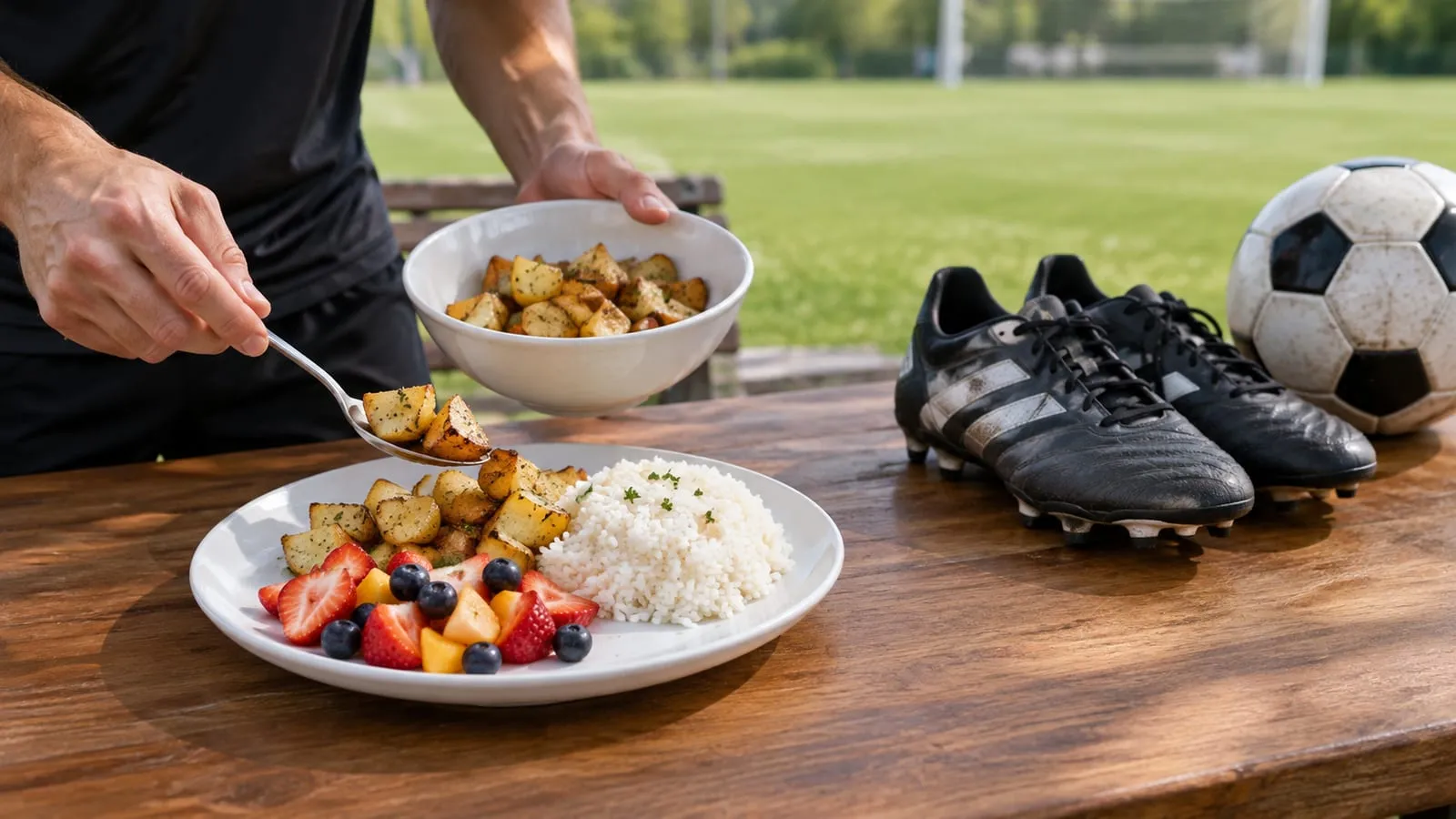
Sports dietitians work in ranges because a starter who plays the full match and a sub who gets the last 15 minutes burn very different amounts. The baseline gives you a fixed point to move from. Here's where to aim relative to it:
| Day type | What it looks like | Where to aim |
|---|---|---|
| Rest or light day | Day off, mobility work, light technical drills | Below the baseline |
| Normal practice | Regular team training at moderate effort | Around the baseline |
| Hard session | Long practice, small-sided games, heavy sprint work | Above the baseline |
| Match day and the day before | Competition and the build-up to it | Toward the top of your range |
| Close turnaround | Match followed by hard training, preseason doubles | Above the baseline, with a fast refuel |
What that looks like across a match week
Say your match is Saturday. Friday should be a higher-carb day with familiar food. Saturday is your biggest carb day, spread across breakfast, the pre-game meal, and the meal afterward.
Sunday depends on what comes next. If it's a true rest day, eat normal meals with a smaller serving of rice or pasta. A Monday practice can sit near the baseline. A hard Wednesday session needs more, especially at the meals before and after it.
In practice you adjust portion sizes. The same foods show up all week. You just add more starch on the plate when the work gets harder.
How duration and intensity move the number
Two practices with the same label can burn very different amounts of fuel. Use these factors to decide whether you sit at the low or high end for that day type:
- Session length: Longer practices drain more stored fuel, so move up.
- Repeated sprints: High-intensity running burns carbs fast. Small-sided games and conditioning days count here.
- Total running load: Fullbacks and central midfielders usually cover more ground than keepers. If your team tracks distance, use it.
- Gym work: A heavy leg session adds some load. However, it usually costs less fuel than a hard field session.
- Time until the next hard effort: The closer the next session, the more today's refuel matters.
When you're unsure, the last factor wins. A hard practice followed by a rest day gives you room to catch up. A hard practice followed by a match the next day doesn't.
Why do soccer players need so many carbohydrates?
Soccer is stop-start running at high speed, and that kind of effort runs mostly on carbohydrate. Fat is plentiful in the body, but it releases energy too slowly for repeated sprints. Carbs are the fuel your muscles can use fast.
Your body stores carbohydrate as glycogen, a chain of glucose molecules packed into tissue. It sits in muscle and in the liver, and each store does a different job:
- Muscle glycogen fuels the leg muscles that hold it. It powers your sprints, tackles, and jumps, and it can't be shipped to another muscle that runs low.
- Liver glycogen keeps blood sugar steady and feeds your brain. It drains overnight, which is why an early practice on an empty stomach often feels flat.
Because muscle stores are limited, a hard session or match can run them down. That's the reason the daily target climbs on heavy days.
What low glycogen looks like on the field
Under-fueling rarely shows up in the first ten minutes. It shows up late. You lose a step on the recovery run, and your repeat sprints get slower and fewer.
Concentration slips too, because your brain depends on steady blood sugar. As a result, touches get heavy, passes go astray, and decisions come a beat late. Coaches often read this as poor effort when the real problem is an empty tank.
The next day also tells you something. Heavy legs, a sluggish warm-up, and slow recovery after hard work often point back to missed carbs the day before.
Chronic under-eating is a bigger concern. Relative energy deficiency in sport describes what happens when athletes eat too little for their training over a long stretch. Frequent injuries, constant fatigue, or missed periods deserve a conversation with a doctor or sports dietitian, especially for teenage players.
Put more carbs around the work that matters
You don't need to turn every meal into sports nutrition math. Instead, put the extra carbohydrates where training happens and keep the rest of the day as normal, balanced eating.
Before training: Eat a real meal a few hours out, built on rice, pasta, potatoes, or bread. If you're hungry closer to the start, add a small snack such as a banana, toast, or a granola bar.
During training: Water covers a normal practice. For long, hot, or very intense sessions, a sports drink or a banana at the break adds fuel and fluids together.
After training: Eat a meal with carbs and protein soon after hard work. Protein supports muscle repair, and our guide to meeting your protein needs as a soccer player covers that side of the plate.
Fuel before a match without upsetting your stomach
Match day is the worst day to test anything. Choose familiar carbs that are lower in fiber and fat. They digest faster and sit more quietly while you sprint. Good pre-game choices include:
- Pasta with tomato sauce and chicken
- Rice with scrambled eggs and fruit
- A bagel with jam and a banana
- A baked potato with cottage cheese
- Pretzels, applesauce, or crackers as a top-up snack
Save bean-heavy dishes, fried food, big salads, and new gels for another day. Those foods aren't bad. They just bring digestive risk you don't need before kickoff.
Nerves can kill appetite. If solid food won't go down, drinkable carbs help: juice, a fruit smoothie, chocolate milk, or a sports drink. For more meal ideas, see these pre-game meals built around carbs.
A multi-day top-up before a big match is a separate job with its own rules. The complete guide to carb loading for soccer players walks through it.
Recover carbs between close sessions

Fast refueling matters most when another quality session is coming the next day. Tournaments, a match followed by hard training, and preseason double sessions all fit that pattern. In those cases, start eating soon after you finish.
Pick food you can eat in the car or the locker room without a kitchen:
- Chocolate milk with a bagel
- A chicken and rice bowl
- A bean and cheese burrito
- Pasta with meat sauce
- A turkey sandwich with fruit and pretzels
Don't stop at one snack. Keep carbs at the next couple of meals, because muscle stores take time to refill. If a rest day follows, you can relax and eat normal meals at normal times.
For full post-match plates, see these recovery meals for after soccer games.
Build a budget-friendly carb plan
Gels, special powders, and branded bars are optional. Most players can hit their targets with cheap supermarket staples:
- Grains: Oats, rice, pasta, bread, bagels, tortillas, breakfast cereal
- Starchy vegetables: Potatoes, sweet potatoes, corn
- Fruit: Bananas, frozen berries, canned fruit in juice, raisins, applesauce
- Dairy and alternatives: Milk, chocolate milk, yogurt, soy milk
- Snacks: Pretzels, crackers, fig bars, rice cakes
- Legumes: Lentils and beans for training days, when there's more time to digest
Simple combinations cover most days. Try oats with milk and a banana for breakfast, or a rice bowl with eggs and frozen vegetables for lunch. Pasta with canned tomatoes and ground turkey works for dinner.
Meal prep helps on a busy schedule. Cook a big pot of rice or pasta on Sunday, and you can add more carbs to any plate in seconds.
Adjust the plan using performance, digestion, and schedule
Your baseline is an estimate, so let your body correct it. Keep a short log for a few weeks with the day type, rough meals, and how training felt. Patterns show up fast.
Raise carbs if you fade late in sessions, feel hungry all day, start the next practice flat, or lose weight you didn't mean to lose.
Lower carbs slightly if you feel stuffed before training or gain weight you don't want during a light stretch. Take the cut from rest days, and leave match days and hard sessions alone.
Fix digestion before adding more food. Bloating or cramps during play usually mean the timing, fiber, or fat is off. Move the meal earlier or switch to simpler foods.
Change one thing at a time so you know what worked. Persistent stomach pain or vomiting needs a qualified clinician.
Mistakes worth skipping
Most carb problems in soccer come from copying advice that doesn't fit the player's schedule. These are the ones that show up most:
- Eating match-day amounts every day. A double helping of pasta on a rest day leaves you feeling heavy with no payoff on the field.
- Going low-carb during the season. It might work for a desk job. It falls apart when repeated sprints are the main demand.
- Skipping the refuel before a quick turnaround. The second session exposes a missed meal faster than the first.
- Trying new foods on game day. Test new meals at a normal practice first, when a bad reaction only costs you a drill.
- Treating sports drinks as the plan. They help in long or hot sessions. Real meals still carry most of the load.
- Treating the baseline as exact. It's a starting point, not a ceiling.
For the wider picture beyond carbs, these diet tips for soccer players cover fluids, meal structure, and protein.
FAQ
Do goalkeepers need as many carbs as outfield players?
Usually they need less. A keeper's work comes in short, explosive bursts with long stretches of standing between them. Many keepers can stay close to the baseline even on match days. A long session of diving and footwork drills still earns a bigger plate of rice or pasta afterward.
Should youth players count grams of carbohydrate?
Most kids and young teens shouldn't count grams at all. Regular meals, a sandwich and fruit before practice, a water bottle in the bag, and enough food across the day do the job. Tracking numbers can push a young athlete toward worrying about food. Let parents handle the planning in the background.
Can I estimate carbs without a tracking app?
Yes, and for most players a quick look at the plate is enough. On light days, starch fills a smaller corner. On hard days and match days, rice, pasta, or potatoes take up a bigger share, with protein and vegetables around them. A single serving of rice on a rest day can become a second helping the night before a match.
Can plant-based soccer players hit their carb targets?
Easily, because most plant foods are rich in carbohydrate. The catch is fiber, since beans, lentils, and whole grains can sit heavy when you start sprinting. Lean on white rice, pasta, bread, and fruit close to training. Save the lentil curry for a rest day.