

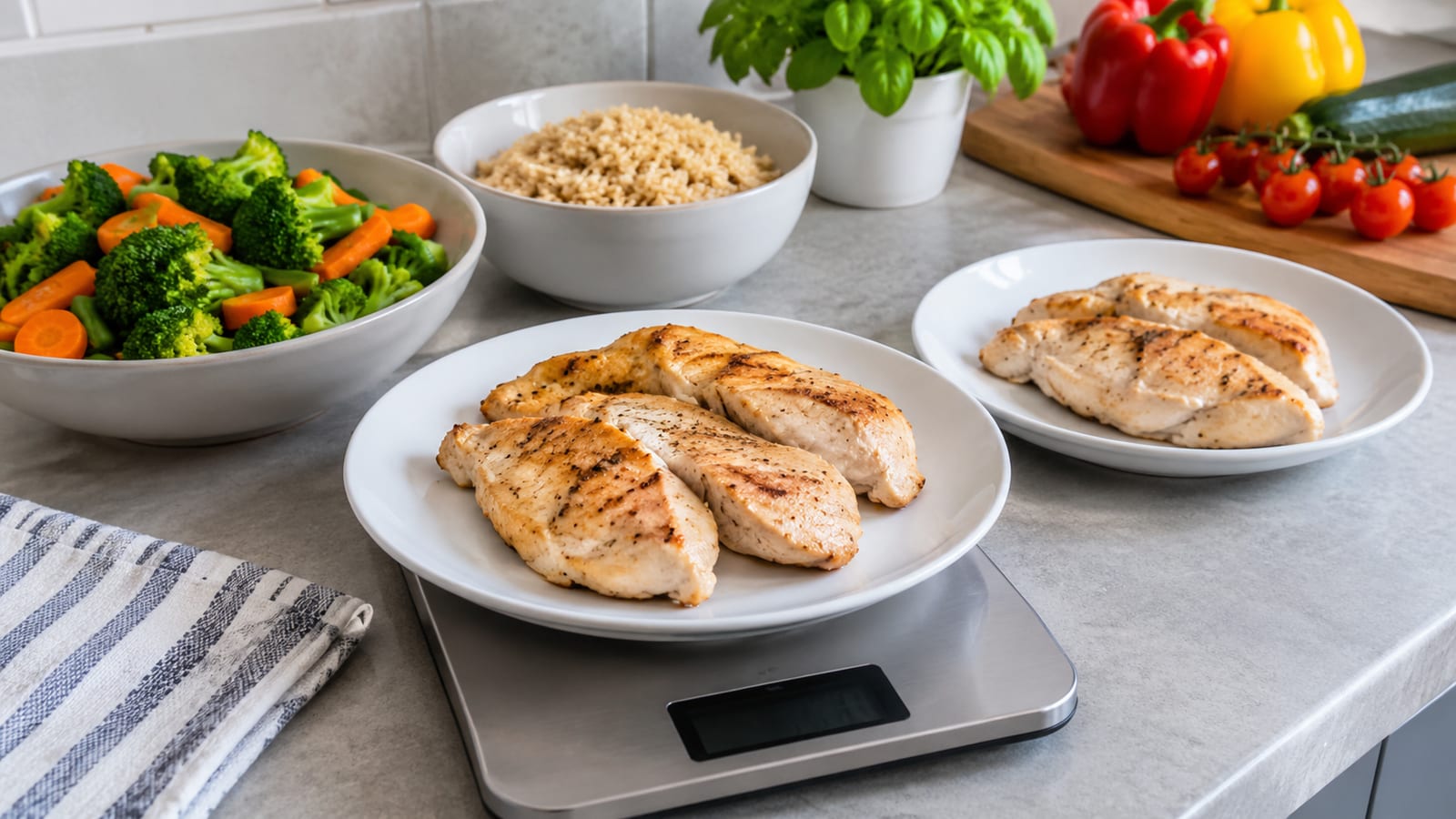
Chicken breast earns its place because it provides substantial protein without much fat. Cooked, boneless, skinless chicken breast provides 31 grams of protein and 165 calories per 100 grams. That leaves room for rice, potatoes, bread, fruit, and other carbohydrate sources that support training and recovery.
Protein in chicken breast: how much do you get?
Cooked, boneless, skinless, roasted chicken breast provides 31 grams of protein per 100 grams. Use that as the dependable reference point. A full breast has no fixed protein count because chicken breasts vary widely in size.
Use the table as a portion guide. A chicken breast is not a standard unit, no matter how neatly a food tracker lists it:
| Cooked portion | Practical protein guide |
|---|---|
| Three-ounce serving | Slightly less protein than the 100-gram reference portion |
| 100 grams | 31 grams of protein |
| Half a chicken breast | Weigh it after cooking, then compare it with the 100-gram reference |
| One full chicken breast | Protein depends on its cooked weight; large breasts may cover more than one meal |
If you track food, weigh the chicken after cooking and use a cooked entry in USDA FoodData Central. Mixing a raw weight with a cooked nutrition entry creates a tidy-looking number that isn’t especially useful.
A food scale helps, but you don’t need to weigh dinner forever. Use it during meal prep until you can recognize the serving that fits your usual appetite and training load.
Why do raw and cooked weights differ?
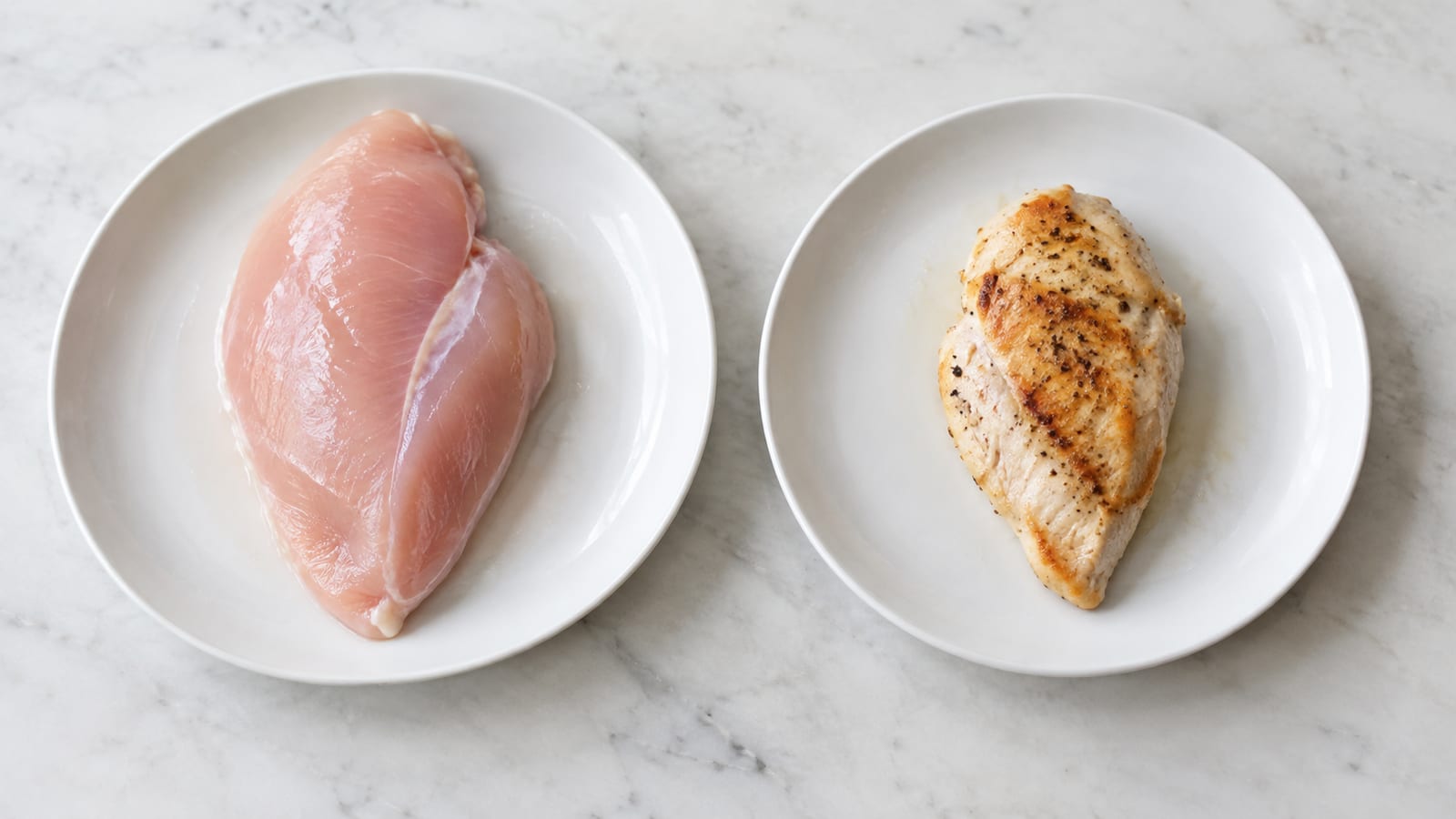
Chicken loses water as it cooks. As a result, the cooked meat weighs less while its protein becomes more concentrated per ounce.
This is why a raw package label may not match a cooked entry in a food tracker. Neither figure is automatically wrong. They describe chicken at different stages.
Pick one tracking method and stick with it:
- Weigh raw chicken and use a raw nutrition entry.
- Weigh cooked chicken and use a cooked entry.
- For batch cooking, use the same method for the full batch and each divided portion.
Cooked weights are often easier for meal prep because that’s the food you actually place in the container. However, raw weights can work just as well if you portion the meat before cooking.
Lean, complete protein
Chicken breast supplies all the essential amino acids your body must get from food, so it counts as a complete protein. That includes leucine, an amino acid involved in starting muscle protein repair after training.
The breast is also lean. Most of its calories come from protein rather than fat, especially when you remove the skin. That helps athletes add protein without turning every recovery meal into a heavy, slow-digesting plate.
Still, leaner isn’t always better. An athlete struggling to eat enough may benefit from dark meat, olive oil, avocado, sauce, or another calorie-dense addition. Your total fuel intake matters more than winning a contest for the driest lunch.
Chicken also contributes to bone-supporting meals because protein helps maintain body tissues. However, bones need more than chicken. Regular training, enough total food, and sources of calcium and vitamin D still belong in the plan.
Protein for muscle growth
Build a full meal around chicken breast, then spread other protein foods across your day. A large serving at dinner cannot fully repair a day built on skipped breakfast, a thin lunch, and coffee before practice.
Your needs change with body size, age, training load, and goals. Athletes doing frequent strength sessions usually need more total protein than someone training lightly. Young athletes also need enough total food for growth, school, and sport, so aggressive restriction is a poor trade.
For a useful recovery meal, give the chicken carbohydrates and fluids to work with:
- Chicken, rice, vegetables, and a glass of milk
- Chicken pasta with tomato sauce and fruit
- A chicken burrito with beans, rice, salsa, and cheese
- A chicken sandwich with pretzels and yogurt
- Chicken with potatoes, vegetables, and water
Carbohydrates replace training energy. Protein supplies material for repair. Meanwhile, fluids replace what you lost through sweat.
Muscle gain still requires progressive training and enough food across the day. Chicken can support that work, but it cannot rescue inconsistent training or chronic under-fueling.
Breasts compared with thighs, drumsticks, and wings
Breast is the clearest choice for a lean, protein-heavy meal. However, thighs and drumsticks remain useful foods. They bring more fat, more flavor, and often better texture after reheating.
| Chicken cut | Protein | Fat and calories | Best use |
|---|---|---|---|
| Skinless breast | High | Lowest among these common cuts | Lean meal prep and lighter pre-training meals |
| Skinless thigh | High | More than breast | Flavorful meals and higher-energy days |
| Skinless drumstick | Useful amount | More than breast | Budget meals and portable leftovers |
| Wings | Some protein | Higher because of skin and cooking method | Occasional meals, especially when baked |
Dark meat can make practical sense if breast is too dry, too expensive, or simply unappealing by day three. A meal you’ll eat is more useful than a container you keep pushing behind the yogurt.
For more affordable choices beyond poultry, use this guide to budget-friendly protein sources. Eggs, canned fish, beans, lentils, tofu, dairy foods, and soy products can all reduce meal-prep costs.
What chicken skin changes
The skin adds fat and calories, including saturated fat. It does not turn the meal into nutritional wreckage, but it changes what the meal provides.
Removing the skin makes sense when you want a lighter meal before training or need to keep the protein-to-calorie ratio high. Leaving some skin on may suit a higher-energy meal, especially for an athlete who has trouble eating enough.
Look at the full day rather than treating one piece of skin as the deciding factor. A varied diet with vegetables, fruit, grains, and mostly unsaturated fats gives you more useful information than a single dinner choice.
Fried chicken and the lean-protein trade-off
Fried chicken keeps its protein, but breading and frying add oil, calories, sodium, and often saturated fat without adding much to the protein payoff.
That trade-off matters before practice. A heavy fried meal may sit poorly during running, jumping, or hard intervals, especially if you eat it close to the session.
Baked, grilled, poached, or air-fried chicken is easier to fit into regular meal prep. If you want crisp texture without deep frying, try these high-protein air fryer recipes for busy athletes.
Fried chicken can still fit into an athlete’s diet. Just don’t count the coating and cooking oil as free extras because the food underneath contains protein.
Meal prep for a busy schedule
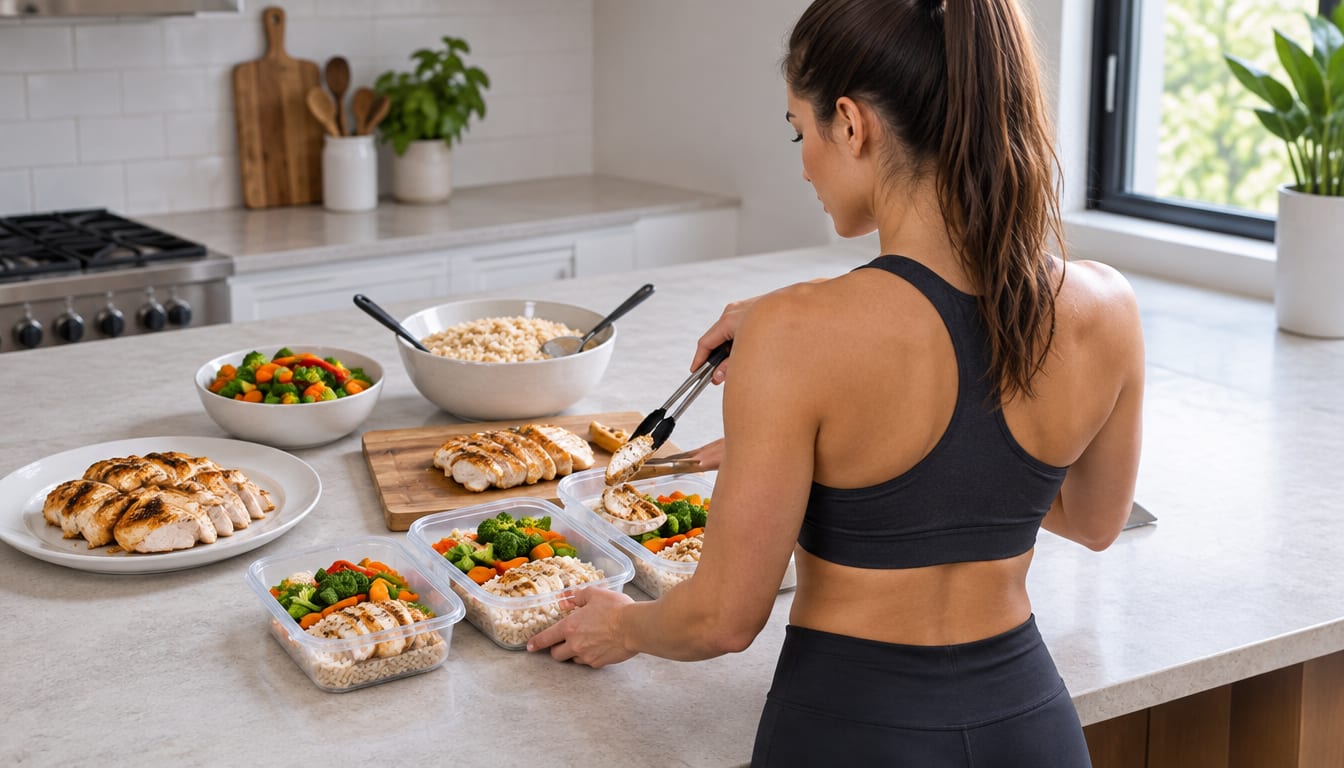
For a busy week, cook enough chicken for several meals and keep the seasoning flexible. Salt, pepper, garlic, and a little oil work with rice bowls, wraps, pasta, salads, and sandwiches. Strong seasoning on the entire batch can make Thursday’s lunch feel like punishment.
Keep the setup simple:
- Cook the chicken until it reaches a safe internal temperature.
- Let it rest before slicing so it keeps more moisture.
- Portion it with rice, pasta, potatoes, bread, or another carbohydrate.
- Add vegetables or fruit you’ll actually eat.
- Pack sauce separately if soggy meals bother you.
- Refrigerate promptly and freeze portions you won’t use soon.
The USDA’s protein foods guidance includes poultry as one option within a varied eating pattern. Rotation matters because eating the same meat every day gets dull and pushes other useful foods off the plate.
For rushed weeks, choose meals with few moving parts. These simple high-protein recipes can reduce prep without turning dinner into another project.
Keep the serving comfortable around training
Before training, pair a modest chicken portion with familiar carbohydrates. A chicken-and-rice bowl, a plain chicken sandwich, or a simple chicken wrap usually makes more sense than a huge salad covered in chicken and rich dressing.
After training, appetite and schedule should guide the format. Use a full meal when you have time. Otherwise, eat a portable snack first and follow it with chicken, carbohydrates, vegetables, and fluids later.
If chicken feels heavy before practice, reduce the portion or move it earlier. Digestion tolerance outranks a meal plan copied from someone else.
Weight management and training energy
For weight management, chicken breast can make meals more filling without adding much fat. However, the cooking method and the rest of the plate still count. Creamy sauces, large amounts of oil, and fried coatings can change the meal quickly.
Weight management should not come at the expense of training energy. Cutting rice, bread, potatoes, and fruit while keeping only chicken and vegetables often leaves athletes flat during hard sessions.
Build the meal around the work ahead. On demanding days, keep a solid carbohydrate serving. On lighter days, adjust the full plate based on hunger instead of shrinking the chicken into a token garnish.
FAQ
Is canned chicken breast as useful as fresh chicken?
Yes. Canned chicken does the job when you need cooked protein without another round of meal prep. Use it in sandwiches, wraps, and rice bowls, check the label if sodium matters, and choose a texture you can tolerate repeatedly.
Can you eat chicken breast every day?
You can, but chicken every day gets tiresome and narrows your food choices. Rotate it with fish, eggs, dairy foods, tofu, beans, lentils, and other protein sources to broaden your nutrient intake and keep meals appealing.
Is organic chicken higher in protein?
An organic label does not guarantee a meaningful protein advantage. It describes how the chicken was raised and produced, so compare the nutrition label and choose based on budget, access, and preference.
What if chicken breast feels dry after reheating?
Don’t keep packing dry chicken and hoping Thursday will be different. Slice it after cooking and store it with some cooking liquid or sauce. Thigh meat also reheats more forgivingly and may be the better meal-prep choice.
Is chicken breast suitable after an evening workout?
Yes. Pair it with rice, pasta, bread, or potatoes, then add fluids to make it a useful recovery meal. Keep the serving smaller and lower in fat if a large late dinner disrupts your sleep or digestion.